

Hooked-End Steel Fibre for Approved Concrete Specifications
Buy hooked end steel fibre against the engineer approved material and concrete evaluation requirements. Fibre geometry and tensile evidence define the incoming candidate; dosage, dispersion and matrix response require the actual concrete trial. This guide helps you connect those decisions, identify the offered supply and retain the records needed when the result differs.
Separate the three fibre decisions
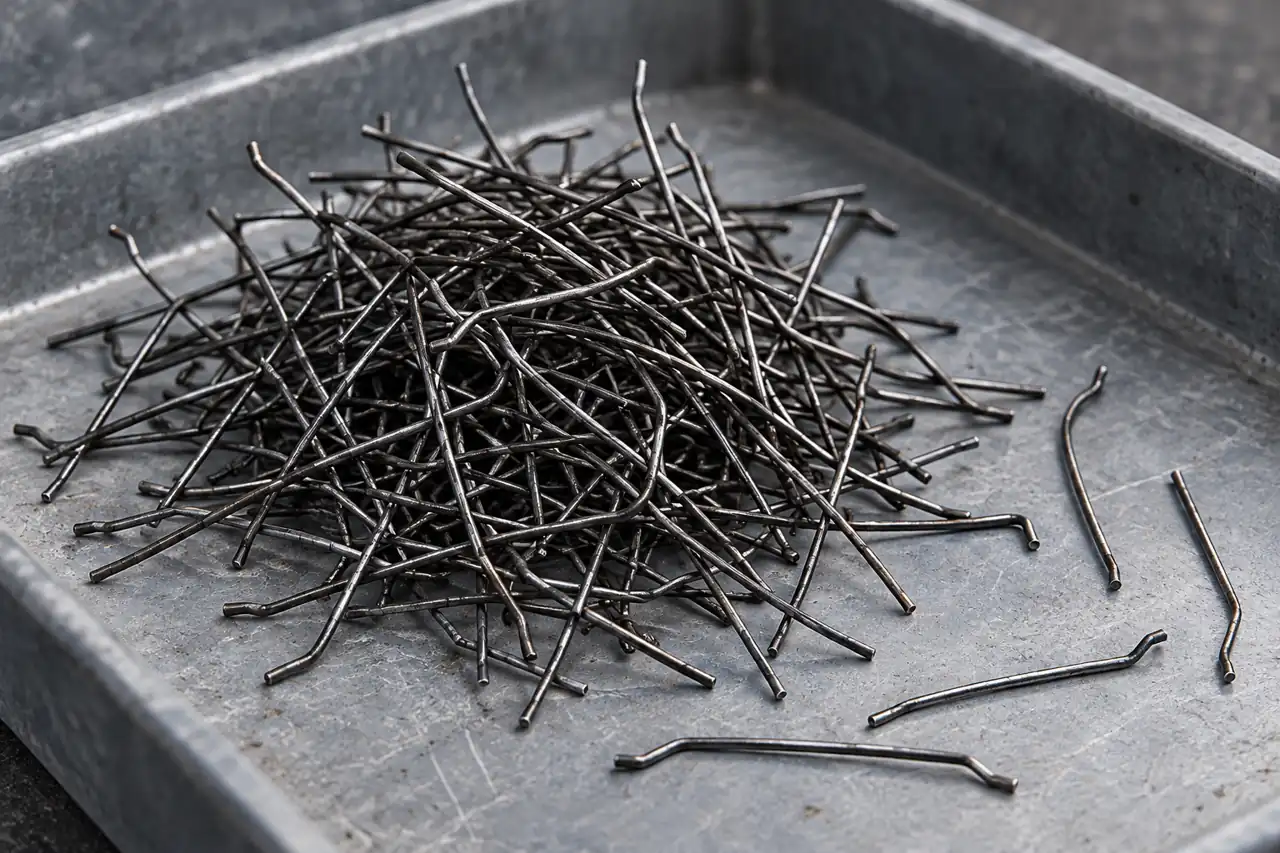
For concrete producers and project buyers, approve hooked-end steel fibre against the engineer's material and concrete-performance requirements, not a fibre size or tensile value alone. Relia can review its 0.75 × 35 mm catalogue candidate; the offered geometry, actual material evidence and supply role must be confirmed. Hook shape, fibre distribution and the concrete production route all affect the trial your project needs. Send the approved fibre specification, mix/evaluation plan, quantity and destination so the proposal can separate incoming-fibre acceptance from dosage, residual concrete performance and structural design approval.
- Incoming materialDefine the steel fibre geometry and material evidence required for the actual lot.
- Concrete evaluationUse the approved mix and test plan to evaluate the selected fibre candidate.
- Project acceptanceKeep dosage and structural use with the responsible engineering requirements and approval.
Selection context and decision detail
| Buyer requirement | Relia response | Evidence or condition |
|---|---|---|
| Defined hooked-end fibre | Review the 0.75 × 35 mm candidate | Resolve nominal geometry and actual material evidence |
| Traceable fibre acceptance | Batch inspection records can be provided | Confirm finished-fibre producer and covered tests |
| Concrete performance | Keep project validation separate | Mix, dosage, dispersion and specified test |
Keep fibre production and concrete design boundaries clear
Separate the actual finished fibre producer and records from Relia confirmed wire manufacturing scope.
Relia manufactures steel wire, with drawing and annealing among its confirmed in-house operations. That does not by itself confirm the cutting, hook-forming or finished-fibre production scope of this item. Incoming, in-process and final inspections are performed and corresponding batch records can be provided; identify the actual fibre producer and relevant records.
The listing states 0.75 mm diameter, 35 mm length, SD45/35 and L/D 45, plus a tensile reference above 1100 MPa. Resolve the dimensional relationship and actual test basis instead of treating those entries as a concrete design or result.
- Fibre identityActual material, geometry and represented lot
- Supply roleConfirmed producer and finishing responsibility
- Concrete authorityProject mix, dosage, testing and structural acceptance
Define the length, diameter and hook geometry
Define diameter, length and hook geometry on one agreed nominal and measurement basis.
Put fibre geometry on one basis
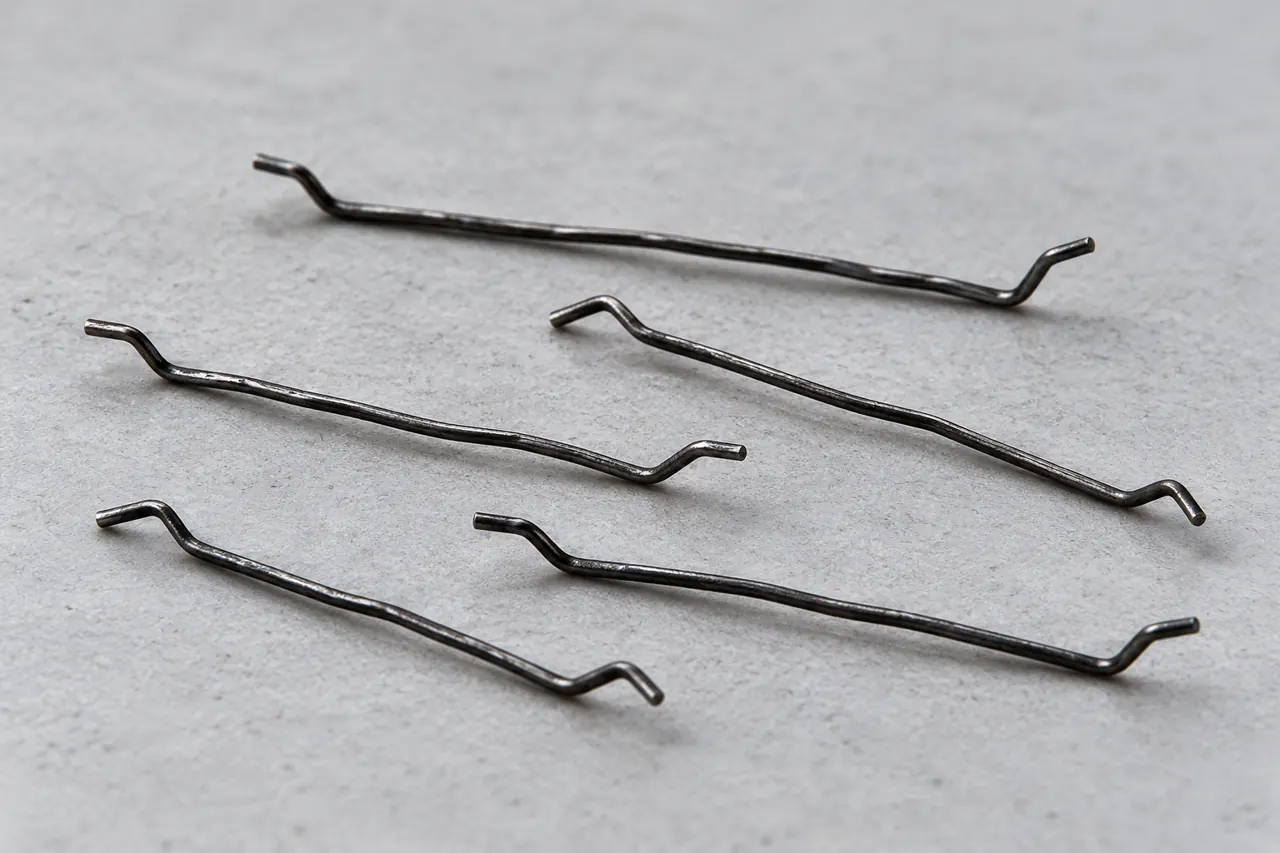
State the dimensional definitions and permitted variation used by the project. The simple quotient of the listed 35 mm and 0.75 mm is about 46.7, while the model/detail says 45; ask which nominal basis governs rather than silently correcting the offer. Include hook configuration and relevant geometry. A photograph of bent ends cannot establish the distribution of diameter, length or hook dimensions in the delivered lot.
- Diameter and lengthState definitions and permitted variation for the fibre measurements used by the project.
- Hook configurationDefine the end geometry that the offered fibre and inspection must represent.
- Nominal relationshipAgree the governing aspect ratio basis instead of mixing different catalogue designations.
Product references for your shortlist
Open the product details, then discuss the exact specification for your application.
Hooked end steel fibre candidate
A candidate for an engineer specified fibre enquiry requiring defined geometry, actual material evidence and concrete system evaluation.
Wire strength and hook anchorage affect different mechanisms
Wire strength and hooked end anchorage contribute differently to the fibre interaction with concrete.
Drawing changes the wire's mechanical condition; cutting and end forming then define individual fibres and their anchorage geometry. In concrete, a fibre bridging a crack transfers force through its interaction with the matrix, while hooked ends affect pull-out behaviour. Fibre strength, geometry, dosage, dispersion and matrix properties therefore act together.
These are general mechanisms, not proof of a Relia hook-forming line or a universal crack-control result. The tensile reference for an individual fibre cannot replace testing of the concrete system.
- WireMaterial and supplied mechanical condition
- FibreCut length, diameter and end geometry
- ConcreteApproved mix, dosage and dispersion
- PerformanceProject-specified post-crack or other assessment
Accept incoming fibres against their own criteria
Inspect incoming fibre geometry and material separately from the performance of the concrete system.
Agree representative sampling, dimension definitions, hook assessment and the required tensile evidence for the actual lot. Keep the method and represented material with the result. Counting fibres or weighing a package may support quantity checks but cannot prove strength, geometry or uniform dispersion in concrete. Specific instruments, sample counts and test frequencies need agreement; the catalogue does not establish a certified routine for every shipment.
- DimensionsLength, diameter, hook and stated basis
- MaterialIdentity and applicable tensile evidence
- ConditionSurface and any specified supplied form
- TraceabilityActual lot, sample reference and acceptance decision
Test concrete behaviour with the approved project method
Evaluate post crack behaviour using the project method and recorded concrete production conditions.
Connect the fibre with concrete behaviour
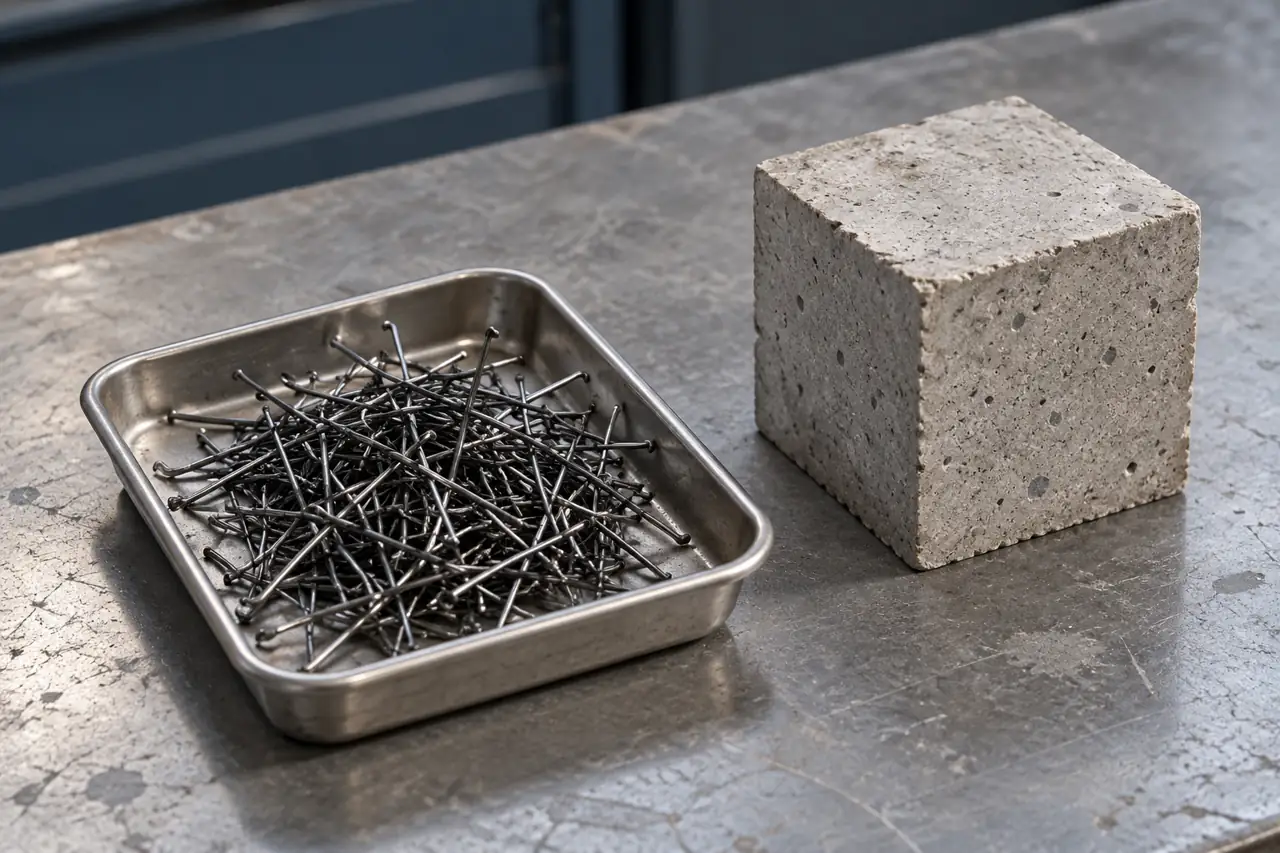
Use the actual candidate fibre and record dosage, mix, mixing sequence, placement and specimen preparation as required by the project. Dispersion problems can affect the result even when individual fibres pass incoming checks. ASTM C1609 distinguishes first-peak and residual flexural behaviour; a concrete cube photograph or compressive result cannot establish that post-crack response. The engineer defines the applicable test, acceptance and design use; this guide supplies no universal dosage or concrete strength.
- Production conditionsRetain fibre dosage, mix and mixing sequence with the actual evaluated concrete.
- Specimen preparationFollow the project requirements for placement and preparation of the test material.
- Measured responseAssess the specified first peak or residual behaviour using the approved method.
Confirm the offered fibre and usable supply unit
Confirm actual finished fibre identity, supply form and represented documents in the offer.
Identify the actual finished-fibre producer, form, quantity basis and documents in the offer. Keep any proposed substitute geometry or strength visible for project approval. The stated package, tensile and application fields remain references to verify, not proof of structural suitability or unrestricted supply. If glued bundles or another form are proposed, define their handling and dispersion requirements explicitly rather than assuming they behave identically to loose fibres.
- Offered materialOne defined geometry and condition
- ProducerActual manufacturing and supply relationship
- QuantityNet fibre mass and package basis
- SubstitutionWritten technical acceptance before supply
Separate delivery quantity from concrete dosage
Keep delivered package quantity separate from the dosage controlled by the concrete design.
Agree net package contents, package identification and lot separation, then reconcile them with the order. A bag mass is a logistics unit; dosage is a project-controlled amount per concrete volume or another specified basis. Protect the material in the required supplied condition and ensure the receiving team can identify which lot enters each evaluated production run. Catalogue packing and pallet wording require an actual, physically coherent shipment proposal.
- Purchase quantityNet fibre mass and the actual package contents
- Batch identityKeep the supplying lot visible through opened packs
- Concrete dosageProject-controlled addition per specified concrete basis
- Run connectionRecord which material lot enters each evaluated mix
Preserve fibres and production records when results differ
Preserve fibres and related mix records together when incoming material or concrete results are questioned.

Preserve evidence when the result changes
Hold affected packs and retain representative fibres with their lot references before mixing them into concrete. Record geometry using the agreed definitions and compare with the approved candidate. If the concern is concrete performance, retain the related mix, dosage, specimen and test records as well. A jar of fibres is only an illustrative retained-material concept; it is not proof that the supplied material or concrete has passed testing.
- Hold the fibreKeep affected packs and representative unused fibres connected to their material lot.
- Compare incoming geometryUse the agreed dimensional definitions against the approved fibre candidate.
- Review concrete recordsConnect any performance concern with mix, dosage, specimen and test conditions.
Send the approved fibre and concrete evaluation brief
Send the engineer approved material and evaluation brief to clarify the candidate and supply responsibilities.
Share the engineer approved fibre requirement and the evaluation your project will use. We can clarify the candidate geometry, producer records and proposed supply scope.
Qingdao Relia Industries Co., Ltd.
Contact address: Shuyuan Road, Qingdao, Shandong, China
- Approved fibre specification and geometry
- Hook dimensions and material test criteria
- Concrete evaluation method and acceptance
- Evaluation quantity and project requirement
- Required records packing and destination
Enquiry scope and supporting detail
Send the engineer's fibre specification, dimensional definitions, hook requirements, actual material/test criteria, evaluation quantity and project volume. Add the concrete trial basis, required records, packing and destination. Relia can review the listed candidate and clarify producer, sample and supply scope. Dosage, concrete design, structural acceptance, certification needs, MOQ and delivery conditions require the appropriate project decision and actual offer.
- MaterialFibre geometry, strength basis and supplied form
- EvaluationMix, dosage and project acceptance plan
- SupplyProducer, lot records, quantity and packing