

Carbon Steel Round Bar Stock for Machining Blanks
Select machining bar stock from the drawing grade and the material your cutting sequence needs. Then define the route, condition and allowance that leave enough usable section after preparation. This guide helps you compare actual stock, qualify dimensional movement and preserve material evidence when bars are cut into blanks for the machine shop.
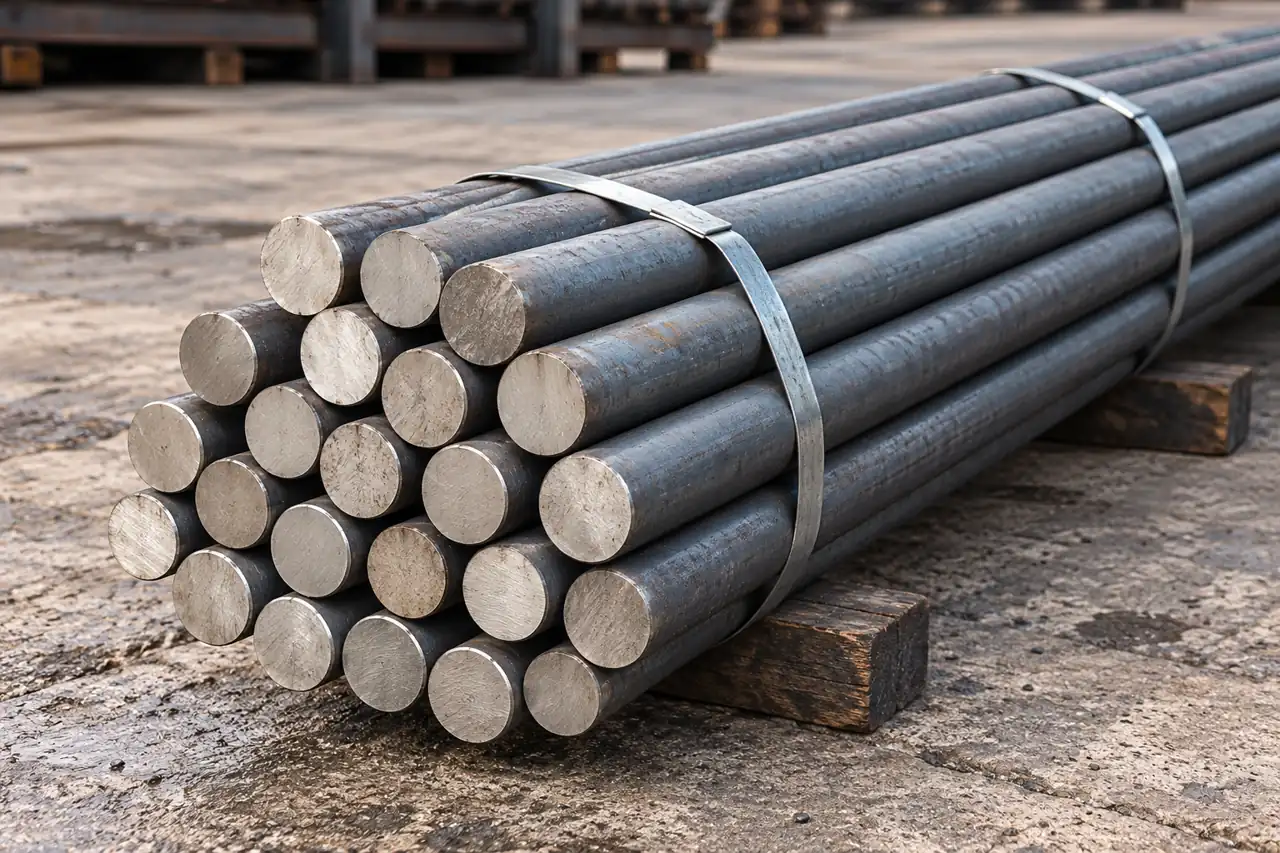
Select stock for the machining plan
For machine shops buying carbon-steel bar blanks, start with the drawing grade and machining plan, then select the stock condition and allowance. Relia can review the round-bar catalogue candidate; hot-rolled, cold-drawn and forged descriptions are not interchangeable finished stock. The decision is whether the offered bar has enough usable section, appropriate condition and traceable evidence for your process without unexpected movement or extra preparation. Send the material specification, blank dimensions, quantity and required machining result so the actual producer, supply route, inspection and cutting scope can be confirmed together.
- Drawing materialStart with the specified grade and the properties needed for the component.
- Stock conditionChoose the actual route, surface and any required treatment before setting allowance.
- Usable geometryDefine diameter, blank length and the material needed to reach the finished drawing.
Selection context and decision detail
| Buyer requirement | Relia response | Evidence or condition |
|---|---|---|
| Usable machining stock | Review the round-bar candidate | Selected grade, route, condition and allowance |
| Evidence for the actual stock | Batch inspection records can be provided | Confirm producer, represented lot and scope |
| Full bar or blanks | Confirm cutting and preparation separately | End condition, identity transfer and current terms |
Confirm the actual bar route and evidence
Confirm the actual round bar producer, route and delivered condition in the selected supply offer.
Relia's confirmed steel manufacturing scope does not by itself identify the producer or heat-treatment route of this round-bar item. Incoming, in-process and final inspections are performed, with corresponding batch records available; identify which bar and producer records the offer includes.
The listing's actual OD option is 10–400 mm, while its body gives 5–600 mm or custom. Cold Drawn is the principal technique, with hot-rolled/forged alternatives and broad grades elsewhere. Select one grade, exact size, surface and delivery condition; A36 and Q235B are not documented equivalents.
- IdentityDrawing grade, standard and delivered condition
- RouteActual producer and selected finishing/heat treatment
- EvidenceRepresented heat/lot and required bar acceptance
Route and stress state change the machining discussion
Drawing history and stress state can affect preparation needs and movement during asymmetric machining.
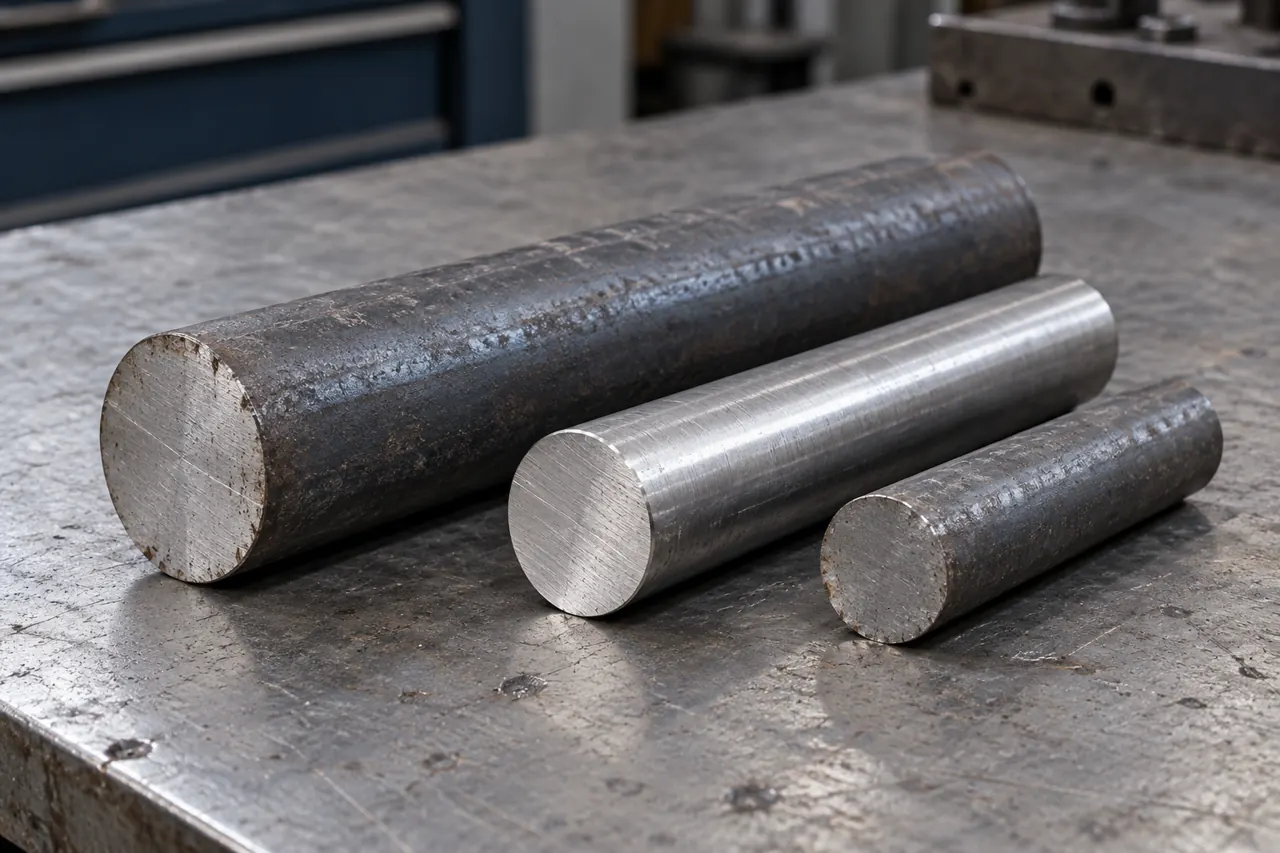
Read route and surface as stock conditions
Cold drawing reduces section through a die and changes mechanical condition and residual stresses. Subsequent stress relief is a distinct treatment, not something inherent in the words cold drawn. Hot-rolled scale, turned surfaces and polished finishes also imply different preparation needs.
Specify the route and any required treatment through its actual acceptance basis. During asymmetric machining, removing material can disturb the stress balance and move the blank. A straighter or brighter starting bar is not proof that a thin finished component will remain straight.
- Cold drawn stockReview mechanical condition and residual stress implications alongside the required dimensional acceptance.
- Hot rolled surfaceAllow for scale removal and the actual surface imperfections permitted in the stock.
- Additional preparationDefine stress relief, turning or another treatment separately when the machining route requires it.
Product references for your shortlist
Open the product details, then discuss the exact specification for your application.
Carbon steel round bar stock
A candidate for machine shop blanks requiring one selected grade, stock route and a defined usable section.
Purchase the usable section rather than the nominal size
Purchase usable section with explicit allowance, geometry and surface limits rather than nominal size alone.
Define diameter limits, ovality, straightness and cut length separately, including the measurement positions and support conditions. Add the machining allowance needed to remove scale or permitted surface imperfections and reach the finished drawing. A nominal 20 or 50 mm request does not specify that allowance. The generic ±1% field does not establish a complete bar tolerance or a precision-machining stock condition.
- SectionDiameter and ovality at defined locations
- LengthBlank or full-length requirement and end allowance
- FormStraightness and relevant surface condition
- Usable stockAllowance linked to the actual machining plan
Keep material properties connected with the delivered bars
Connect the required material properties to the actual delivered bars and represented heat or lot.
Request the chemistry and relevant mechanical or hardness evidence required for the selected grade and condition. Identify the represented heat or lot and how its marks survive cutting into blanks. A report for the same broad grade family is not evidence for unidentified stock. Material evidence, bar geometry and machinability answer separate questions; the structural or cold-heading label does not supply a universal machining-performance result.
- Material identitySelected grade and represented heat/lot
- ConditionRequired properties or treatment evidence
- DimensionsActual bar/blank readings and surface review
- TransferParent-stock reference after cutting
Qualify the stock through the intended machining sequence
Use the intended machining sequence to evaluate chip behaviour, surface and dimensional movement.
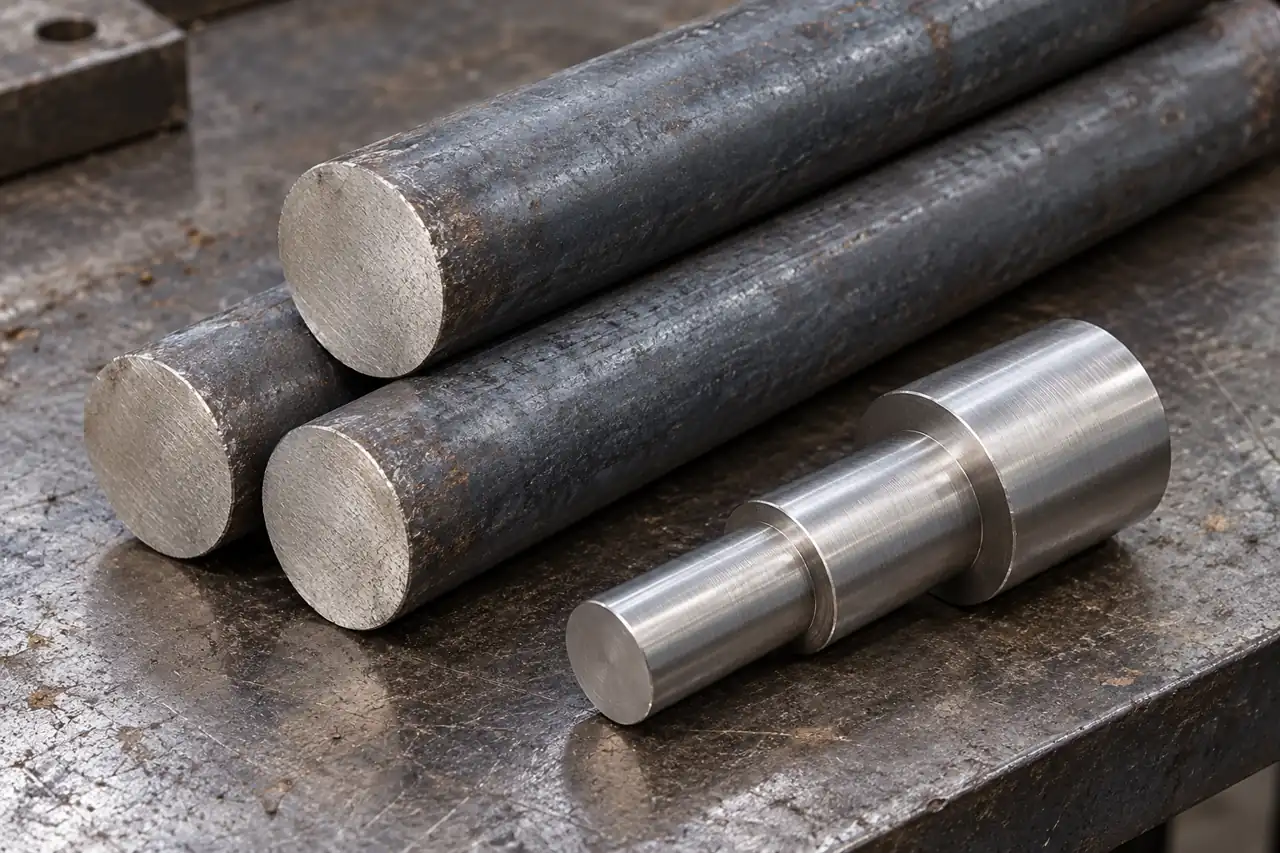
Qualify stock in the intended sequence
Use an identified bar sample and record its route, condition and starting dimensions. Retain the relevant workholding, roughing/finishing sequence and acceptance checks. Evaluate chip control, surface and dimensional movement under the buyer's actual setup rather than promising a universal tool life. A stepped sample illustrates material removal; it is not a documented production trial or proof that Relia machines finished parts.
- Identify starting stockRetain material route, condition and measured blank dimensions with the represented sample.
- Run the machiningRecord workholding, roughing and finishing operations used for the actual component trial.
- Assess the resultCompare chip behaviour, surface and dimensional movement using the buyer accepted checks.
Specify cutting without assuming a finished-part contract
Specify cut blanks and extra preparation separately while retaining the parent material identity.
Choose full bar lengths or defined blanks and state end squareness, burr and length requirements where they affect location or feeding. Name any turning, peeling, deburring or other preparation separately and confirm the actual provider. Cutting can remove the original mark, so the quoted identification method must connect blanks with parent material. A broad processing-service list does not establish all cutting or machining work in-house.
- SelectFull length or blank schedule
- PrepareActual cutting and additional work
- InspectEnd, length and surface criteria
- RetainParent material and blank identity
Preserve size and material separation at receipt
Keep grades, sizes and conditions distinguishable during receiving and issue to the machines.
Agree bundle or pack references for grade, condition, diameter, length and heat/lot. Match the quantity basis with the packing list and distinguish similar sizes before issuing stock to machines. Supports and protection should suit bar length, mass and surface sensitivity. Record transport damage or corrosion while stock is still identifiable; a later machining defect is harder to examine after bars and remnant pieces are mixed.
- Bundle referenceGrade, delivered condition, diameter and heat/lot
- Blank separationKeep similar lengths and different heats distinguishable
- Quantity reconciliationMatch pieces, length or net mass with the packing list
- Receiving evidenceRecord damage before stock or remnants enter machining
Retain stock evidence when machining reveals a deviation
Retain affected and unmachined stock with measurements and machining history when investigating a deviation.
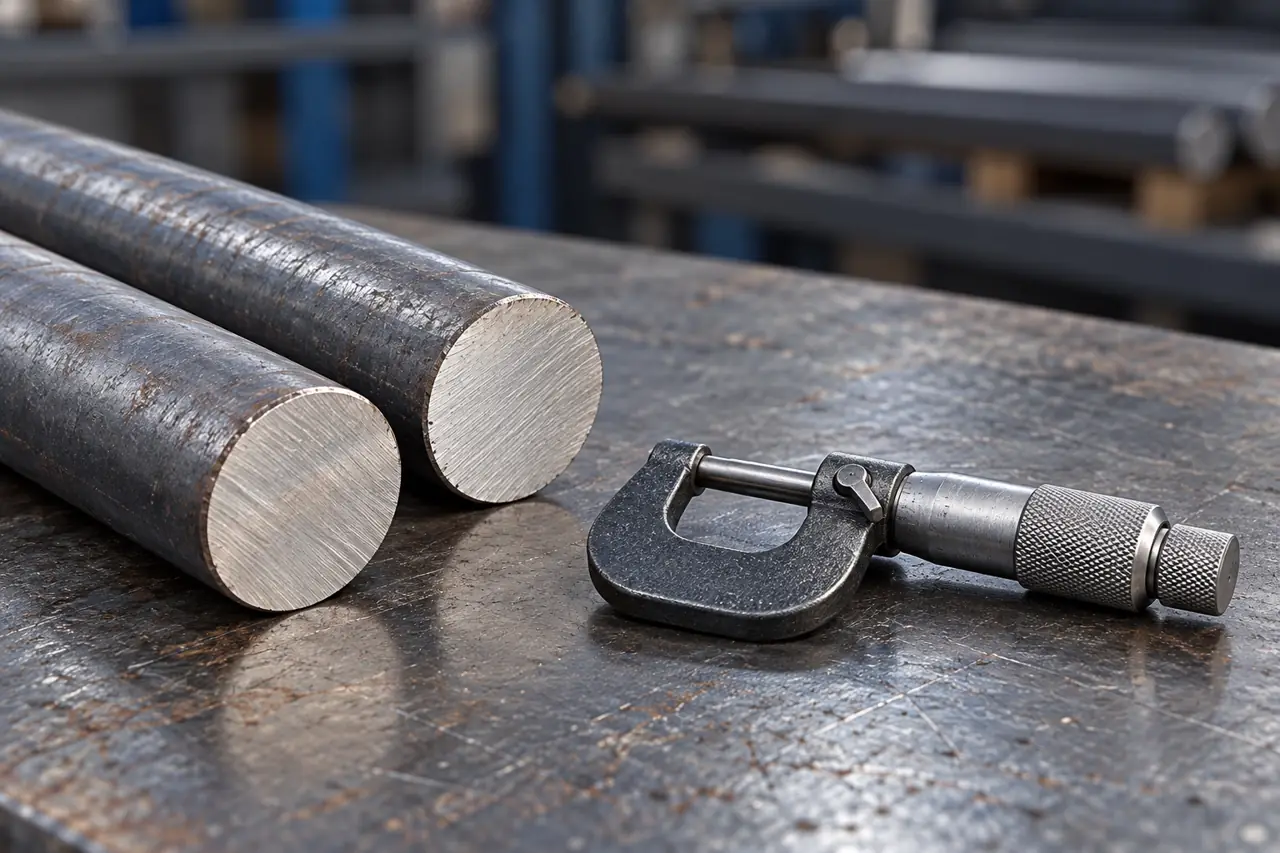
Preserve the cause of a machining deviation
Preserve an affected blank and unmachined stock from the same reference. Record the original geometry, measured defect, method, units and machining history. Compare incoming surface/straightness, removal sequence and finished movement before assigning cause. A tool beside a bar is illustrative and supplies no reading. Agree claim examination and authorized rework or disposition in the order instead of assuming that every finished-part deviation is an incoming-bar defect.
- Incoming referenceKeep unmachined stock and the original material identity alongside the affected blank.
- Measured defectRecord the observed geometry or surface with location, method and units.
- Machining historyReview removal sequence and workholding before assigning the finished deviation to incoming stock.
Define the bar and its machining allowance
Send a defined material and machining stock schedule to clarify producer, condition and supplied scope.
Send the drawing material and the stock your machining sequence needs. We can review the round bar candidate and clarify condition, cutting scope and required records.
Qingdao Relia Industries Co., Ltd.
Contact address: Shuyuan Road, Qingdao, Shandong, China
- Drawing grade and required stock route
- Stock diameter length and quantities
- Machining allowance and surface requirements
- Straightness limits and measurement basis
- Material records and blank identification
Enquiry scope and supporting detail
Send the drawing grade and revision, required route/condition, stock diameter, blank length, quantities and destination. Include allowance, straightness, surface, material records, cutting and packing requirements. Relia can review the listed candidate and clarify the actual producer and supplied scope. Particular treatments, available sizes, testing arrangements, MOQ and timing require the current offer.
- MaterialGrade, standard, condition and represented lot
- StockDiameter, allowance, length, form and surface
- SupplyProvider, cutting, records and packing