

Stainless Filler Wire for Laser-Welding Sample Approval
Choose stainless laser-welding filler by its documented classification and the joint you need to make. Then check whether the actual wire and spool feed reliably on your equipment. This guide helps you connect alloy selection, filler volume, surface handling and coupon results before approving a replacement consumable for repeat production.
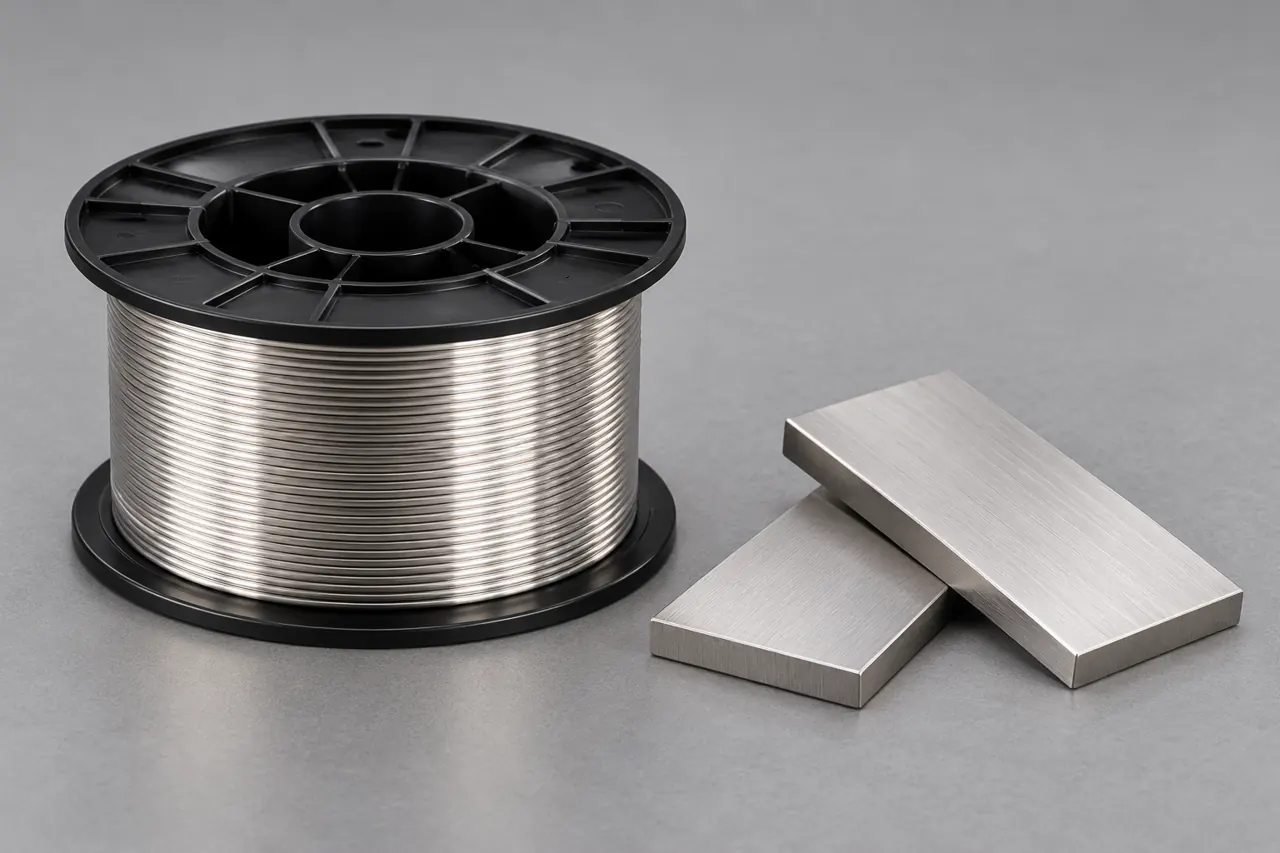
Approve the filler and its delivery together
For a fabricator qualifying stainless filler wire for laser welding, start with the approved filler classification, joint materials and wire-feeding geometry. Choose a documented consumable identity rather than assuming general 304 or 316 wire is an ER-classified filler. Relia manufactures steel wire and can review the two listed stainless-wire enquiries against the intended supply. Control diameter, cleanliness, winding, feed stability and the joint's acceptance requirements together. Send the procedure or trial brief, parent alloys, joint gap and required filler designation so a representative spool is evaluated for both reliable feeding and the specified weld result.
- Consumable identityUse the filler classification selected for the actual parent alloys and joint.
- Feeding fitMatch wire diameter, spool arrangement and delivery path to the intended feeder.
- Joint acceptanceDefine the weld observations and examinations required for the sample decision.
Selection context and decision detail
| Buyer requirement | Relia response | Evidence or condition |
|---|---|---|
| Defined stainless filler | Review the listed wire enquiries | ER classification and parent-joint requirement must be explicit |
| Wire production evidence | In-house wire operations and batch inspection records | Selected consumable producer and surface route identified |
| Laser sample approval | Discuss a representative spool | Feed behavior and required joint tests assessed separately |
Wire manufacture and consumable classification need separate evidence
Connect the trial spool to its actual consumable identity, manufacturing scope and corresponding batch evidence.
Relia operates steel-wire drawing, annealing and galvanizing in-house. Incoming, process and final inspection are performed, and corresponding batch records can be provided. For this stainless filler enquiry, identify the actual alloy, drawing/surface route and responsible consumable producer in the offer. General galvanizing capability is not the surface requirement for stainless filler.
A manufacturing role does not supply an AWS classification or a qualified laser procedure. Request the selected consumable's composition/classification evidence with its diameter and winding record, then link that identity to the trial spool.
- Wire manufacturingConfirmed core operations
- Consumable identityProducer, alloy and classification record
- Batch evidenceCorresponding incoming, process and final records
The catalogue references do not define one welding consumable
Define welding-wire diameter and spool format explicitly rather than selecting from unrelated general material dimensions.
One stainless-wire listing names 304, 316, 316L and other alloys but retains carbon-steel-bar fields and a broad 0.1–300 mm customized option. The laser-wire listing requests ER308/ER316 and AWS wording while its body describes general 304-family wire.
The latter has nineteen diameter options, including 30 and 50 mm outside its described 0.5–20 mm range. Use an actual welding-wire diameter and defined spool configuration. Remove irrelevant bar dimensions and select the required filler classification explicitly before treating either reference as a consumable offer.
- General stainless entryResolve unrelated bar fields
- Laser-wire titleER classification needs actual documentation
- Diameter menuSelect a feedable welding size
- SpoolDefine carrier dimensions and winding
Product references for your shortlist
Open the product details, then discuss the exact specification for your application.
Laser-welding filler coil enquiry
The focused enquiry reference for a classified stainless filler supplied in a defined wire and spool arrangement.
Stainless alloy wire selection
A broader alloy-wire reference when discussing the required stainless composition and supplied wire condition for the trial.
Filler volume and wire position affect the melt pool
Wire area, feed rate and travel speed determine filler volume; consistent positioning keeps delivery controlled.
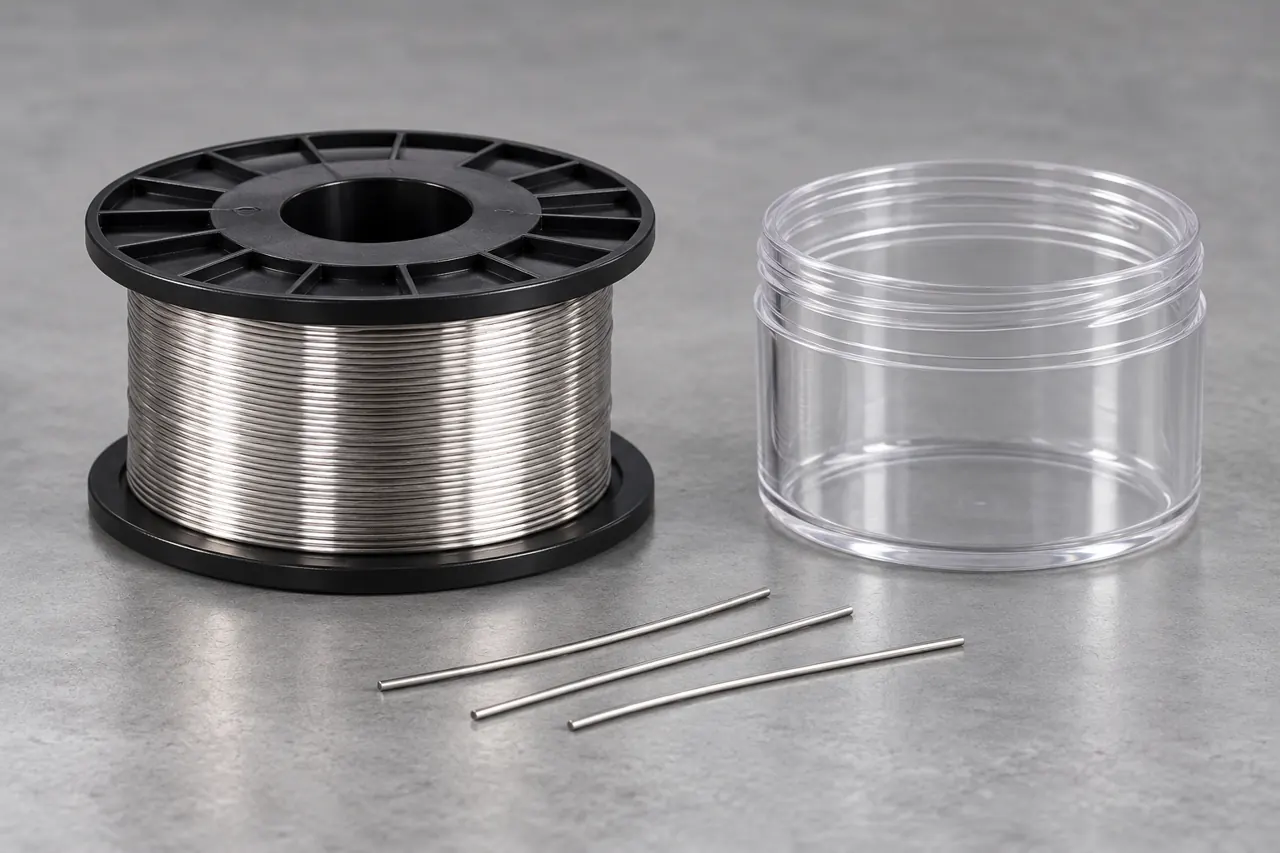
Connect delivery settings with filler volume
Laser energy must melt the added wire as well as the joint. Filler volume per unit weld length depends on wire area, feed rate and travel speed; a changing gap can therefore require a different balance. Wire positioning matters because the intended entry region can be small.
Specify diameter variation, feed path and winding so the wire reaches that region consistently. Record wire feed, travel, energy and joint fit-up during the trial rather than judging only the spool appearance. The retained lengths in the picture are AI-assisted references, not dimensional measurements.
- Wire cross-sectionRecord actual diameter because wire area changes the volume entering the joint.
- Feed and travelCompare wire feed against travel speed under the recorded trial conditions.
- Entry positionKeep the wire entering the intended melt region throughout the representative joint.
Alloy chemistry does not replace joint qualification
Filler chemistry identifies the consumable, while joint qualification also depends on dilution, preparation and procedure.
AWS A5.9 classifies bare stainless filler by chemical composition. That identifies a material basis; the welded joint also depends on parent-metal dilution, joint preparation and process conditions. A matching-looking wire cannot establish deposited-metal behavior, corrosion suitability or freedom from cracking.
Use the responsible welding engineer's consumable selection and procedure requirements. Define visual, dimensional and any required internal, mechanical or corrosion examination for the actual joint. Do not derive a universal ER308/ER316 substitution from the general stainless grade list.
- Select fillerApproved chemistry/classification
- Define jointParent alloys and fit-up
- Run procedure trialRecorded delivery and welding conditions
- ExamineRequired joint results and disposition
A useful sample trial records feeding and weld evidence
Record feeding behavior separately from weld observations so a spool problem does not obscure joint defects.
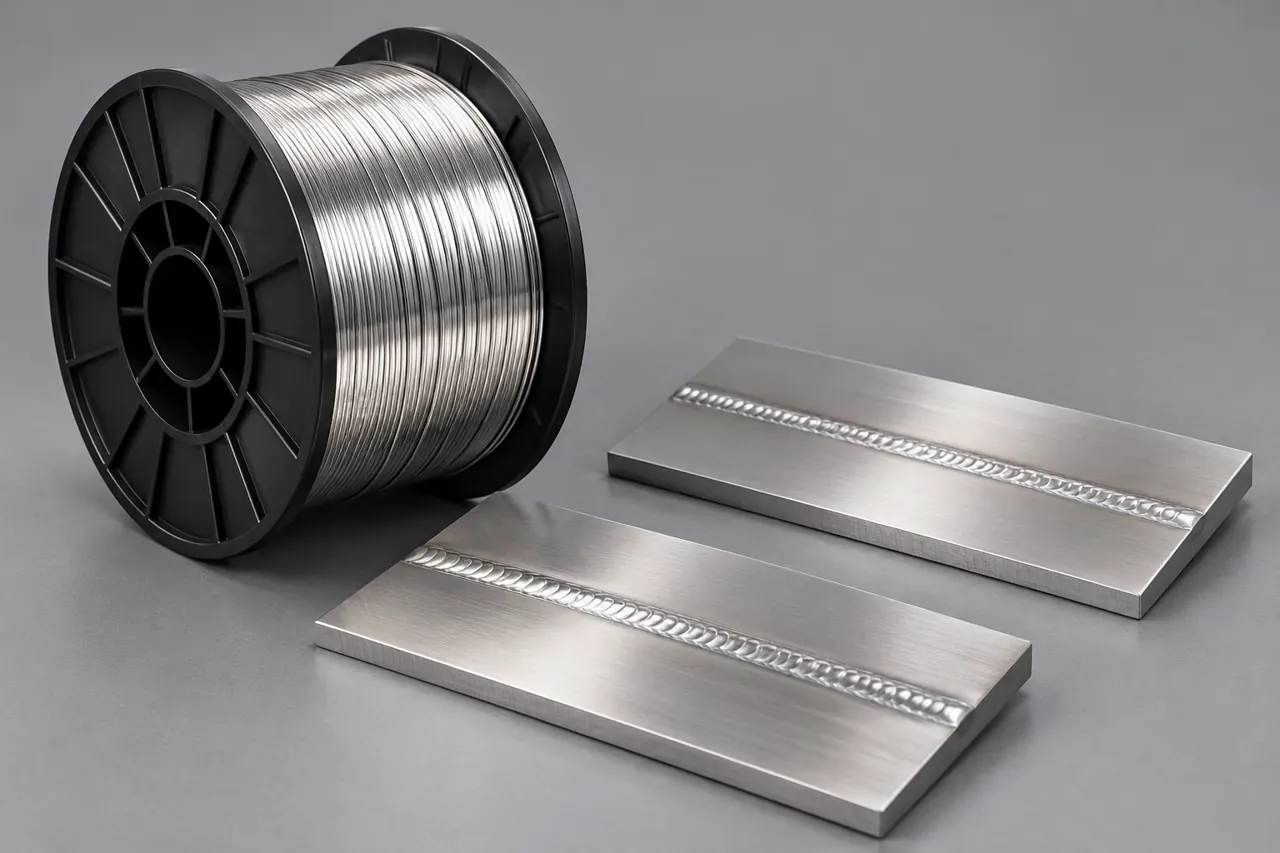
Separate spool behavior from joint results
Run the identified spool on representative parent material, thickness and fit-up with the intended laser and delivery arrangement. Record feed interruptions, wire wander, shielding and joint conditions alongside the required weld observations. Keep a feeder problem distinct from porosity, lack of fusion or an unacceptable bead profile.
The pictured beads are AI-assisted illustrations of trial coupons, not documented laser welds or proof of penetration. Retain the actual coupons, wire sample and process record so a later spool can be compared with the same acceptance basis.
- Feed observationsRecord interruptions and wire wander with the delivery arrangement used for trial.
- Weld observationsEvaluate bead profile and the required defect examinations on representative joint coupons.
- Retained referencesKeep coupons, wire sample and process record tied to the identified spool.
Surface handling protects the trial from avoidable contamination
Control wire handling, parent-surface preparation and delivery cleanliness before blaming an alloy for defects.
Residue on wire, dirty parent surfaces or an unsuitable handling path can confound a material comparison. Define the supplied surface and how the spool is stored, opened and fed. BA or 2B sheet-style wording does not alone describe a clean, feedable welding wire.
Use clean compatible guides and preserve the selected material identity. If a weld defect appears, review preparation, shielding and delivery conditions with the filler batch evidence before changing alloy. A bright stainless surface is not a cleanliness measurement.
- WireSurface requirement and handling
- Parent metalPreparation and starting condition
- DeliveryGuide, positioning and shielding
- Defect reviewMaterial and process evidence combined
Spool protection and winding belong in the offer
Match winding, carrier dimensions and payout direction to the feeder while protecting the wire surface.
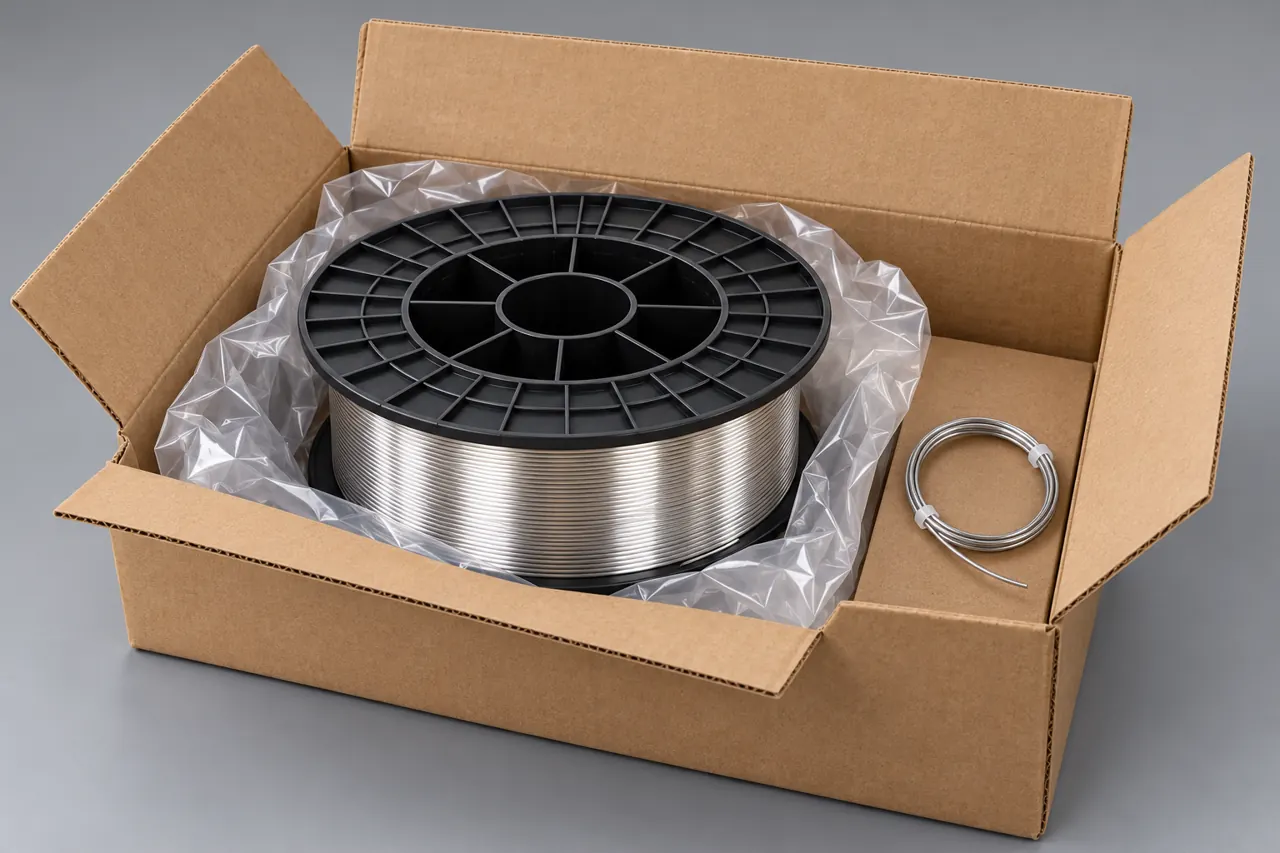
Specify a spool your feeder can use
Specify spool dimensions, bore, unit mass, winding arrangement and payout direction against the feeder. Protect the surface and prevent loose turns or shipping damage from disturbing feed. A material certificate does not establish compatibility with an unspecified spool carrier.
The carton scene is an AI-assisted packing illustration. Agree actual barrier protection, spool identification and net contents for the order. Preserve the spool/lot reference after opening so a retained sample and weld coupon remain traceable to the evaluated supply.
- Carrier dimensionsConfirm spool bore, outer dimensions and unit mass against the feeder arrangement.
- Winding and payoutDefine winding and payout direction to avoid loose turns disturbing wire delivery.
- Surface protectionAgree packing and preserve spool identity after opening the selected consumable.
The approved spool becomes a controlled replacement baseline
Use the accepted spool and procedure scope as the baseline for reviewing future consumable changes.
Retain filler classification, actual diameter and limits, surface, spool arrangement and corresponding batch evidence with the accepted trial. Review a change of producer, alloy, winding or supplied condition before routine replacement.
The procedure controls which changes need revalidation. A successful sample does not approve all diameters in the catalogue or every stainless base alloy. Keep the qualification scope narrow enough that purchasing can compare the next offered spool with the one actually accepted.
- Approved spoolIdentity, size, surface and winding
- Repeat offerCompare the controlled revision
- ChangeProducer or delivery difference identified
- ReleaseProcedure-specific review completed
Define the joint and trial spool
Send the filler designation, joint requirements and feeder constraints together to define a representative sample.
Share the joint drawing, required filler designation and feeder details so we can discuss a representative spool and the records needed for your trial.
Qingdao Relia Industries Co., Ltd.
Contact address: Shuyuan Road, Qingdao, Shandong, China
- Parent alloys and joint thicknesses
- Filler classification and wire diameter
- Joint gap and welding procedure
- Spool dimensions and payout arrangement
- Required coupon examinations and quantity
Enquiry scope and supporting detail
Send parent alloys and thicknesses, joint drawing and fit-up range, required filler classification, wire diameter and spool/feeder constraints. Include the governing welding procedure or sample decision, surface restrictions and inspection requirements. Add current feed or weld defects with retained-coupon references.
Request the selected consumable identity, corresponding batch records and representative spool arrangement in one offer. Trial quantity, additional testing, packing and schedule are confirmed individually for the proposed supply.
- Weld briefBase metals · joint · procedure
- Wire briefClassification · diameter · format
- Trial briefQuantity · inspection · destination