

PC Steel Wire for Pretensioned Concrete Components
For pretensioned concrete components, select single-wire prestressing steel against the project specification, anchorage and bond requirements. This guide helps precast buyers define the right wire form, distinguish initial strength from relaxation, and prepare the evidence needed before a trial coil can enter an engineering-controlled production approval process.
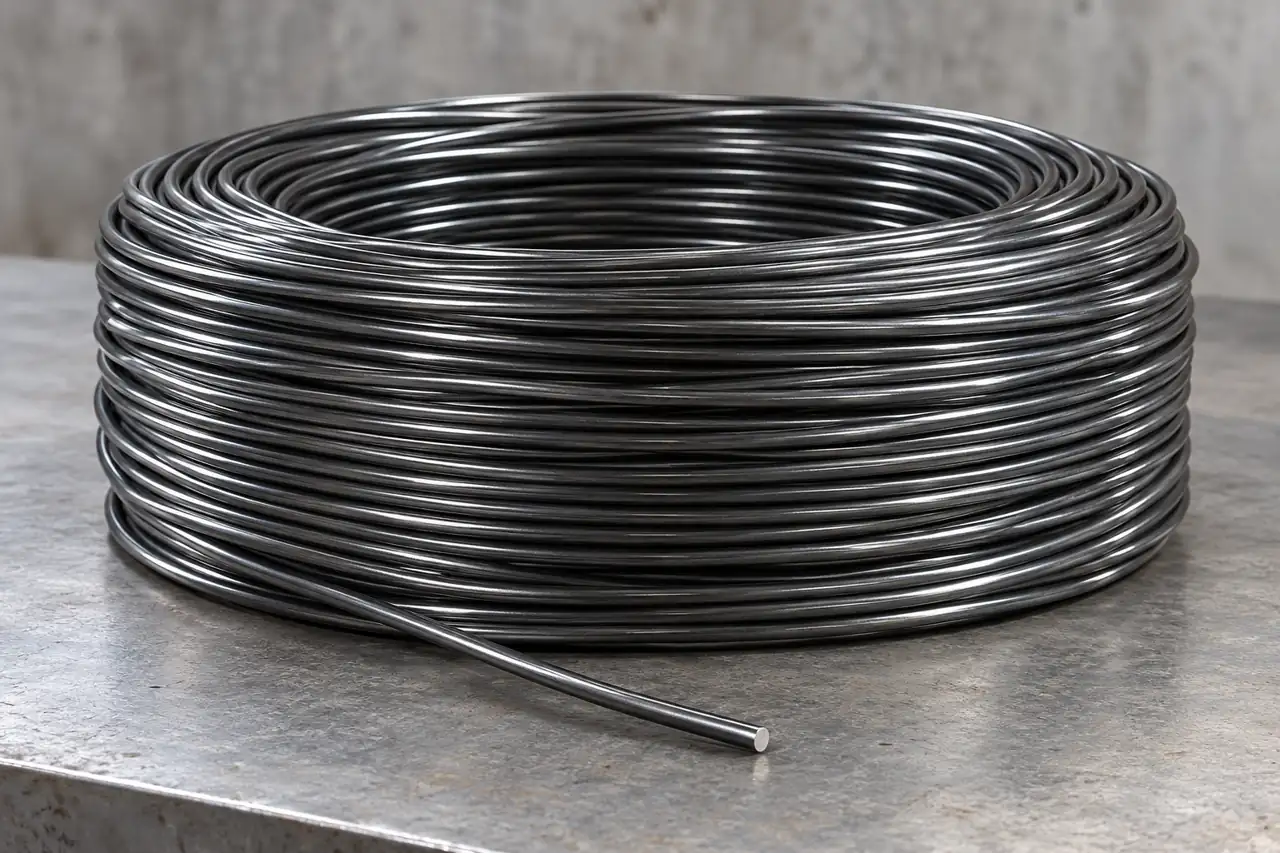
Define the prestressing purchase
For a precast producer buying single-wire prestressing steel, begin with the project-approved wire specification, anchorage and bond requirement rather than a high-tensile catalogue title. Use a defined prestressing-wire grade and delivery condition with the required strength, ductility, relaxation and surface geometry evidence. Relia manufactures steel wire and can review the listed PC-wire enquiry, but its mixed low-carbon and smooth-wire fields do not establish project-qualified prestressing supply. Send the concrete-component specification, exact wire dimensions and release criteria first; only a coherent product offer and required material/process validation can support acceptance for pretensioned production.
- Project specificationStart with the approved product requirements for the concrete component being made.
- Wire formIdentify single wire, required surface geometry and the actual anchorage arrangement.
- Release evidenceAgree material results and engineering approval before production use of trial coils.
Selection context and decision detail
| Buyer requirement | Relia response | Evidence or condition |
|---|---|---|
| Prestressing-wire identity | Review the listed single-wire enquiry | Project grade, condition and surface must be established |
| Manufacturing and evidence | Own wire operations and corresponding batch records | Specific PC treatment and qualification are not inferred |
| Production release | Discuss a defined candidate | Anchorage, relaxation and component requirements govern approval |
Confirmed wire operations do not establish a prestressing grade
Confirmed wire operations support a supply review but do not establish a qualified prestressing product.
Relia operates drawing, annealing and galvanizing in-house for steel wire. Incoming, in-process and final inspection are performed and corresponding batch records can be provided. For prestressing wire, the selected manufacturing and stress-relief route, material grade and actual inspection scope must be identified in the offer.
A general annealing capability is not proof of a low-relaxation treatment or a qualified PC product. Keep the project specification and required evidence beside the material reference so ordinary construction or nail-wire fields do not become a prestressing approval.
- ConfirmedWire manufacture and staged inspection
- Selected PC routeGrade, drawing and specified treatment
- Required evidenceProject material and applicable relaxation records
The catalogue contains a material and geometry gap
Resolve one grade, diameter and surface geometry before treating the catalogue reference as a PC-wire offer.
The HH01 entry has actual diameter choices of 1, 1.2, 1.5, 1.8, 2, 2.5 and 3 mm. The title's 0.3, 4, 6 and 7 mm requests are not separate selectable options. Its body also gives a 3–16 mm range and low-carbon SAE1006/1008/Q235 wording.
The title requests high-carbon PC and spiral-ribbed material while the body describes round, untwisted, smooth wire. Resolve one exact grade, size, surface and supplied condition. No listed tensile, relaxation or bond result closes that gap.
- Actual options1 / 1.2 / 1.5 / 1.8 / 2 / 2.5 / 3 mm
- Title requests0.3 / 4 / 6 / 7 mm; not actual options
- Material gapPC high-carbon title versus low-carbon body
- Surface gapSpiral-ribbed request versus smooth body
Product references for your shortlist
Open the product details, then discuss the exact specification for your application.
Single-wire prestressing enquiry
Use this reference to request a defined PC-wire offer for review against your concrete project specification.
Drawing and stress relief affect different prestressing characteristics
Drawing and specified stress relief address different characteristics; initial tensile strength does not establish relaxation behavior.
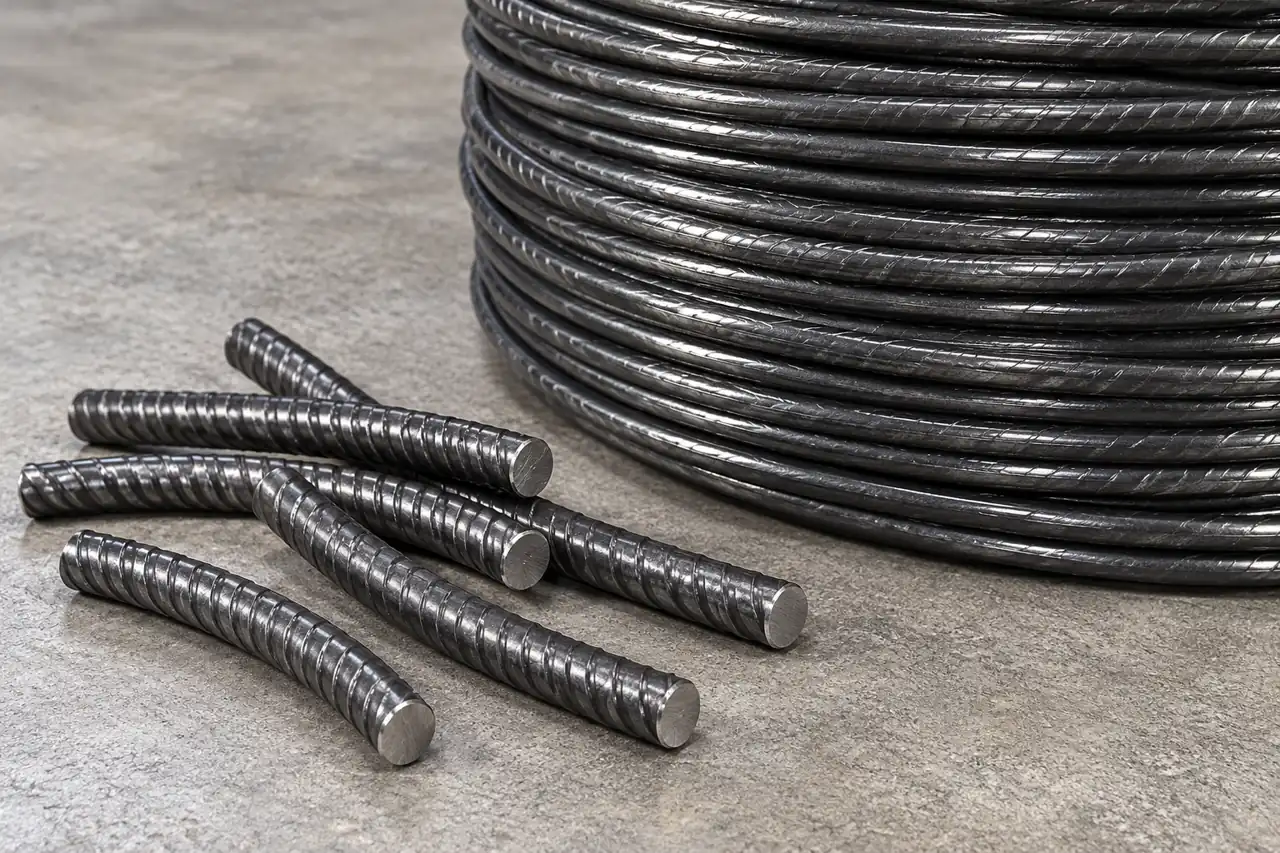
Different properties need different evidence
Cold drawing establishes section and changes the wire's deformation condition. A defined stress-relief or stabilization treatment addresses the supplied prestressing state; it should not be assumed from the grade name or a generic annealed description.
Relaxation is a loss of steel stress with time at a held strain, so an initial tensile value does not describe all retained-prestress behavior. Request the specified mechanical and relaxation evidence for the selected wire and treatment. The ribbed-wire illustration shows a possible requirement to define, not the smooth catalogue item proven to meet it.
- Drawing conditionConnect the selected wire section and supplied deformation condition to material records.
- Specified treatmentIdentify the stress-relief or stabilization route required by the selected product.
- Relaxation behaviorRequest applicable time-dependent evidence rather than substituting an initial tensile result.
Surface geometry must match bond and anchorage requirements
Single wire, ribbed wire and strand need their own project requirements and compatible anchorage.
Single round wire, spiral-ribbed wire and a multiwire strand are different products. Their outside size does not establish equal metallic area, bond behavior or compatible anchorage. Use the concrete design and approved production method to identify the required surface and end/anchoring condition.
ASTM A421/A421M concerns stress-relieved round prestressing wire with defined anchorage-related types; low-relaxation requirements apply when specified. That scope is a selection reference, not evidence that this catalogue entry meets it. A ribbed product needs the appropriate governing requirement rather than an automatic standard transfer.
- FormSingle wire, ribbed wire or strand
- Project basisApplicable product and anchorage specification
- Material evidenceDimensions, treatment and required mechanics
- Process approvalEngineering-controlled pretensioning release
A pretensioned component needs more than a coil photograph
Agree material evidence first, then evaluate the component through the approved stressing and release procedure.
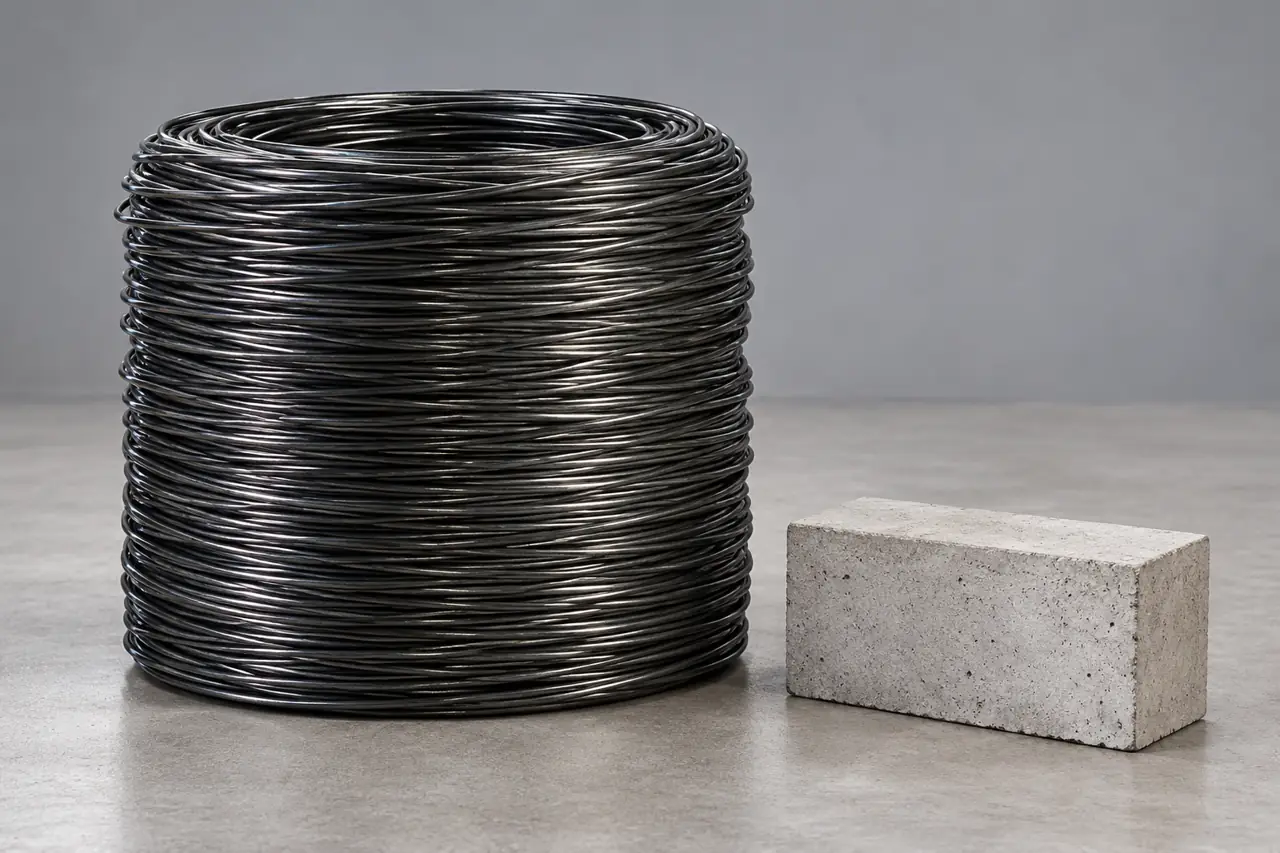
Material review precedes component approval
Agree the wire identity, dimensions and required material results before a component trial. The precast production team must then assess the approved stressing, anchoring, casting and release procedure under its engineering requirements. Wire procurement does not supply the missing design stress, concrete release strength or allowable transfer result.
The pictured coil and concrete block are AI-assisted objects illustrating the material/application relationship. They are not a documented prestressing trial or proof of bond, anchorage or component load capacity.
- Identify the coilMatch wire grade, dimensions and records to the material proposed for trial.
- Run approved procedureUse the engineering-controlled stressing, anchoring, casting and release procedure for that component.
- Review component resultEvaluate the required transfer and component evidence under the project acceptance rules.
Acceptance evidence should distinguish strength and time-dependent behavior
Link dimensional, mechanical and applicable relaxation evidence to the actual delivered wire and coil.
Specify the required mechanical properties, dimensional basis, surface geometry and applicable relaxation evidence. Link the results to the represented material and delivered coil. Ask for the actual method and condition rather than treating a generic high-tensile field as a numerical result.
The project controls supplementary requirements and release. Our corresponding batch records can support the agreed wire review, while any required additional producer or independent testing must be identified in the selected offer. No specific test instrument or frequency is asserted here.
- IdentityGrade, surface and represented coil
- Strength/ductilityRequired method and supplied condition
- RelaxationApplicable requirement and test basis
- DispositionProject technical approval
Handling should preserve the qualified wire surface
Protect the surface and retain coil identity through receipt, unloading and controlled payout.
Kinks, corrosion and local damage can undermine an otherwise acceptable wire. Agree coil support, protection, unloading and payout requirements with the approved process. Keep coil identity available after straps or outer packing are removed.
Inspect receipt condition before material is issued to the stressing operation. Preserve damage observations separately from the material-record review so a transit defect is not overlooked because the chemistry report matches. Pack quantity and schedule still require a current product-specific quotation.
- SurfaceAvoid local damage and corrosion
- CoilSupport and protect the actual pack
- PayoffUse the approved handling method
- ReceiptReconcile condition and identity
Repeat supply follows the project-approved reference
Repeat orders must preserve the accepted treatment, surface geometry and engineering approval scope.
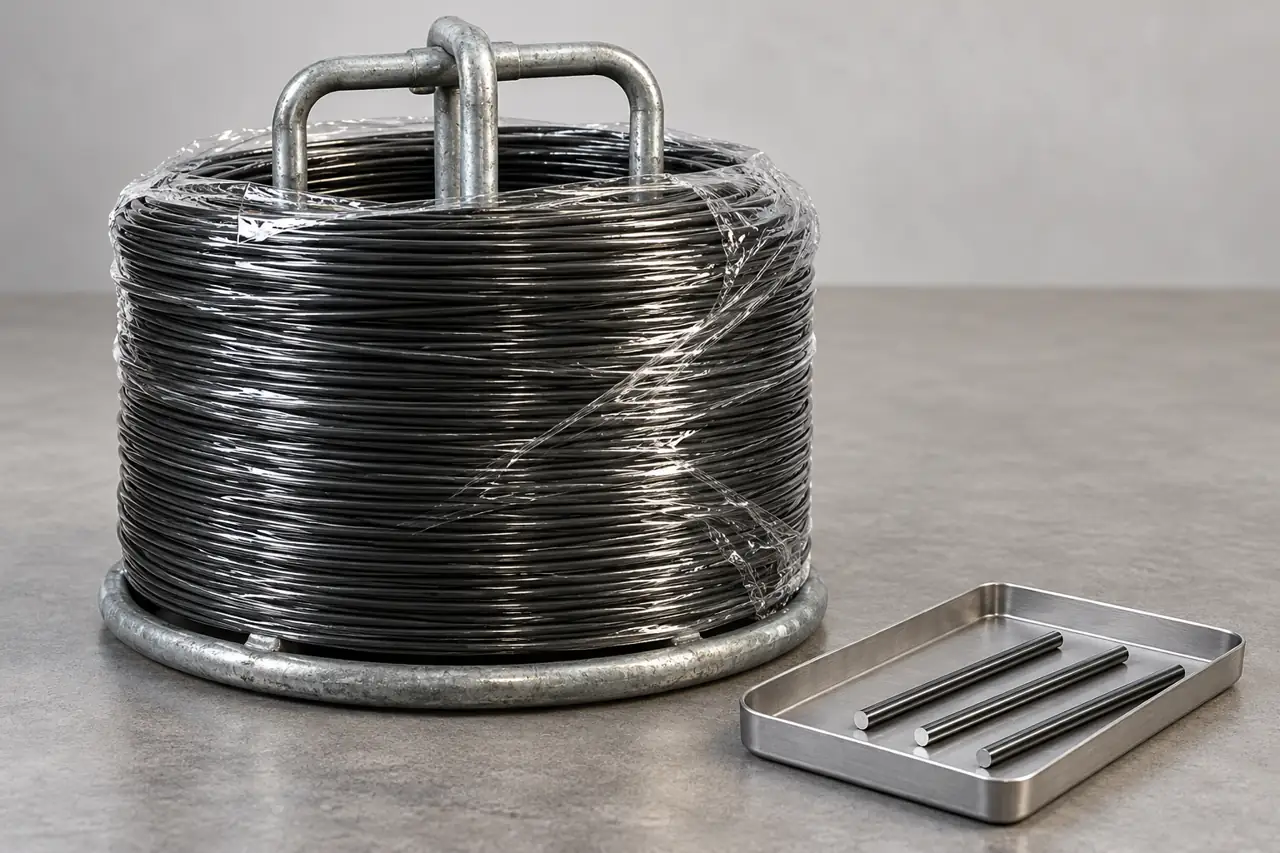
Keep the approved reference intact
Retain the accepted grade, treatment state, dimensions, surface geometry and applicable batch evidence with the coil reference. Review a proposed substitution or route change with the responsible engineer before it enters production. Equal nominal diameter cannot authorize a change between smooth wire, ribbed wire and strand.
The retained samples and protected coil are AI-assisted handling illustrations. They do not demonstrate a tested low-relaxation product. Any component or process qualification remains tied to the conditions and material actually assessed.
- Material identityPreserve the accepted grade and treatment condition with the delivered coil reference.
- Surface geometryCompare the specified wire form before accepting any proposed nominal-size equivalent.
- Change reviewRefer substitutions to the responsible engineer before they enter pretensioned production.
Prepare the prestressing wire brief
Send the governing specification, wire form and required evidence before requesting a representative trial coil.
Send the approved project requirement and anchorage details so we can review a defined wire enquiry and the evidence your technical team needs.
Qingdao Relia Industries Co., Ltd.
Contact address: Shuyuan Road, Qingdao, Shandong, China
- Governing wire and project specification
- Exact diameter and surface geometry
- Required mechanical and relaxation evidence
- Anchorage and coil handling requirements
- Trial quantity and destination
Enquiry scope and supporting detail
Send the governing product/project specification, single-wire form, exact diameter and surface geometry, required delivery condition and anchorage method. Include the mechanical and relaxation requirements, required records, coil handling envelope and intended component route. Identify every conflict between that specification and the catalogue reference.
Request a defined supply offer for technical review before any pretensioning use. Add trial quantity, packing and destination; product suitability, additional evidence, samples and current commercial terms must be confirmed for the selected material.
- Product briefSingle wire · standard · surface
- Technical briefMechanical and relaxation requirements
- Supply briefCoils · trial quantity · records