

Grinding Ball Sourcing for Wet Mineral-Processing Mills
Choose wet-mill grinding balls by the circuit’s combined impact, abrasion and slurry conditions. This guide helps you compare a defined cast or forged grade, select physical diameters and plan a representative trial. Track accepted grind, additions and breakage together so the result explains useful media consumption rather than hardness or purchase price alone.
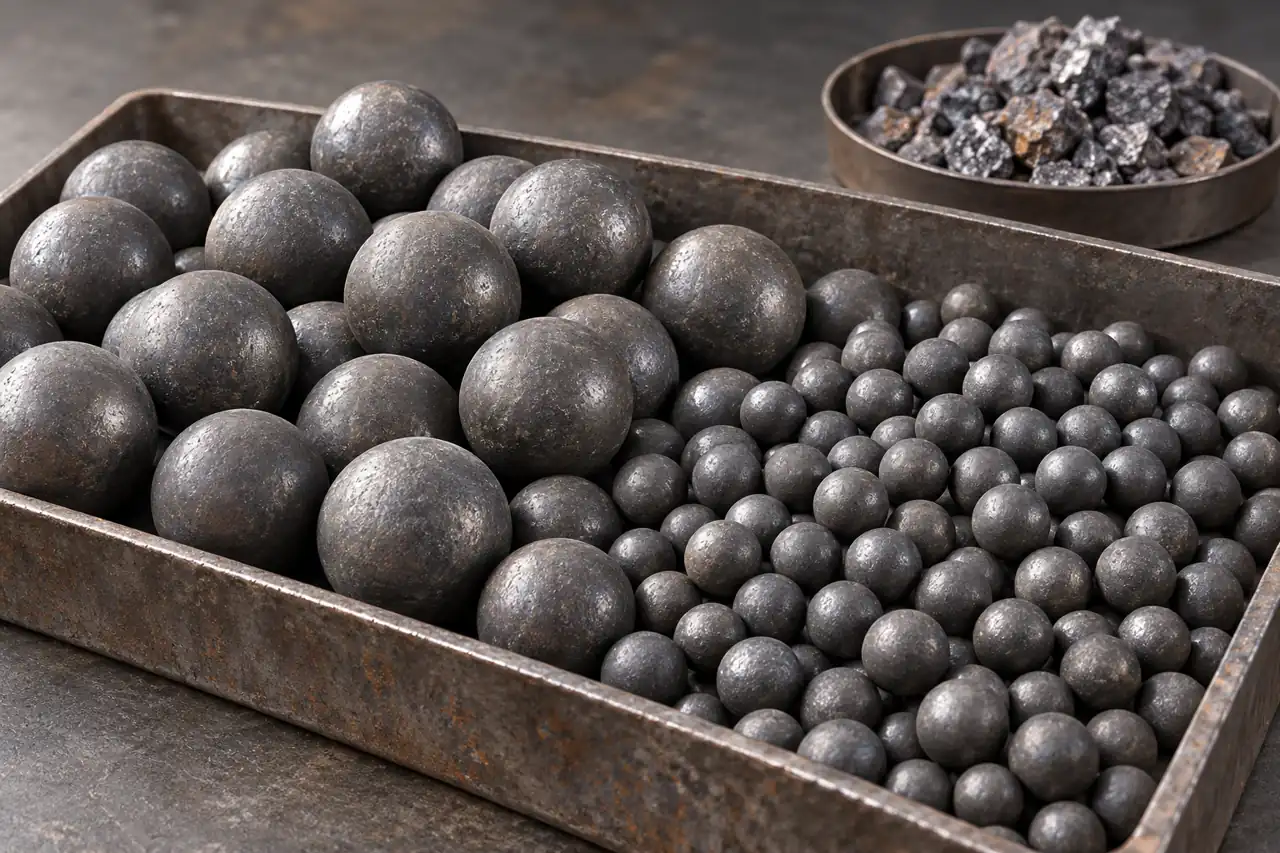
Choose media around the wet circuit
For a wet mineral-processing mill, compare a defined forged or cast grinding-ball grade against the circuit's impact, abrasion and slurry conditions. Choose physical diameter mix, material chemistry and heat-treated condition together; an ore name or hardness range alone cannot predict useful media life. Relia supplies the listed forged/cast candidates and can discuss their actual configurations and batch evidence. Start with feed size, mill and liner, water/slurry chemistry and current ball-loss pattern. Run a representative comparison that tracks accepted grind, breakage, media additions and downstream requirements before changing the charge or promising a throughput or recovery improvement.
- Circuit dutyDescribe feed, slurry and mill conditions that combine impact, abrasion and corrosion.
- Selected ballDefine chemistry, manufacturing route, treatment and the physical diameter population together.
- Useful comparisonTrack accepted grind and media consumption under a recorded, representative operating trial.
Selection context and decision detail
| Buyer requirement | Relia response | Evidence or condition |
|---|---|---|
| Wet-mill candidate | Discuss actual forged/cast ball entries | Circuit, chemistry, diameter and condition required |
| Supply identity | Identify the selected grinding-ball producer/route | Cast-shot manufacture is not a mill-ball route claim |
| Evidence and trial | Corresponding batch records can be provided | Useful grind, breakage and additions compared under recorded conditions |
Grinding-ball supply does not inherit the cast-shot route
Identify the grinding-ball producer and route separately from the confirmed cast-steel shot and grit manufacturing operations.
Relia manufactures steel wire and cast steel shot/grit, with confirmed cast-abrasive stages in-house. Grinding balls are separate offered products; identify their actual producer, casting or forging route and heat-treated condition in the supply offer. Cast-shot manufacture does not establish every mill-ball process.
Incoming, in-process and final inspection are performed and corresponding batch records can be provided. Agree the relevant chemistry, size, hardness and physical-condition evidence for the selected mill-ball lot, with any additional test responsibilities identified.
- Own scopeSteel wire and cast steel shot/grit
- Mill-ball offerProducer, casting/forging and treatment
- EvidenceRelevant corresponding batch records
Select the material-diameter entry rather than a grit label
Choose a coherent material-and-diameter entry rather than interpreting the separate grit label as physical ball size.
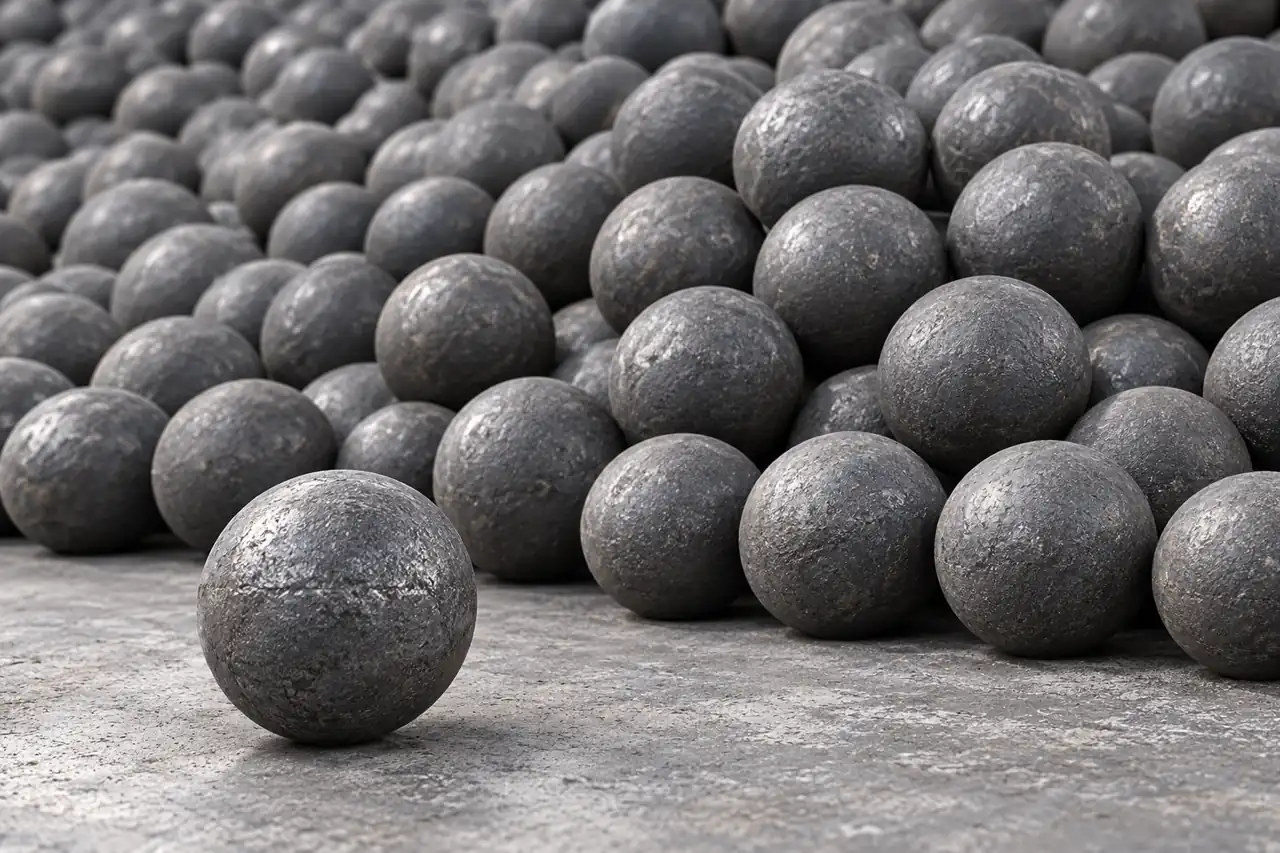
Select one coherent material-and-size candidate
The forged-ball enquiry has mixed specifications: cast Cr10% models and forged C45 or B2 entries at named diameters. Its separate grit numbers are not automatic physical ball diameters. The 53–64 HRC body range also needs actual lot and location evidence.
The cast-ball reference contains Cr2–3%, Cr10%, C45, B2 and B3 model/diameter alternatives. Select one coherent material and route. A cast or forged word in the title cannot describe every option in the menu.
- Forged candidateChoose an actual forged grade and diameter with its treatment and lot evidence.
- Cast candidateSelect an identified cast alloy and physical size rather than a mixed-family label.
- Diameter populationRecord the charge-size mix without converting a separate grit label into ball dimensions.
Product references for your shortlist
Open the product details, then discuss the exact specification for your application.
Forged grinding-ball enquiry
A reference for selecting an actual forged grade and physical diameter for comparison in the stated wet-mill circuit.
Cast grinding-ball enquiry
A cast-media reference for a defined alloy, treatment and diameter population evaluated against the actual ore and slurry duty.
Impact, abrasion and corrosion act together in a wet charge
Consider impact, abrasion and slurry corrosion together instead of treating maximum hardness as a universal selection rule.
Balls experience impacts and abrasive contacts while immersed in the circuit slurry. Electrochemical conditions and mineral contacts can contribute to loss alongside mechanical wear. Slurry solids, chemistry and rheology therefore belong in the comparison, not just the nominal ore type.
A hard material may resist one wear mechanism yet respond differently to repeated impact or fracture. Use chemistry, microstructure/condition and hardness with the actual failure observations. Neither the highest hardness nor a chromium label is a universal best-ball rule.
- Impact damageReview repeated contacts with observations of fracture, spalling and the actual charge condition.
- Abrasive wearRelate gradual loss to ore contacts rather than judging hardness in isolation.
- Slurry corrosionInclude slurry chemistry, solids and mineral interactions when comparing the observed combined loss.
Forging and casting create different material histories
Review the selected forging or casting history with relevant condition, defect and hardness-location evidence.
A representative forged route deforms heated steel stock, followed by the selected thermal treatment; a cast route solidifies the chosen alloy and uses its specified treatment. These histories influence structure, defects and the material carrying impact and wear. They are generic mechanism descriptions until the actual producer's route is identified.
Request relevant manufacturing and batch evidence for the selected entry. Define where hardness is assessed and which fracture, spalling or dimensional limits apply. A single surface value does not describe every aspect of a ball's internal condition.
- Forged routeDeformed stock and selected heat treatment
- Cast routeSolidified alloy and selected treatment
- Condition evidenceComposition, structure and hardness basis
- Physical evidenceSize, defects and failure acceptance
A useful trial controls feed and charge composition
Keep feed, grind target and charge composition comparable, including the candidate fraction added to an existing charge.
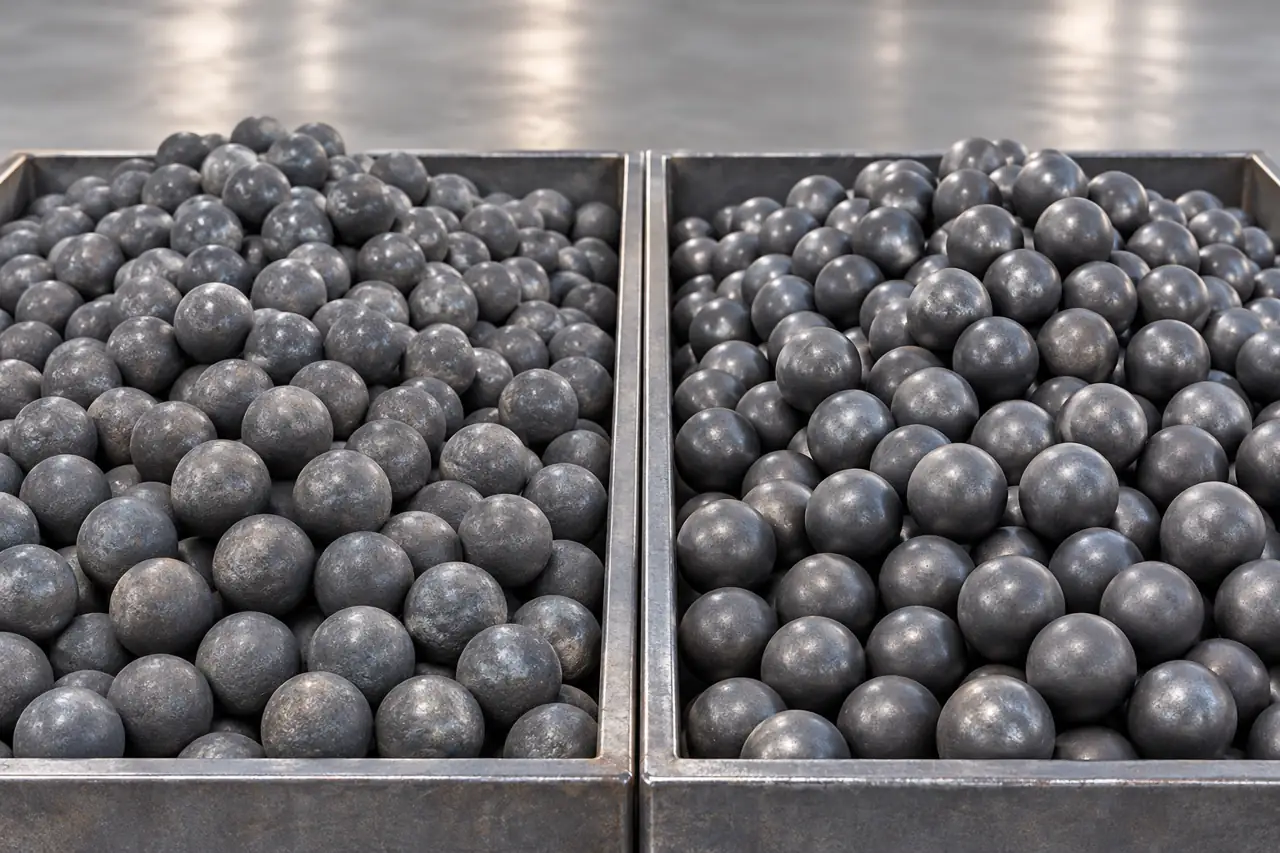
Keep the plant comparison representative
Compare candidates under similar ore feed, grind target, mill/liner condition and operating route. Record charge-size mix and the fraction of candidate material in an existing charge. A small addition to a mature charge is not a pure-candidate test.
The two trays illustrate separate media candidates, not proven forged/cast grades. Record accepted product size, additions, chipped or broken balls and relevant process consequences. If the circuit includes downstream recovery, assess its required outcomes rather than claiming improvement from abrasive identity alone.
- Comparable dutyHold feed and grind target comparable while recording mill and liner condition.
- Charge compositionState the candidate proportion in the existing charge and the actual diameter mix.
- Observed resultRecord accepted product size, additions and chipped or broken media during the trial.
Media consumption needs an inventory and output basis
Reconcile inventory and additions against agreed output, separating broken fragments from gradual diameter loss.
State the start and finish inventory method and reconcile additions, removed fragments and other losses where practical. Express consumption against the agreed processed output and grind criterion. A shorter observation or a different ore can make an apparent saving misleading.
Keep fracture/spalling distinct from gradual diameter loss. Laboratory impact or abrasion tests can help characterize a material, but they do not translate directly into tonnes processed or plant life without a representative operating comparison.
- InventoryClear start/end basis
- AdditionsActual media introduced
- Useful outputAccepted grind and processed quantity
- Loss typeFragments versus gradual wear
Receiving records should preserve route and diameter identity
Check route, diameter and lot records before charging, retaining unused samples separately from recovered media.
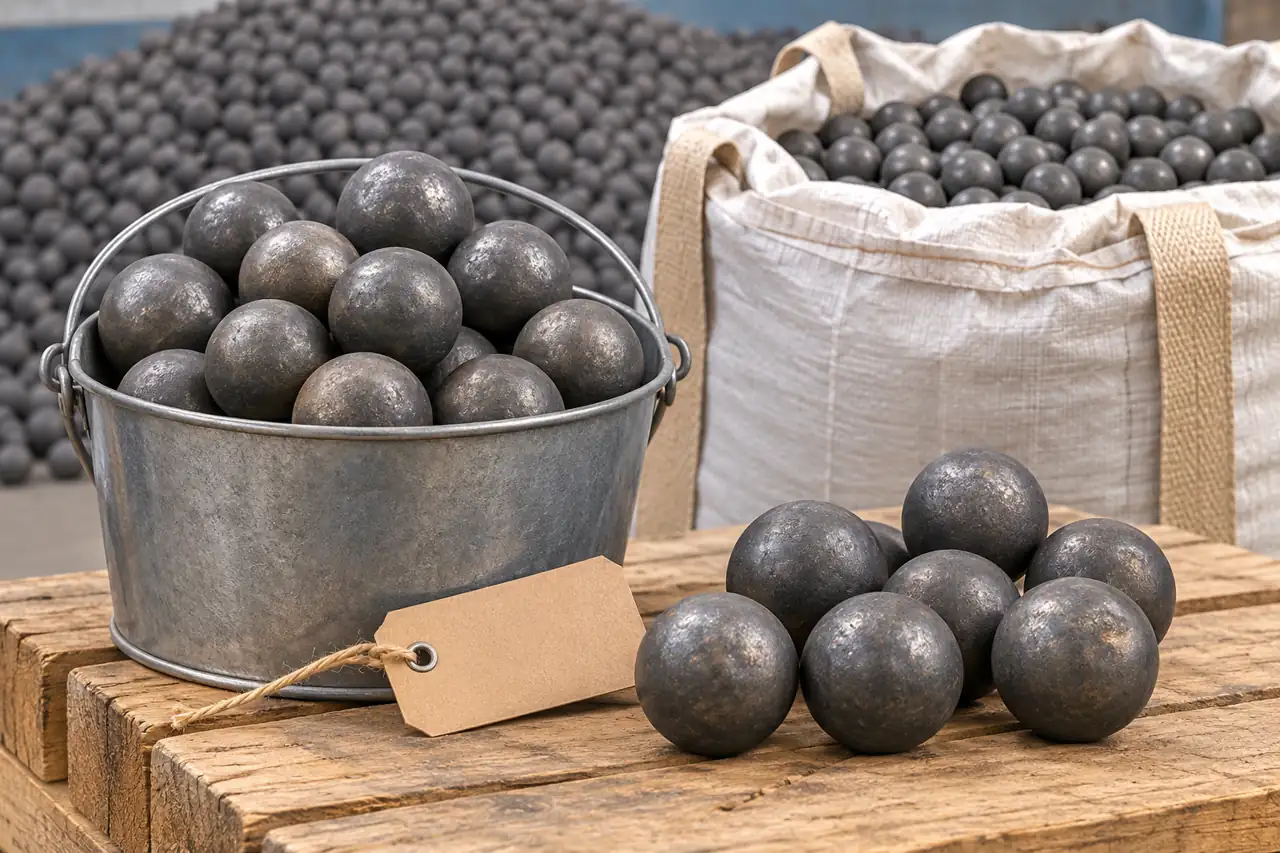
Verify identity before the balls enter the mill
Match the supplied material-diameter entry with lot records, actual ball sizes and pack identification before adding it to the mill. Retain unused samples separately from recovered media. The pictured pail, bags and blank tag are AI-assisted supply illustrations.
Agree pack mass, protection and handling for the receiving system. A one-tonne bag field or generic ISO/JIS/ASTM list does not establish every shipment condition or certification. Request only the actual documents and acceptance scope needed for the order.
- Selected entryMatch the material and physical diameter with the accepted supply specification.
- Represented lotConnect actual sizes and pack identity with the relevant chemistry and condition records.
- Separate samplesRetain unused supply separately from recovered balls so later loss investigations remain specific.
Investigate the loss pattern before changing alloy
Investigate fragments, uniform wear and grind changes with circuit history before changing alloy or several operating conditions.
A rise in fragments calls for a different review from uniform diameter loss or a changed grind. Compare media identity and condition with feed, charge, slurry and liner history. Retain the failed balls and the trial records so the cause is not reduced to purchase price or hardness alone.
For repeat supply, preserve the approved chemistry/route, thermal condition, diameter mix and batch evidence. Review a source or circuit change before assuming that the old approval remains applicable.
- ObserveLoss pattern and grind change
- RetainBalls, samples and circuit record
- CompareMedia and process causes
- ApproveDefined supply and operating baseline
Describe the circuit and current media loss
Send circuit conditions and current loss evidence so a selected ball proposal and trial can address the real decision.
Share the mill duty and current loss pattern so we can discuss a selected ball specification and an operating comparison based on accepted grinding output.
Qingdao Relia Industries Co., Ltd.
Contact address: Shuyuan Road, Qingdao, Shandong, China
- Mill liner feed and product sizes
- Ore slurry and operating conditions
- Current ball grade and diameter mix
- Inventory additions and breakage evidence
- Trial objective and required quantity
Enquiry scope and supporting detail
Send mill type, liner, feed and product sizes, ore/slurry conditions, current ball chemistry/route and diameter mix. Include additions, inventory method, observed fracture/spalling and the performance decision your trial must resolve. State the required material and physical acceptance records.
Request a selected forged or cast model and defined trial supply, with packing, quantity and destination. We can discuss the actual mill-ball offer and evidence responsibilities; no universal wear life, throughput or recovery result is established by the catalogue.
- MillDuty, ore and operating context
- MediaMake-up sizes, baseline and inspection needs
- TrialQuantity, evaluation method and destination