

Open Blasting Abrasive Sourcing for Shipyard Projects
Choose an open-blasting abrasive against the coating project and the way the shipyard will handle the job. This guide compares garnet and copper-slag candidates through required surface preparation, contamination checks and site controls. It helps you evaluate accepted prepared area with cleanup, waste and rework included, then define a traceable project supply.
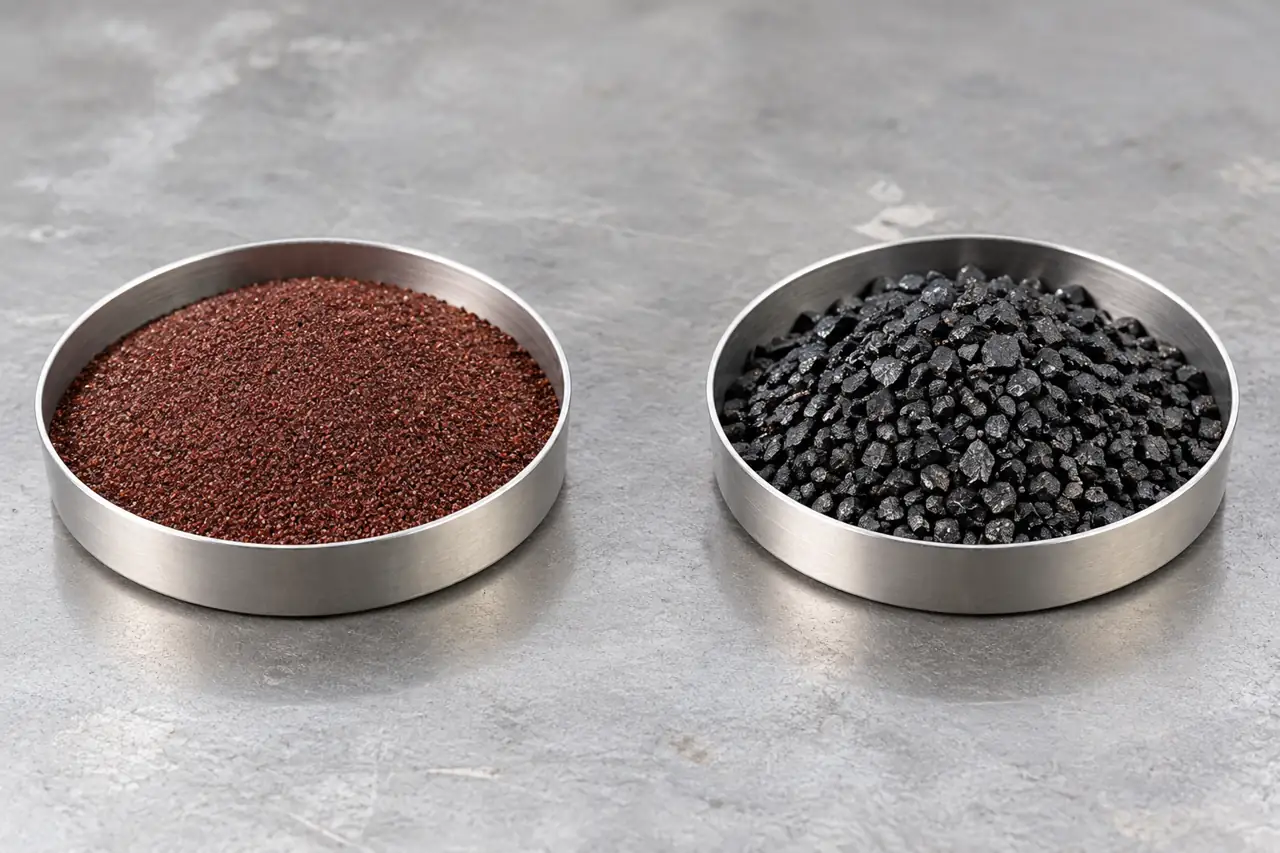
Shortlist by project need rather than mineral name
For a shipyard contractor buying expendable open-blasting abrasive, compare defined garnet or copper-slag grades against the coating specification, equipment, surface profile and site handling route. Material price alone does not capture dust, cleanup, waste, rework or accepted prepared area. Relia supplies the listed mineral-abrasive candidates and can discuss actual source and batch evidence. Start with the steel/coating condition, project surface limits, nozzle/air system and containment/recovery arrangement. Qualify the selected abrasive on representative steel, checking cleanliness and profile separately from contamination and site requirements before planning routine project consumption.
- Garnet candidateDefine the selected source and distribution against the required steel preparation task.
- Copper-slag candidateReview its own source and material evidence against the same project criteria.
- Project comparisonKeep surface requirements, equipment envelope and site handling conditions comparable for both.
Selection context and decision detail
| Buyer requirement | Relia response | Evidence or condition |
|---|---|---|
| Project surface preparation | Discuss garnet or copper-slag candidates | Coating criteria and equipment envelope govern choice |
| Defined mineral source | Identify actual producer and grade | No mineral self-manufacture inferred from cast-shot scope |
| Batch and site evidence | Corresponding inspection records available | Surface, contamination and job controls evaluated separately |
Mineral supply needs a defined source and record scope
Identify the mineral source and represented records separately from the confirmed manufacture of cast steel abrasives.
Relia manufactures steel wire and cast steel shot/grit; garnet and copper slag are separately sourced mineral supply items. Identify the actual producer, origin/material scope and selected distribution in the technical offer. Our cast-steel production stages do not establish mineral refining or slag processing in-house.
Incoming, process and final inspection are performed and corresponding batch records can be provided. Agree the relevant particle, material and contaminant evidence for the selected lot, together with any required site or independent assessment before project approval.
- SourceActual producer and material scope
- GradeSelected distribution and condition
- EvidenceCorresponding batch and required site records
The coating requirement drives the initial shortlist
Use the coating requirement to shortlist material and grading within the permitted equipment envelope.
Select the blast-cleanliness criterion and profile parameter/range from the coating/project specification. Then shortlist material and grading within the equipment's permitted envelope. A coarse, aggressive grain can increase texture or damage without solving a salt or oil problem.
The listed garnet and copper-slag references provide candidate identities, not one universally approved shipyard grade. The exact grading, particle condition and source evidence belong in the technical offer. Keep the material-specific requirements separate rather than substituting by colour or the generic word mineral.
- GarnetSelected source and grade proposal
- Copper slagSeparate material proposal
- GradingActual size basis and evidence
- ComparisonOne agreed project acceptance plan
Product references for your shortlist
Open the product details, then discuss the exact specification for your application.
Garnet blasting-grade enquiry
A mineral candidate to define by actual source and grading against the shipyard’s coating-preparation and handling requirements.
Copper-slag blasting-grit enquiry
A separate mineral candidate for comparing required surface preparation and site handling on the same project basis.
Source processing affects the particles arriving at the nozzle
Request source and particle evidence because processing and handling affect distribution, fines and delivery condition.
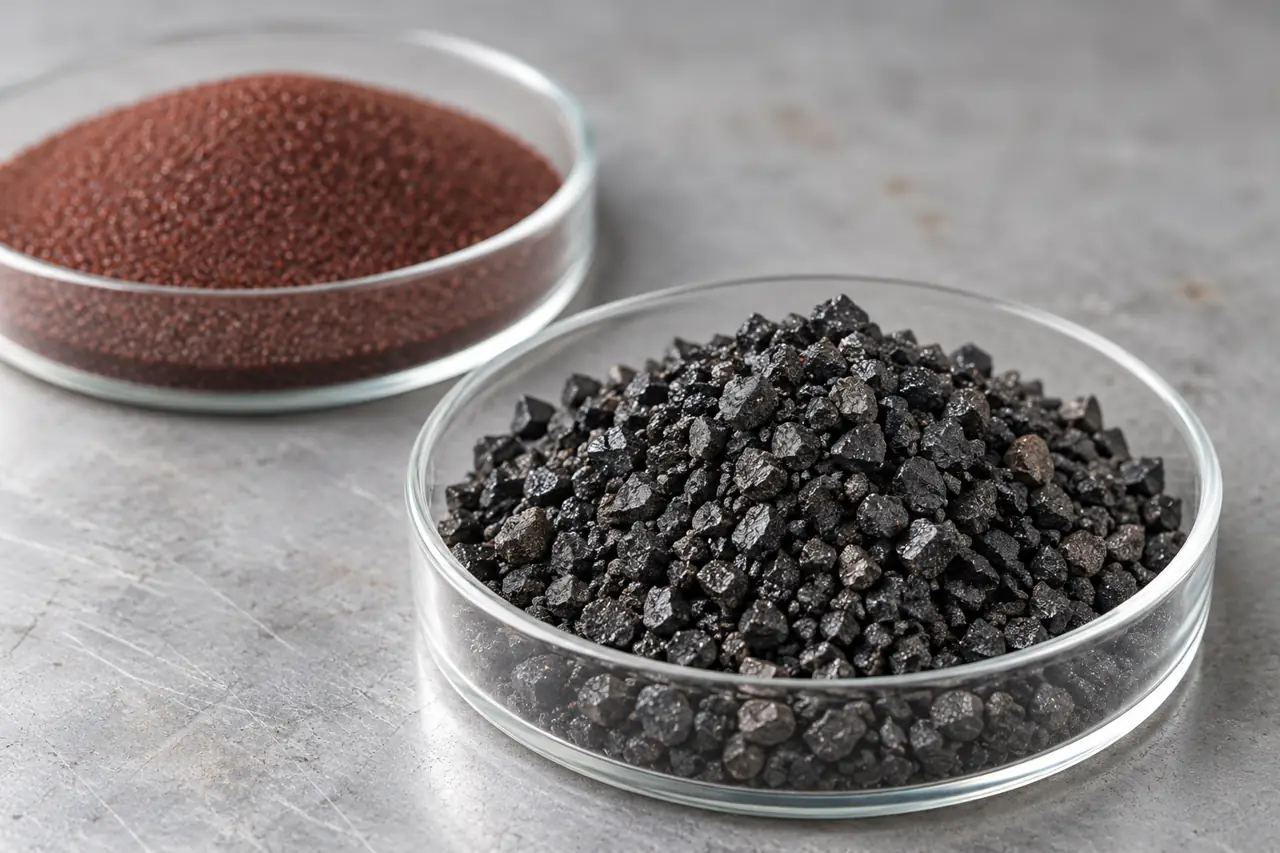
Connect source processing with delivered particles
A representative mineral-abrasive preparation route selects material, removes unwanted fractions, sizes it and controls delivery condition. Crushing, screening and handling affect angularity, fines and contamination. Copper refinery slag and garnet begin from different material sources, so their evidence and product frameworks should follow that identity.
Inspect actual distribution and particle condition, with required source chemistry or contaminant checks. Broad density, hardness or size fields do not replace measurements on the selected supply. Request the corresponding batch scope and relevant methods without assuming a named test instrument.
- Material sourceIdentify the actual mineral or refinery-slag supply and required source evidence.
- Particle preparationReview selected sizing and condition after processing and handling of the abrasive.
- Lot conditionConfirm distribution, fines and relevant contaminant checks for the proposed project supply.
Precleaning and local steel preparation remain necessary
Plan precleaning, local preparation and post-blast clearing alongside the abrasive rather than relying on profile alone.
Oil, salts, weld condition and edge geometry can require preparation before overall blasting. A cleaner-looking or deeper-profile surface does not compensate for contaminants that the chosen route leaves or spreads. Resolve required weld/edge and inaccessible-area work within the project plan.
After blasting, remove loose abrasive and dust and protect the accepted steel before coating. The contractor's environmental, transfer and inspection requirements remain part of the process. No abrasive identity alone establishes a universal coating-ready surface.
- PrecleanOil and soluble contamination
- Local preparationWelds, edges and inaccessible areas
- Blast/clearRecorded process and loose-residue removal
- ProtectRequired inspection and transfer
Trial panels should represent the project steel
Assess cleanliness, profile, dust and soluble contamination separately on representative project steel.
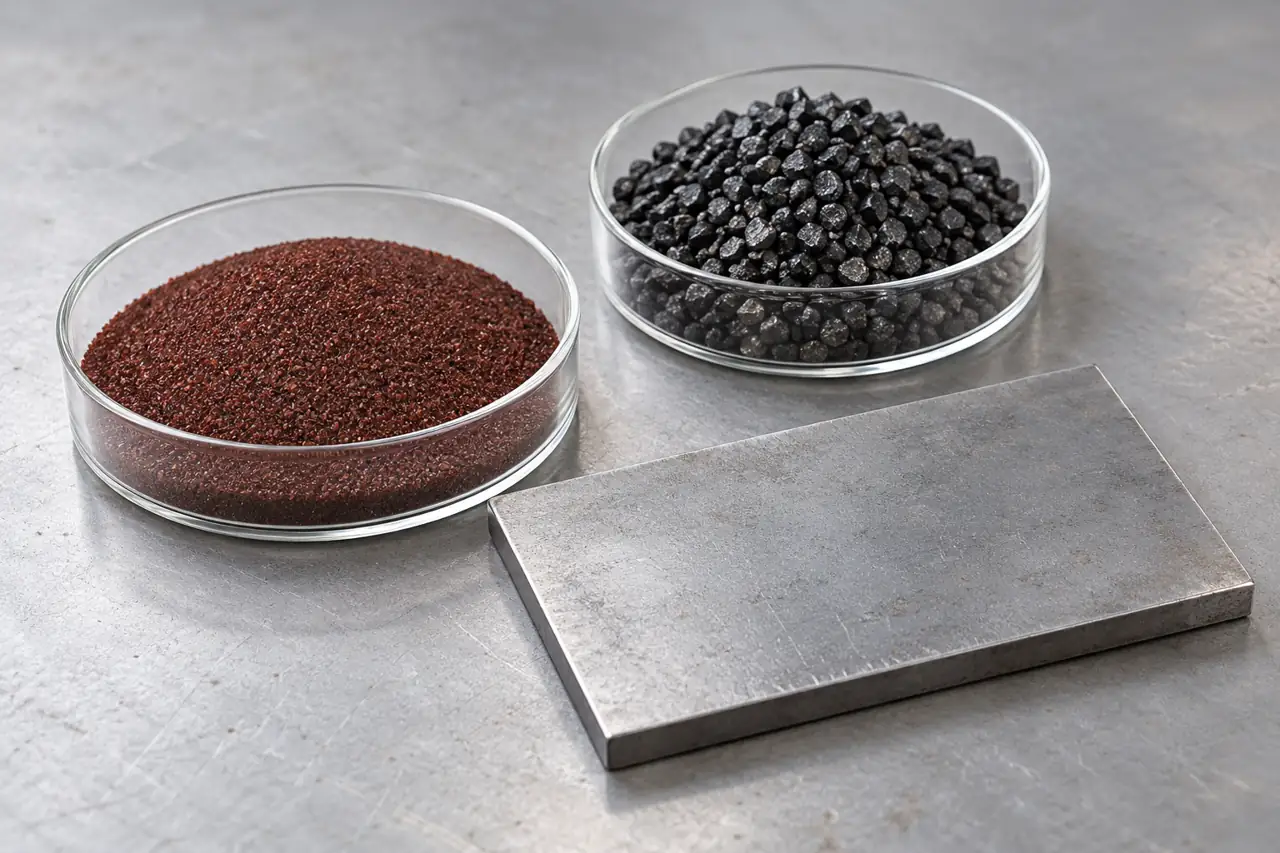
Inspect separate characteristics on representative steel
Use comparable starting rust/coating condition, geometry, nozzle conditions and acceptance methods. Record abrasive identity, feed, exposure and relevant equipment state. Assess the specified visual preparation, profile, dust and soluble contamination as separate characteristics.
The mineral dishes and plain steel plate are AI-assisted trial-planning references, not a documented prepared panel. A passing profile does not establish salt or dust conformity. Use the actual coating/project criteria and retain the inspected steel and corresponding batch references.
- Prepared surfaceAssess the specified visual preparation and profile with the starting condition recorded.
- Surface residuesCheck dust and soluble contamination separately from the measured surface texture.
- Trial recordRetain abrasive identity and nozzle conditions with the actual inspected steel.
Open work changes the cost and handling comparison
Include containment, cleanup and waste handling when comparing open-work effort and accepted prepared area.
Open blasting may leave limited opportunity to recover the charge, so abrasive use, cleanup, containment and waste handling matter alongside cleaning speed. Evaluate the actual job plan and site controls rather than adopting a generic reuse count.
Define the required source/SDS and relevant exposure or waste evidence through the responsible site team. An MSDS field is not proof of unrestricted material use or a disposal classification. Keep selected abrasive, removed coating and the resulting mixed waste as different subjects.
- Supplied abrasiveActual source and SDS/test scope
- Removed materialOld coating and surface residues
- Mixed wasteSite-specific assessment
- CostCleanup and accepted project output
Dry storage and lot separation protect the comparison
Keep packs protected, grades separated and lot identity connected as abrasive moves into the work area.
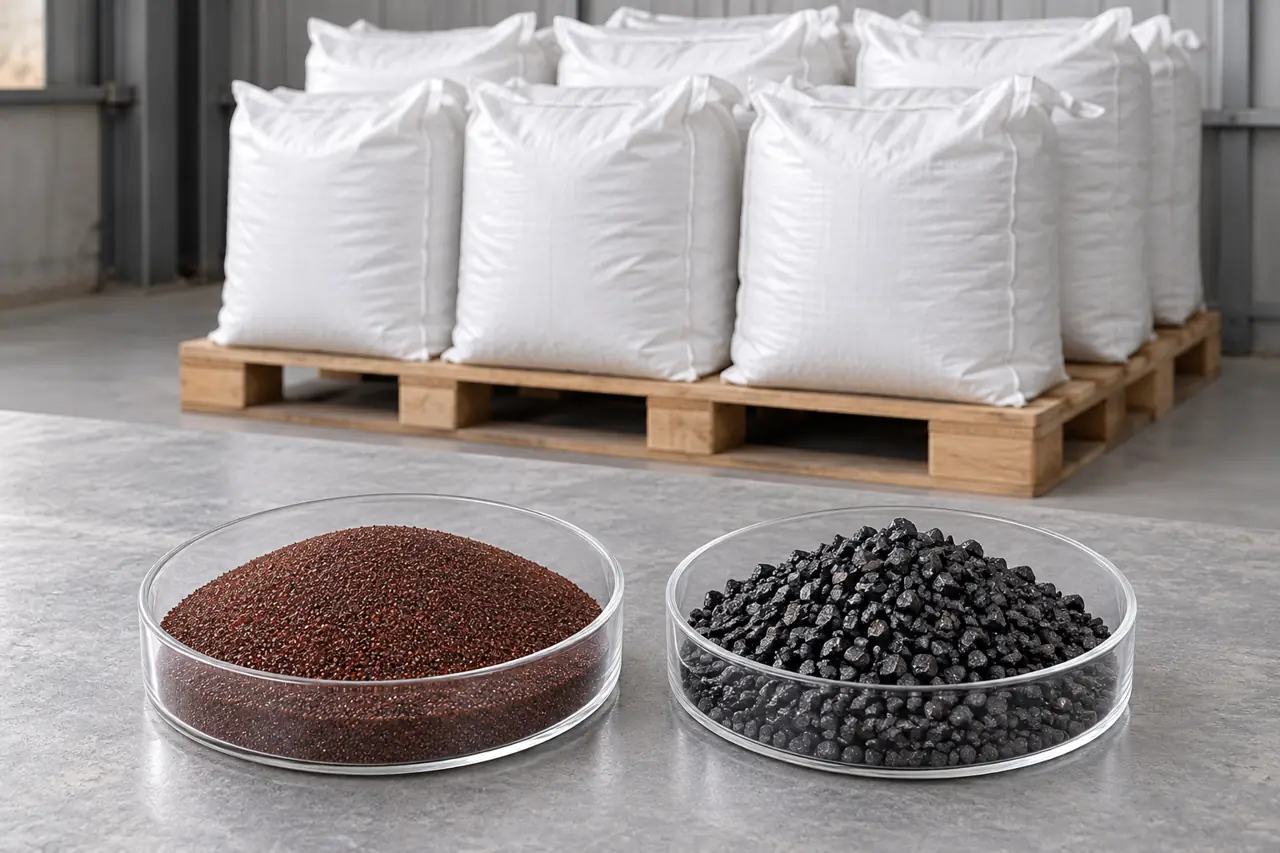
Preserve material condition at the work area
Keep bulk packs closed and protected from moisture, debris and incompatible grades. Wet or contaminated material can affect feed and the prepared surface. Preserve lot identity as packs move to the blast area and reconcile the quantity issued.
The staged plain bags and samples are AI-assisted supply illustrations, not an actual project shipment. Agree net pack, handling and identification with the actual site and offer. A broad catalogue range does not establish a confirmed stock quantity or delivery schedule.
- Closed storageProtect unopened packs from moisture, debris and mixing with incompatible grades.
- Issued identityKeep the lot reference connected as packs move to the blast area.
- Quantity recordReconcile issued quantity with the relevant project work and supply records.
Approval follows accepted prepared area and actual records
Approve and replenish against accepted surface results and actual project effort under comparable starting conditions.
Compare consumption, treatment time, rework and relevant cleanup/waste effort against steel accepted to the project specification. Keep starting condition and surface criteria comparable. A low purchase price can be offset by a changed profile or contamination burden.
For replenishment, retain source, material, grading and contaminant limits with the approved trial. Review changes before the new lot enters the project. Investigate field deviations with samples and nozzle/site records instead of attributing every coating failure to abrasive hardness.
- ApprovedSource, grade and surface limits
- MeasureAccepted area and total relevant effort
- RetainPanels, samples and lot records
- ReviewSupply or job-condition change
Define the open-blasting project and trial
Send the coating specification, equipment limits and site plan so the proposed grade can be trialled meaningfully.
Share the coating specification and the way the work will be contained and cleared. We can review a defined abrasive source and the evidence needed for the project trial.
Qingdao Relia Industries Co., Ltd.
Contact address: Shuyuan Road, Qingdao, Shandong, China
- Steel condition and coating specification
- Cleanliness profile and contaminant limits
- Nozzle and equipment media envelope
- Containment recovery and waste plan
- Prepared area and delivery sequence
Enquiry scope and supporting detail
Send steel condition, coating requirements, specified cleanliness/profile and contaminant limits, nozzle/equipment envelope and expected prepared area. Add containment, recovery and waste-handling arrangements and the documents the site needs to approve material.
Request a defined garnet or copper-slag grade, actual source and corresponding batch evidence for a representative trial. Include quantity, pack/unloading needs and destination; project suitability and commercial schedule are confirmed against the selected offer.
- ProjectPreparation and coating criteria
- MaterialPermitted candidate and grading
- TrialSubstrate and acceptance method
- DeliveryQuantity, packing and sequence