

Alumina Grinding Balls for Ceramics and Fine Powders
Choose alumina grinding balls by the powder quality you need, then match purity and ball sizes to your mill. This guide helps ceramic and fine-powder buyers compare contamination, wear and useful grinding together, build a fair sample trial, and turn the accepted result into a clear repeat-order specification.
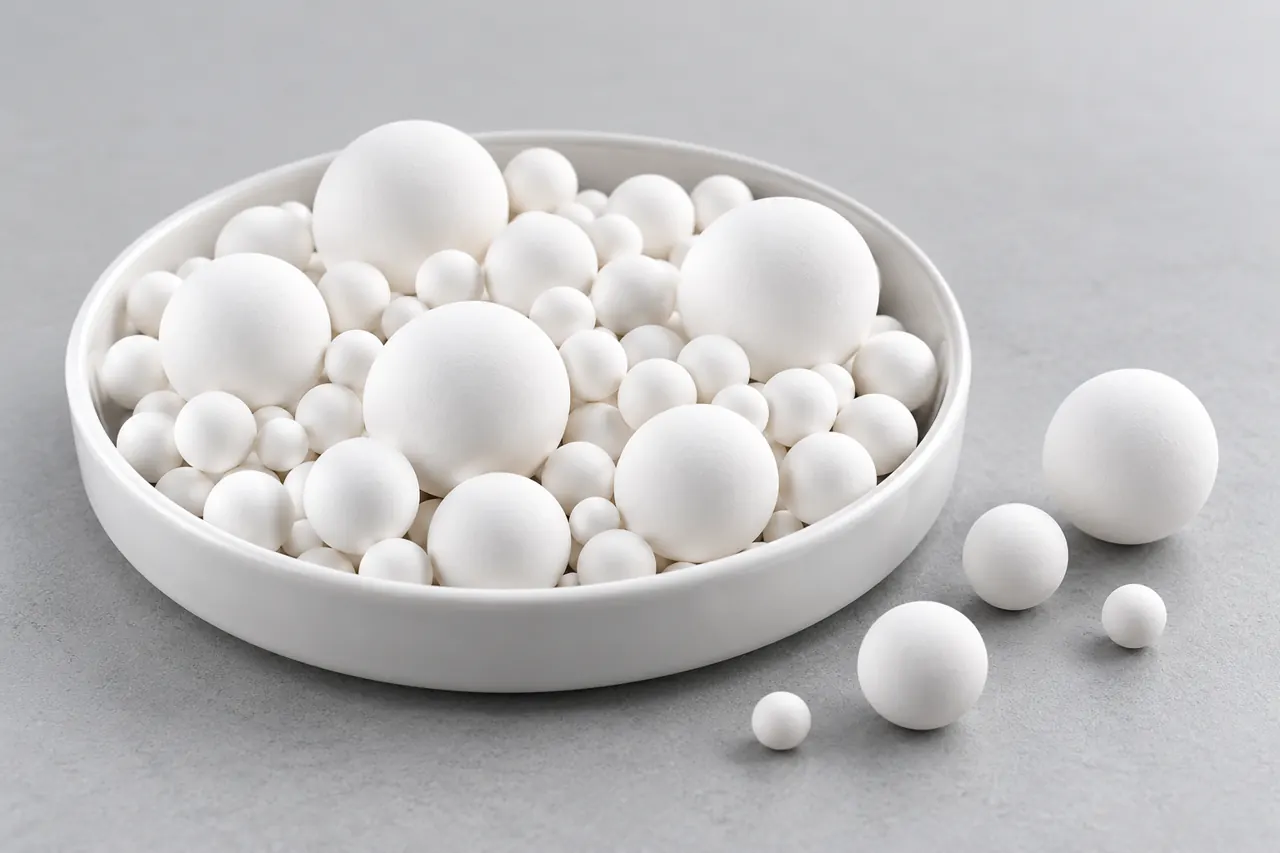
A useful grinding result has three parts
For ceramic or fine-powder production where iron pickup is unacceptable, evaluate an alumina grinding-ball candidate against the permitted chemistry, mill type and final powder requirement. Choose actual alumina content and ball-size population together; a purity title does not establish wear rate, density or contamination performance. Relia supplies the listed ceramic-ball enquiry and can discuss the selected material and evidence package. Start with your powder chemistry, wet or dry route, mill charge and acceptance limits. Compare particle-size reduction, ball loss and product contamination in a representative trial before approving a different media family or purity.
- Powder endpointDefine the particle distribution needed for the next production stage.
- Chemistry limitSet the permitted contamination before comparing different ceramic media candidates.
- Media consumptionCompare ball loss and damage against the amount of accepted powder.
Selection context and decision detail
| Buyer requirement | Relia response | Evidence or condition |
|---|---|---|
| Low-contamination grinding | Discuss a selected alumina-ball supply | Chemistry and mill/liner compatibility must be defined |
| Defined ceramic identity | Identify producer, grade and ball-size population | Title purity and grit labels are not a verified size matrix |
| Batch and trial evidence | Corresponding inspection records can be discussed | Actual wear and powder contamination require a controlled trial |
The ceramic-ball offer needs its own producer and inspection scope
Identify the ceramic producer and agreed inspection responsibility separately from steel abrasive manufacturing.
Relia manufactures steel wire and cast steel shot/grit, while this alumina-ball item is a separate ceramic supply enquiry. Do not apply our cast-steel production route to ceramic media. Identify the selected ceramic producer, composition, forming/sintering route and inspection responsibilities in the offer.
Incoming, in-process and final inspection are confirmed within our quality-control scope, and corresponding batch records can be provided. For the selected ceramic supply, agree which records describe the represented balls and which additional tests or external evidence your process requires.
- Supply identityCeramic producer and selected composition
- RouteOffered forming and sintering responsibility
- EvidenceCorresponding batch records and required tests
Purity requests and actual options are different descriptions
Specify an actual composition and diameter distribution rather than relying on a broad purity label.
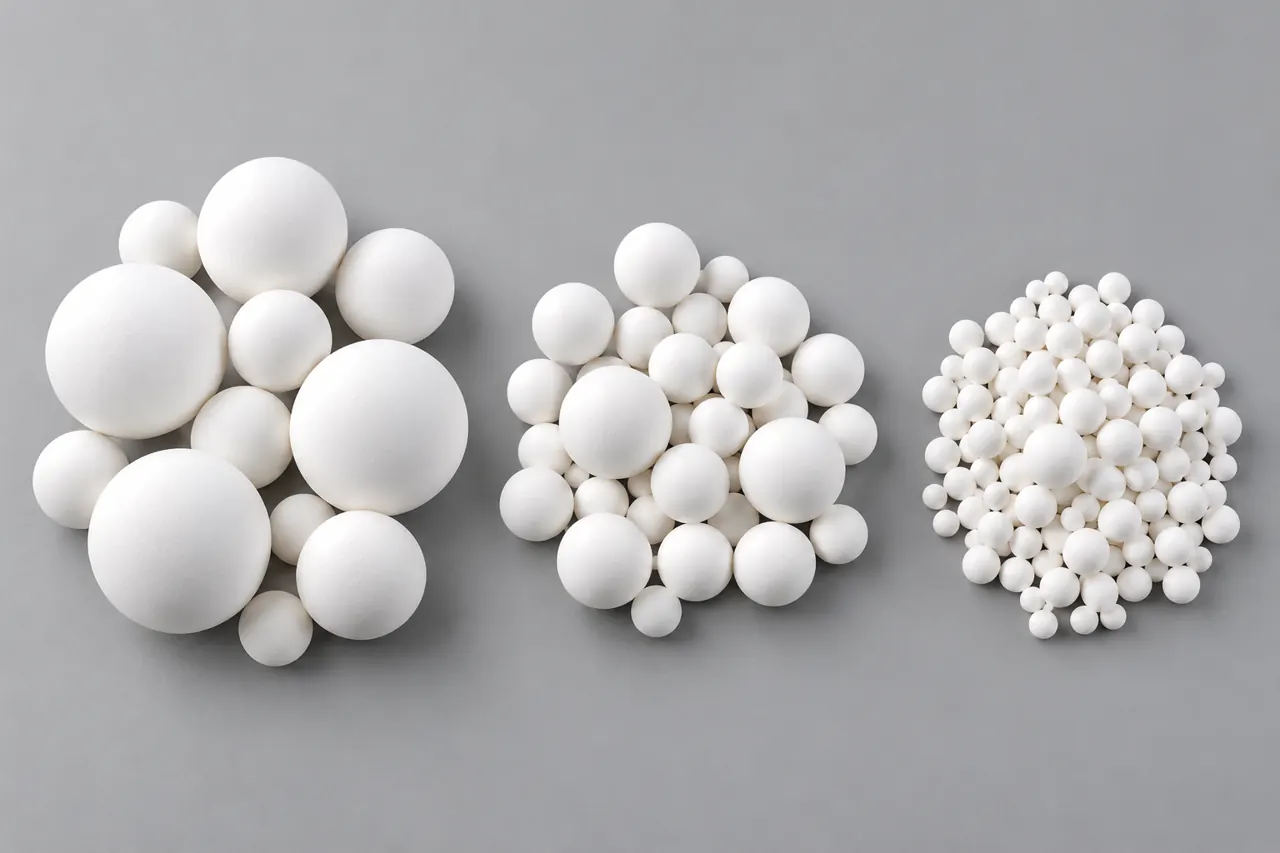
Define the ceramic ball being compared
The title requests 92, 95 or 99% alumina and a 1–50 mm size range. Its actual options pair a 2000 grit label with Ceramic or Ceramic Alumina/Aluminum Oxide material wording. These are not a verified matrix of ball diameters and composition grades.
Specify one required alumina content, relevant impurity limits, physical diameter distribution and ball condition. The entry gives no numerical hardness or measured wear. A white ball photograph cannot establish purity, density or whether the selected media can meet a sensitive powder's contamination limit.
- Selected compositionName one alumina content and the impurities your powder process restricts.
- Physical sizeSpecify actual diameters and distribution rather than the catalogue grit label.
- Ball conditionAgree geometry and defect evidence for the sample under review.
Product references for your shortlist
Open the product details, then discuss the exact specification for your application.
Alumina grinding-ball enquiry
A starting point for ceramic media trials where powder contamination and ball-size selection drive approval.
Densification and defects influence how a ceramic ball wears
Density, pores and defects help explain wear differences that alumina content alone cannot predict.
A representative alumina-media route prepares ceramic powder, forms the green ball and sinters it into a bonded ceramic body. Composition, packing and firing influence the final density, pores, grain boundaries and defects. These features affect surface loss and chipping under repeated contacts; purity alone does not describe them.
Request the selected producer's material and physical-condition evidence rather than copying a research firing cycle into the order. Measure the characteristic actually required: composition for identity, defined density or porosity where specified, geometry and defects, and a controlled wear comparison for the intended duty.
- Prepare powderComposition and feed condition
- Form and sinterDensity, grain structure and pores develop
- Inspect ballsGeometry, defects and specified physical evidence
- TrialWear and accepted powder quality measured
Ball size and charge affect the powder response
Compare ball populations under the same feed, filling and mill conditions before changing diameters.
A larger ball carries a different individual contact energy from a smaller one; a charge also needs enough effective contacts to treat the feed. Size selection depends on feed size, material hardness, mill motion and the required product distribution. No single diameter is best for every fine powder.
Record the ball-size population, media filling, powder charge and speed or motion used by your mill. Keep those conditions comparable when testing a different purity or media supplier. A nominal diameter alone cannot explain a changed grinding endpoint.
- FeedMaterial and initial size distribution
- MediaBall-size population and filling
- MillMotion, liner and charge
- EndpointAccepted product size and chemistry
Wear enters the product as a contamination source
Measure final powder chemistry alongside size reduction because media and liners can both introduce contamination.
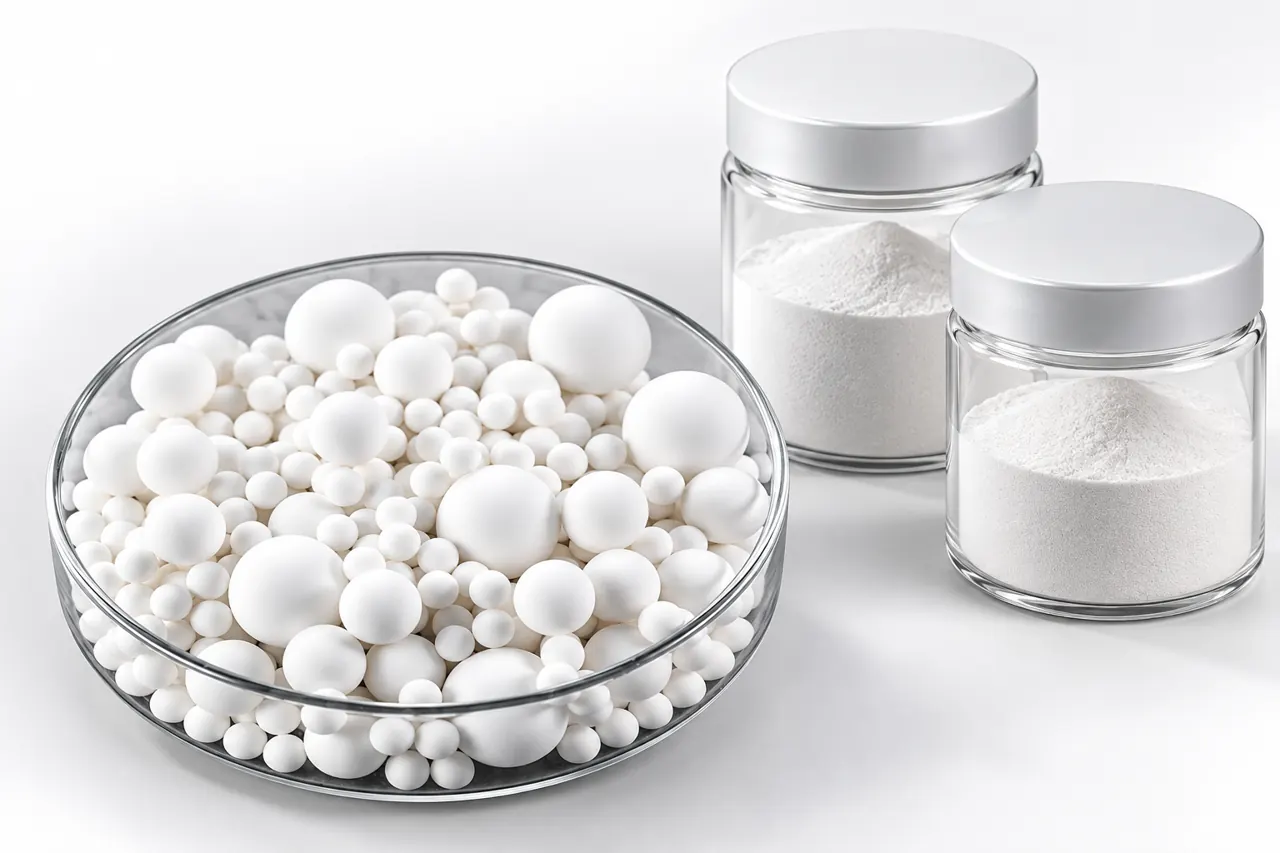
Trace material entering the powder
Ball and liner wear can introduce material into the ground powder. Original wet-alumina milling research found contamination behavior depended on slurry properties and grinding stage, so a media certificate alone cannot describe the final powder. Check compatibility with the full contact system, including the liner.
Measure the required final chemistry or contamination characteristic alongside particle-size reduction. The illustrated jars are unverified powder references, not chemical-analysis results. For a high-purity product, a faster grind that exceeds the contaminant limit is not an acceptable media improvement.
- Ball wearRelate media loss to the chemistry measured in accepted powder samples.
- Liner contactCheck liner compatibility alongside the ball composition in the same trial.
- Process conditionsRecord slurry or dry conditions when comparing contamination and grinding progress.
A useful trial records wear and useful grinding together
Separate gradual wear from chipping, and weigh media using the same cleaning and drying basis.
Compare baseline and candidate under a recorded mill, charge, feed, time and wet/dry condition. Define the powder endpoint and collect samples consistently. For a gravimetric wear comparison, use the agreed cleaning and drying condition before weighing so retained slurry is not mistaken for ball mass.
Record chips or fractured balls separately from gradual loss. Relate additions or loss to useful processed output and accepted powder quality. Avoid importing a laboratory wear percentage from another mill, slurry or method as a guaranteed production value.
- BaselineSame feed and recorded charge
- Mass evidenceConsistent cleaning/drying basis
- DamageChips and fracture separated
- Useful resultAccepted powder and contamination
A retained set should separate balls from product samples
Retain unused balls, recovered media and final powder as distinct samples with connected references.
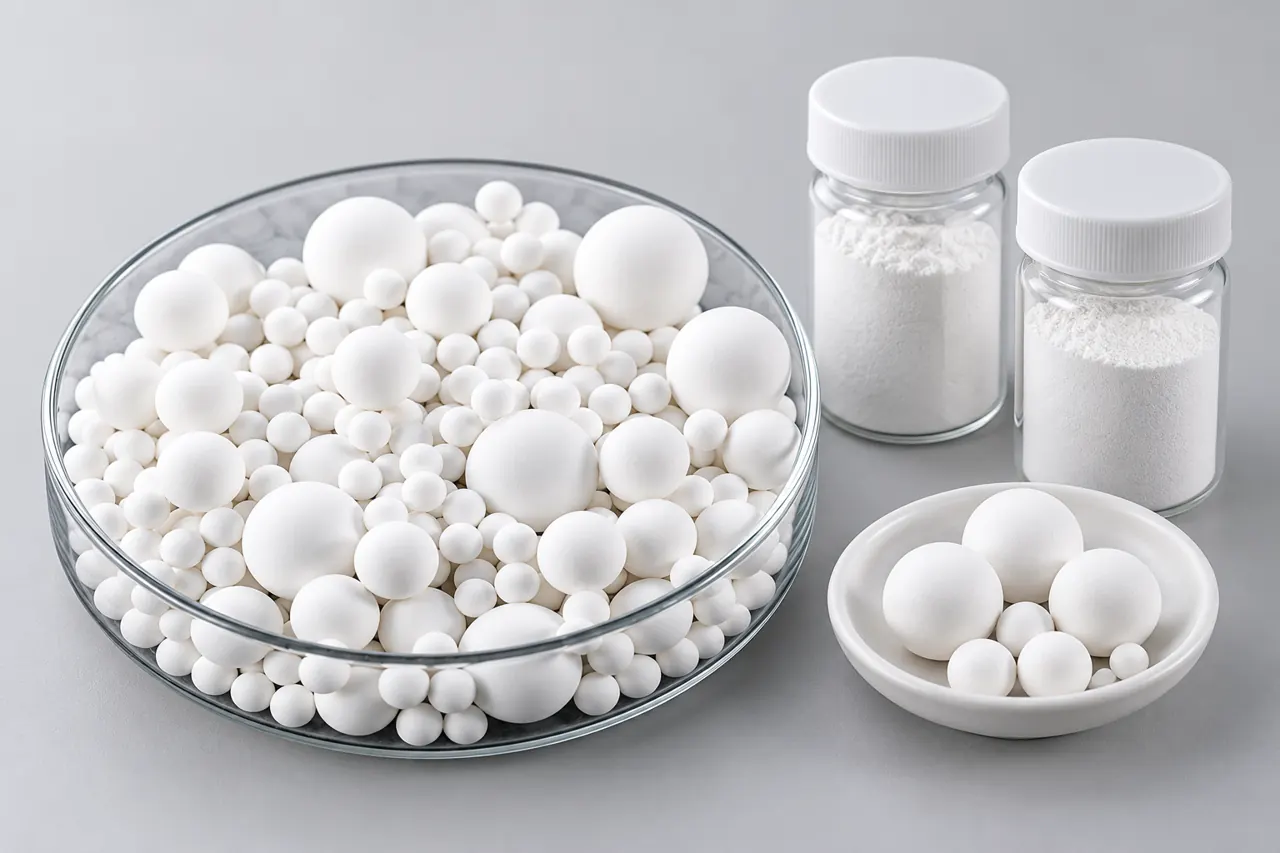
Keep three separate reference samples
Keep unused balls, recovered media and final powder under different sample references. Retain the selected composition/diameter identity, producer, batch and corresponding records. A powder shift may come from feed, liner, mill conditions or media, so preserve the comparison inputs.
The AI-assisted media and powder scene illustrates this evidence separation. It does not establish an actual source batch or analysis. Investigate a contamination or wear change against the recorded route before changing several charge variables at once.
- Unused ballsRetain original media identity before any mill contact changes its surface.
- Recovered mediaKeep worn balls available to compare chips and gradual surface loss.
- Final powderConnect product chemistry and size results to the same recorded trial.
Repeat supply preserves the approved chemistry and physical condition
Preserve the approved formulation, producer and size mix when replenishing an accepted grinding charge.
Use the approved alumina grade, diameter population and physical acceptance as the replenishment baseline. Review a change in formulation, producer, size mix or firing route before treating it as equivalent supply. A common purity number can conceal different secondary phases and defect populations.
Protect the balls from cross-contamination in storage and handling. Agree pack identity and net contents for the selected item, keeping lots distinguishable until receiving acceptance. Commercial quantity and schedule require a current offer rather than a general catalogue promise.
- Approved referenceComposition, producer and physical condition
- ReceiveDistinct lot and pack identity
- UseProtect against foreign contamination
- Change reviewSize, formulation or route difference
Build the powder trial brief
Send powder limits, mill conditions and the current charge so the sample plan tests your actual decision.
Share your current mill charge and powder limits so we can discuss a ceramic-ball candidate and an evidence plan for your comparison.
Qingdao Relia Industries Co., Ltd.
Contact address: Shuyuan Road, Qingdao, Shandong, China
- Powder chemistry and impurity limits
- Mill type and liner material
- Current ball sizes and charge
- Required powder size distribution
- Trial quantity and delivery destination
Enquiry scope and supporting detail
Send the feed composition, permitted contamination, wet/dry route, mill type, liner, media charge and required product distribution. Identify current ball material and sizes, observed wear or chipping, and the output used to compare candidates. State which composition, physical and trial records govern acceptance.
Request a defined ceramic-ball offer and representative sample plan with quantity, packing and destination. We can discuss the listed supply reference and inspection responsibility while keeping the selected producer's route distinct from our cast-steel abrasive manufacture.
- Powder briefComposition · impurity limits · acceptance
- Media briefBall sizes · material requirement
- Trial requestQuantity · records · destination