

Zinc Anodes and Feed Forms for Electroplating Lines
Select zinc feedstock for the replenishment route your plating line already uses. This guide connects chemistry and impurity limits with spheres or particles, basket fit and actual consumption observations. It helps you review one compatible feed form while keeping material acceptance, bath control and deposited-coating results as distinct parts of the decision.
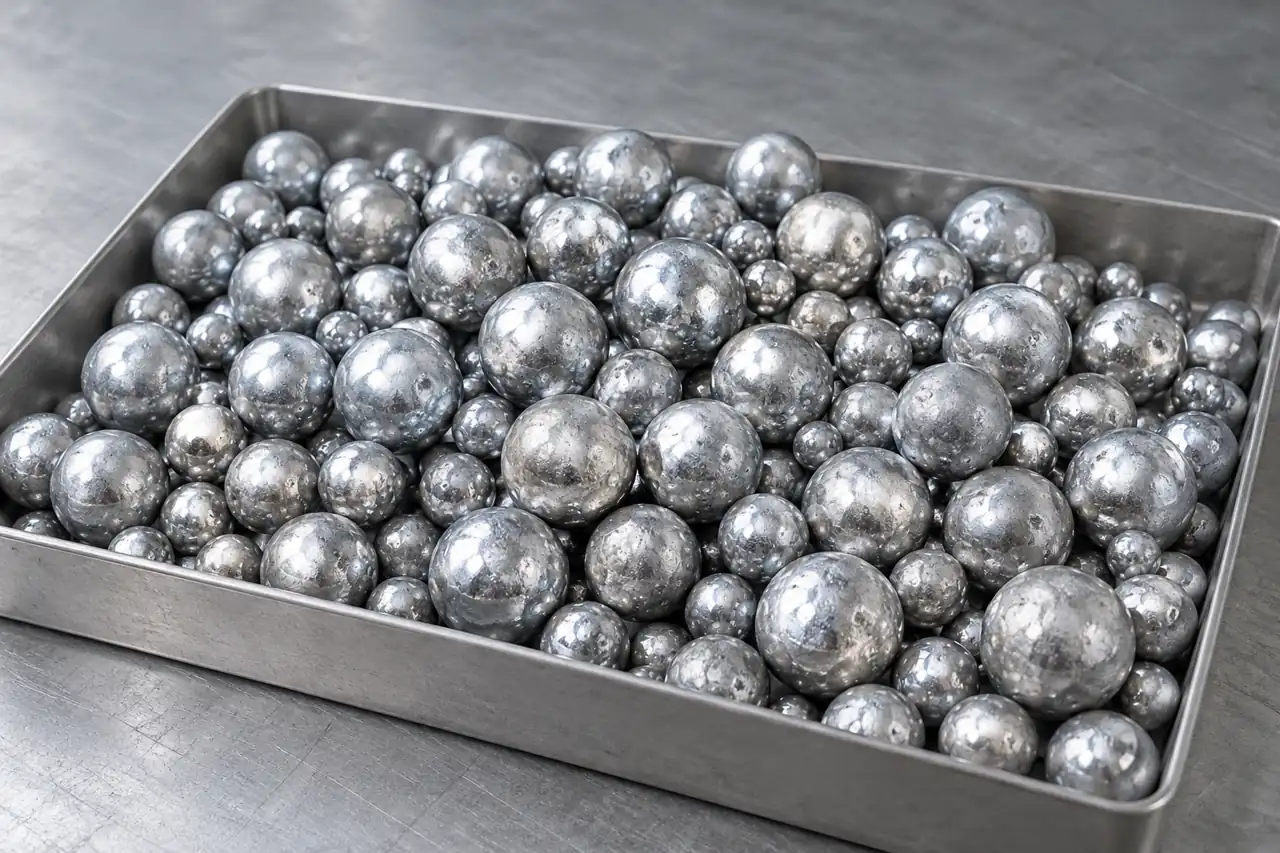
Choose feedstock from the established line design
For zinc plating feedstock, first identify whether your line uses soluble anodes or a separate replenishment route, then select the zinc form that the equipment and bath require. Large spheres and small particles are not automatic substitutes even when both are called high purity. Relia supports material supply and selection, while the plating process remains your qualified line. Send the bath-system and basket/feed references so an actual size and chemistry package can be evaluated against dissolution, residue and coating acceptance before repeat supply is agreed.
- Replenishment routeIdentify soluble anodes or the actual separate dissolution and make-up arrangement.
- Compatible materialSelect zinc chemistry and physical form for the documented bath and holder.
- Trial evidenceObserve consumption and required coating results without changing the qualified line baseline.
Selection context and decision detail
| Buyer requirement | Relia response | Evidence / condition |
|---|---|---|
| Compatible replenishment form | Zinc supply and selection support | Qualified bath and anode/feed arrangement |
| Defined zinc lot | Chemistry/size/condition review | Selected impurities, dimensions and containment |
| Reviewable acceptance | QC and batch-record scope agreed | Material evidence plus established-line trial |
Zinc feedstock supply needs a defined form and producer
Identify the actual zinc producer and represented material records separately from steel-wire or abrasive manufacturing.
Relia supports zinc material selection and supply; zinc refining, sphere/particle manufacture and electroplating-line operation are not confirmed as in-house. Company incoming, in-process and final QC and corresponding batch records are confirmed. Agree the actual producer and represented composition, size and surface evidence for the supplied lot.
Product 958 offers a combined 25–100 mm zinc-sphere entry with a 99.995% minimum reference, while product 1133 offers 0.6–2.5 mm zinc particles. The separate grit or blasting fields do not establish these as interchangeable plating feed.
- ProcessActual bath and material specification
- Feed formBalls, pieces or specified anode
- EquipmentBasket or mounting details
- AcceptancePlating-team material approval
The replenishment route determines the material task
Keep the qualified replenishment arrangement as the starting point for any sphere or particle proposal.
A soluble zinc anode is consumed while supplying dissolved metal to a compatible electrolyte. Other line designs may use separate metal dissolution or make-up with insoluble electrodes. The required feed form follows that established process design.
Identify the actual bath and replenishment arrangement before approving spheres or particles. A supply enquiry should not change a qualified line solely to accommodate a catalogue form.
- IdentifyQualified bath and replenishment route
- SelectCompatible zinc form and chemistry
- VerifyHolder/feed and material evidence
- TrialEstablished control plan and coating checks
Product references for your shortlist
Open the product details, then discuss the exact specification for your application.
Zinc spheres for plating-feed review
A large-form zinc candidate when the established bath and holder require an explicitly selected sphere size.
Zinc particles for process-feed review
A small-particle candidate only where the actual replenishment arrangement accepts its selected chemistry and physical population.
Chemistry acceptance should address relevant impurities
Define relevant impurity limits because a purity minimum alone does not describe every bath-critical trace element.
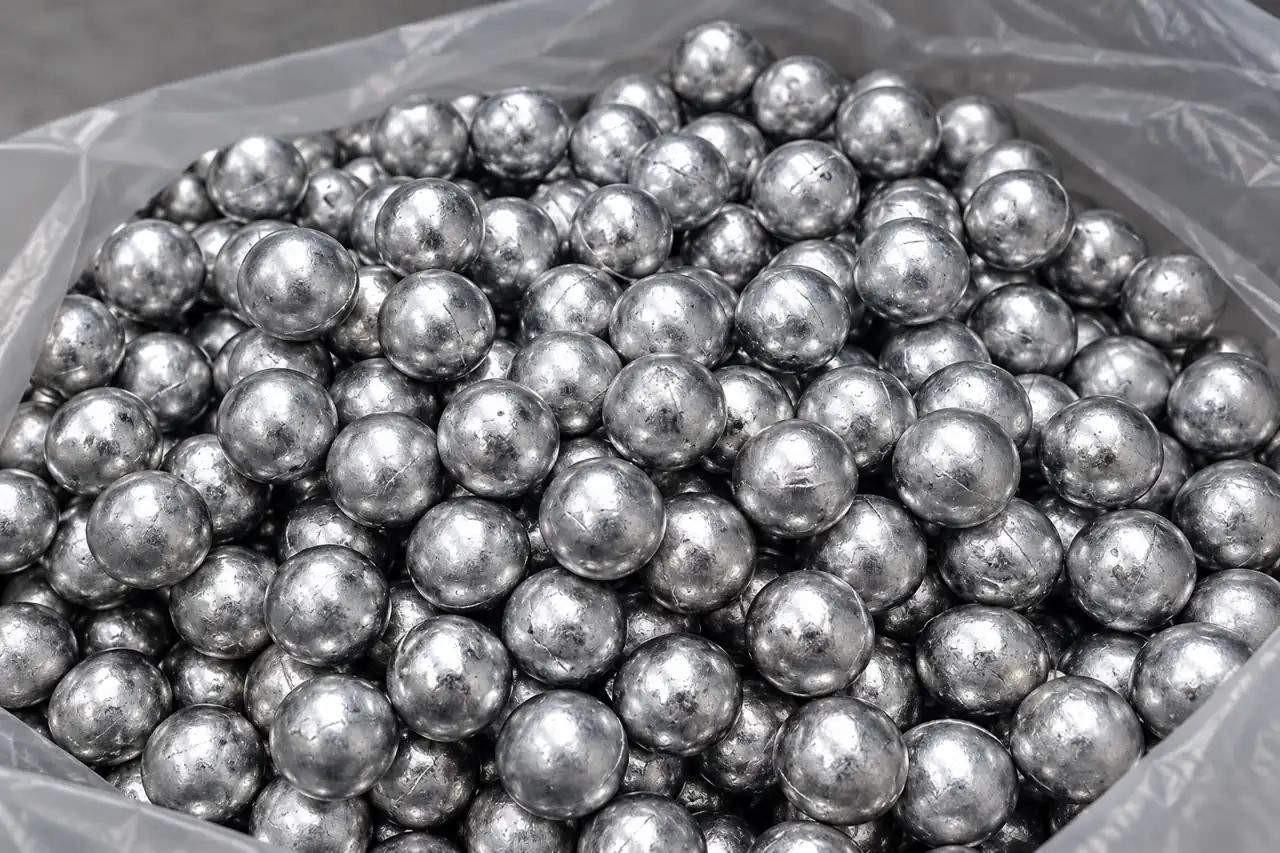
Define chemistry beyond a purity headline
Specify zinc and impurity limits under the selected material basis, with represented batch analysis. A purity minimum alone does not describe every trace element that the bath specification may restrict.
Keep chemistry evidence separate from size and surface checks. Brightness or a round shape cannot verify zinc identity, a purity result or acceptable dissolution behavior.
- Material specificationState zinc and the relevant impurity limits required by the bath basis.
- Represented analysisConnect actual batch composition with the selected limits for the offered material.
- Separate checksKeep chemistry identity distinct from size, surface condition and dissolution observations.
Size and contact condition govern a different interface
Match containment and electrical-contact needs because equal masses of large spheres and small particles are not interchangeable.
For a basket or holder, define acceptable dimensions, containment and electrical-contact requirements through the actual equipment documentation. Particle form changes the available surface and packing relative to large spheres; its suitability therefore needs process review.
Do not replace 25–100 mm spheres with 0.6–2.5 mm particles by equal mass alone. Confirm loading and replenishment practice with the responsible line operator.
- Large zinc spheresReview the selected sphere dimensions against the actual holder and loading arrangement.
- Small zinc particlesAssess their different surface and packing behaviour before proposing them instead.
- Equipment interfaceConfirm containment and electrical contact through the actual equipment documentation and line review.
Dissolution and deposited coating need separate observations
Observe dissolution and deposited coating separately under the established bath-control plan and workpiece acceptance.

Observe the material and coating separately
Anode consumption and cathodic deposition do not necessarily balance identically in every bath. Monitor the established bath-control indicators and required workpiece results during the represented trial rather than infer coating uniformity from anode purity.
A feedstock issue, current-distribution issue and bath-maintenance issue need different evidence. No operating current, bath recipe or dosing rate is prescribed here.
- Feedstock behaviourRecord relevant consumption and residue under the established line-control plan.
- Bath conditionPreserve the accepted bath baseline and relevant control indicators during the comparison.
- Workpiece resultAssess the required deposited coating rather than inferring it from anode purity.
The trial should preserve the established line baseline
Trial identified material within the approved line baseline after reviewing any proposed change of feed form.
Evaluate identified material under the approved bath, holder/feed arrangement and normal control plan. Record relevant consumption behavior, residue and the required coating checks, with comparison to the accepted feedstock baseline.
If a different form is proposed, have its compatibility reviewed before the line trial. The pictured basket illustrates containment context, not an approved current-carrying anode assembly.
- SampleIdentified zinc source and form
- ProcessApproved trial conditions
- ObservationRequired line and deposit checks
- DecisionDocumented accepted supply scope
Receiving checks should retain material and package evidence
Retain surface, size and package evidence before the supplied lot enters the bath system.
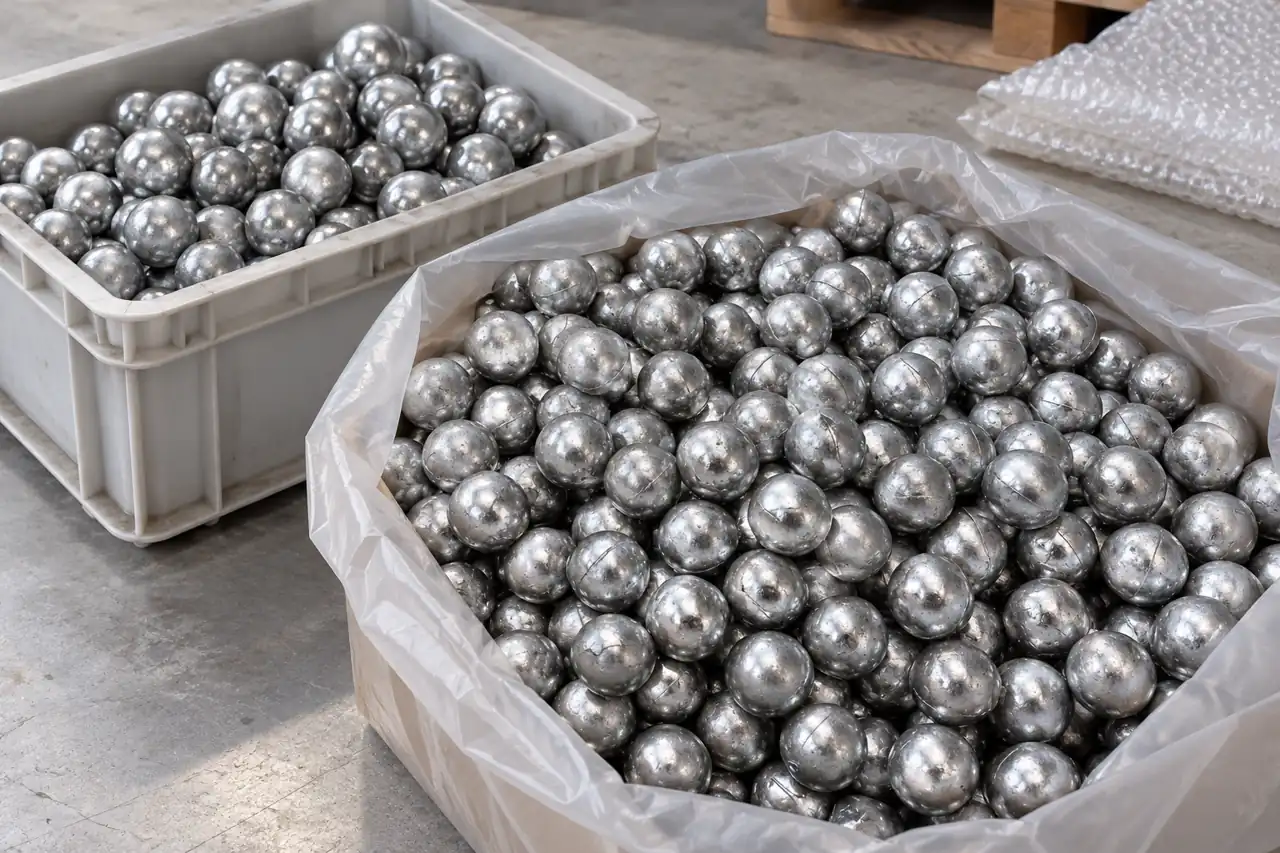
Retain evidence before material enters the bath
Check selected size/form, surface condition, contamination and package identity before the lot enters the bath system. Retain identified samples and the wider package context for any discrepancy.
The spherical images show form only. Their metallic appearance does not verify zinc chemistry, and a combined size label does not provide individual inspection of every diameter.
- Physical formCheck selected dimensions, surface condition and contamination against the accepted supply.
- Package identityKeep lot and package references with the actual received material and records.
- Retained samplePreserve identified unused material and wider package context for any discrepancy.
Repeat orders should preserve the accepted feedstock specification
Preserve producer, chemistry, physical form and records when reviewing repeat lots or changes.
Retain actual producer, chemistry/impurity limits, size distribution or selected diameter, surface condition and packaging with represented records. Review changes before mixing different forms or lots in a controlled process.
The company QC fact does not imply a specific analyzer, numerical sampling frequency, tested dissolution rate or guaranteed deposited coating life.
- MaterialSelected form and chemistry
- DimensionsEquipment-related size limits
- EvidenceActual analysis and identity
- CommercialNet quantity and delivery scope
Define the zinc and feed-system interface
Send the bath and feed interfaces so a specific material package and compatibility review can be defined.
Share the established bath route and the form your feed system accepts. We can review a selected zinc package and the material and trial evidence needed for approval.
Qingdao Relia Industries Co., Ltd.
Contact address: Shuyuan Road, Qingdao, Shandong, China
- Bath and replenishment arrangement
- Zinc chemistry and impurity limits
- Selected size form and surface
- Basket or feed-system constraints
- Dissolution and coating acceptance basis
Enquiry scope and supporting detail
Send the established replenishment route, selected zinc chemistry, actual size/form and basket or feed-system constraints. Add surface/residue limits, required material records and the trial/coating acceptance basis. We can then define a lot-specific supply package and compatibility review, with responsibility and commercial conditions agreed before release.
- ProcessBath and material requirement
- GeometryFeed form and equipment fit
- EvidenceChemistry and batch records
- SupplyTrial, packing and destination