

Custom Cut-Wire Shot Specification and Manufacturing Review
For custom cut-wire media, define the alloy, wire diameter, cut length and finished particle condition separately. This guide helps you turn the process requirement into a feasible specification, compare sample evidence and retain a clear approval reference. You can then discuss an actual carbon-steel or stainless proposal for cleaning or peening.
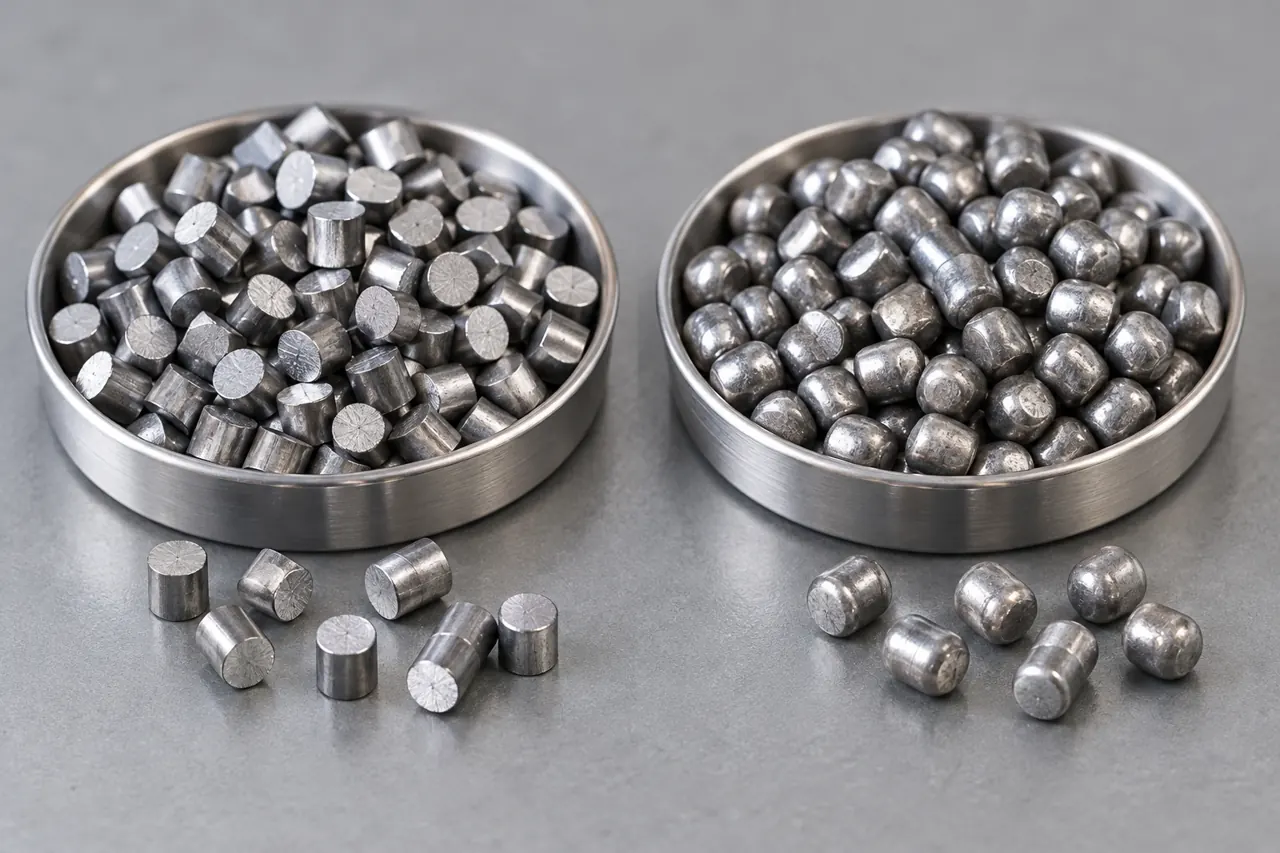
Define four independent particle requirements
For process engineers specifying custom cut-wire media, define alloy, wire diameter, cut length and required conditioning as separate fields. Relia can review its carbon-steel and stainless cut-wire candidates; the actual producer and feasibility of the requested combination must be established before a sample or order is promised. The purchasing decision is whether the supplied particle population matches the contact action and acceptance basis of your cleaning or peening process. Send the complete geometry, condition, inspection and application brief so the proposal can distinguish a feasible product from a broad custom enquiry.
- Selected materialName the alloy and material evidence required by the substrate and contamination limit.
- Cut geometrySpecify original wire diameter and axial cut length as independent dimensions.
- Finished conditionDefine as-cut or required conditioning and the form acceptance for the application.
Selection context and decision detail
| Buyer requirement | Relia response | Evidence or condition |
|---|---|---|
| A defined custom particle | Review actual carbon/stainless candidates | Alloy, diameter, length and conditioning separated |
| Production evidence | Batch records can be provided | Actual cut-wire producer and stage coverage confirmed |
| Feasible sample and repeat | Compare one complete revision | No inferred 3.0 mm option or arbitrary custom range |
Set the cut-wire production boundary beside the product
Identify the actual cut-wire producer and record scope separately from the confirmed wire and cast-steel abrasive operations.
Relia manufactures wire and cast steel abrasives, but cutting/conditioning cut-wire media in-house has not been confirmed. Incoming, in-process and final inspections are performed and corresponding batch records can be provided; identify the actual producer, stages and records for this product.
The carbon entry offers CW0.6 through CW2.5 and separately selected 0.6–2.5 mm diameters, with cylindrical shape and a 42–53 HRC reference. Its 3.0 mm family wording is outside the actual maximum option. The stainless entry gives a 0.2–2.0 mm range but no selected alloy or conditioning record.
- MaterialActual carbon-steel or selected stainless designation
- GeometryWire diameter and cut length independently defined
- ConditionAs-cut or specified conditioning and acceptance
Choose material independently from appearance
Select carbon or stainless chemistry against the substrate and contamination requirement rather than particle appearance.
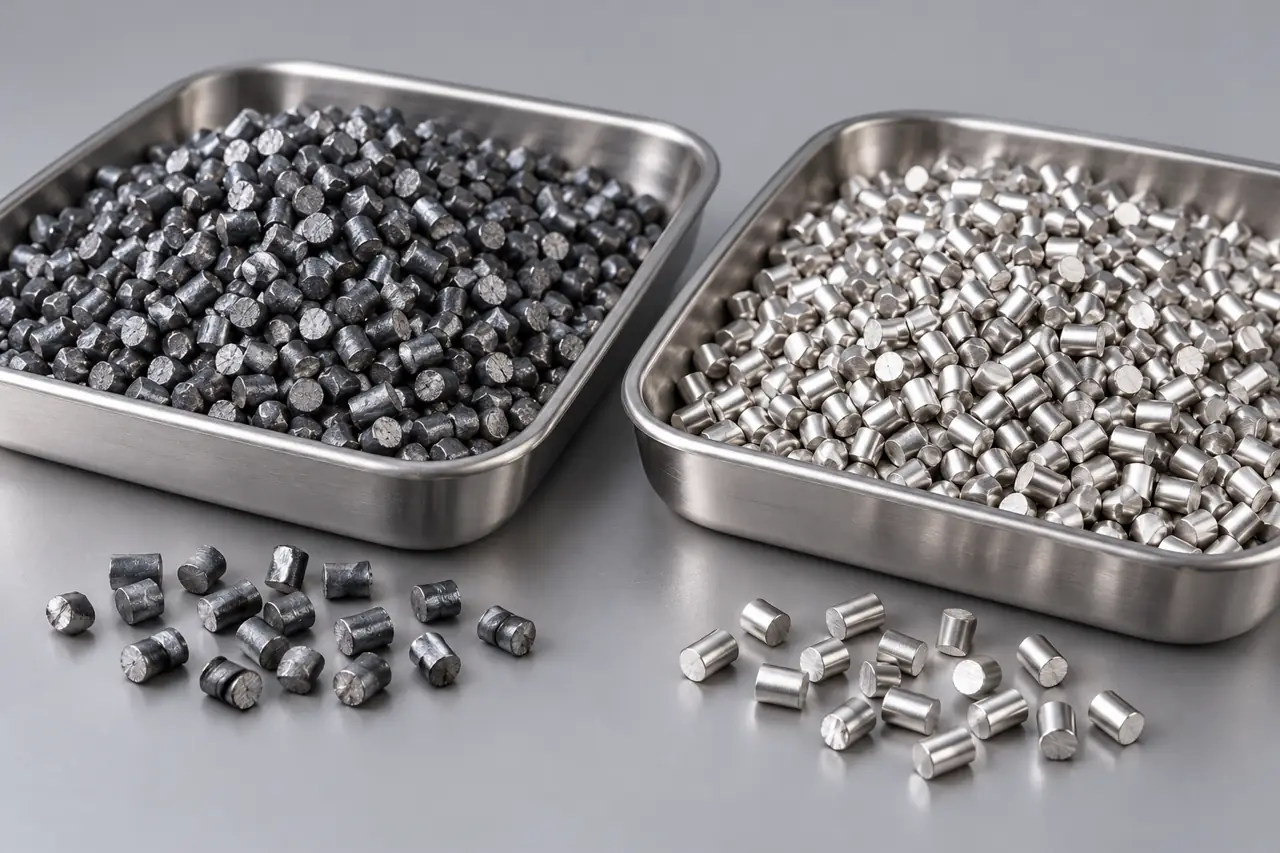
Choose material for the actual process boundary
Carbon steel and stainless steel can have similar visible particle shapes while differing in composition and supplied condition. Select the actual alloy and relevant material evidence for the substrate and contamination requirement. A shiny surface cannot identify a stainless grade, and a hardness reference does not replace composition. Keep material or source alternatives as separate proposals; the wider catalogue does not establish every alloy/diameter/condition combination as available.
- Carbon steelEvaluate the selected carbon material against the substrate and permitted surface contamination.
- Specified stainlessName the required stainless designation rather than relying on shiny particle appearance.
- Separate proposalsCompare source or alloy alternatives independently with the same stated acceptance basis.
Product references for your shortlist
Open the product details, then discuss the exact specification for your application.
Carbon cut-wire specification enquiry
A carbon-steel candidate for a defined cleaning or peening proposal with separately specified diameter, length and particle condition.
Stainless cut-wire specification enquiry
A stainless candidate where the actual alloy and particle condition meet the process’s material and contamination requirements.
Diameter, cut length and conditioning change the contact geometry
State whether dimensions apply before or after conditioning because cutting and rounding establish different particle characteristics.
Cutting a wire defines both its original diameter and the axial length of each particle. As-cut cylinders retain edges; conditioning rounds the form to the required degree. Those are distinct characteristics, and conditioning can change the dimensions and form being inspected.
Specify whether dimensions apply to the wire, as-cut particles or finished conditioned media. Define the accepted particle-form method or reference for the intended duty. Rounded appearance alone does not qualify a peening process, and a sieve distribution cannot by itself prove the required conditioning.
- Wire sectionActual diameter and material condition
- Cut particleAxial length and relevant dimensional variation
- Conditioned outputRequired rounding/form and applicable size basis
- ApplicationCleaning or engineered peening criteria assessed separately
Resolve feasibility before fixing a sample commitment
Obtain a response to the complete requested combination before fixing the sample specification or commitment.
Ask the proposed producer to respond to the complete material, geometry, condition and quantity requirement. Mark anything outside the actual listed choices, including a 3.0 mm request, as a separate feasibility point. Identify the real provider and any preparation needed for a representative sample. Do not turn custom wording, a cross-combination menu or a generic catalogue price into unlimited manufacturing capability.
- RequestedAlloy, diameter, length and final condition
- OfferedActual feasible combination and producer
- DifferenceEvery alternative explicitly stated
- Next gateAgreed sample and evidence before commitment
Accept the finished population through measured characteristics
Accept the represented particle population through agreed material, dimensional, form and hardness evidence, with application trials kept separate.
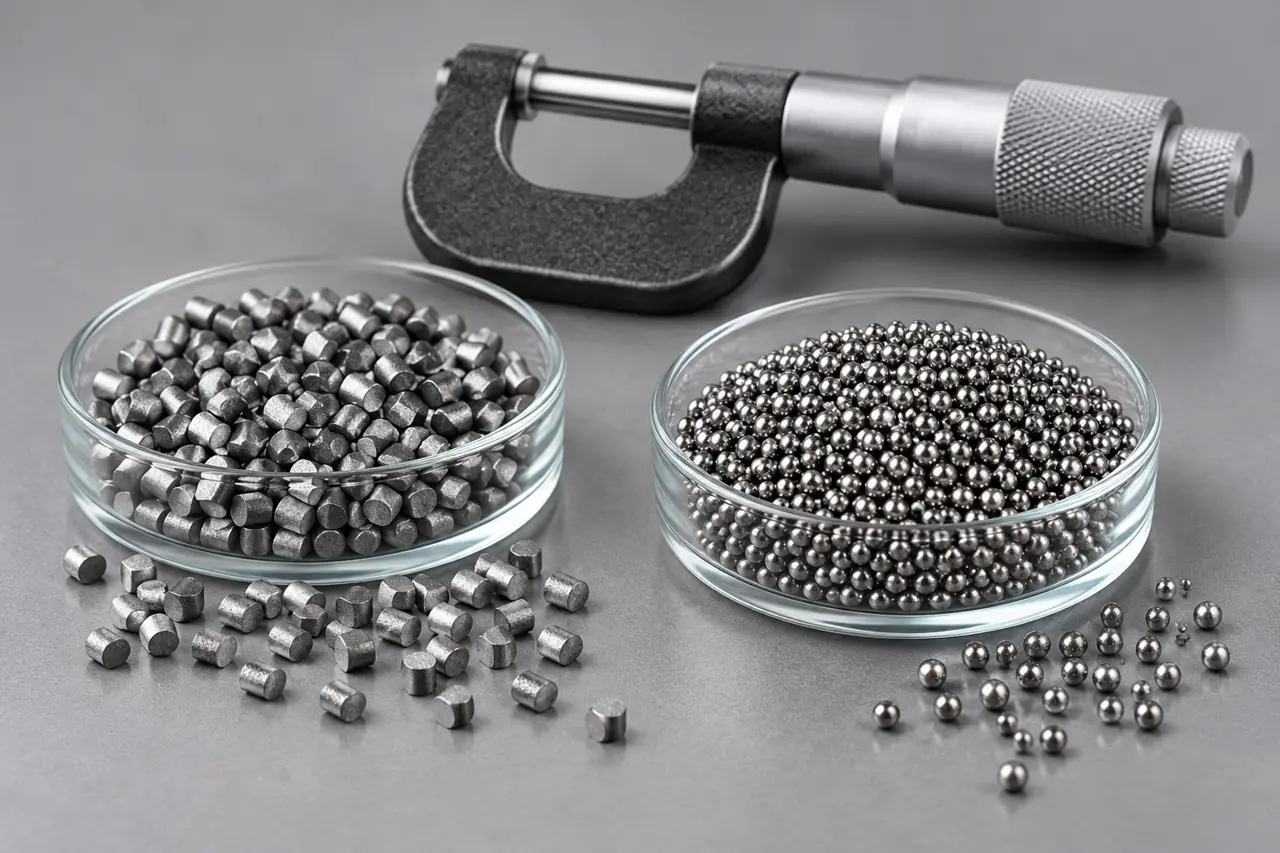
Check the delivered population rather than its label
Connect the sample with its lot and inspect the agreed dimensional distribution, particle condition and material evidence. Match the hardness scale and method to the actual particles; a catalogue HRC range is not a batch result or an automatic conversion to another scale. Where application performance matters, use a separate controlled trial. The tool and particles pictured here are illustrative and do not provide measured acceptance.
- Material and lotConnect the represented sample with the agreed composition and supplied batch identity.
- Dimensions and formAssess distribution and conditioning using the agreed finished-particle basis and reference.
- Hardness and dutyUse the appropriate hardness method and keep application approval within a controlled trial.
Quote the feasible specification and included evidence
Define the feasible sample and volume scopes, including the evidence, preparation and packing included in each offer.
Separate exploratory samples from production quantities, and state which material/particle reports, conditioning and packing are included. Confirm any setup, minimum quantity or preparation charge in the actual proposal. Distinguish sample preparation, production release, dispatch and transport timing. A supplier's response to feasibility is a technical starting point, not a commitment to capacity or a universal processing time.
- Sample scopeQuantity, source, preparation and records
- Volume scopeApproved specification and represented lot evidence
- Commercial basisIncluded conditioning, packing and charges
- TimingConfirmed stages and delivery boundary
Keep a retained reference without replacing the specification
Keep retained media connected to the written revision and records, identifying whether the reference is as-cut or conditioned.
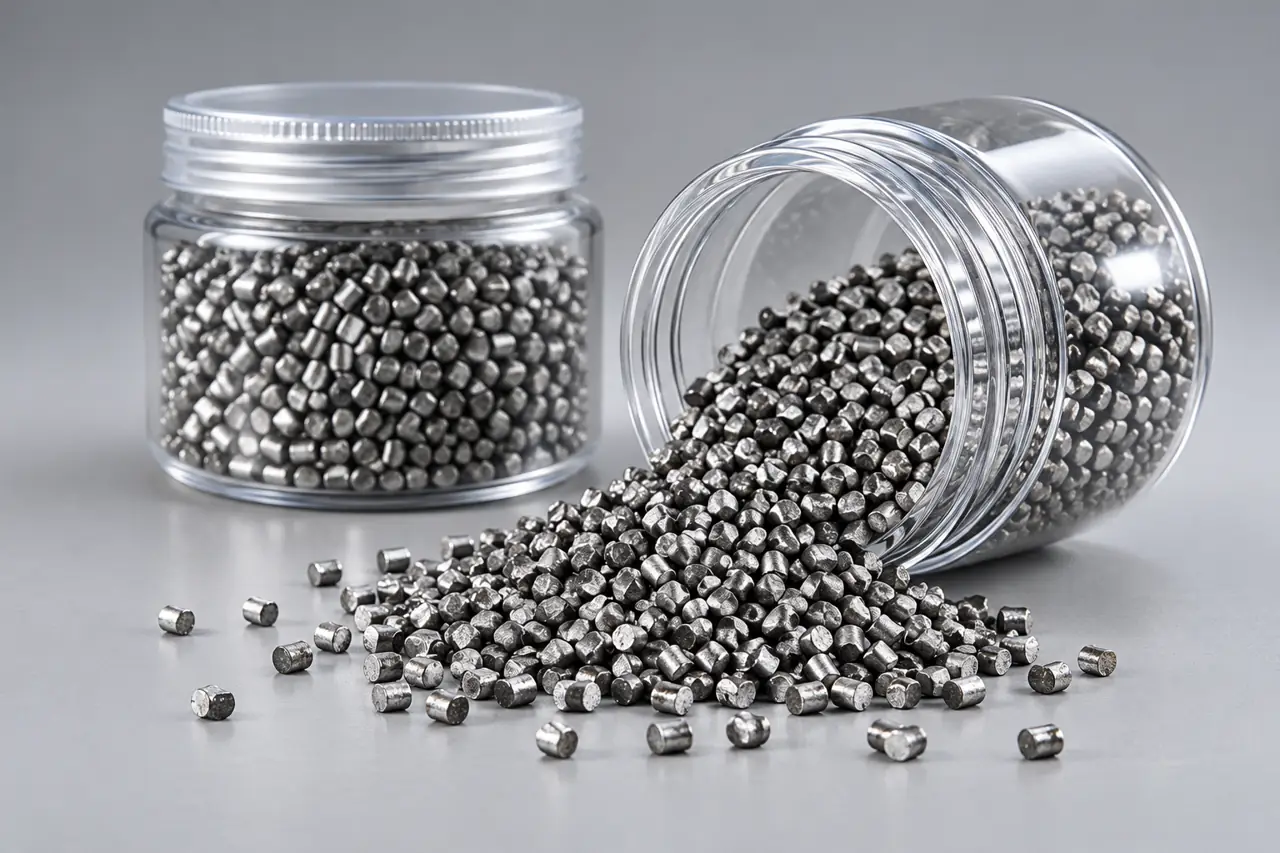
Keep a reference that can explain a difference
Retain agreed material with the complete revision and its acceptance records. Protect it from moisture, contamination and mixing, and identify whether it represents as-cut or conditioned supply. If a delivery differs, isolate packages and record the discrepancy through the original method before use. Separate changes in material, geometry and condition; a single report that the media looks different cannot establish the cause.
- Complete revisionRetain the written geometry, material and final condition alongside the sample records.
- Distinct conditionIdentify whether retained particles represent as-cut supply or the accepted conditioned output.
- Discrepancy recordIsolate affected packages and document material, geometry or form differences before use.
Control the complete custom combination on repeat orders
Control alloy, dimensional basis, conditioning and producer together, reviewing any change before repeat release.
Carry alloy, diameter basis, cut length, conditioning, distribution and producer into the reorder reference. Review a proposed change before release, including changes that preserve the short CW label but alter its separate diameter field. Keep pack identity linked with actual batch records. Define who reviews a deviation and authorizes rework or replacement; neither an illustrative retained jar nor a familiar product name is a contractual remedy.
- RetainComplete custom revision and reference material
- CompareOffered lot, records and declared changes
- AssessRelevant dimensional, form and application evidence
- AuthorizeRepeat release or defined new qualification
Prepare the complete custom-particle request
Send the complete particle and application brief so feasibility, sample evidence and the actual supply scope can be discussed.
Share the required particle geometry and application limits so we can discuss a feasible material proposal, sample scope and the evidence needed for your decision.
Qingdao Relia Industries Co., Ltd.
Contact address: Shuyuan Road, Qingdao, Shandong, China
- Actual alloy and wire diameter
- Cut length and dimensional basis
- Finished conditioning and form reference
- Cleaning or peening acceptance criteria
- Sample quantity and production requirement
Enquiry scope and supporting detail
Send the actual material, wire-diameter basis, cut length, final conditioning and inspection criteria, with the cleaning or peening context. Add sample and production quantities, required records, packing and destination. Relia can review catalogue candidates and clarify the actual producer and feasible scope; sample terms, special combinations and commercial commitments require a specific offer.
- ParticleMaterial, diameter, length and final condition
- AcceptanceMethods, reference and bounded process trial
- OfferProducer, quantities, records and terms