

Cast Grinding Media for Cement-Mill Procurement
Choose cast grinding balls around the cement circuit and the quality of cement you need to produce. This guide connects alloy and treatment with the actual diameter mix, compartment duty and loss pattern. It helps you compare a candidate at a consistent quality target using useful output, inventory and additions rather than price per tonne alone.
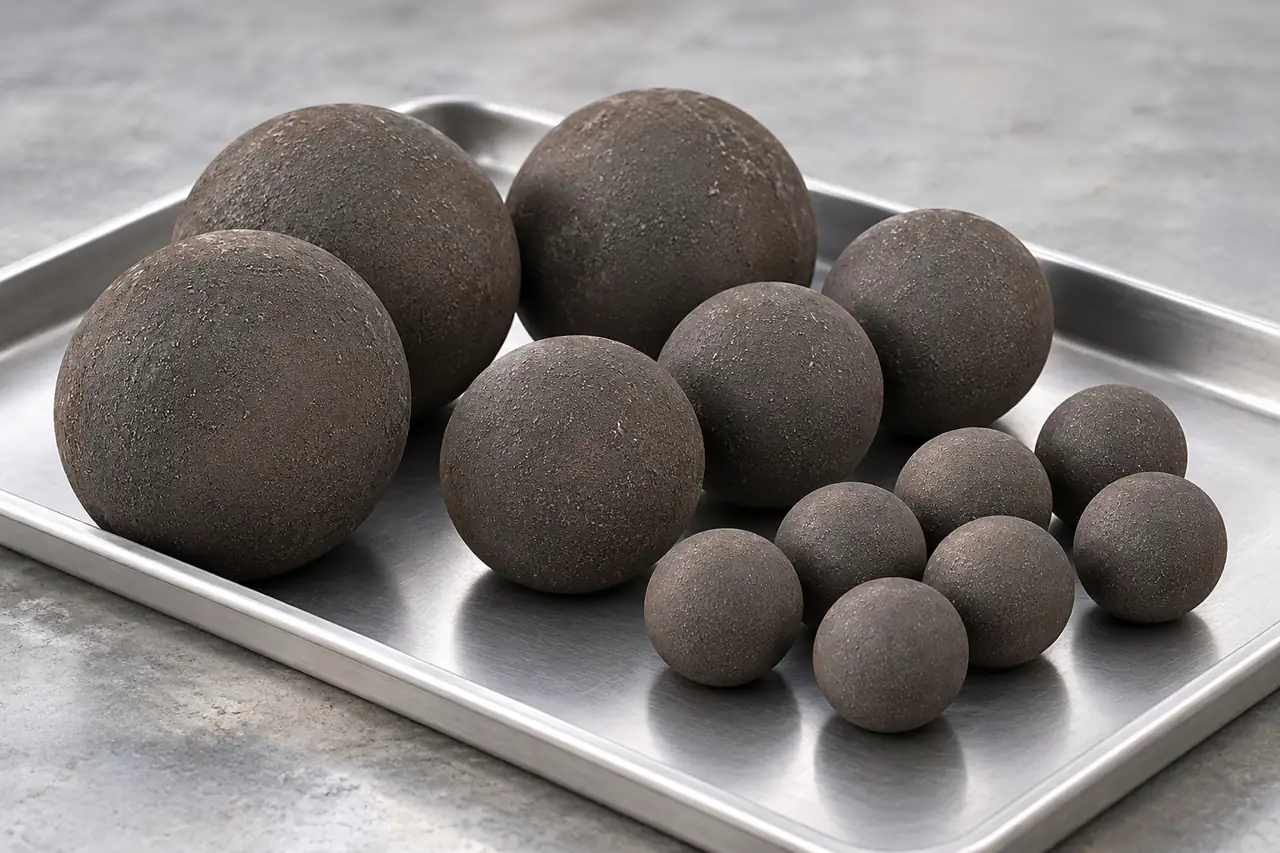
Connect the grinding duty to the buying decision
For a cement mill buying cast grinding balls, select the actual alloy and diameter mix against feed, compartment duty, liner and required product fineness. A high-chromium label or low price per tonne cannot alone select the best charge. Relia supplies the listed cast-media enquiry and can discuss the selected producer and batch evidence. Start with the current ball population, clinker/additive feed, mill circuit and observed wear or breakage. Compare accepted cement quality, throughput conditions, energy and media additions on a representative basis before changing the replenishment specification or promising a lower grinding cost.
- Circuit dutyDefine feed, compartments and the fineness or quality the mill must deliver.
- Candidate chargeSelect one cast alloy, condition and physical diameter mix for that duty.
- Useful comparisonCompare accepted output and actual additions with the operating baseline retained.
Selection context and decision detail
| Buyer requirement | Relia response | Evidence or condition |
|---|---|---|
| Cement-duty cast media | Discuss actual cast model and diameter entries | Feed, charge and mill configuration govern selection |
| Defined supplier route | Identify mill-ball producer and treatment | Cast-shot manufacture is a different product scope |
| Measured comparison | Corresponding batch records available | Accepted cement quality and actual additions control approval |
Cast mill balls need an identified producer and treatment
Identify the grinding-ball producer and treatment separately from the confirmed manufacture of cast blasting media.
Relia manufactures cast steel shot/grit and steel wire; this grinding-ball enquiry is a separate supply item. The cast-shot route does not establish the actual mill-ball casting or heat-treatment provider. Identify the selected alloy, production route and finished condition in the technical offer.
Incoming, process and final inspection are performed, and corresponding batch records can be provided. For the mill-ball lot, agree the relevant composition, size, hardness/condition and defect evidence with any additional inspection required by the cement duty.
- Product scopeGrinding-ball supply, distinct from cast shot
- ProducerActual casting and treatment responsibility
- InspectionCorresponding agreed batch evidence
The cast selection follows the actual cement duty
Choose an actual cast model and diameter mix rather than treating the mixed cast-forged family as one material.

Select a cast proposal from the actual models
The catalogue contains cast Cr2–3% and Cr10% model/diameter entries alongside forged models. Choose an actual cast entry and its physical diameter mix; the shared grinding-ball family is not one chemistry or route. The technical offer determines the selected supply specification.
A cement application needs its own acceptance because the listing also refers to ore milling. Keep the mill's feed, temperature and dry or other operating route explicit. Do not borrow a hardness or performance result from a different product merely because both are grinding balls.
- Cr2–3 cast entriesChoose the required physical diameters and confirm the offered chemistry and condition.
- Cr10 cast entriesReview the selected alloy and diameters against the same cement-duty acceptance.
- Other family entriesKeep forged alternatives separate rather than merging their material or route evidence.
Product references for your shortlist
Open the product details, then discuss the exact specification for your application.
Cast grinding-ball model enquiry
A mixed-family listing from which a specific cast alloy and physical size mix can be proposed for cement duty.
Alloy and heat treatment control more than surface hardness
Assess chemistry, treatment and casting integrity together because surface hardness alone cannot explain every loss mode.
A cast grinding alloy solidifies with its composition-dependent structure and defects, then receives the selected treatment. Hard phases, matrix condition and casting integrity influence wear and repeated-impact response. Chromium content is one material variable rather than a complete performance class.
Request the relevant producer and batch evidence for the actual condition. Define the hardness method and location and any required internal or physical assessment. Distinguish gradual wear, spalling and fracture; one surface value cannot explain all three.
- AlloyActual chemistry
- Cast and treatStructure, matrix and defects
- InspectRequired hardness/physical evidence
- ObserveWear, spalling and fracture separately
Charge and compartment duty must be considered together
Match the charge to the real compartments, feed and liner arrangement instead of assuming a universal size mix.
Where a cement mill uses separate coarse and fine grinding compartments, their feed and contact duties differ. Ball sizes and liner/diaphragm arrangement should follow the actual mill design and process objective. A single universal diameter mix cannot be selected from the catalogue.
Record existing charge, compartment allocation, liner condition and feed. For a single-compartment or preground circuit, use that actual route instead of importing a two-compartment assumption. The media and machine work as a combination.
- ConfigurationActual compartments or pregrinding route
- ChargeDiameter mix and allocation
- HardwareLiner and diaphragm condition
- TargetRequired fineness and quality
The trial must preserve the cement-quality target
Hold the cement-quality target visible while comparing the candidate under recorded circuit and feed conditions.
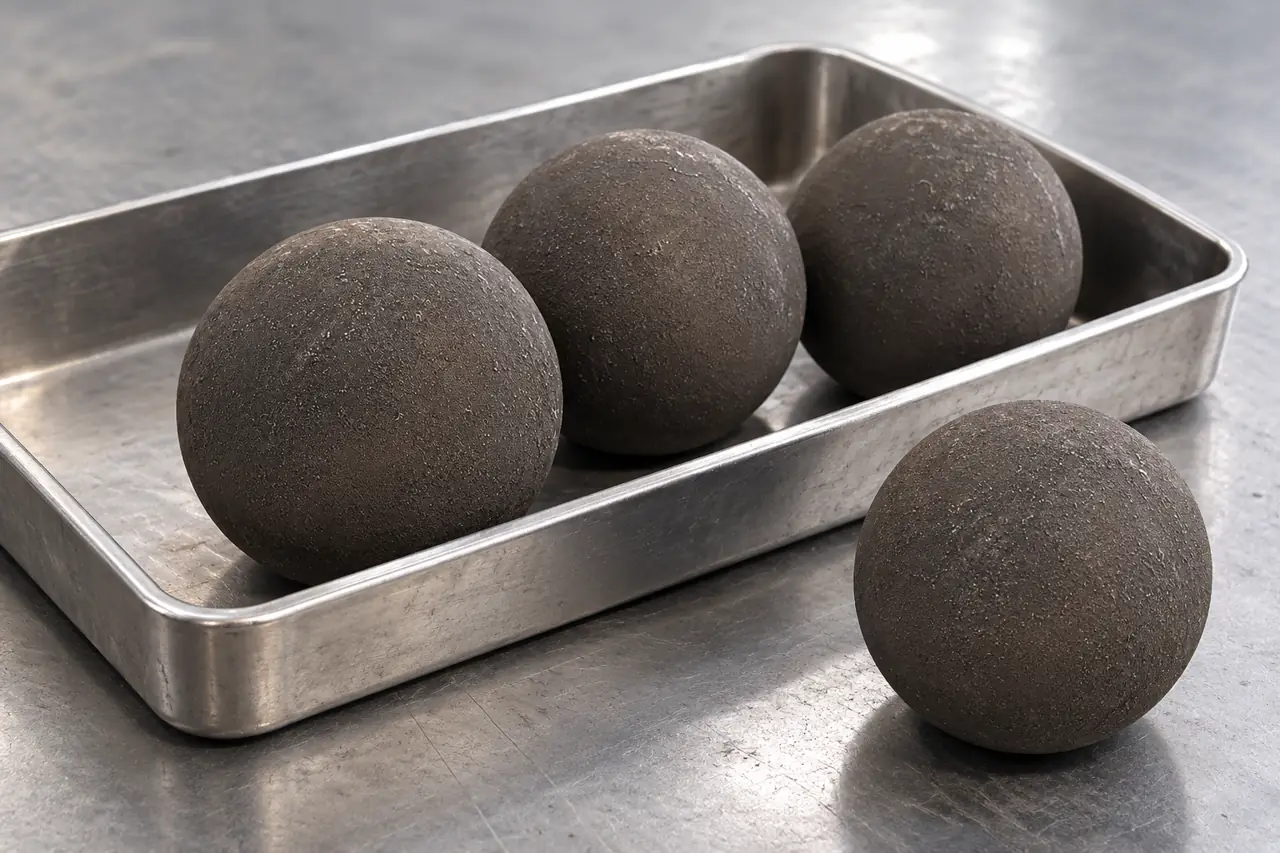
Keep the cement result constant
Compare a candidate with the current media at an agreed fineness and relevant product-quality requirement. Record feed composition and size, operating conditions, circuit/separator state and the proportion of candidate media in the charge.
The sample tray is an AI-assisted material illustration. It is not evidence of a cement-mill trial. An output gain that changes the product or shifts work elsewhere in the circuit needs qualification rather than being reported as an unconditional media improvement.
- Quality baselineRetain the required fineness and relevant cement-quality criteria during the comparison.
- Circuit baselineRecord feed, operating state and separator conditions with the candidate charge proportion.
- Trial conclusionQualify gains that change the product or shift grinding work elsewhere.
Wear accounting needs useful output and comparable charge maturity
Account for inventory, additions and fragments against accepted output at a comparable charge maturity.
Use a clear start/end inventory and actual additions with accepted cement output. Keep broken balls and removed fragments separate from gradual diameter loss. A new charge, mature charge and partial candidate addition represent different conditions.
Include required energy, rework or quality consequences in the comparison. A laboratory abrasion test can characterize its conditions but cannot guarantee the mill's consumption or service life. State the measured basis and limitations of the plant comparison.
- InventoryStart/end and additions
- Mix maturityNew, mature or partial candidate
- LossGradual wear versus fragments
- OutputAccepted cement and relevant consequences
Packing should preserve the selected cast grade and size
Preserve grade, physical size and represented lot identity before blending the supplied balls into the charge.
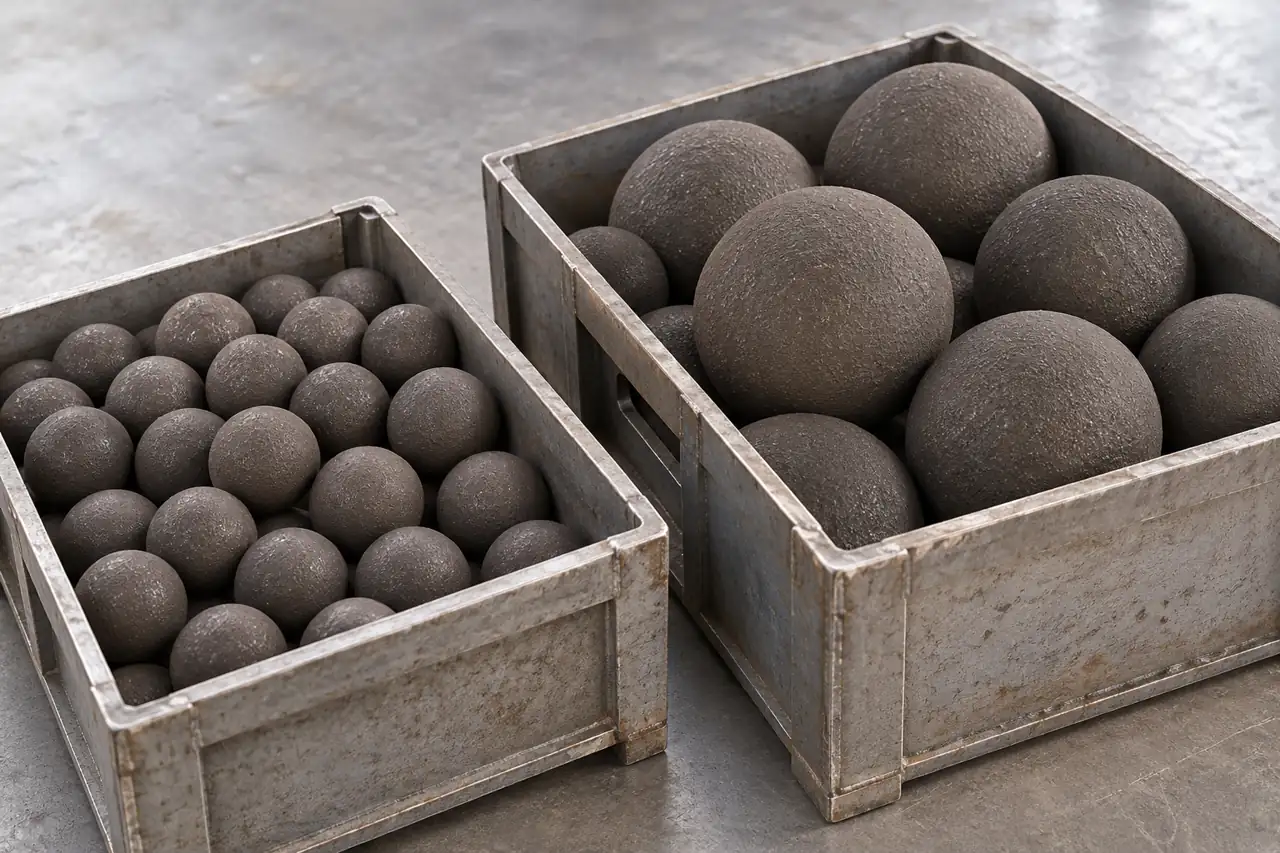
Preserve the supplied identity before charging
Keep material grade, physical size and represented lot identifiable in each agreed package and packing-list line. Inspect receipt condition and reconcile corresponding records before the media is blended into the charge. Retain unused samples separately.
The separate containers in the image illustrate segregation, not an actual dispatch or verified pack mass. Agree handling, net contents and shipment protection for the selected supply rather than assuming every generic bag field applies.
- Package identityKeep actual cast grade, physical size and lot reference on each package.
- Receiving comparisonReconcile net contents and represented records before mixing balls into the mill.
- Unused referenceRetain identified unused media separately for later material or breakage investigation.
A replenishment change needs a controlled comparison
Review material and size changes alongside process conditions before treating replenishment as an equivalent repeat.
Carry the approved alloy, treatment condition, diameter mix and evidence scope into repeat orders. Review a proposed producer, material or size change with its likely impact on the actual compartment and circuit. Same chromium wording is not sufficient equivalence.
If breakage rises or fineness drifts, preserve failed balls and process records. Check feed, charge and liner/diaphragm changes alongside supplied material before choosing another alloy or higher hardness.
- ApprovedAlloy, condition and mix
- ChangeSource, material or diameter
- CompareCompartment/circuit impact
- ReleaseDefined technical revision
Define the cement circuit and media comparison
Send the circuit, current charge and loss evidence so the cast-media proposal addresses the actual grinding task.
Share the current charge and the loss pattern your mill is seeing. We can review a selected cast-media proposal and a comparison that preserves your cement-quality target.
Qingdao Relia Industries Co., Ltd.
Contact address: Shuyuan Road, Qingdao, Shandong, China
- Mill compartments and liner arrangement
- Feed and target cement quality
- Current alloy and diameter mix
- Inventory additions and failure samples
- Required batch evidence and destination
Enquiry scope and supporting detail
Send mill/compartment configuration, liner/diaphragm reference, feed and target fineness, current ball alloy and diameter mix. Include additions, inventory basis, fracture or spalling observations and the cement-quality measures that must remain acceptable.
Request a selected cast model and defined batch evidence with a representative comparison plan. Add quantity, packing and destination; actual availability, samples and commercial schedule are agreed for the chosen grinding-media offer.
- MillCompartment and operating brief
- MediaMaterial and diameter mix
- TrialComparison and acceptance plan
- SupplyQuantities and packing limits