

Blasting Media Replacement for Forging Scale Removal
Replace forging descaling media by comparing the surface and line result, not just the abrasive price. Start with the current machine limits and decide whether impact cleaning or angular cutting fits the duty. This guide helps you isolate residual scale, feature damage and recovery losses so the new media has a clear reason for approval.
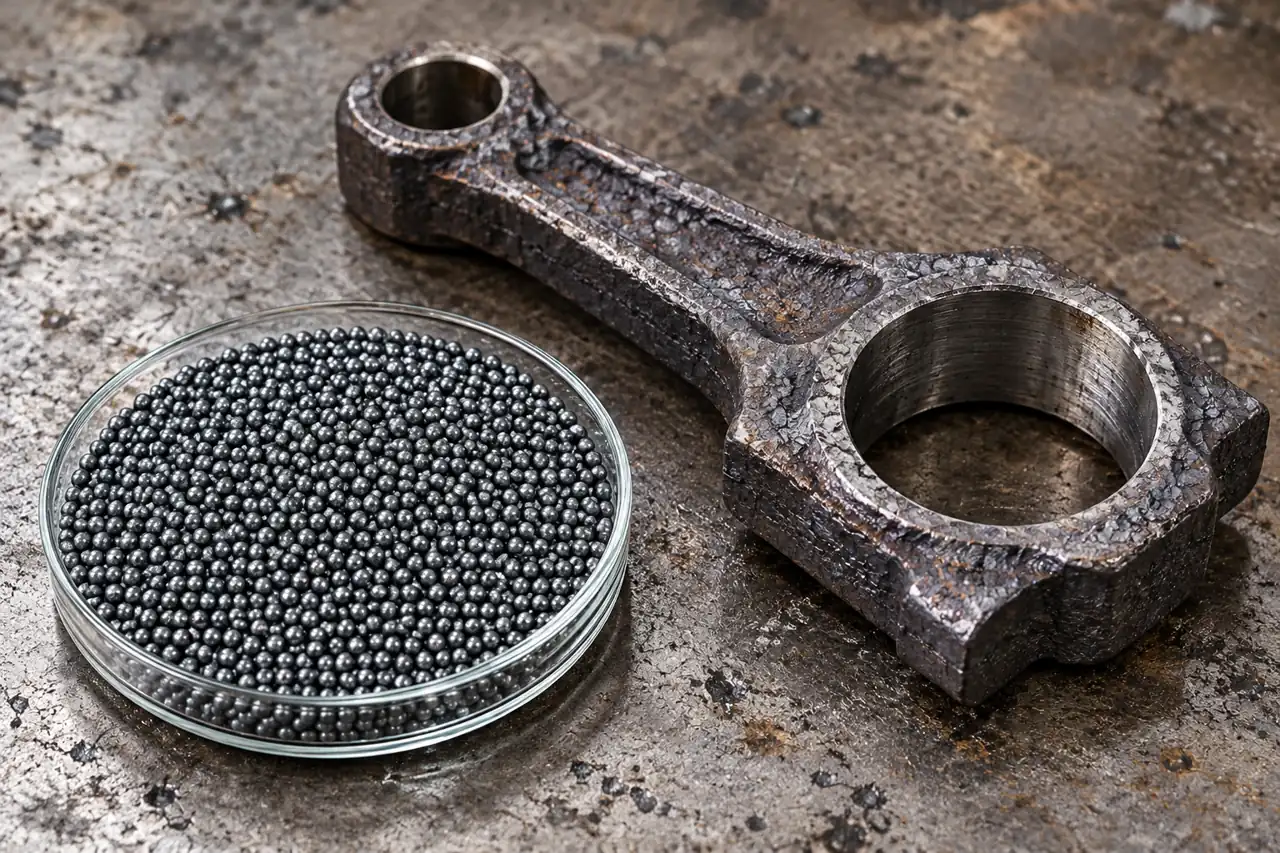
Match the action to the forging duty
For a forge replacing descaling media, qualify a cast-steel-shot candidate first when the existing wheel-blast process relies on repeated impact; assess angular grit when the required texture or scale-removal duty calls for cutting action. Keep the machine's permitted material and grading as a hard boundary. Relia manufactures cast steel shot and grit and can discuss an offered identity against your current abrasive. Compare residual scale, critical-feature damage, working-mix behavior and accepted output on representative forgings. Start by sending the current specification, failure pattern and a recorded baseline load so the proposed switch addresses a defined line problem.
- Impact descalingAssess cast shot where repeated rounded impacts support the established cleaning process.
- Angular cuttingAssess grit where texture or residue removal requires a different contact action.
- Machine limitsKeep permitted material and grading fixed while shortlisting the candidate abrasive.
Selection context and decision detail
| Buyer requirement | Relia response | Evidence or condition |
|---|---|---|
| Preserve descaling performance | Cast steel shot and grit manufactured in-house | Candidate form and grading must fit the existing machine |
| Explain a batch difference | Incoming, process and final inspection records can be provided | Match record scope with the selected abrasive lot |
| Approve a source change | Discuss a controlled baseline-to-candidate comparison | Representative forgings and written surface limits required |
Cast-abrasive production and batch evidence support the switch
Connect the offered cast abrasive specification with Relia production stages and corresponding batch records.
Relia is the brand of Qingdao Relia Industries Co., Ltd. We manufacture cast steel shot and steel grit through in-house melting, atomization, heat treatment and grading. We inspect incoming material, production stages and finished supply, and can provide corresponding batch records. For a forging-line change, connect those records with the proposed steel identity, particle condition, hardness basis and sieve limits. The inspection method and acceptance criteria for your particular offer still need agreement; no generic production claim establishes its cleaning rate.
- Melting and atomizationMaterial identity and cast-particle condition
- Heat treatment and gradingHardness basis and sieve population
- Inspection recordRelevant incoming, process and final evidence
Particle shape changes the descaling action
Rounded shot and angular grit act differently on scale, surface texture and sensitive forging features.
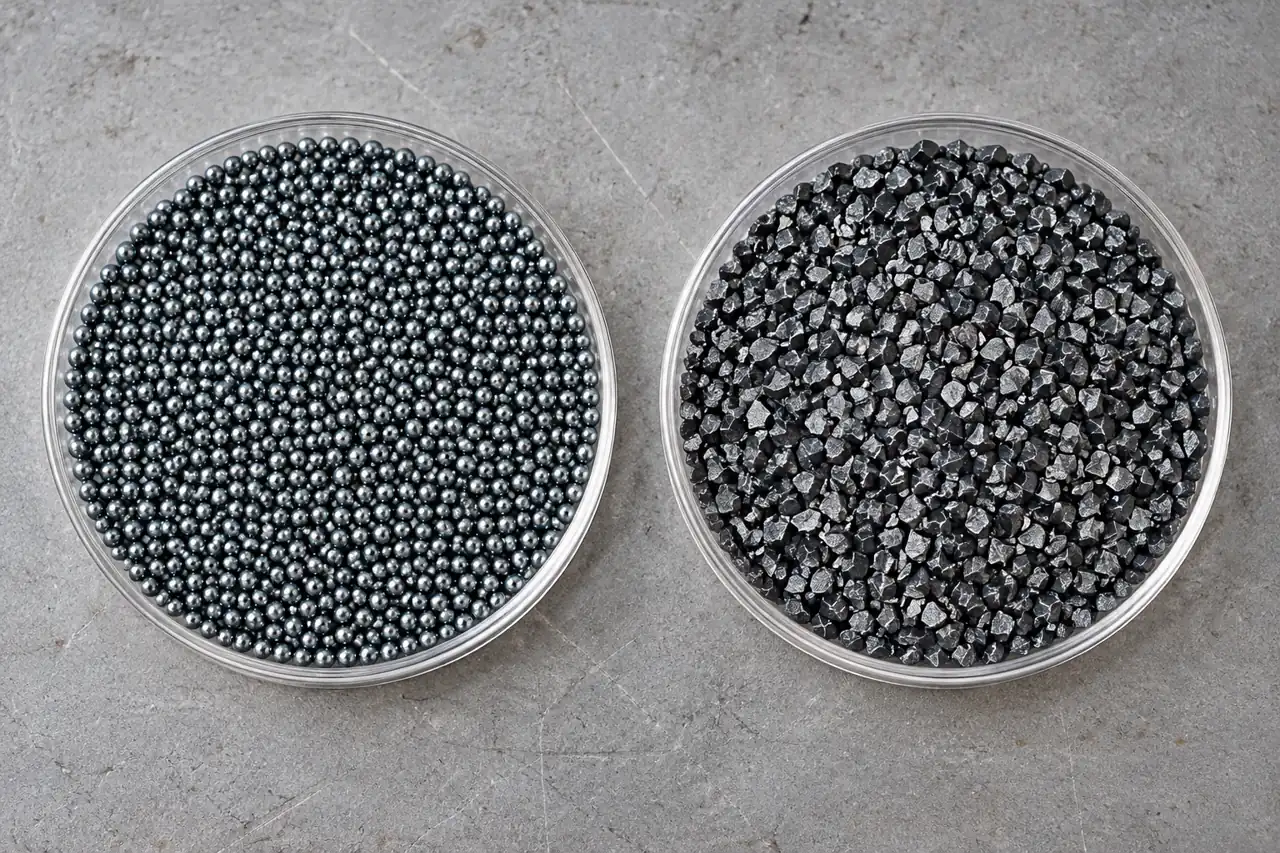
Read residue removal and texture together
Repeated rounded-shot contacts transfer momentum into brittle scale and leave overlapping indentations in the metal. Angular grit concentrates contact along edges and can create a sharper texture. Either can remove scale on an exposed face while causing an unwanted result on an edge, bore or thin feature.
The cast-shot catalogue reference gives 42–53 HRC and broad 12–20 mesh wording, but also retains an irregular-shape field. The steel-grit reference combines S70–S780 title wording, a 46 option and a 12–220# range. Reconcile the actual offered form and grading rather than treating these labels as interchangeable specifications.
- Rounded particle contactRepeated indentations can break scale while also changing the underlying metal texture.
- Angular particle contactEdges can increase cutting action while changing the finish on exposed features.
- Sensitive forging areasInspect bores, edges and thin features independently from the clean exposed face.
Product references for your shortlist
Open the product details, then discuss the exact specification for your application.
Cast shot for forging descaling
A candidate for an impact based forging cleaning comparison within the actual wheel machine abrasive limits.
Steel grit for descaling comparison
A candidate when angular cutting and the required surface texture justify a comparison with the current forging media.
Production stages lead to different acceptance checks
Read new media evidence separately from the changing charge after wear and scale carry in.
Melting establishes composition; atomization creates the cast-particle population; heat treatment changes its hardness and structure; grading selects the particle-size population. These transformations affect deformation, fracture and the mix delivered to the forging. A hardness reading therefore belongs beside particle form, structural condition and distribution.
Request the relevant batch evidence against the agreed limits. ISO 11124-3 concerns new high-carbon cast-steel media; its new-supply requirements do not describe the charge after wear, scale carry-in and replenishment. Keep a sealed candidate sample and a representative operating-mix sample under different references.
- Melting identityConnect the selected steel composition with the represented batch and agreed chemistry limits.
- Atomized particlesReview particle form and structural condition against the agreed physical acceptance basis.
- Heat treated conditionReview supplied hardness and structure alongside deformation or fracture during the forging trial.
- Graded populationCompare supplied sieve fractions with agreed limits; identify used operating media separately.
Scale location and access define the trial load
Keep forging condition and stream access comparable when building the baseline and candidate trial loads.
Use the same forging family, incoming scale condition, load arrangement and machine condition for the baseline and candidate. Mark difficult recesses and protected features before treatment. Ribs, neighboring parts and baskets can shield scale from the stream; increasing size or exposure will not remove a physical obstruction.
Record blast settings, loading and treatment time, then inspect the named locations. Change one relevant variable at a time where practical. If the new candidate is added to an established charge, record that dilution rather than describing the result as a trial of pure new media.
- Comparable inputForging family, scale and load
- Recorded deliveryMachine condition and settings
- Separate resultsScale, texture and critical features
- Defined approvalCandidate and duty actually assessed
Removal, texture and feature preservation are separate results
Judge scale removal, surface texture and feature preservation as separate outcomes on the forgings.
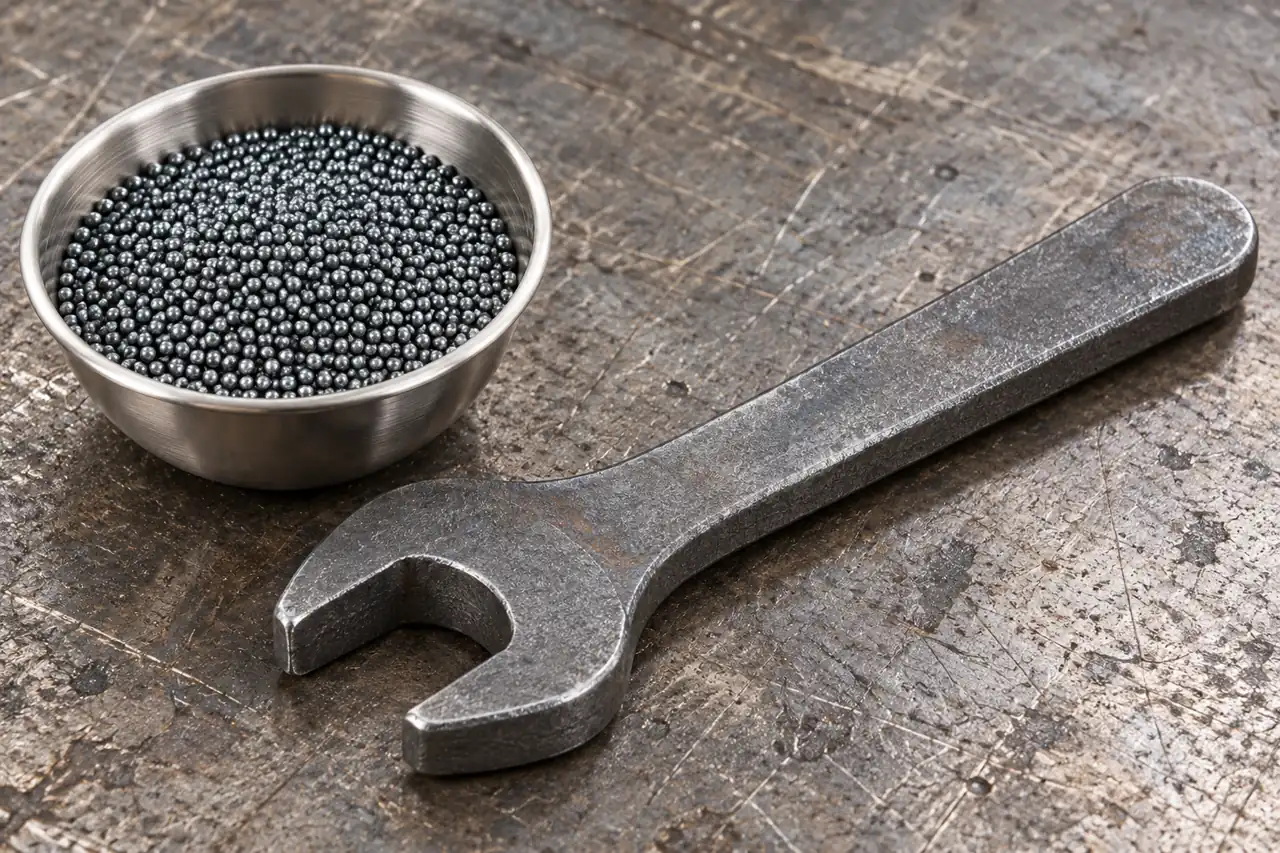
Accept three separate workpiece results
Assess residual scale at agreed locations, then inspect the created texture and any edge rounding or damage separately. A bright exposed face does not prove a recessed passage is clear. Where the next operation needs a measured profile or dimensional limit, retain its method and readings with the load identity.
The photograph is an AI-assisted workpiece and media illustration, not a documented before-and-after result. Your release record should identify the actual forging, media batch, operating mixture, measured characteristics and disposition. That makes the supplier comparison repeatable when another load is run.
- Residual scaleInspect named recesses and surfaces using the agreed scale removal acceptance.
- Created textureKeep the required profile or finish measurement with the actual treated load.
- Feature preservationCheck the dimensional and edge condition of the sensitive forging locations.
Recovery losses can dominate the apparent media cost
Compare media additions with accepted output while investigating useful abrasive discarded through recovery.
The recycling charge contains new grains, worn grains, scale and fragments. Review screens, separator waste and carry-out on parts when additions rise. A candidate may appear economical per tonne yet increase rework, useful-shot discard or cleaning time.
Compare additions with a clear start and finish inventory and accepted forging output. Keep baseline and candidate mix maturity comparable. Report treatment time and rejected or reworked parts alongside media use; a fresh fill and a mature working charge do not support an unqualified consumption comparison.
- AdditionsStart/end inventory and fresh media
- Useful lossSeparator waste and part carry-out
- ReworkLoads receiving additional treatment
- Accepted outputConforming forging quantity or mass
A failed comparison needs material and line evidence
Retain the affected part, new material and working mixture to investigate a failed comparison.
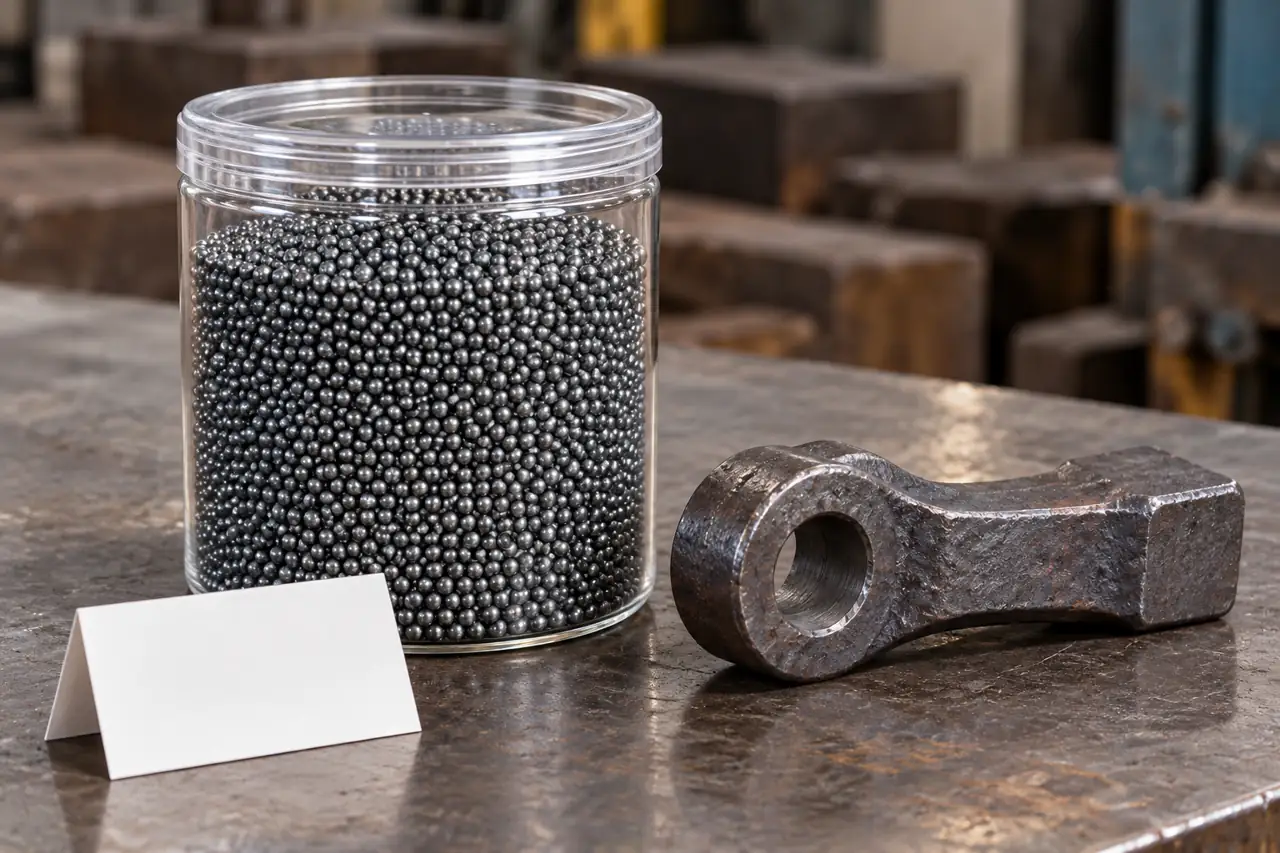
Keep the evidence needed for a failure review
Retain the candidate sample, unopened supply identity and working-mix sample with the affected forging. Describe whether the deviation is local residual scale, whole-part texture, damaged edges or rising additions. Each points to different checks: access, delivery energy, particle population, wear or separation.
Our corresponding batch records can support review of the supplied material. Combine them with your machine and load observations before deciding on another abrasive. Preserve the first result and explain any changed condition when repeating the trial.
- Retain the materialKeep the unopened candidate reference separate from the sampled operating mixture.
- Locate the defectDescribe local scale, texture change, edge damage or increased abrasive additions.
- Compare the conditionsConnect batch evidence with machine, loading and recovery observations before another change.
Approval defines the boundary of repeat supply
Preserve the exact approved abrasive and operating boundary when ordering later replenishment.
Approve the media specification for the forging family and operating conditions actually assessed. Carry forward the material identity, particle-form requirement, grading, hardness basis and relevant batch-record scope. Review a deliberate change in any of these rather than replenishing by product name alone.
A different forging material, scale history or coating requirement can require another comparison. Keep the approved result with packing and receiving instructions so the next order enters the same technical baseline.
- ApproveMedia identity and recorded duty
- ReceiveMatch shipment and batch evidence
- ReplenishPreserve the agreed working mix
- Review changeNew grade, part or surface requirement
Plan a media switch around the forging failure
Send the current media, forging failure pattern and baseline so the proposed switch answers a defined problem.
Share the current abrasive and the location of the scale or damage problem. We can discuss the candidate and the baseline needed for a meaningful comparison.
Qingdao Relia Industries Co., Ltd.
Contact address: Shuyuan Road, Qingdao, Shandong, China
- Current abrasive specification and sample
- Forging material geometry and scale condition
- Machine limits and baseline load settings
- Failed surface or critical feature
- Accepted output and trial quantity
Enquiry scope and supporting detail
Send the current designation and sample reference, forging material and geometry, incoming scale photographs, machine type and permitted media range. Mark the surface or feature that fails and provide the baseline settings, accepted-output criterion and proposed trial quantity. Request the offered particle specification and corresponding batch inspection records with the quotation.
Include packing, quantity and destination. We can then discuss the cast-shot or grit candidate and the sample arrangement for that particular line, with price, availability and schedule confirmed in the individual offer.
- BaselineCurrent media and observed problem
- Trial briefForgings · settings · acceptance
- Supply requestQuantity · packing · destination