

Fine Cut-Wire Media for Small Steel Components
Choose fine media by how it enters, cleans and leaves your actual small component. This guide connects particle material, condition and size distribution with delicate features, loading and recovery. It helps you plan a trial that judges residue removal, feature preservation and residual particles separately before approving a routine media charge.
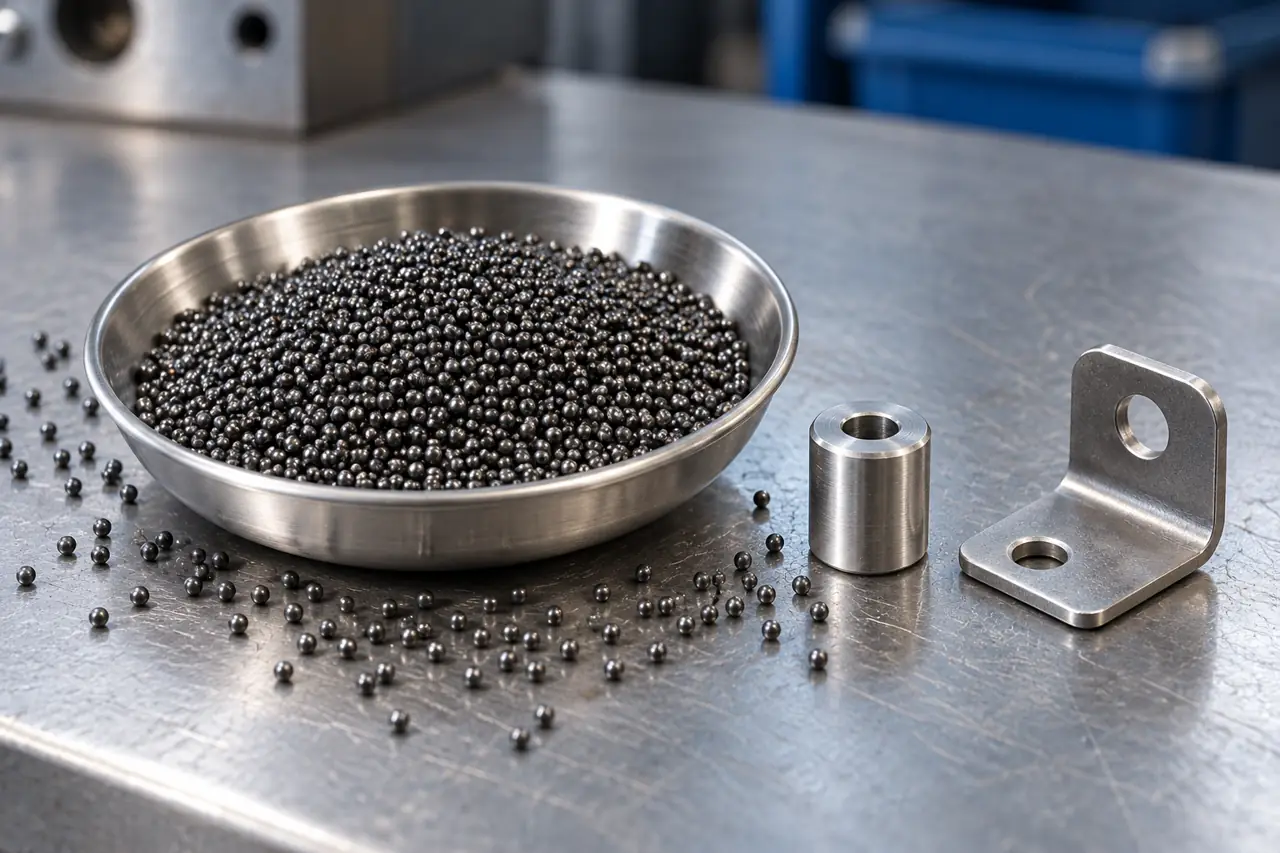
Approve the complete small-part cleaning task
For small steel components with holes, recesses or delicate edges, select fine metallic media by actual material, particle condition and complete size distribution, then prove cleaning and unloading on representative parts. A smaller nominal size can improve access yet introduce retained-particle or recovery problems; rounded appearance alone does not establish cut-wire origin or peening quality. Relia supplies the listed fine-media and stainless cut-wire candidates and can discuss their actual scope. Start with the component drawing, smallest critical passages, machine envelope and allowed finish change. Approve residue removal, dimensional preservation and residual-media checks separately before committing to a routine charge.
- Reach the residueMatch selected material, particle condition and distribution with the actual part access.
- Preserve the featuresSet acceptable texture, edge and dimensional change before the representative trial.
- Remove the mediaVerify unloading and residual-particle checks before parts continue to the next operation.
Selection context and decision detail
| Buyer requirement | Relia response | Evidence or condition |
|---|---|---|
| Small-feature cleaning | Discuss a defined fine metallic candidate | Actual material, form and full distribution required |
| Supply responsibility | Own wire/cast-shot scope is confirmed | Cutting/conditioning defined separately |
| Release evidence | Corresponding batch records available | Access, damage and residual-media tests remain distinct |
Fine-media supply needs a specific route and batch identity
Identify the selected particle route, producer and batch evidence separately from general wire or cast-abrasive manufacturing.
Relia manufactures steel wire and cast steel shot/grit, with the confirmed wire and cast-abrasive stages operated in-house. Cut-wire cutting and conditioning remain separate product-specific supply responsibilities. Identify the actual material, producer and supplied particle condition in the offer.
We perform incoming, process and final inspection and can provide corresponding batch records. For small parts, request the relevant distribution, particle-condition and material evidence and connect it with the sample used in the trial. General abrasive manufacture does not establish every fine-media or peening qualification.
- Own scopeWire and cast shot/grit production
- Selected cut wireProducer, cutting and condition
- EvidenceCorresponding records for actual batch and specification
Size tails matter at a small opening
Compare full distribution tails with passages and unloading paths instead of choosing by nominal grain size alone.
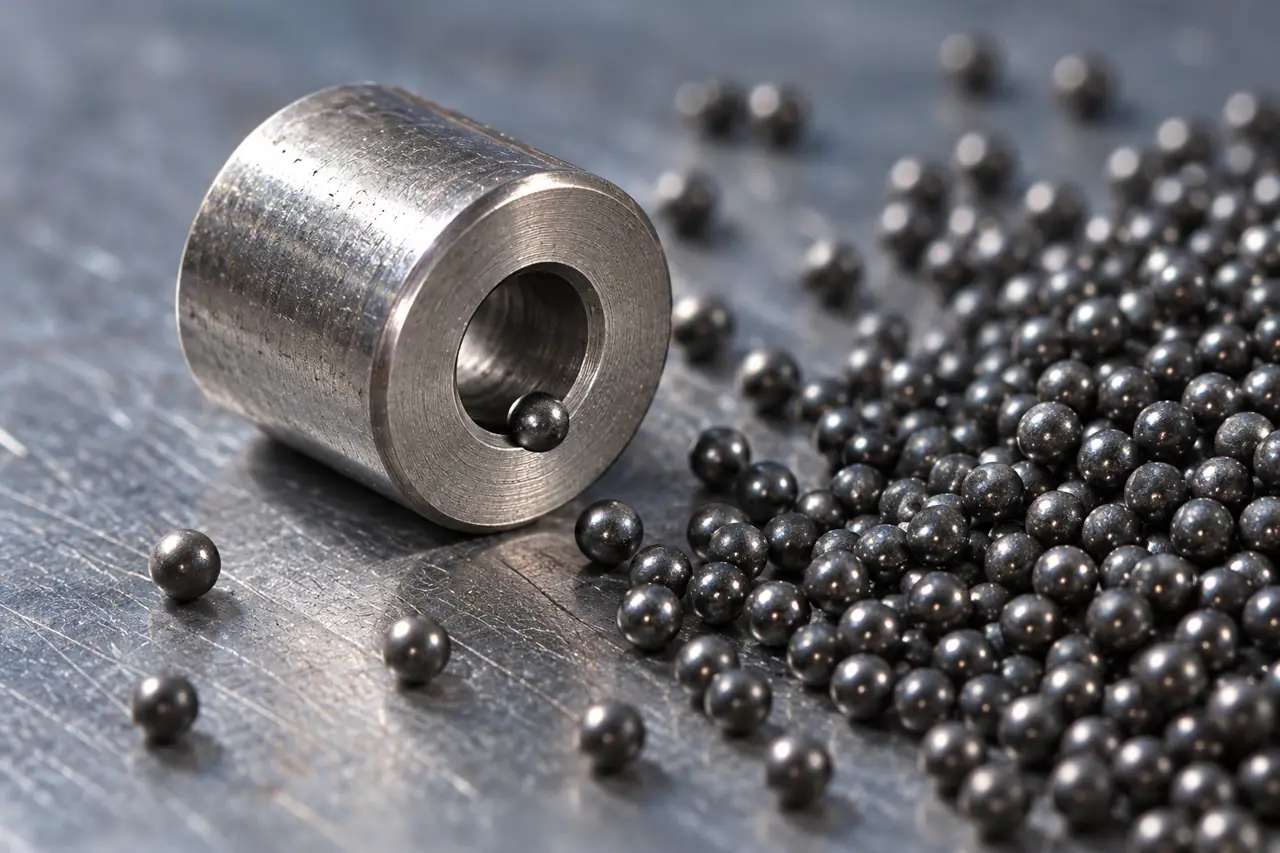
Compare passages with the whole population
Compare the whole size population with holes, slots and unloading paths. A coarse tail can behave differently from the nominal grain, while worn fragments and fines can reach places the original particle cannot. Do not set a universal passage-to-particle ratio from a photograph.
The fine cylindrical-media reference gives a 0.3–1.4 mm range but has mixed material choices; the stainless cut-wire enquiry spans 0.2–2.0 mm. Define the actual metallic identity and grading in the technical offer. The illustrated ball at a bore is an access/retention example, not a measured clearance rule.
- Critical passageIdentify the smallest relevant opening and the actual unloading or escape path.
- Incoming distributionAssess coarse and fine tails as well as the selected nominal size.
- Used populationReview fragments and fines separately because service changes what reaches the recess.
Product references for your shortlist
Open the product details, then discuss the exact specification for your application.
Cylindrical steel-shot selection
A title-led steel-shot enquiry candidate to define by actual metallic identity, selected grading and component-cleaning duty.
Stainless cut-wire media enquiry
A stainless candidate when the small-part application requires a defined alloy, particle origin and supplied condition.
Particle geometry controls contact as well as access
Specify material, shape and conditioning separately because distribution does not describe contact geometry.
As-cut wire starts with cut faces and edges; conditioning changes their contact geometry. Rounded cast shot has a different production route. Select the form needed to remove the actual residue while preserving small edges, threads and thin sections.
A sieve result describes distribution, not shape. Keep material, particle condition and hardness basis separate in incoming approval. For engineered peening, the component's specified media and process qualification apply; a general fine-media title does not establish them.
- MaterialDefined metallic identity
- FormAs-cut or specified conditioned geometry
- PopulationGrading, tails and defects
- ApplicationRequired contact and feature preservation
Thin features need a controlled impact trial
Use representative thin features and recorded impact conditions to balance residue removal against texture or distortion.
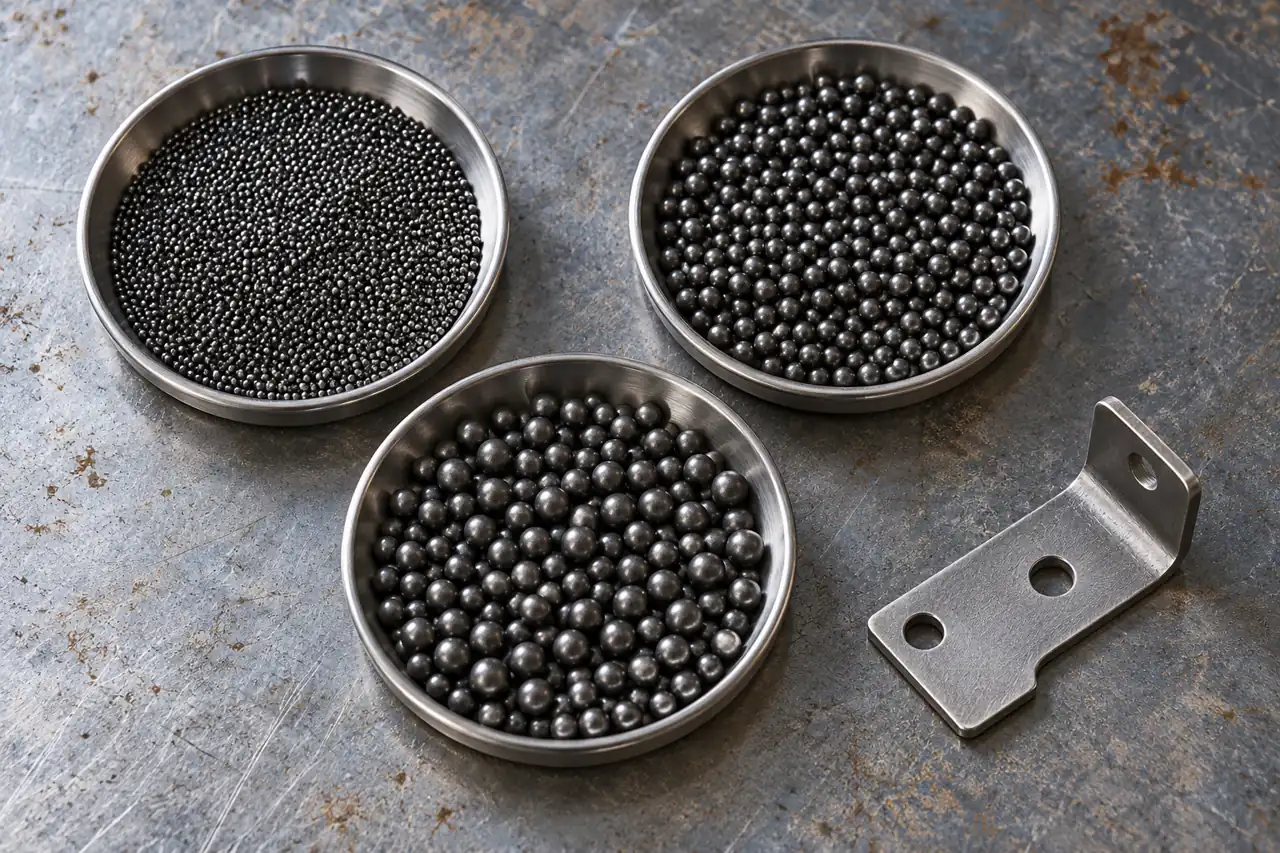
Judge cleaning and feature preservation separately
A small bracket can distort or develop an unacceptable texture before a difficult recess is fully clean. Record part material, section, starting residue, loading and media/delivery settings. Mark the edge, hole and flatness limits that the trial must preserve.
The separate trays and bracket are AI-assisted comparisons of candidate particle populations. They do not establish tested sizes or a before-and-after result. Assess required removal, appearance and geometry through their own acceptance methods.
- Removal resultAssess the actual residue at named difficult locations after the trial.
- Feature resultCheck the agreed thin sections, edges, holes and flatness against their limits.
- Trial contextRetain part material, loading and media delivery settings with both results.
Loading and presentation can solve an apparent media problem
Check orientation, nesting and load presentation before treating every untreated recess as a need for finer media.
Parts nested together or blocked by a carrier can prevent stream access even when the selected grains are small enough. Compare orientation, load depth and movement within the equipment's approved arrangement before increasing exposure.
Use representative small components, not only a flat coupon. Inspect difficult locations after unloading and any final cleaning step. Record which surfaces remain untreated and where particles collect so changes address the access path rather than a vague need for finer media.
- AccessOrientation and shielding
- LoadingDepth, nesting and movement
- ObservationNamed untreated locations
- AdjustmentRecorded relevant change
Recovery and residual-media checks complete the process
Verify that media leaves blind holes, threads and pockets after the actual unloading and cleaning route.
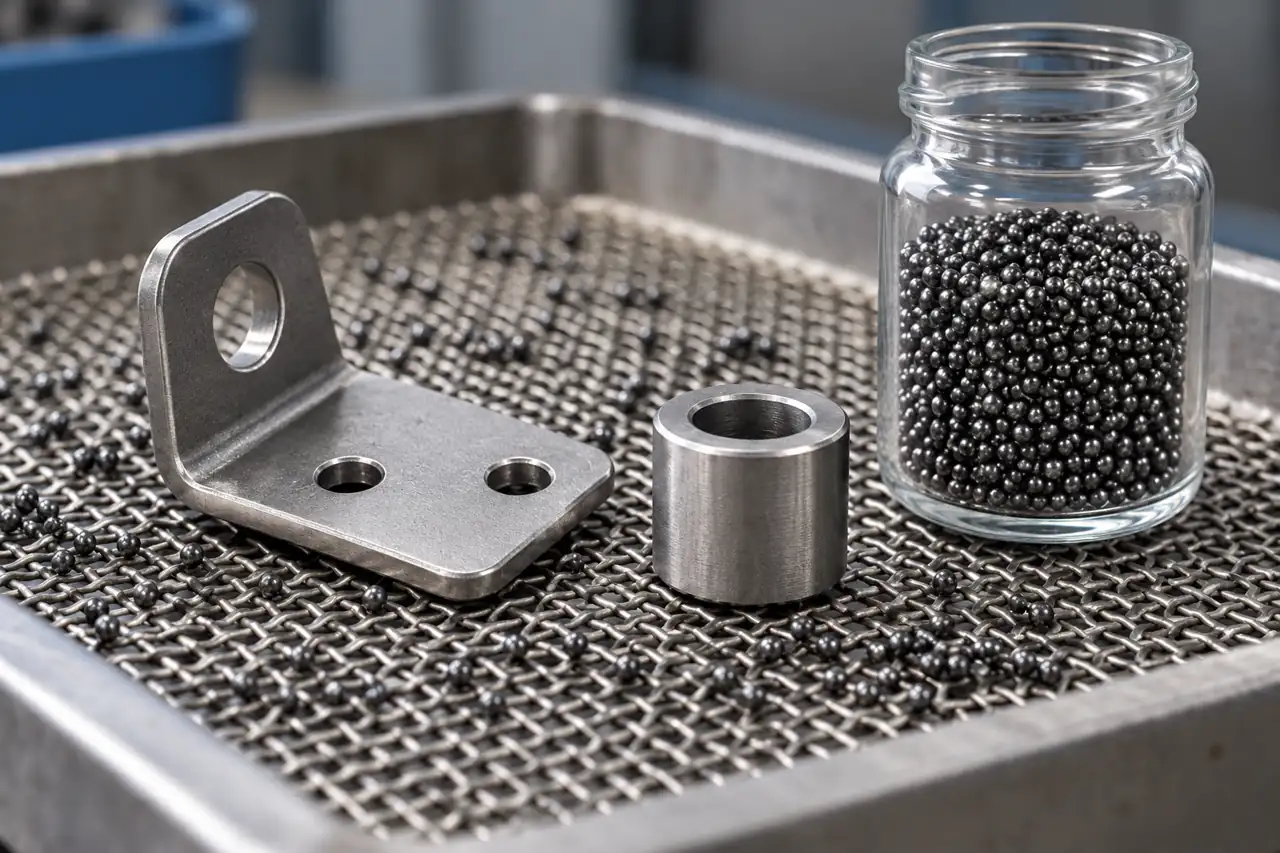
Complete the process by checking residual media
Media must leave the component as well as reach it. Review tray or basket openings, unloading motion, separation and final checks for blind holes, threads and pockets. A visually clean outer surface can conceal retained particles.
The mesh tray and sample jar illustrate these separate objects. They do not prove that a particular screen drains every supplied grain. Agree the actual part and equipment method for checking residual media before transfer to assembly, coating or service.
- Unloading routeDefine basket openings, part movement and separation for the actual component.
- Hidden locationsInspect blind holes, threads and pockets after the selected final cleaning.
- Release criterionAgree the residual-media check before transfer to coating, assembly or service.
A recycled charge changes the population reaching the parts
Monitor new and used media separately because wear, fracture and recovery change the operating particle population.
Wear, fracture, contamination and fresh additions alter the hopper mix. Sample unopened supply and used media separately, and review recovery discharge when loss or residue increases. A nominal new-grain range cannot describe every particle after service.
Compare accepted parts, rework, cleaning time and actual additions under similar charge maturity. Keep a deliberate material or condition change visible; the candidate should not be credited for an unrelated loading or equipment correction.
- New supplySelected incoming population
- UseWear and contamination develop
- RecoverDiscard and retained grains reviewed
- ReplenishPreserve approved operating condition
Retained references keep a small-part claim specific
Retain new media, working mix and the affected part so a claim identifies the exact failure location.
Retain unused media, working mixture and the affected component with the supplied batch reference. Photograph the exact retained-particle or damage location, adding dimensions and recorded settings where applicable. Our corresponding records can support review of the offered material alongside that application evidence.
Carry the approved metallic identity, distribution and particle condition into replenishment. Review a source, form or grading change before assuming that another fine-media label represents the same small-part result.
- SampleNew and used media kept separate
- PartExact failed location retained
- RecordBatch and process conditions
- DecisionMedia, access and recovery causes separated
Define access, feature and unloading requirements
Send passages, delicate features and residual-media acceptance so the proposed media can be tested meaningfully.
Share the component and the locations that are difficult to clean or empty. We can review a defined media candidate and a trial covering removal, preservation and residual particles.
Qingdao Relia Industries Co., Ltd.
Contact address: Shuyuan Road, Qingdao, Shandong, China
- Component material and critical passages
- Thin features and allowed change
- Machine loading and media limits
- Unloading and residual-media checks
- Current charge and trial quantity
Enquiry scope and supporting detail
Send the component drawing/material, critical passages and thin features, starting residue and allowed surface change. Include machine media limits, current charge, loading and unloading route, and how residual media is checked. Identify the selected fine-metallic or stainless candidate and required particle condition.
Request a defined technical offer, corresponding batch records and a representative component trial. Add quantity, packing and destination; actual media suitability and commercial terms are confirmed for that selected duty.
- PartOpenings, edges and material
- ProcessMachine, loading and separator
- AcceptanceRetention, finish and dimensions
- OrderTrial amount and destination