

PC Strand Procurement Against Prestressing Project Requirements
Order PC strand around the engineer’s product specification and the actual tendon system. This guide separates strand construction and relaxation evidence from protective assembly, anchorage and installation requirements. It helps you define whether the enquiry is for bare strand or a complete protected configuration and preserve the approved identity through project delivery.
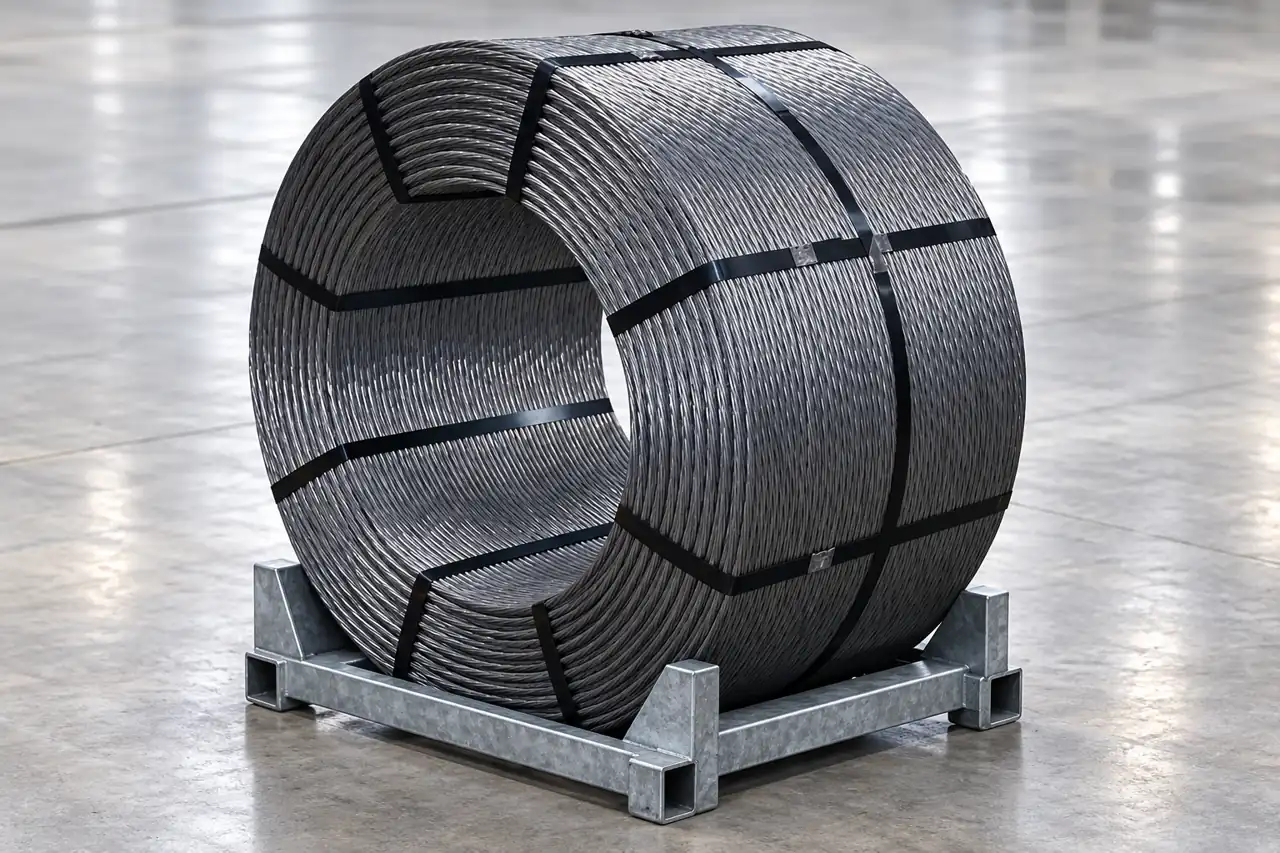
Name the configuration being procured
For a prestressing project, buy strand against the engineer's exact product and system requirements: construction, nominal area/diameter, tensile class, relaxation and required protection must be defined together. Uncoated strand and a complete unbonded tendon assembly are different supply scopes. Relia supplies the listed PC-strand enquiry and can discuss the actual producer and batch evidence; core-wire manufacture does not establish strand closing or tendon manufacture in-house. Start with the approved specification, anchorage and protection design. Resolve material, assembly and installation evidence before accepting a diameter or sheath colour as proof that the offered supply suits the project.
- Bare strandDefine construction, area, tensile class and required relaxation evidence for the strand.
- Protected assemblyAdd the specified medium, sheath and end protection when these are included.
- System interfaceState anchorage and stressing compatibility requirements controlled by the project design.
Selection context and decision detail
| Buyer requirement | Relia response | Evidence or condition |
|---|---|---|
| Project-qualified strand | Discuss the listed PC-strand supply | Grade, area, construction and relaxation must be explicit |
| Manufacturing responsibility | Core-wire operations are confirmed | Stranding/treatment and tendon assembly allocated separately |
| Actual configuration evidence | Corresponding batch records can be provided | Bare strand, protection and anchorage requirements remain distinct |
Strand production and tendon assembly need responsible providers
Assign strand closing, treatment and tendon protection responsibilities separately from the confirmed core-wire manufacturing scope.
Relia manufactures steel wire through drawing, annealing and galvanizing in-house and performs incoming, process and final inspection, with corresponding batch records available. Finished PC strand adds stranding and the specified treatment; an unbonded assembly adds its protection and end/system scope. Those operations are not inferred as in-house from core-wire manufacture.
Identify the actual strand producer, treatment and protection responsibilities in the technical offer. Agree the corresponding material records and any assembly evidence the project requires, keeping the approved engineering specification as the release basis.
- WireConfirmed core operations
- StrandActual closing and treatment provider
- TendonProtection and assembly scope identified
The required form comes before a diameter comparison
Select the required numerical strand and area basis before comparing catalogue diameter or coating references.
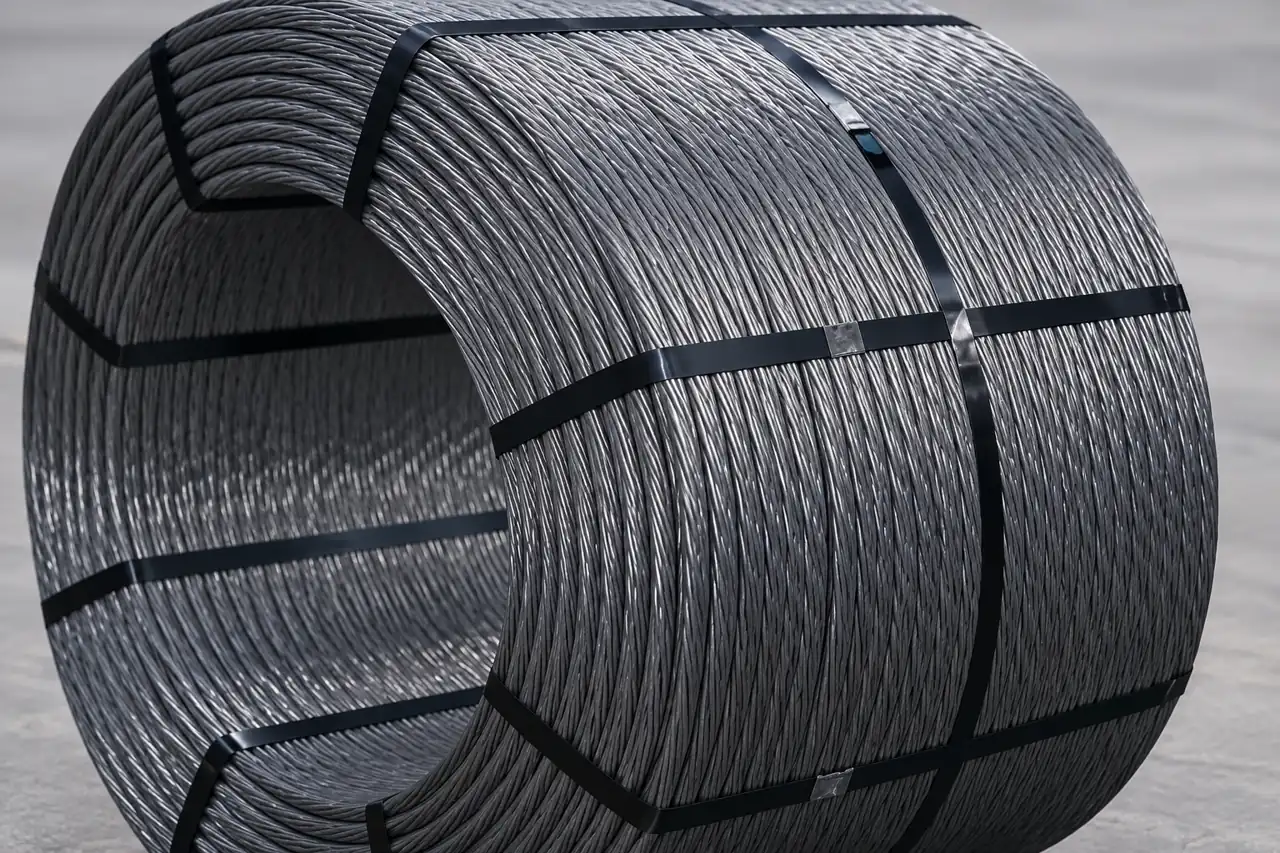
Define the project item before comparing diameter
The catalogue title requests SWRH82B unbonded strand at 12.7, 15.2 or 15.7 mm with black or blue coating, while its actual size labels are a different set. Use the project's numerical strand and nominal-area basis to define the offered item.
Confirm the exact prestressing standard and protection system; a generic A475 or coating field does not define a low-relaxation PC tendon. The specific supply specification is established in the technical offer rather than by combining unrelated family fields.
- Numerical identityState the required nominal area and diameter using the governing product basis.
- Mechanical identitySpecify tensile and relaxation requirements for the delivered assembled strand.
- Protection identityIdentify bare or protected supply and its actual project acceptance references.
Product references for your shortlist
Open the product details, then discuss the exact specification for your application.
Unbonded PC-strand project enquiry
A starting point for defining the actual strand construction and protection configuration required by a prestressing project.
Stranding and treatment affect load and relaxation behavior
Assess assembled-strand properties and relaxation separately because a constituent-wire result cannot characterize the complete strand.
A representative strand route draws constituent wires, closes the required construction and applies the specified thermal/mechanical treatment. Wire arrangement and final treatment affect the assembled strand's behavior; one core-wire test does not characterize the complete product.
Breaking force, yield/elongation and required relaxation evidence address different characteristics. Relaxation concerns steel stress loss over time at held strain. Use the selected standard and edition to define tests, material representation and acceptance, without borrowing another producer's treatment recipe or a generic high-tensile value.
- Constituent wireMaterial and section
- ConstructionSpecified strand arrangement
- TreatmentRequired final mechanical state
- EvidenceAssembly-level properties and relaxation
Unbonded protection is more than a coloured covering
Define the protective medium, sheath and ends because a coloured covering is not a complete unbonded system.
The project may require a defined protective medium, sheath, continuity, thickness and end protection compatible with the tendon system. Colour identifies appearance, not the complete barrier or service performance. Specify the actual assembly and its responsible supplier.
ASTM A416/A416M concerns the strand product; it does not by itself define every protected tendon or anchorage arrangement. Keep strand, protection and end-system records distinct so no required layer disappears behind the word unbonded.
- StrandProduct standard and material records
- ProtectionMedium, sheath and continuity requirements
- EndsInterface and protection scope
- ProjectAnchorage/stressing compatibility and release
Project acceptance reviews the delivered configuration
Match actual delivered strand and protection records with the project configuration and responsible technical approval.
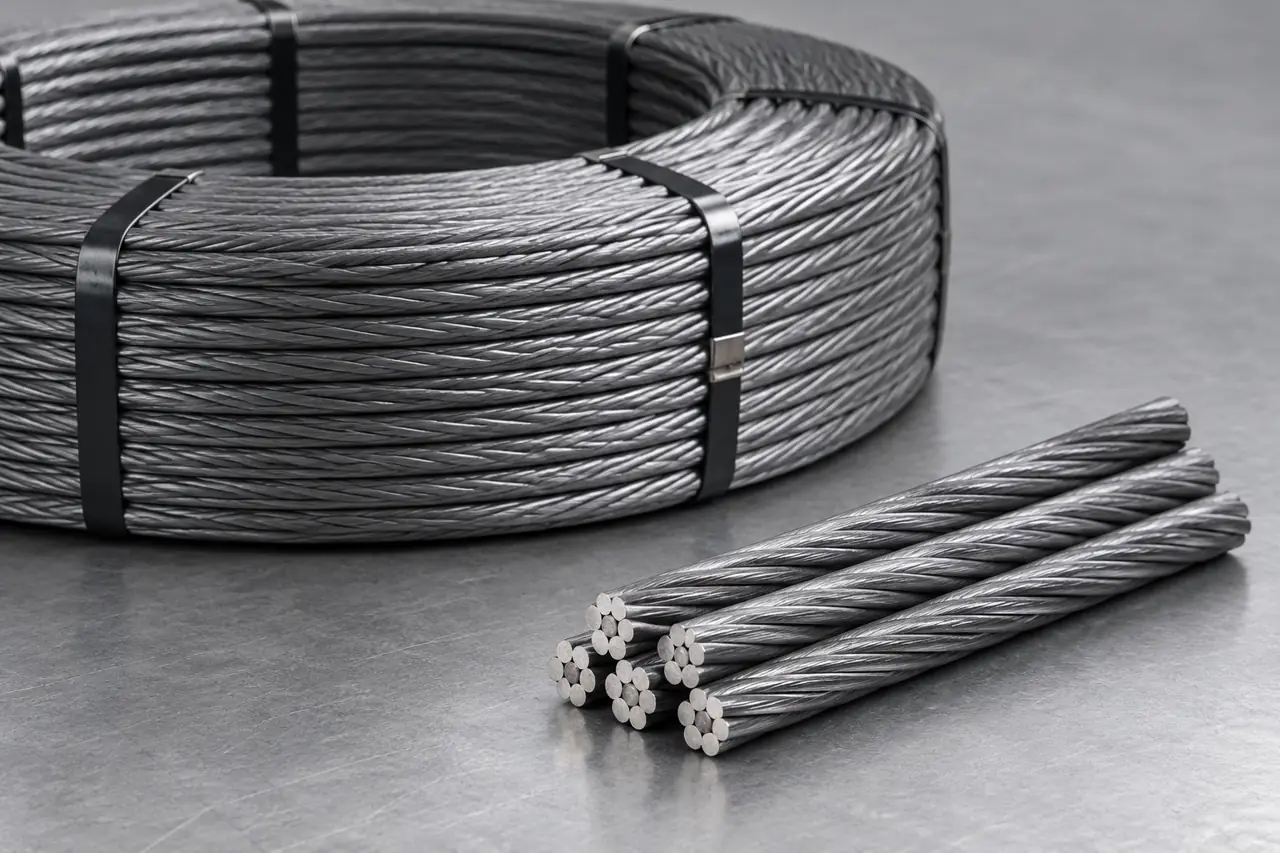
Review the actual delivered configuration
Reconcile the offered strand identity with the approved product specification, material results and actual coil/reel references. Review the selected protection and end condition where included. The project's technical authority controls compatibility with anchorage, stressing and installation requirements.
The bare metallic strand and cut samples pictured illustrate constituent construction only. They do not show a complete grease/sheath system or a qualified unbonded tendon. No stressing load, anchorage capacity or installed component result can be inferred from them.
- Strand conformityReconcile material results and coil references with the approved strand specification.
- Protection scopeCheck included sheath, medium and end condition against the selected assembly requirement.
- Project releaseRetain the technical authority’s decision on anchorage, stressing and installation compatibility.
Handling must protect the selected strand and sheath
Protect strand and sheath during handling while retaining identity through cutting and transfer.
Kinks, local damage, corrosion or a damaged protection layer can affect usability. Agree reel/pack support, unloading and payout with the selected producer's instructions and project route. Preserve material identity as lengths are cut or transferred.
Inspect receipt condition separately from material-document conformity. A matching record does not make a damaged section acceptable. Define any repair or disposition through the applicable project procedure and responsible supplier rather than assuming a field coating touch-up is equivalent.
- ReceiveMaterial and protection condition
- HandleApproved support and payout
- Cut/transferPreserve identity and protect ends
- DispositionProject procedure for damage/deviation
Separate coils should retain separate acceptance identities
Keep coil, lot and document references connected rather than releasing mixed supply by colour or outside size.
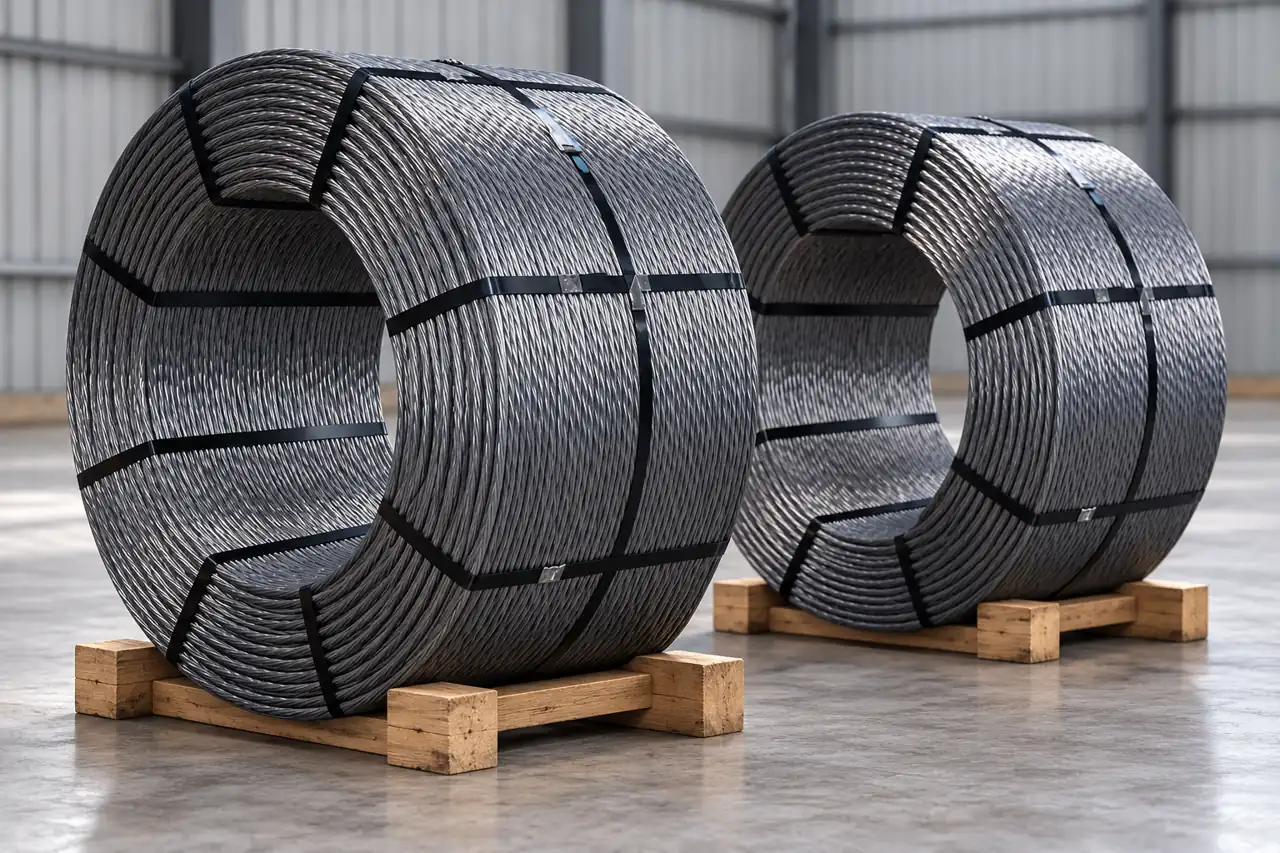
Preserve separate coil acceptance identities
Keep each represented lot, coil and document reference connected through the packing list and receiving record. If several sizes or protection systems arrive together, do not release them by colour or outside dimension alone.
The two staged coils are AI-assisted storage illustrations, not a dispatch or tested lift arrangement. Agree actual unit mass, support and identification in the offer; the catalogue's broad pack fields do not establish a current project shipment.
- Physical referenceKeep each coil and represented material lot distinguishable during receiving and storage.
- Document referenceConnect those identifiers with the packing list and required inspection records.
- Variant separationSeparate different sizes and protection systems before releasing material to the project.
A substitution needs engineering review before use
Submit changes in construction, treatment, producer or protection for engineering review before substituting project material.
A change in grade, area, construction, treatment, producer or protection system can alter the project decision. Retain the approved technical revision and corresponding evidence, and keep proposed differences visible before commercial release. Same-diameter wording is not authorization to substitute.
For a dispute, preserve the affected material, batch record and damage or test evidence. Distinguish strand conformity, protection damage and installation conditions so the investigation follows the actual configuration.
- ApprovedMaterial and assembly revision
- DifferenceSource, construction, treatment or protection
- ReviewAffected evidence and project decision
- ReleaseAuthorized supply scope
Define the strand and tendon supply scope
Send strand and tendon requirements together so the actual product, protection and record responsibilities can be defined.
Share the approved project requirement and the configuration to be delivered. We can review the strand offer, protection responsibilities and the records needed for technical acceptance.
Qingdao Relia Industries Co., Ltd.
Contact address: Shuyuan Road, Qingdao, Shandong, China
- Product standard and strand construction
- Nominal area diameter and class
- Required relaxation and material evidence
- Bare or protected assembly scope
- Anchorage interface and reel constraints
Enquiry scope and supporting detail
Send the governing product/project standard and edition, required construction, nominal area/diameter, grade, relaxation requirement and quantity. Add whether supply is bare strand or a defined unbonded assembly, with protection, anchorage-interface and required record scope.
Include coil/reel constraints, destination and technical review points. Request an offer identifying the actual strand producer and assembly responsibility with corresponding batch evidence. Samples, additional tests and commercial terms require project-specific confirmation.
- SpecificationProject material designation
- SystemActual required supply form
- EvidenceTest and traceability requirements
- DeliveryCoil constraints and lot sequence