

Stainless Steel Wire for Woven Screening and Filter Mesh
Choose stainless weaving wire around the required opening, weave and service environment. This guide helps you define alloy, diameter and supplied condition, then connect the wire with loom behavior and finished-cloth checks. You can use it to prepare a representative trial that separates input-wire variation from crimp, tension and surface-handling effects.
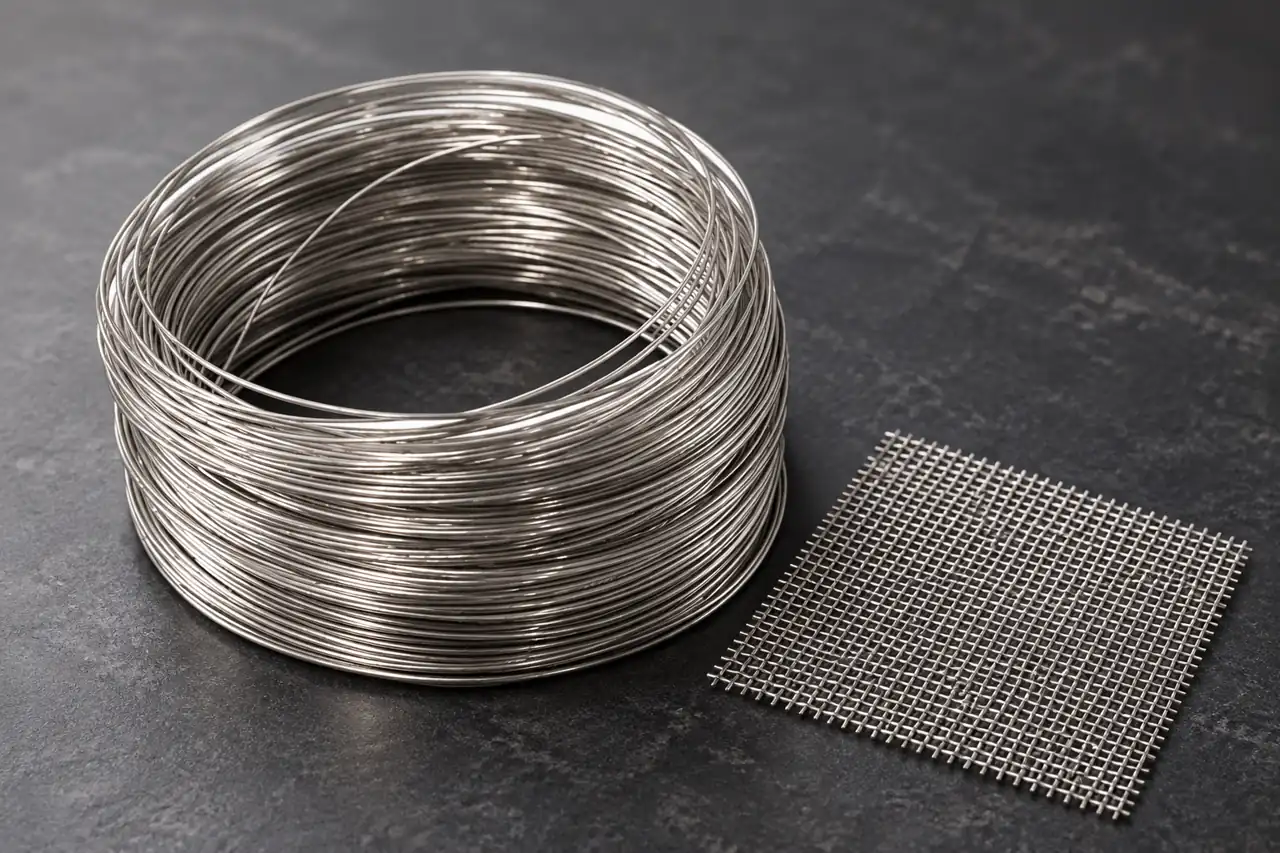
Build the wire enquiry from the cloth requirement
For a weaver producing screening or filter mesh, select a named stainless alloy, measured wire diameter and supplied condition against the weave and service environment. Fine aperture control depends on wire geometry and weaving behavior, while corrosion and contamination requirements depend on the actual fluid, temperature and cleaning route. Relia manufactures steel wire and can discuss the listed stainless candidate with corresponding batch evidence. Start with the weave drawing, target opening, warp/weft diameters and required wire surface. Approve a representative weaving run and finished-cloth checks before treating a broad stainless grade list as a filter-performance specification.
- Weave and openingDefine the target geometry and warp or weft dimensions required by the cloth.
- Material and conditionSelect the stainless alloy and supplied state for weaving and the actual exposure.
- Trial acceptanceCheck loom behavior and finished cloth separately under the intended production conditions.
Selection context and decision detail
| Buyer requirement | Relia response | Evidence or condition |
|---|---|---|
| Controlled weave input | Own steel-wire manufacturing operations | Actual alloy, diameter and condition required |
| Traceable wire evidence | Corresponding incoming/process/final records available | Record scope follows the selected wire |
| Finished mesh suitability | Discuss the intended weaving trial | Aperture and filter performance assessed on actual cloth |
Wire manufacture supports a defined weaving input
Use wire production and batch records to define the input while keeping finished-cloth and service acceptance separate.
Relia performs drawing, annealing and galvanizing in-house for steel wire. Incoming, process and final inspection are carried out and corresponding batch records can be provided. For stainless weaving wire, define the actual alloy, drawing/annealed condition and clean surface in the selected offer; general galvanizing capability does not apply automatically.
The batch record should identify the represented wire and the agreed dimensional, material and mechanical checks. Finished-cloth opening, weave defects and filtration performance are separate decisions made on the woven product.
- Wire routeSelected alloy and condition
- InspectionCorresponding staged batch evidence
- Cloth routeWeaving, cleaning and application acceptance
The catalogue range does not select alloy or temper
Specify exact diameter, condition and wire surface rather than relying on the broad stainless range or grade family.
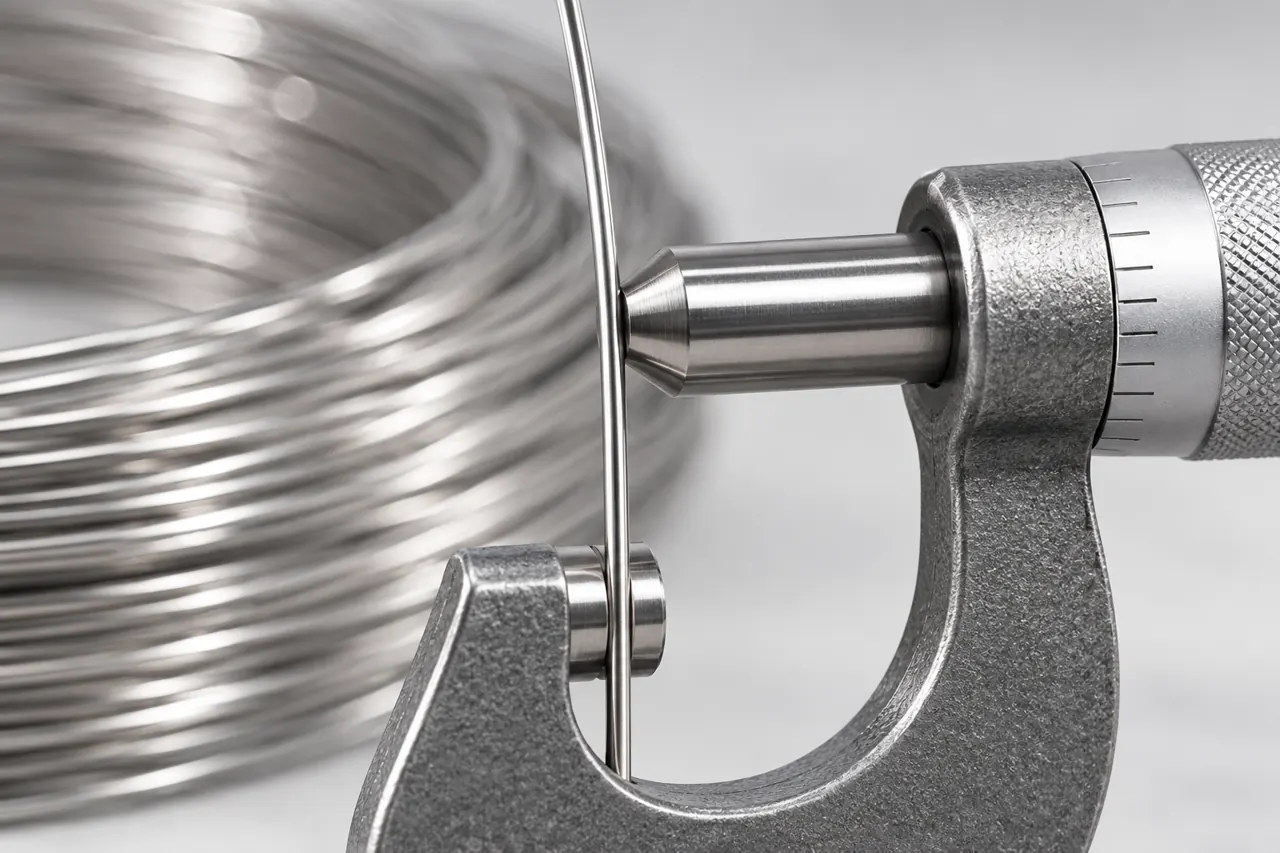
Specify the actual wire entering the loom
The stainless listing has one actual 0.3–26 mm diameter-range option, round spring-wire wording, 304/316 references and a broader mixed alloy list. It provides no tensile value, supplied temper or weaving test. BA/2B descriptions also need a wire-specific surface definition.
Select one designation and precise diameter with limits, surface and coil arrangement. A general 400 Series field cannot replace that identity. If the required fine wire lies outside the actual range, request it explicitly rather than treating the family listing as confirmed availability.
- Named alloySelect one stainless designation with the material evidence required for its service.
- Diameter limitsState exact diameter and relevant shape limits rather than a broad range label.
- Surface and stateDefine the supplied condition and wire-specific cleanliness needed for the weaving route.
Product references for your shortlist
Open the product details, then discuss the exact specification for your application.
Stainless wire for weaving trials
A stainless-wire enquiry reference for a defined alloy, diameter and delivered condition evaluated on a screening or filter-mesh loom.
Wire diameter and crimp influence aperture geometry
Wire pitch, diameter and crimp jointly determine openings, so raw-wire measurements cannot establish final cloth geometry.
For a simple square opening, wire pitch and diameter jointly determine the free gap; a diameter change at the same pitch changes aperture and open area. Woven geometry also includes crimp and the way warp and weft seat. A raw-wire average cannot establish the final opening distribution.
Measure wire at agreed locations and directions, then inspect the finished cloth using its governing method. ASTM E2016 is relevant to general industrial woven cloth but does not automatically cover specialized Dutch/filter weave or test-sieve cloth. Specify the actual product basis.
- WireDiameter distribution and ovality
- WeavePitch, crimp and tension
- ClothOpening and defect assessment
- ServiceRequired filtration or exposure result
Delivered condition affects weaving and springback
Trial the supplied condition with actual loom tension, recording seating, breaks, coil set and surface drag.
Drawing changes wire strength and remaining ductility; annealing changes the condition entering the loom. The wire must bend and seat at crossings without unacceptable fracture, loose crimp or unstable feed. A stronger wire is not automatically a better weaving input.
Trial the selected condition with the intended weave and tension. Record coil cast, helix, surface drag and breaks alongside the cloth geometry. Keep warp and weft identities separate where their sizes or conditions differ.
- Strength/ductilityCondition entering the loom
- SurfaceDrag and cleanliness
- Coil setCast, helix and payout
- TrialBreaks, seating and final geometry
Finished cloth tests answer the application question
Assess geometry, defects and required service results on the woven cloth rather than a fine-looking raw-wire sample.
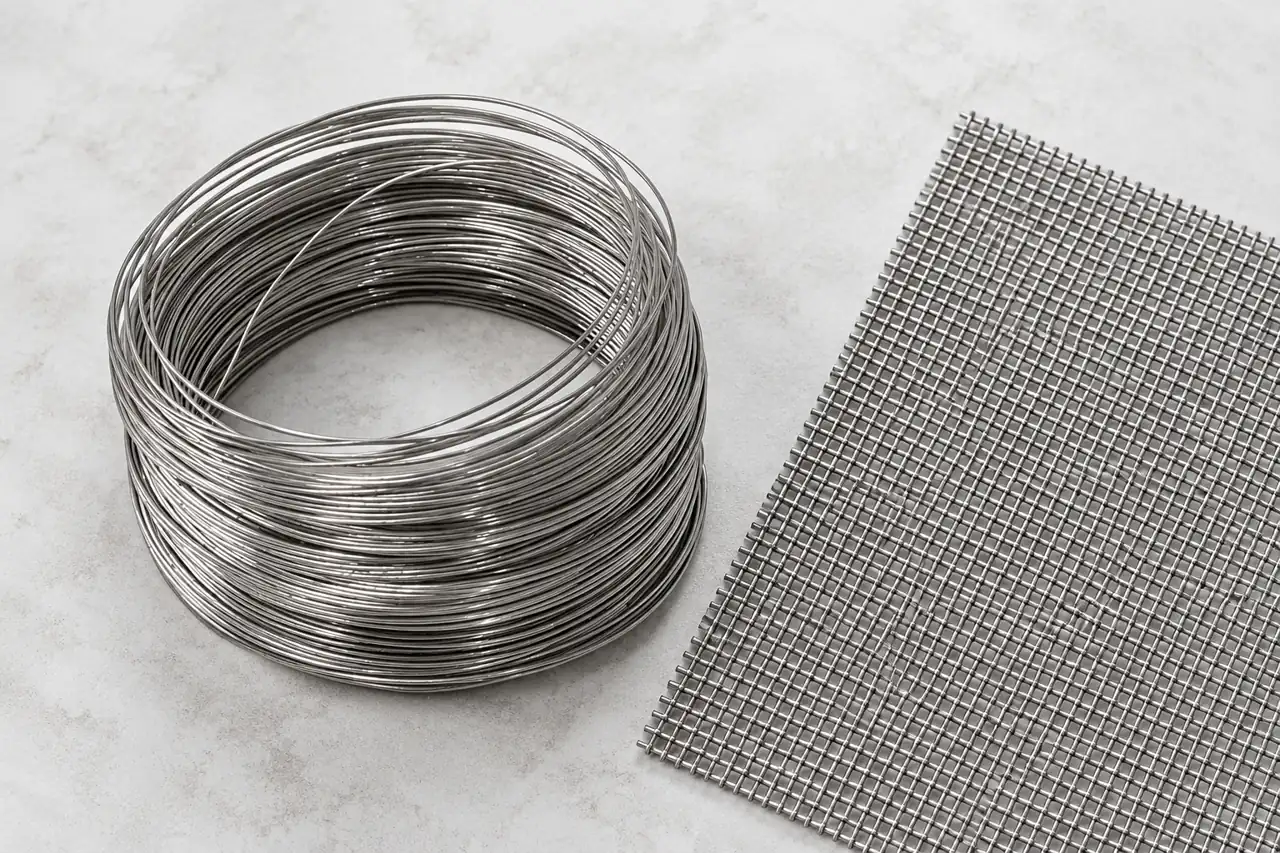
Assess the cloth that performs the application
Inspect aperture or weave geometry, broken wires, distortion and the required surface state on the actual cloth. A fine-looking mesh coupon cannot demonstrate filtration cut-off, pressure behavior or corrosion performance. Define application tests only where the product's intended service requires them.
The illustrated coil and mesh are AI-assisted form references. The earlier tool image has no valid reading or sampling record. Use the corresponding real wire evidence and actual woven samples to judge the offered material.
- Opening geometryInspect the actual weave or aperture distribution under the governing cloth method.
- Fabrication defectsLook for broken wires, distortion and the surface condition required after weaving.
- Service requirementDefine any necessary filtration or exposure assessment separately from the raw-wire records.
Surface handling matters to sensitive filtration
Define supplied residue and the downstream cleaning route, with alloy selected against the actual filtration environment.
Oil, drawing residue, foreign metal or handling debris can affect the next cleaning or service operation. Define what is supplied and what the weaving line removes. A bright stainless surface is not a chemical-cleanliness result.
Where contamination is critical, use compatible handling and the specified cleaning/assessment route. Select alloy against actual exposure rather than promising a universal corrosion life from 304/316 wording. Preserve surface-condition observations with the trial rather than changing alloy to solve an unrelated feed problem.
- Supplied stateDefined wire surface
- HandlingCompatible tools and storage
- CleaningSpecified downstream route
- ResultApplication-appropriate cleanliness evidence
Coils should arrive in a usable feed arrangement
Match coil dimensions and payoff direction to the loom while protecting wire condition and batch identity.
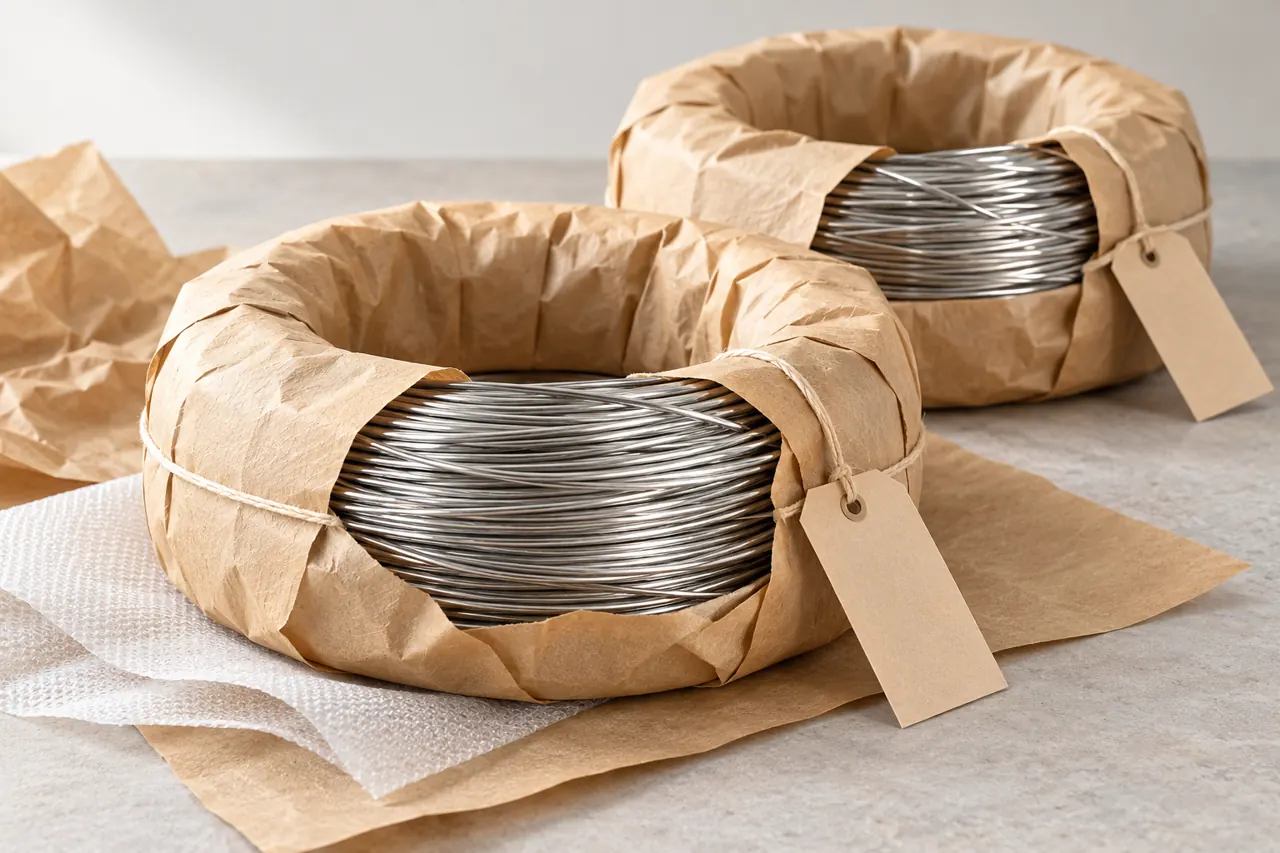
Make the coil usable on the loom
Specify package opening, outside envelope, unit mass and payoff direction against the loom. Protect turns from distortion and the surface from incompatible contamination. A coil that meets chemistry can still cause downtime if the winding arrangement is unsuitable.
Keep material, diameter and batch identity visible after opening. The protected coils and blank tags are AI-assisted packing illustrations; custom marking and package formats require confirmation for the order.
- Package interfaceSpecify opening, outer envelope and unit mass against the loom’s payoff arrangement.
- Turn protectionProtect winding from distortion and the wire surface from incompatible handling contamination.
- Visible identityKeep alloy, diameter and batch references available after the coil is opened.
A repeat order retains both wire and cloth references
Retain separate incoming-wire and cloth references to distinguish diameter variation from a changed weaving setup.
Keep the approved wire grade, diameter/ovality limits, condition, surface and package with the weaving settings and accepted cloth sample. Review a change in producer, treatment or diameter before treating it as an equivalent input.
If openings drift, compare wire distribution, loom tension and crimp/setting history together. Retain incoming and woven samples separately so the investigation can distinguish supplied-wire variation from a weaving change.
- Wire baselineGrade, section and condition
- Weave baselineSetup and accepted cloth
- DeviationRetained raw and woven samples
- ReviewSupply and loom effects separated
Define the weave and service conditions
Send the weave drawing, service and acceptance requirements together to define the wire offer and representative loom trial.
Share the cloth drawing and loom requirements so we can discuss a wire condition and sample plan that address feeding, opening control and surface acceptance.
Qingdao Relia Industries Co., Ltd.
Contact address: Shuyuan Road, Qingdao, Shandong, China
- Weave drawing and target opening
- Warp and weft wire diameters
- Alloy condition and surface requirements
- Loom coil and payoff limits
- Service fluid cleaning and acceptance
Enquiry scope and supporting detail
Send the weave drawing, target opening or filtration requirement, warp/weft diameters, selected alloy and required surface/condition. Include loom payoff constraints, service fluid and temperature, cleaning route and the tests governing finished-cloth acceptance.
Request a defined wire offer, corresponding batch records and representative trial arrangement. Add quantity, packing and destination; confirm any special fine diameter, sample and commercial conditions for the actual selected supply.
- MeshApplication, weave and aperture requirements
- WireAlloy, diameter and surface acceptance
- SupplyCoil format, trial quantity and documentation