

Qualifying a Second Source of SAE1070 Spring Wire
Qualify a second SAE1070 source against the wire your spring process already accepts and the spring your design requires. This guide connects grade, delivered condition and surface with coiling behaviour, package fit and finished-spring evidence. Use the comparison to approve one candidate revision and understand which differences still need validation before routine substitution.
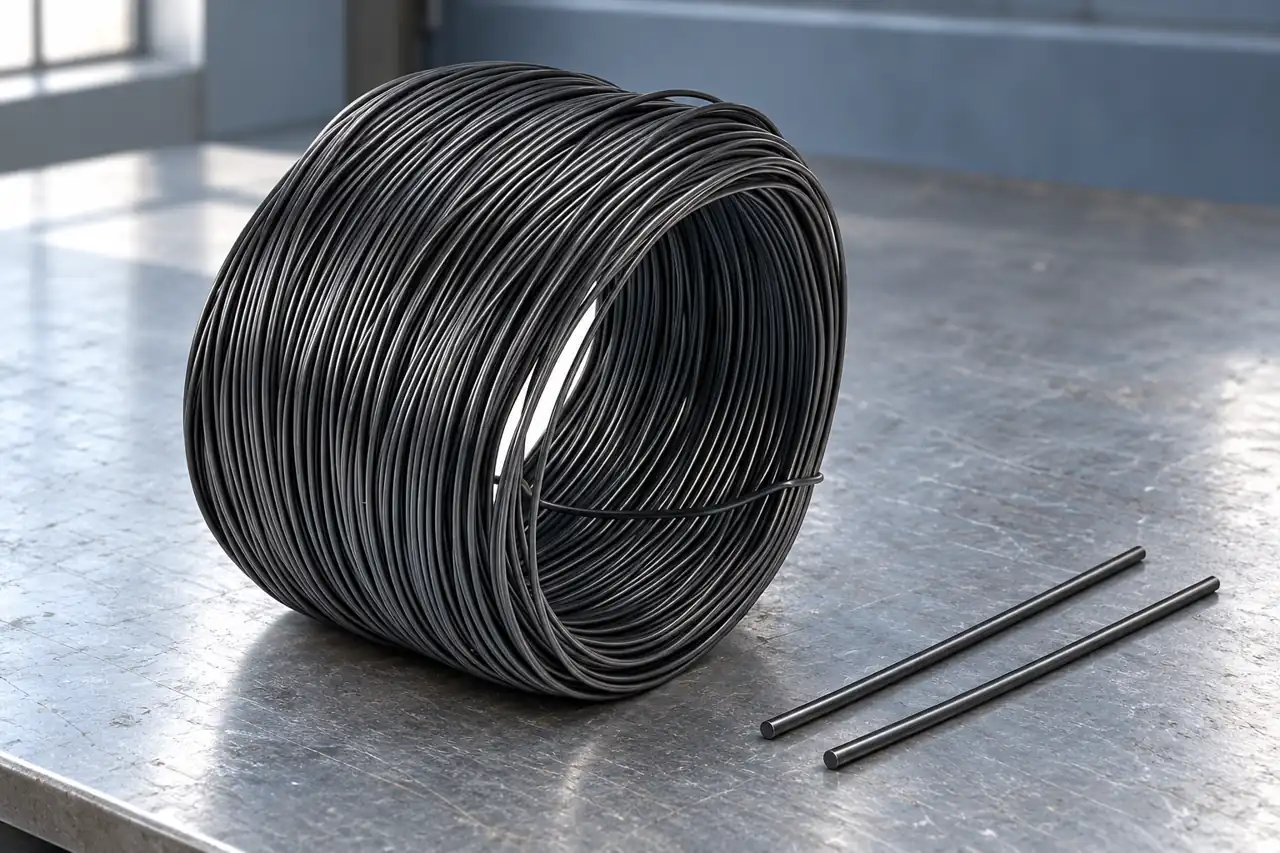
Move from current approval to a bounded alternative
For a spring manufacturer adding a second SAE1070 source, preserve the approved chemistry, diameter limits, supplied condition and surface quality, then compare coiling and required finished-spring behavior. Matching a grade name or broad tensile range is not complete equivalence. Relia manufactures steel wire and can discuss the listed SAE1070 candidate with corresponding batch records. Start with the current wire specification and the spring's forming, stress-relief and service requirements. Qualify the candidate under the actual process before routine substitution, separating wire conformity from load-deflection, set or fatigue evidence required for the finished spring.
- Current baselineRetain approved chemistry, diameter limits, condition, surface and the accepted spring process.
- Candidate comparisonIdentify intentional differences and the records that represent the proposed wire lot.
- Qualified releaseApprove the tested candidate revision and the required first-delivery evidence together.
Selection context and decision detail
| Buyer requirement | Relia response | Evidence or condition |
|---|---|---|
| Second-source equivalence | Discuss actual SAE1070 wire | Chemistry, condition and surface must match the approved need |
| Manufacturing evidence | Own drawing/annealing and staged inspection | Specific spring treatment is named in the offer |
| Spring validation | Corresponding batch records available | Coiling and finished-spring criteria assessed separately |
Confirmed wire processes need a selected spring-wire route
Confirm the selected spring-wire treatment and delivered condition rather than extending general annealing capability to every route.
Relia operates drawing, annealing and galvanizing in-house and carries out incoming, process and final inspection, with corresponding batch records available. For SAE1070 spring wire, identify the particular supplied condition and manufacturing route in the offer. General annealing capability does not establish patenting, oil tempering or every spring-grade treatment.
Use the approved wire specification to request relevant material, surface and mechanical records for the candidate batch. Keep those records linked to the coil and the exact state tested before your own forming and any subsequent treatment.
- Confirmed routeWire drawing and annealing capability
- Selected stateActual spring treatment and final condition
- EvidenceCorresponding staged batch records
The actual menu extends beyond the descriptive range
Set size-specific acceptance because a broad diameter menu and tensile range do not define one spring-wire condition.
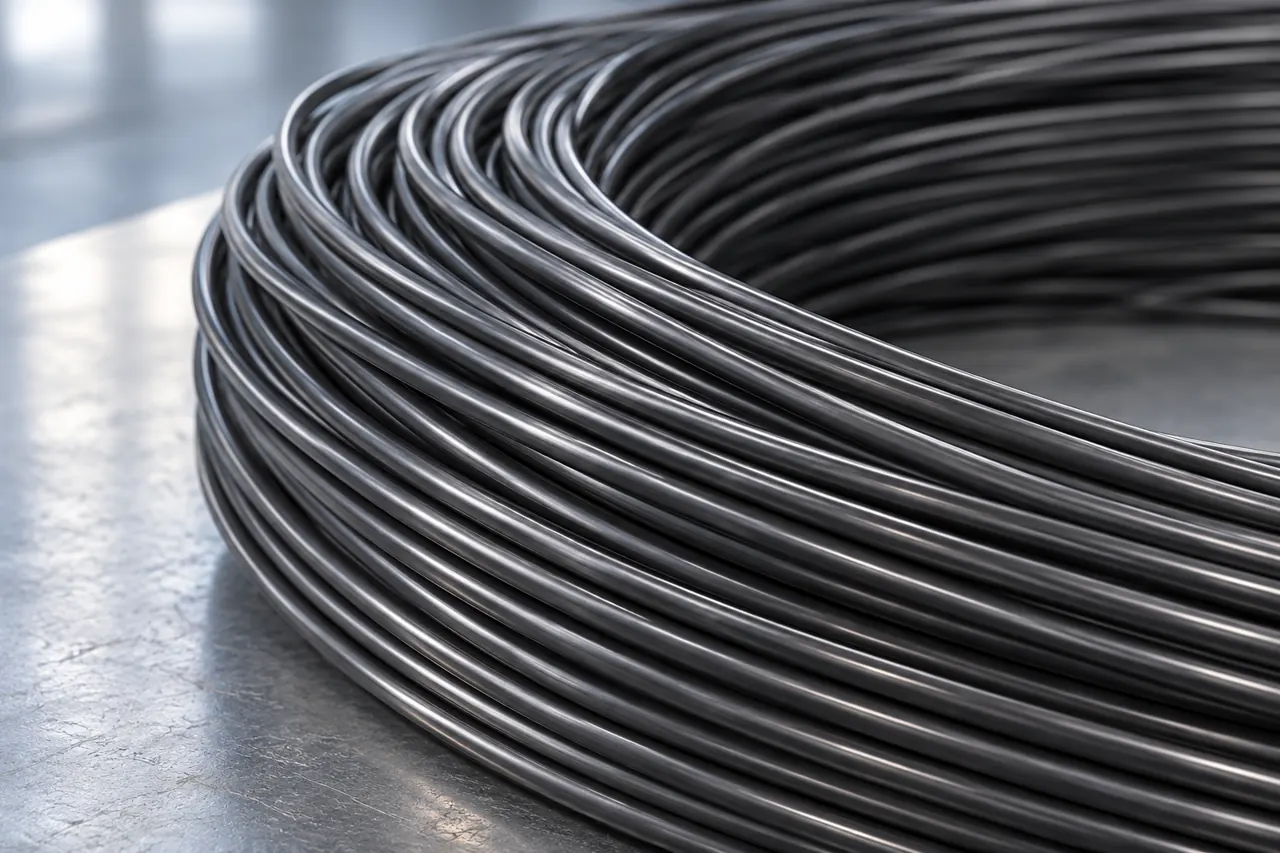
Define one wire from the listed choices
The listing identifies SAE1070 and a smooth surface with a 1370–2160 MPa tensile reference. It has seventeen diameter labels from 1 to 50 mm, including 30 and 50 mm outside the body's 0.2–20 mm description and title's 0.5–20 mm request.
Confirm the actual offered diameter and numerical acceptance for that condition. Lower-carbon family fields are not equivalent to SAE1070. A broad tensile range cannot specify every diameter or establish fatigue life, and ISO9001 wording needs its own current evidence if required.
- Selected sizeState the actual offered diameter and the numerical limits required for acceptance.
- Supplied conditionName the treatment and condition represented by the proposed material records.
- Required performanceKeep size-specific wire properties distinct from the finished spring’s service tests.
Product references for your shortlist
Open the product details, then discuss the exact specification for your application.
SAE1070 spring-wire candidate
A second-source starting point for a selected diameter, delivered condition and surface linked to the approved spring process.
Drawing history changes the condition entering the coiler
Review mechanical state and surface together because drawing history and local defects can change coiling response.
Cold deformation changes the section, strength and remaining forming capacity. Different reduction and thermal histories can leave same-grade, same-size coils with different coiling response. Define the actual condition and any required subsequent treatment rather than relying on a generic spring-wire name.
Measure the agreed mechanical and dimensional characteristics in the supplied state, then record forming behavior. A surface seam or local damage can initiate a failure even when a bulk tensile value is acceptable. Surface acceptance therefore belongs beside strength.
- HistoryReduction and thermal route
- Wire stateStrength, ductility and surface
- FormActual coiling geometry
- ComponentRequired finished-spring tests
The spring duty controls the specification framework
Choose the governing wire specification from the spring duty rather than chemistry designation alone.
Select the governing wire standard from the spring duty and approved design. ASTM A227/A227M, for example, addresses a defined cold-drawn mechanical-spring-wire scope and is not a universal high-stress or high-fatigue qualification. A grade designation alone does not select the complete product standard.
Keep required strength, ductility/forming, surface and any special service characteristics explicit. Do not substitute an annealed or differently treated candidate merely because its chemistry says SAE1070.
- GradeSAE1070 material basis
- Product standardChosen for the spring duty
- ConditionNamed delivered treatment/state
- AcceptanceSize-specific and service-relevant criteria
Coiling trials need the approved process window
Trial representative spring geometry and the approved treatment sequence before assessing required finished-spring results.
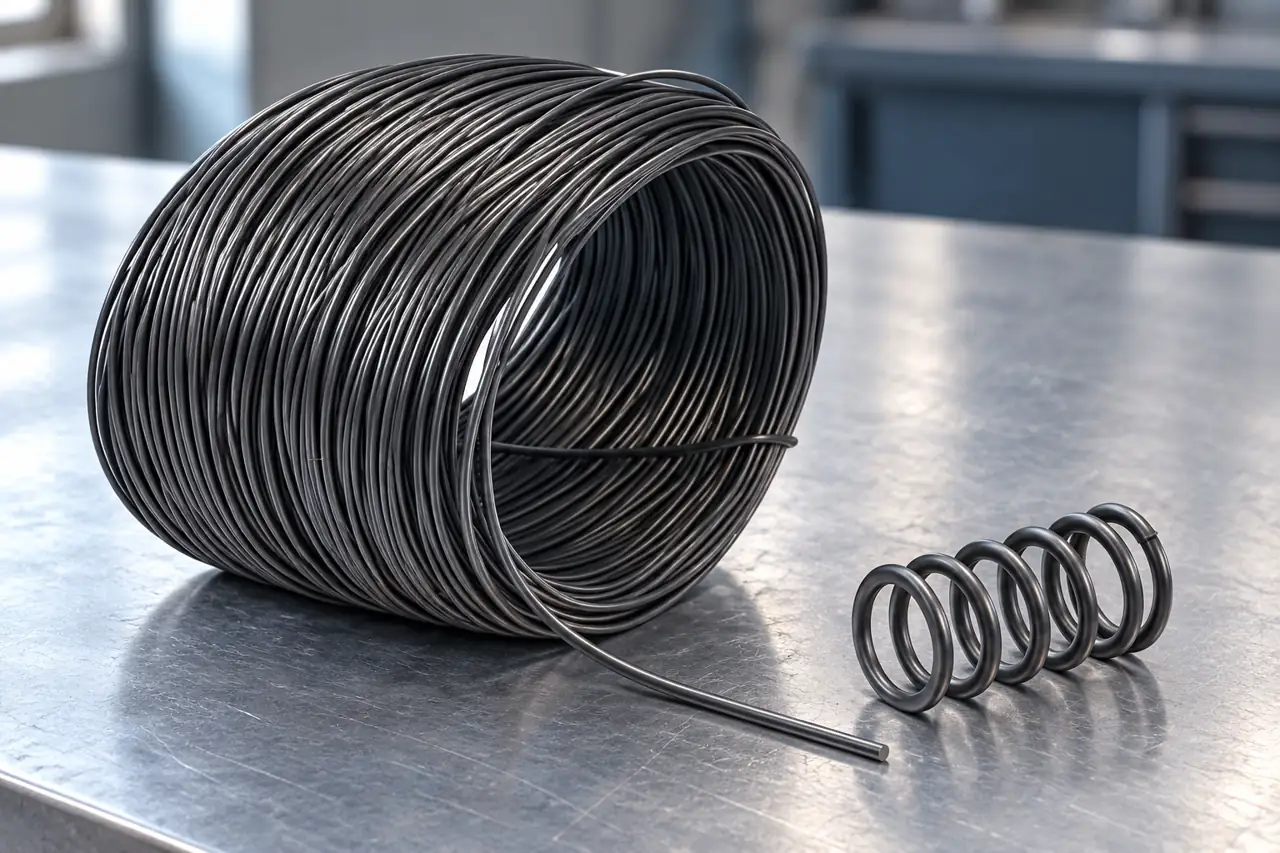
Compare the candidate through the real spring route
Run baseline and candidate on representative spring geometry with identified tooling, wire guide and processing sequence. Record feed behavior, forming load indicators where available, surface marks, cracks and released dimensions. Assess any required stress-relief or later treatment in the state specified by the design.
The coil and small formed spring are AI-assisted illustrations. They do not demonstrate an actual fatigue trial. Finished-spring load, permanent set and required cyclic behavior need their own defined test and acceptance.
- Forming baselineUse representative geometry with identified tooling, guide and processing sequence.
- Observed responseRecord feed, marks, cracks and released dimensions for baseline and candidate.
- Spring evidenceAssess required load, set and cyclic behaviour in the specified final condition.
Evidence should distinguish source variation from machine changes
Record material position, tooling and feed conditions so a failure can be traced to a meaningful comparison.
Retain actual minimum/maximum diameter readings and the mechanical/surface results with each trial coil. Record coiler setup, tooling condition, lubricant and package behavior. A different cast or helix can change feed even when material tests match.
If the candidate cracks, retain the wire and formed defect with its location. Compare condition and surface with local forming demand before increasing treatment or changing several machine settings. A passing trial should explain the approved material and process boundary.
- WireMeasured size and supplied-state evidence
- LineTool, lubricant and setup
- PackageCast, helix and payout
- DefectLocation and retained sample
The coil package is part of a second-source comparison
Test the proposed production coil format because a hand sample may not represent continuous coiler feeding.
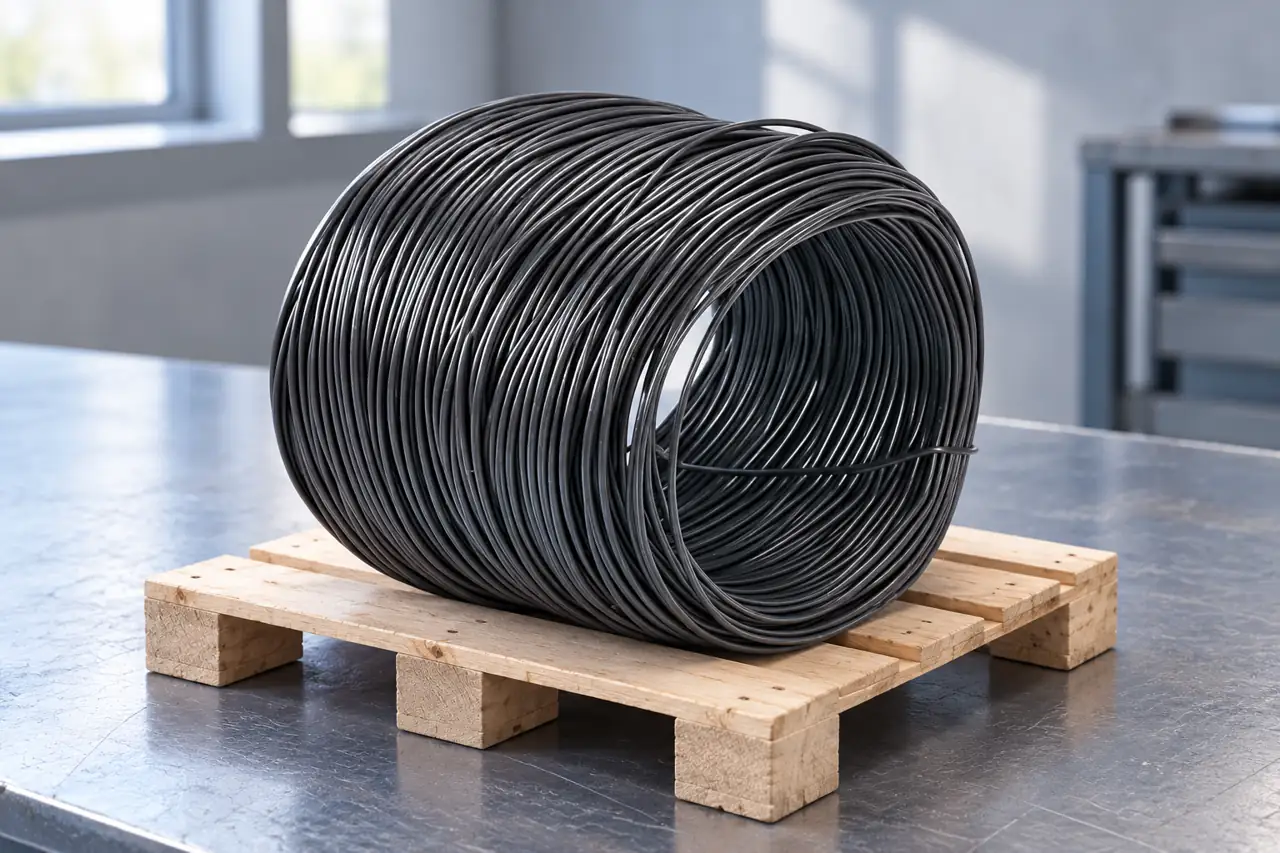
Check the package used for production feeding
Agree coil opening, outside envelope, unit mass and payout arrangement with the coiling line. Avoid package distortion and preserve batch identity through storage and opening. A sample taken from a small hand coil may not represent feed from the proposed production package.
The palletized coil is an AI-assisted receiving illustration. It supplies no pack mass, tested payout result or actual shipment reference. Confirm the real package and corresponding lot evidence in the offer.
- Coil interfaceAgree opening, outside envelope and unit mass for the actual coiler.
- Representative supplyConfirm whether the trial sample represents the proposed production winding and payout.
- Protected identityPreserve the coil condition and batch reference through storage and opening.
Approval freezes the relevant differences
Freeze accepted differences and review later source or route changes against the qualified candidate revision.
Create a side-by-side record of the original and candidate grade, diameter, condition, surface, package and evidence. Identify deliberate differences and the validation that accepts them. A lower price or similar tensile average cannot erase an unresolved surface or treatment gap.
For repeat supply, reference the approved candidate revision and sample. Review changes in source or route through the applicable specification and spring process rather than silently treating them as an equivalent replenishment.
- CompareOriginal versus candidate
- ResolveDeliberate and unresolved differences
- ValidateRequired wire and spring evidence
- FreezeApproved candidate revision
Prepare the spring-wire source comparison
Send the existing wire baseline and spring requirements so the alternative can be qualified within a defined scope.
Share the wire baseline and spring process you need to retain. We can review a defined SAE1070 candidate and the evidence required to resolve each relevant difference.
Qingdao Relia Industries Co., Ltd.
Contact address: Shuyuan Road, Qingdao, Shandong, China
- Approved wire specification and condition
- Diameter limits and surface acceptance
- Spring drawing and treatment route
- Required load set and fatigue criteria
- Coil interface and trial quantity
Enquiry scope and supporting detail
Send the existing SAE1070 specification, actual diameter/tolerance, supplied condition, surface requirements and relevant batch results. Include spring drawing, forming and treatment route, load/set/fatigue criteria as applicable, and coil/payoff dimensions. Identify the source-change objective and any current defect.
Request a defined candidate offer with corresponding batch records and a representative trial package. Add quantity and destination; actual treatment scope, samples and commercial schedule require confirmation for the selected spring-wire supply.
- SpecificationGrade, state and revision
- TrialForming route and spring checks
- EvidenceWire batch and test basis
- OrderCoil format and transition quantity