

Silicon Carbide Abrasive Trials for Hard and Brittle Materials
Select silicon-carbide grain for the finishing stage and the damage limits of your actual hard or brittle part. This guide connects chemistry and grading with removal, edges and surface integrity. It helps you run a controlled loose- or bonded-abrasive trial and retain the grain, workpiece and process references needed for repeat supply.
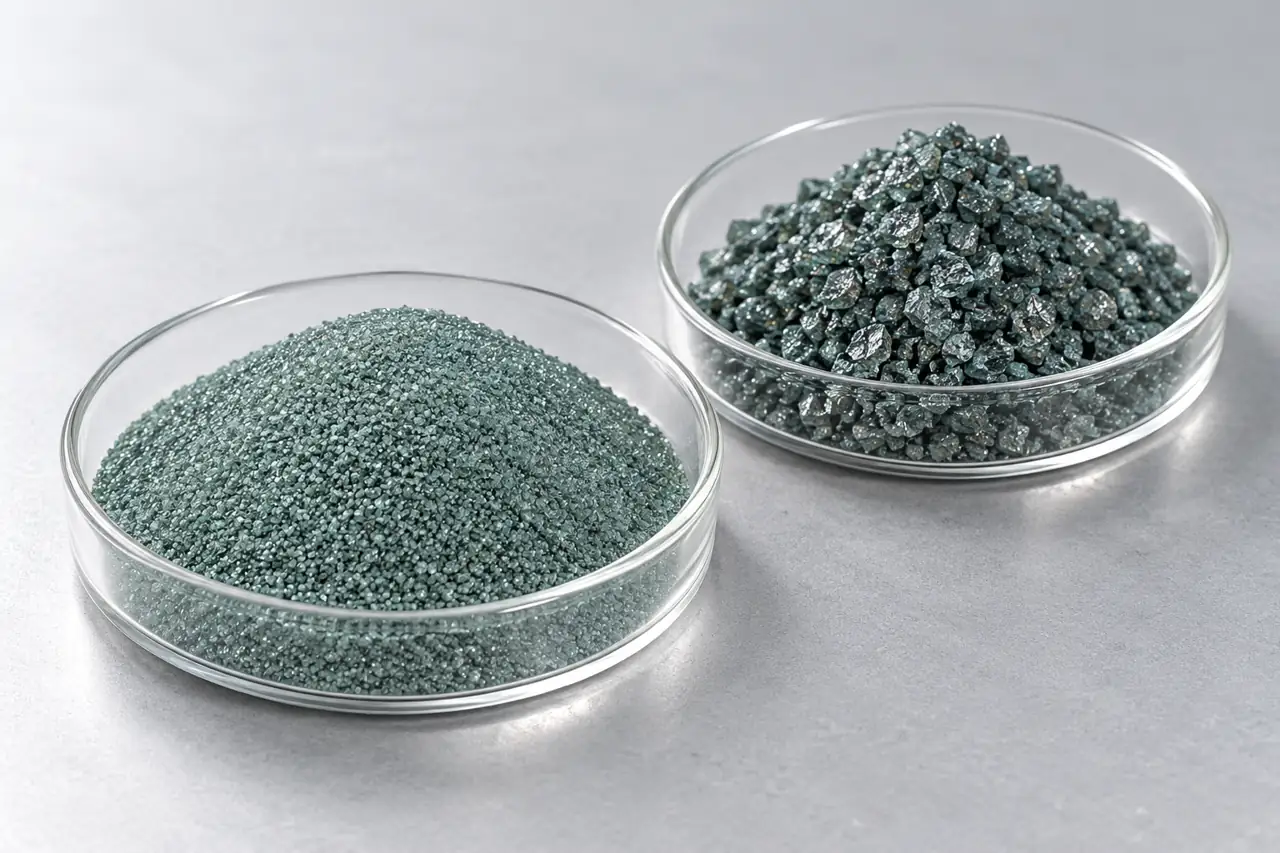
Select the grain through the finishing result
For a shop grinding, lapping or polishing hard brittle workpieces, assess a defined silicon-carbide grain against the material, removal allowance and required surface integrity. Select actual chemistry, grading and delivery form before tuning pressure or process time. A hard abrasive and smooth-looking finish do not prove freedom from edge chips or subsurface damage, and some workpieces require a different abrasive system. Relia supplies the listed SiC candidates and can discuss their selected material and batch evidence. Start with a representative part, current process and defect criterion, then compare useful removal and accepted finish before approving routine grit supply.
- Workpiece requirementDefine the material, removal allowance and the geometry or damage to preserve.
- Grain proposalSelect actual SiC chemistry, distribution and the intended loose or bonded form.
- Controlled comparisonJudge useful removal and required surface-integrity results under the recorded finishing route.
Selection context and decision detail
| Buyer requirement | Relia response | Evidence or condition |
|---|---|---|
| Hard/brittle finishing | Discuss actual SiC grain candidates | Workpiece and permitted damage determine suitability |
| Defined grain supply | Identify producer, chemistry and grading | No SiC furnace manufacture inferred from cast-shot scope |
| Evidence and process trial | Corresponding batch records available | Removal, surface, edge and required subsurface checks separate |
SiC supply needs an identified grain producer and record scope
Identify the SiC producer and grain evidence separately from the confirmed manufacture of steel-wire and cast abrasives.
Relia manufactures steel wire and cast steel shot/grit; silicon carbide grains are separate supply items. Identify their actual producer, chemistry, colour and grain-preparation scope in the technical offer. Our cast-steel production route does not establish SiC reaction furnaces in-house.
Incoming, process and final inspection are performed and corresponding batch records can be provided. Agree the relevant composition, distribution and particle-condition evidence for the selected abrasive and any additional application checks your finishing process requires.
- Supply identityActual SiC producer and composition
- PopulationSelected grading and particle condition
- EvidenceCorresponding batch records and trial requirements
Material and grading must be defined together
Select actual chemistry and grading together rather than treating colour or a family purity request as acceptance.
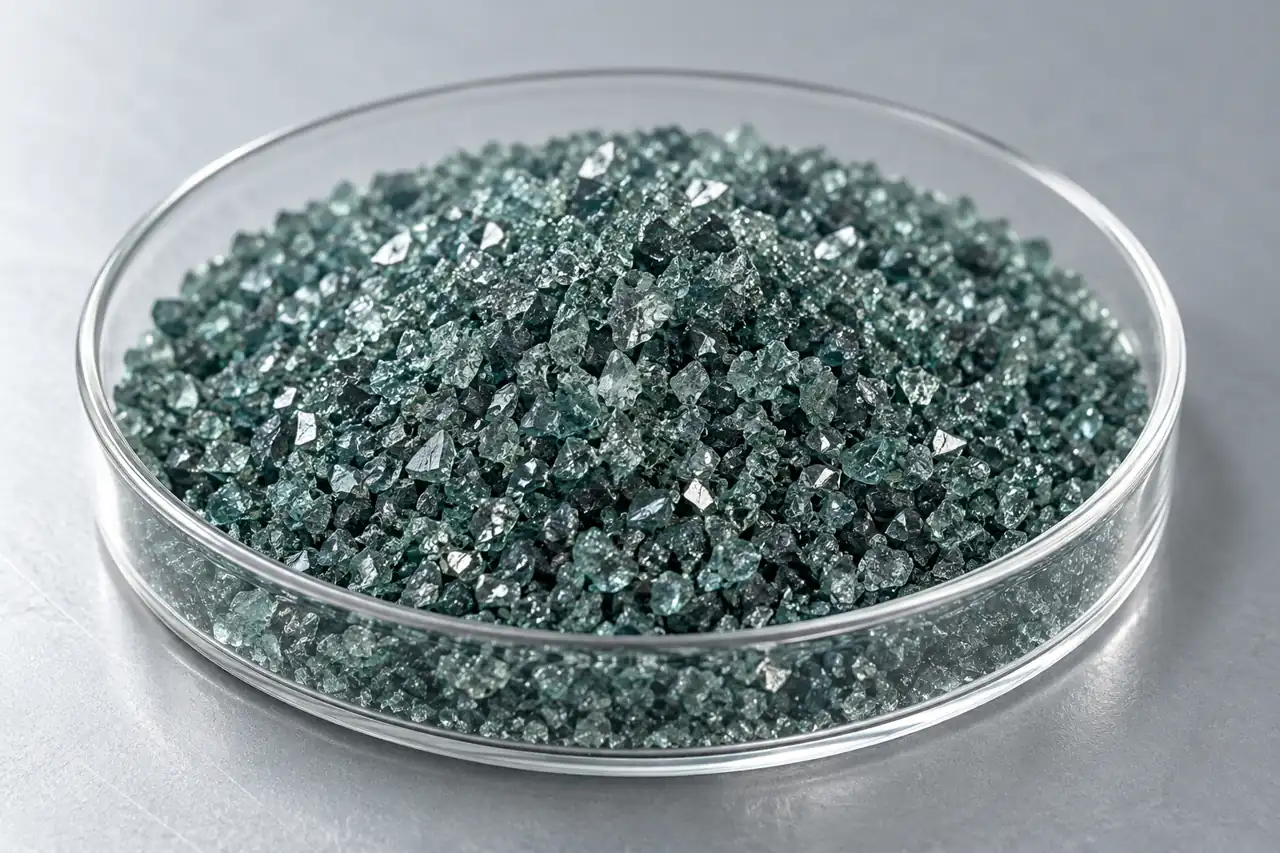
Specify both chemistry and the grain population
The two SiC entries provide green/black and purity requests with individual grit options; choose one actual composition and grading rather than treating their different title/body percentages and endpoints as universal lot guarantees. The selected technical offer determines chemistry and size population.
Name the grading system, full distribution and permitted coarse tail for the intended process. For a powder or precision-lapping requirement, an unqualified macro-grit label is not enough. Confirm any required impurity limits from actual analysis; colour and a hardness number are not the whole material specification.
- Material identityConfirm actual SiC colour and represented analysis for the proposed supply.
- Grading identityName the grading system and distribution required for the finishing stage.
- Coarse-tail controlState the permitted oversize population where scratches or local damage are critical.
Product references for your shortlist
Open the product details, then discuss the exact specification for your application.
Green silicon-carbide grit enquiry
A SiC candidate for selecting one grain and chemistry requirement before a grinding, polishing or lapping trial.
Silicon-carbide abrasive grade enquiry
A candidate when the actual colour, chemistry and individual grain selection are defined for the intended finishing stage.
Reaction and grain processing create different acceptance characteristics
Keep reaction chemistry and grain-preparation evidence distinct because later processing determines particle geometry and distribution.
A representative SiC route reacts silica and carbon in a resistance furnace, then processes the crude material by crushing, milling and classification. The reaction establishes material chemistry; subsequent processing sets particle geometry and distribution. Those are distinct producer records to review for the selected supply.
An angular cutting grain can fracture or dull during work. Its hardness does not predict every wear or removal mode. Specify the required chemistry and particle condition, then assess actual behavior in the intended loose or bonded abrasive system rather than assuming one general SiC family covers all uses.
- ReactSilica/carbon material chemistry
- Prepare grainCrushing and milling establish geometry
- ClassifySelected size population
- VerifyMaterial and application evidence kept distinct
Brittle removal can leave damage beneath an attractive surface
Assess edge and subsurface damage where required instead of treating a smooth-looking face as complete acceptance.
Hard brittle workpieces can remove material through cracking as well as smaller-scale deformation. Contact severity, grain geometry and process conditions affect that balance. A lower roughness result therefore does not automatically demonstrate that all underlying damage has been removed.
Define edge-chip, geometry and any required subsurface-damage acceptance for the actual part. Use appropriate examination under the responsible process procedure. Research using a different abrasive and SiC workpiece explains the risk mechanism; it does not qualify our SiC grain for every ceramic.
- RemovalUseful stock removed
- SurfaceRequired texture or appearance
- Edge/geometryChips and dimensional acceptance
- SubsurfaceRequired deeper damage assessment
The trial follows the actual finishing stage
Trial the actual workpiece and finishing stage with the carrier, contact conditions and cleaning recorded.
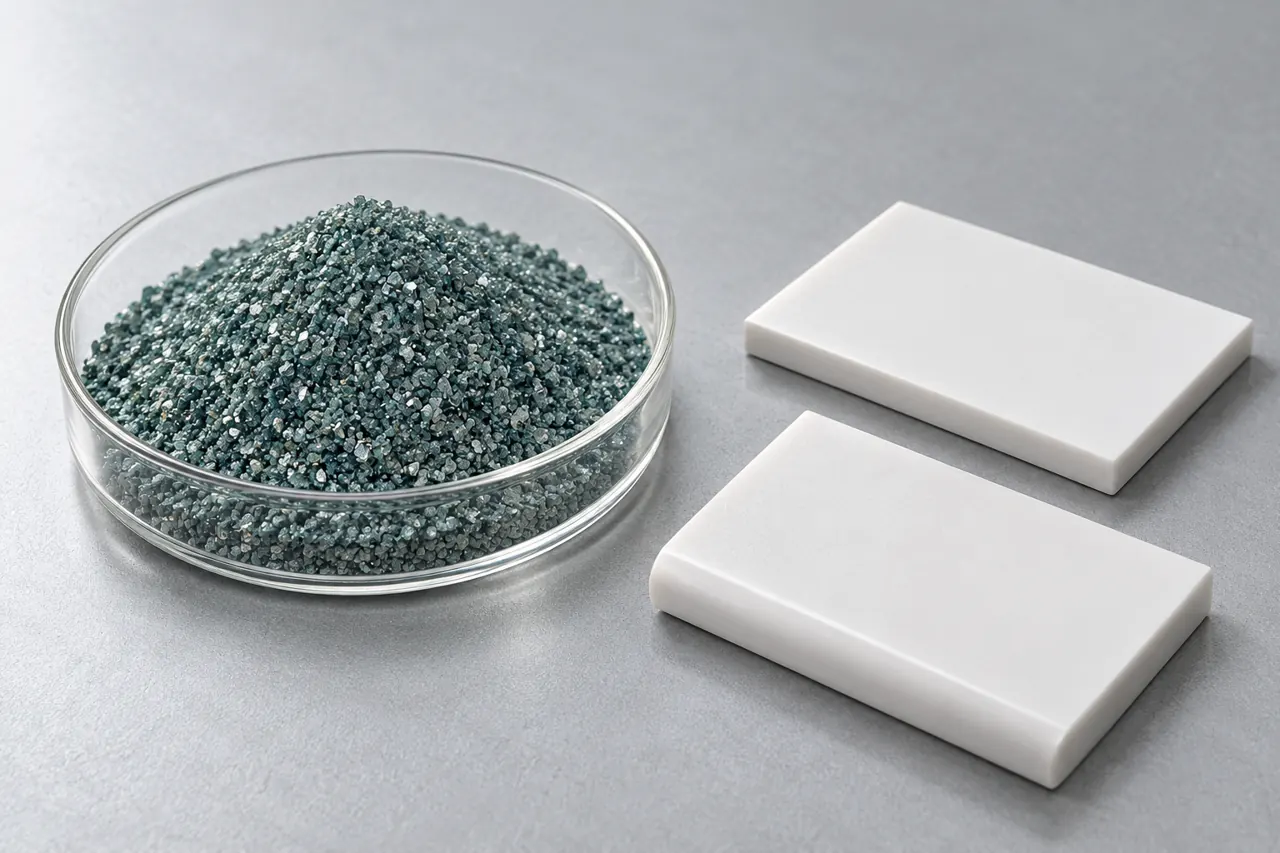
Keep the trial tied to the finishing stage
Run representative workpiece material and starting damage with the intended carrier, tool or slurry. Record grain identity, concentration or charge, pressure/contact, motion, time and cleaning. Keep the removal allowance and next finishing step visible.
The ceramic tiles and green grains are AI-assisted application illustrations, not measured material or polishing results. Compare useful removal, surface texture, edge damage and geometry separately, with any required deeper examination. A visually bright tile is not a precision certificate.
- Starting partUse representative material and starting damage with the removal allowance identified.
- Process setupRecord carrier, grain concentration or charge, contact, motion and cleaning conditions.
- Separate resultsCompare removal, texture, edges and geometry with any required deeper examination.
Grading tails and cross-contamination can dominate scratches
Investigate coarse tails and handling contamination before attributing every scratch to the abrasive’s hardness or purity.
An oversize particle or foreign coarse grain can create scratches inconsistent with the nominal grit. Storage, reused tools, slurry preparation and incomplete cleaning between steps can introduce such particles after incoming acceptance.
Retain new abrasive and in-use material separately when investigating. Review the full distribution and handling route with the scratch location and process record before deciding that the whole SiC batch has the wrong hardness or purity. Change only relevant variables where practical.
- IncomingFull distribution and coarse tail
- In-useSlurry/tool and recovered grain
- HandlingDispensing and interstage cleaning
- DefectScratch/part location with process record
Retained grain and workpiece references make the result reusable
Retain identified grain, used material and finished-part references without mixing different finishing-step populations.
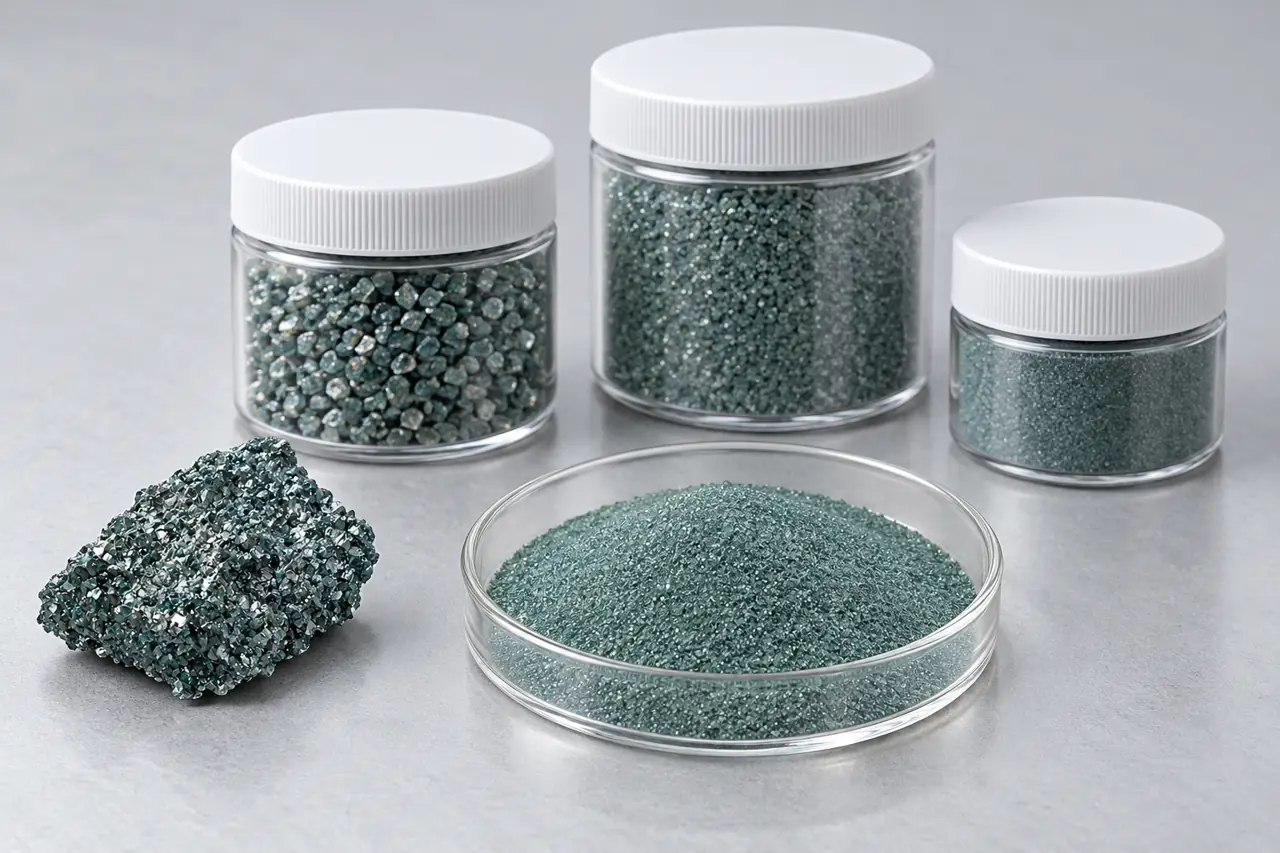
Retain a reusable grain and part reference
Keep the selected composition and distribution sample, producer/batch evidence and actual finished-part reference together. Label trial material and recovered or used abrasive distinctly. The illustrated jars show separate forms, not a laboratory classification result.
Protect containers against mixing with another grit and keep dispensing tools compatible with the acceptance requirement. Packing unit and identification should be agreed for the actual abrasive, especially when several finishing steps use similar-looking green grains.
- Unused grainKeep the selected composition and distribution sample linked with the producer lot.
- In-use materialLabel recovered or used abrasive separately from the unopened supply reference.
- Finished partRetain the assessed component and operating record from the approved finishing stage.
A repeat order preserves the approved process role
Preserve the approved chemistry, distribution and process role when comparing repeat grains or proposed changes.
Retain the approved grain chemistry, size population, particle condition and the finishing stage in which it worked. Review producer, grade, surface treatment or distribution changes before routine substitution. Equal nominal grit does not establish equal cutting or damage behavior.
Compare abrasive use, accepted parts and subsequent finishing effort under comparable conditions. No catalogue purity or precision wording supplies a universal removal rate, finish or lifetime; use the recorded trial to state the approval boundary.
- Approved grainChemistry and distribution
- Process roleActual finishing stage and allowance
- RepeatSame controlled material
- Change reviewProducer, treatment or population difference
Define the finishing stage and damage limits
Send workpiece condition and permitted damage so the selected SiC offer supports a representative finishing trial.
Share the workpiece, starting condition and the damage your finishing route must avoid. We can review a defined SiC grain and the evidence needed for a representative comparison.
Qingdao Relia Industries Co., Ltd.
Contact address: Shuyuan Road, Qingdao, Shandong, China
- Workpiece material and starting damage
- Removal allowance and required geometry
- Selected chemistry and grading basis
- Carrier tool and contact route
- Finish edge and subsurface criteria
Enquiry scope and supporting detail
Send workpiece material, starting surface/damage, required geometry and finish, and the removal allowance. Add whether the abrasive is loose or part of a tool, the carrier/slurry and operating route, current grain and the defect to avoid. Specify chemistry, grading and inspection evidence required for the selected SiC.
Request a defined offer and representative trial supply with corresponding batch records. Include quantity, clean-pack requirements and destination; actual application suitability, samples and commercial terms are confirmed for that supply.
- PartMaterial and initial condition
- AbrasiveIdentity and grading basis
- TrialFinish and defect checks
- OrderSample amount and packing