

PVC-Coated Fence Wire with Separate Core and Outside Sizes
Specify PVC-coated fence wire with a defined steel core and a separate finished outside size. This guide explains what each dimension controls, how the coating must survive your forming route and which input-wire checks remain separate from completed-fence acceptance. Use it to plan a representative line trial and a clearly identified coil supply.
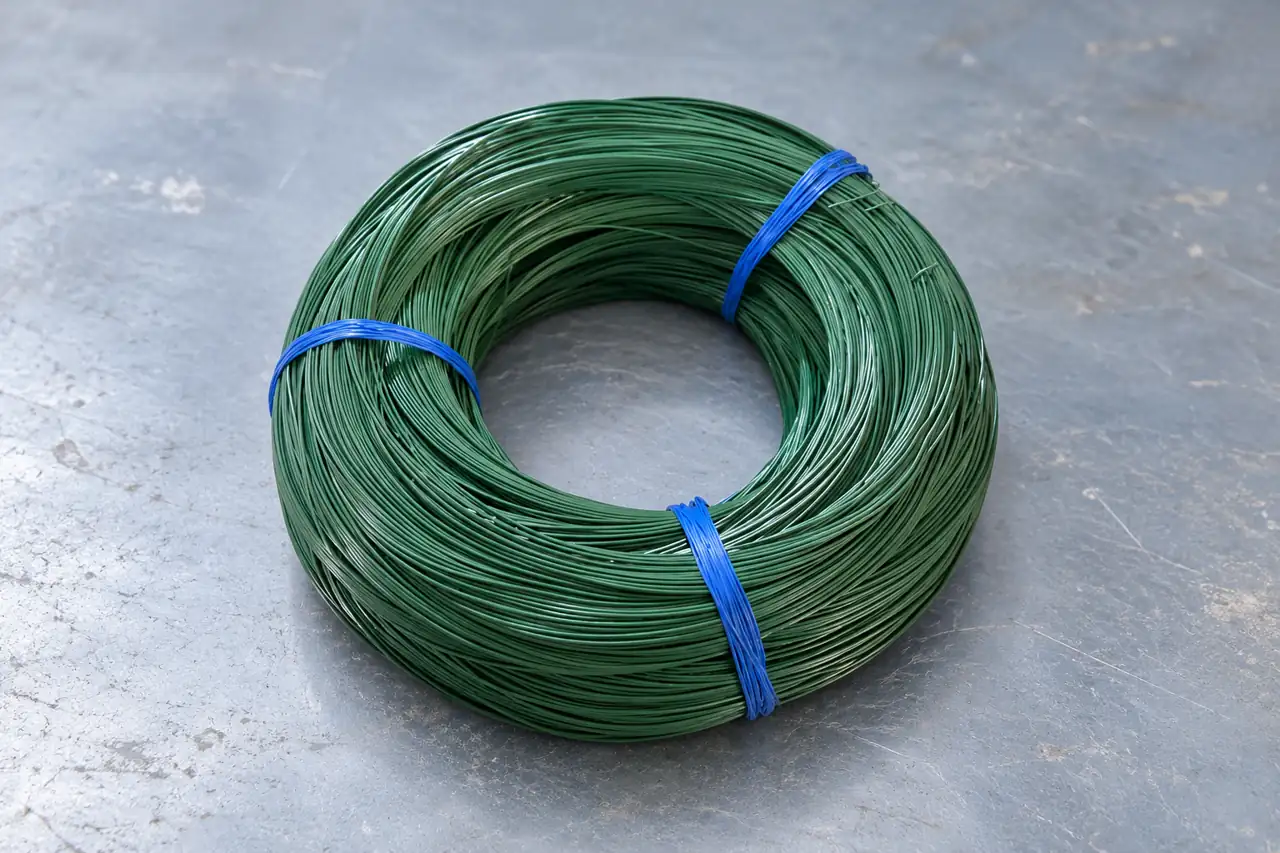
Specify three separate parts of coated wire
For fence-forming buyers considering PVC-coated wire, specify the metallic core and finished outside diameter separately, then define the zinc underlayer, polymer condition and bend requirement. The steel core carries the load while the coating changes contact size and surface protection; equal outside size does not establish equal wire strength. Relia manufactures steel wire and can discuss the listed Q195 coated-wire candidate, whose actual catalogue use is hanger/tie-wire. A fence programme needs its own forming and finished-product acceptance. Send the core/coating dimensions and weave or forming route before treating the 0.8–4 mm range as a qualified fence-wire specification.
- Steel coreSet the material, metal diameter and supplied condition needed for forming.
- Coating systemDefine the zinc underlayer and polymer requirements for the intended product.
- Finished wireSet outside dimensions and the forming acceptance that connects both parts.
Selection context and decision detail
| Buyer requirement | Relia response | Evidence or condition |
|---|---|---|
| Defined coated section | Own wire/core operations available | Core and finished diameter specified separately |
| PVC supply route | Discuss the listed Q195 coated item | Coating provider, underlayer and route confirmed per offer |
| Fence application | Corresponding batch records can be provided | Hanger/tie-wire listing needs a fence-specific trial |
Core-wire manufacture and PVC application need named responsibilities
Identify core-wire manufacture and PVC application responsibilities separately within the proposed coated-wire supply.
Relia operates wire drawing, annealing and galvanizing in-house and performs incoming, process and final inspection, with corresponding batch records available. For this coated-wire offer, identify the selected Q195 core condition and required galvanized underlayer.
PVC application is not established as in-house by those confirmed operations. The selected offer must state the coating provider/route, finished dimensions and relevant inspection evidence. Keep core-wire conformity, polymer condition and the buyer's fence-forming result distinguishable.
- Core operationsDrawing, annealing and galvanizing
- PVC applicationProvider and selected route to identify
- EvidenceCore/coating records and finished-form trial
The actual range leaves the measurement basis open
Define what the diameter range measures and select one core, underlayer and polymer specification.
The listing has one 0.8–4 mm range and Q195 wording, alongside PVC-coated, Black and Galvanized surface fields. It names a hanger-related use and gives no measured coating adhesion or durability result.
Write core diameter, finished coated diameter and permitted variation with a defined measurement method. State colour, required polymer thickness basis, underlayer and end condition. A broad coil-weight family is not an agreed pack for the fence line, and mixed surface words do not establish one selected coating sequence.
- CoreActual metal diameter and condition
- OutsideFinished coated dimension
- UnderlayerSelected zinc or other defined basis
- PolymerComposition/class, colour and thickness limits
Product references for your shortlist
Open the product details, then discuss the exact specification for your application.
Q195 PVC-coated wire enquiry
A coated-wire candidate to evaluate against the specified fence core, outside dimensions and actual forming requirements.
Core section and coating thickness have different functions
Keep steel-core size separate from outside diameter because polymer thickness does not increase the metal section.
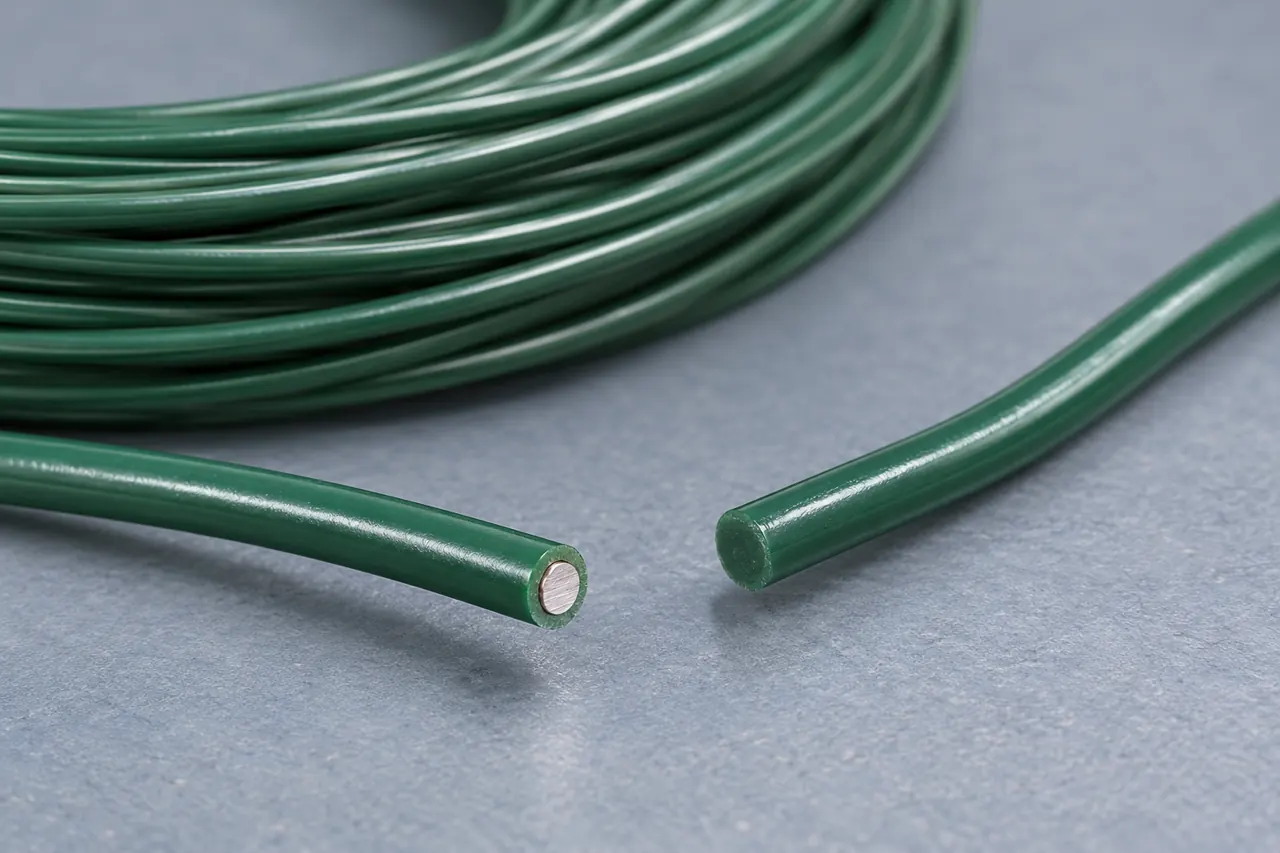
Core size and outside size answer different questions
The core cross-section determines the metal available to carry tension; the outside diameter includes polymer and affects guide contact or mesh geometry. A larger coated outside size can conceal an unchanged or smaller core. Define both rather than inferring strength from the green surface.
For a nominally round concentric coating, half the outside-minus-core difference is a nominal radial thickness; actual eccentricity and local variation still need appropriate checks. The exposed-end illustration shows that distinction but does not provide a thickness measurement.
- Metal sectionCore diameter defines the steel available to carry the wire tension.
- Contact sizeOutside diameter affects guides and mesh geometry as the coated wire moves.
- Coating variationCheck actual thickness distribution rather than relying only on a concentric calculation.
Coating route affects retention during forming
Evaluate coating retention after representative bending and guide contact rather than by green appearance alone.
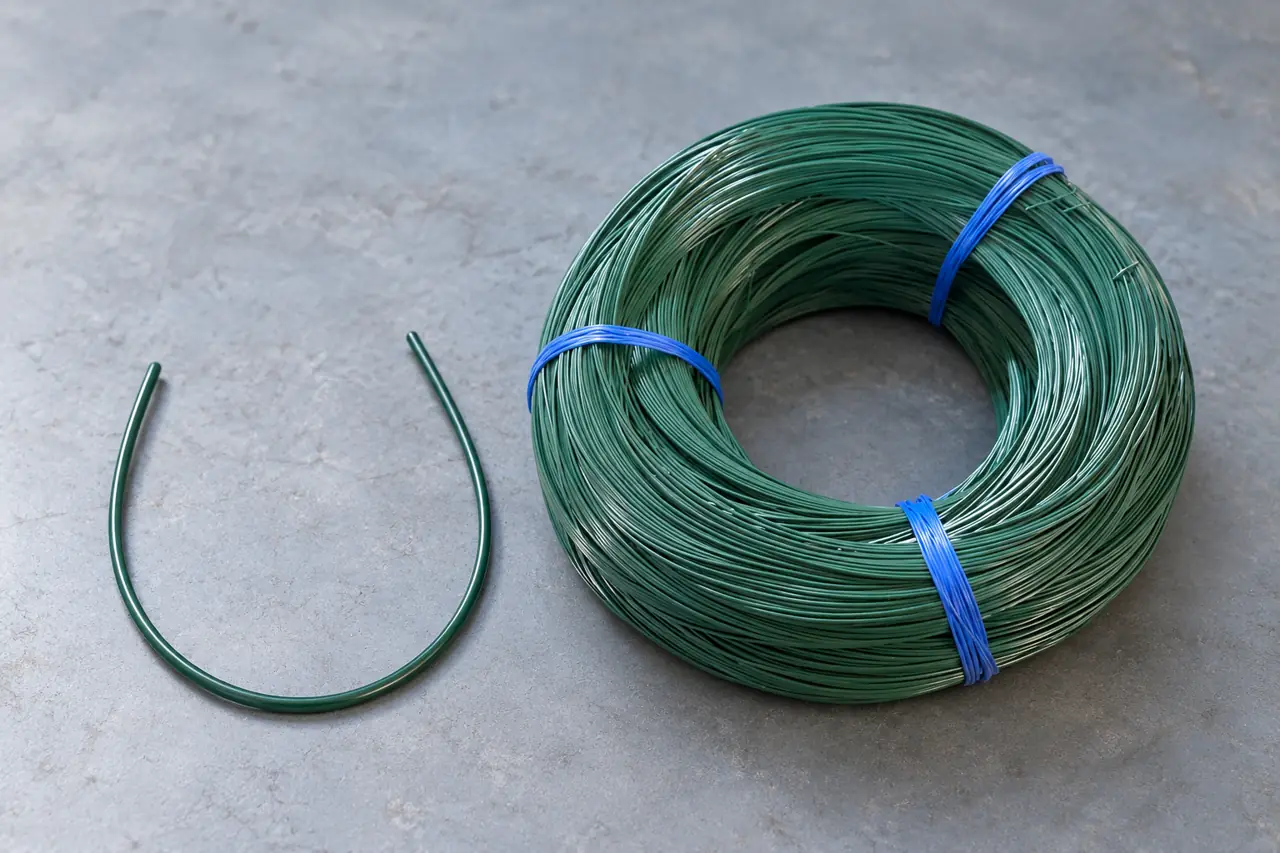
Review the provider route and formed coating
A representative polymer-coated wire route prepares the core surface, applies the specified polymer system and controls the final coating state before winding. Surface preparation, application and cooling/curing route influence adhesion and defects; the actual selected process needs confirmation with its provider.
During fence weaving or bending, the outside of a bend stretches while guide contact can scrape the coating. Check cracks, separation and exposed metal after representative forming. A cosmetic green finish alone cannot establish coating retention or outdoor durability.
- Core preparationConfirm the actual surface preparation used before the selected polymer application.
- Polymer applicationDefine the chosen coating system and its controlled final state before winding.
- Formed assessmentInspect cracks, separation and exposed metal after the representative bend and guide contact.
Fence product requirements cannot be borrowed from a hanger title
Select the actual fence requirement and distinguish input-wire acceptance from completed fabric performance.
A chain-link or other fence programme may specify core mechanics, weave geometry, coating and final fabric performance. ASTM F668 is an example of a polymer-coated chain-link fabric framework, not certification of this general hanger/tie-wire entry.
Choose the actual fence specification and product class where applicable. Define input-wire checks and completed-fence tests separately. Do not turn an approved hanger bend or a wire material report into a finished-fence load or life claim.
- Select product basisActual fence specification
- Approve inputCore and coating characteristics
- FormRecorded line and geometry
- Test fabricRequired finished-product result
A line trial should record both feed and coating damage
Record feed conditions and damage locations while preserving the same core and coating identity through the trial.
Run the candidate through the intended guide, weaving/forming geometry and tension range. Record payout behavior, guide marks, breaks, coating debris and final dimensions. Preserve the location of damage so a guide abrasion issue is not confused with poor adhesion everywhere.
Keep the same core and coating identity through the trial. Changing outside diameter, steel condition and machine tension at once can produce an unexplained result. Agree the acceptance and representative sample before production release.
- FeedPayoff and guide contact
- Local damageScrape/crack location
- MaterialCore and coating identity
- ResultFinal geometry and retention
Coil arrangement protects the selected coating
Protect the coating during shipment and payout while retaining the selected coil and lot identity.
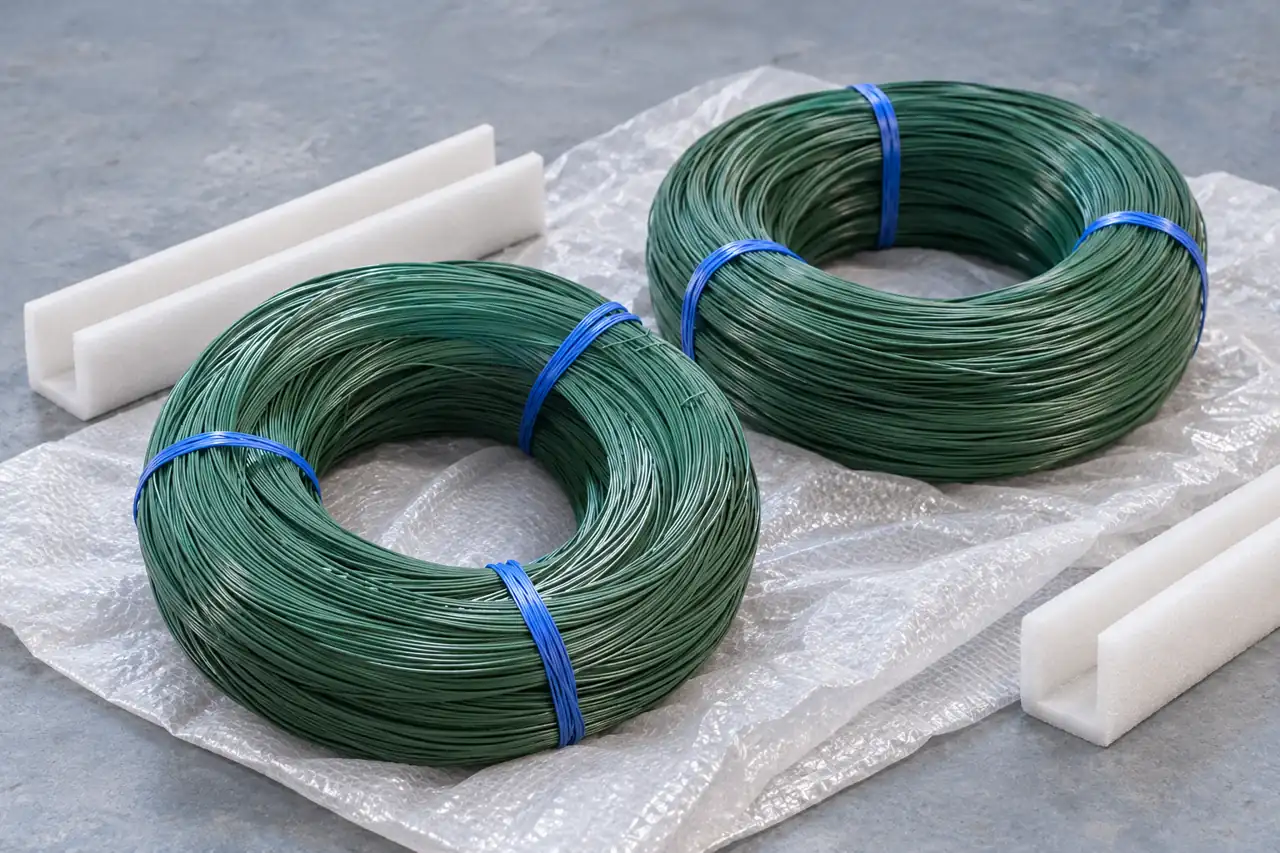
Protect coating and identity through payout
Coils need restraint and protection that prevent crushing, abrasion and unwanted set during transport and payoff. Agree opening, envelope, unit mass and payout against the actual line. Contact with sharp straps or incompatible storage can damage a conforming coating.
The separated coils and foam are AI-assisted packing references, not a validated shipping design. Preserve the selected core/coating identity and corresponding batch evidence after opening and do not mix unverified surface variants in one released stock code.
- Coil interfaceMatch opening, envelope and winding to the actual line and handling limits.
- Contact protectionAvoid restraint or handling contact that scrapes or crushes the selected coating.
- Lot identityKeep the core and coating references linked with records after opening.
Repeat supply keeps core, polymer and form as one revision
Reorder the complete core, polymer and forming revision rather than approving an apparent colour match.
Retain the approved grade, core limits, outside dimensions, coating specification and forming result. A colour match is not enough to establish equivalent polymer or underlayer. Review changes in provider, route, coating or package with the acceptance plan.
For a complaint, keep an unused sample and a formed damaged section with the batch and machine observations. Investigate core, coating and handling separately before increasing polymer thickness as a universal correction.
- BaselineCore, polymer and form
- Repeat offerProvider, route and package matched
- DeviationUnused and formed samples retained
- ReviewCore, coating and handling causes
Define the core, coating and fence route
Send both dimensions and the actual fence route so the candidate can be reviewed for its intended use.
Share the two wire dimensions and the fence your line must produce. We can review the selected core and coating responsibilities alongside a representative forming and acceptance plan.
Qingdao Relia Industries Co., Ltd.
Contact address: Shuyuan Road, Qingdao, Shandong, China
- Core diameter and supplied condition
- Finished outside diameter and limits
- Zinc underlayer and polymer requirements
- Weave route and bend geometry
- Coil limits and damaged samples
Enquiry scope and supporting detail
Send core and finished outside dimensions with limits, selected grade/condition, required underlayer and polymer specification. Include colour, weave/bend drawing, tension/payoff constraints and the actual finished-fence acceptance requirement. Identify any coating crack, scrape or feed fault to resolve.
Request the core and PVC-application responsibilities, relevant batch records and representative trial supply. Add quantity, coil arrangement and destination; fence suitability, sample arrangements and commercial terms must be confirmed for the selected offer.
- CoreMaterial, diameter and tolerance
- CoatingOutside size and colour
- ProcessBending or weaving trial
- SupplyCoil format and destination