

Black ERW Tube for Non-Pressure Frames and Supports
For non-pressure frames, select black ERW tube around the drawing and the joints you need to make. This guide helps you define actual diameter and wall, account for the seam in sleeves or bends, and agree the surface condition. A representative fitting trial then connects incoming tube checks with successful frame assembly.
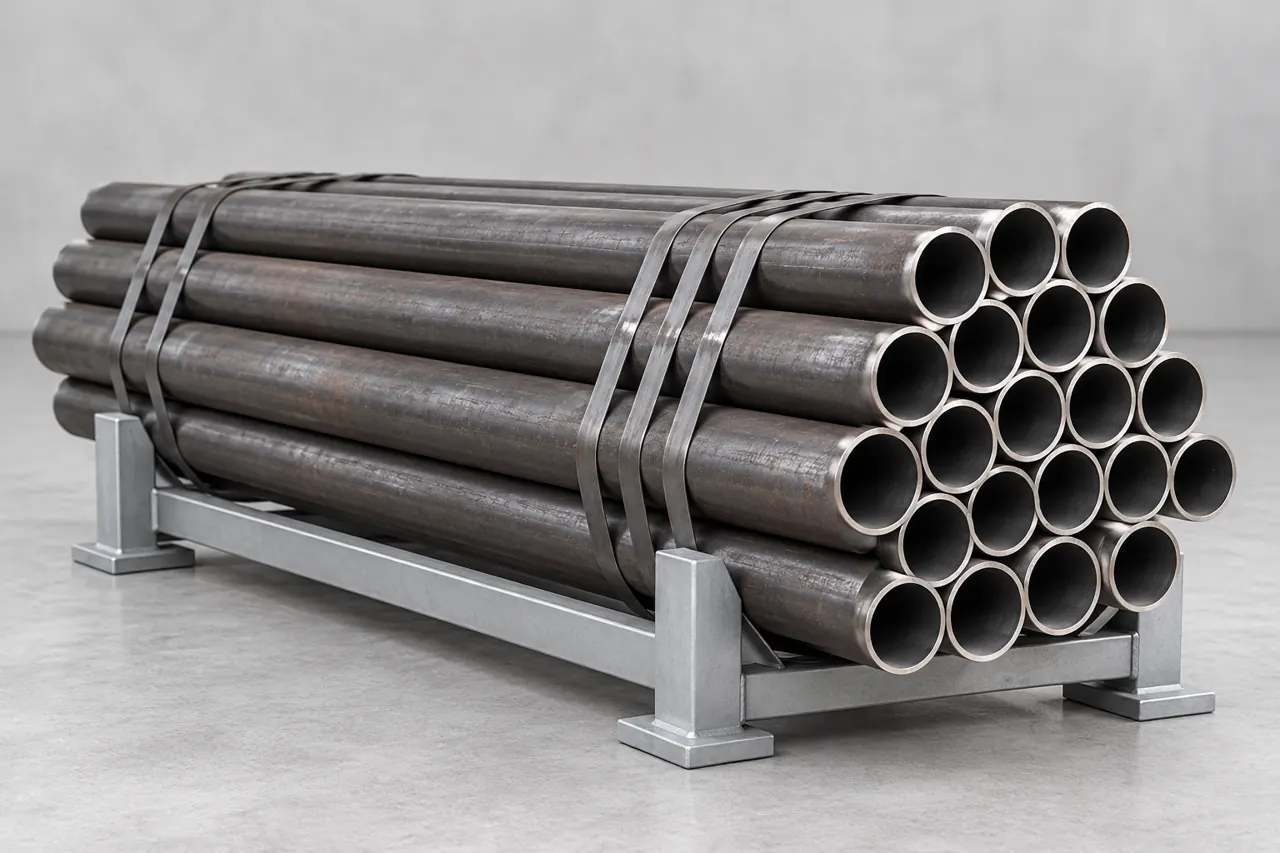
Define tube around the frame interfaces
For a non-pressure frame or support, buy black ERW tube against the frame drawing and fabrication route, not a water-or-steam phrase in a mixed catalogue title. Start with the structural material basis, actual outside diameter, wall and joint requirements, then confirm the welded route and delivered surface. Relia manufactures welded and seamless steel pipe, but the selected item still needs a clear identity. Send the frame drawing and any bending or sleeve interface so dimensional and fabrication acceptance can be defined without implying pressure-service approval.
- Drawing geometrySpecify actual outside diameter, wall and lengths for the approved frame assembly.
- Fabrication routeIdentify sleeves, bends and joints that depend on seam or shape control.
- Delivered surfaceAgree the black surface and preparation needed before welding or painting.
Selection context and decision detail
| Buyer requirement | Relia response | Evidence / condition |
|---|---|---|
| Frame-compatible geometry | Welded/seamless pipe manufacture | One selected welded route and actual OD/wall |
| Usable fabrication input | Drawing and joint review | Bend/sleeve/weld sample with recorded setup |
| Defined acceptance | Incoming/process/final QC and batch records | Material, dimensions and seam scope agreed |
The frame offer needs one tube identity
Identify one offered tube and its batch evidence before selecting lengths or a nominal schedule designation.
Relia manufactures welded and seamless steel pipe and performs incoming, in-process and final inspection, with corresponding batch records available. For this frame enquiry, identify the actual welded tube and the inspection evidence represented by its batch; no universal ERW/EFW/GMAW capability or particular test method is inferred.
The black-pipe listing mixes A53/A500 and ERW with other welding routes and a seamless field. Its actual wall option is customized and lengths are 6 or 12 m, with no outside diameter option. Resolve that identity before using a schedule label or ordering cut pieces.
- UseNon-pressure frame or support
- DrawingApproved dimensions and revision
- MaterialSpecified designation and condition
- ReleaseResponsible project authority
ERW formation introduces a seam that the drawing may need to locate
Consider seam and internal bead restrictions where sleeve fit, bending or later machining requires them.
In the general ERW route, strip is formed toward a closed tube, the longitudinal edges are joined by electrical-resistance heating and pressure, and the tube is sized. The seam and any internal bead can matter to a sleeve fit, later bend or machined surface.
State seam-related restrictions only where the assembly needs them. A plain pipe photograph cannot prove the joining route or weld acceptance.
- FormStrip toward a closed tube
- JoinLongitudinal resistance-welded seam
- SizeFinal tube geometry
- VerifyAgreed material, seam and dimension evidence
Product references for your shortlist
Open the product details, then discuss the exact specification for your application.
Black ERW frame tube enquiry
A starting reference for welded carbon tube defined by actual dimensions and the requirements of a non-pressure frame.
Outside diameter and wall define different interfaces
Use actual diameter, wall and relevant shape limits to define clamps, sleeves and joint interfaces.
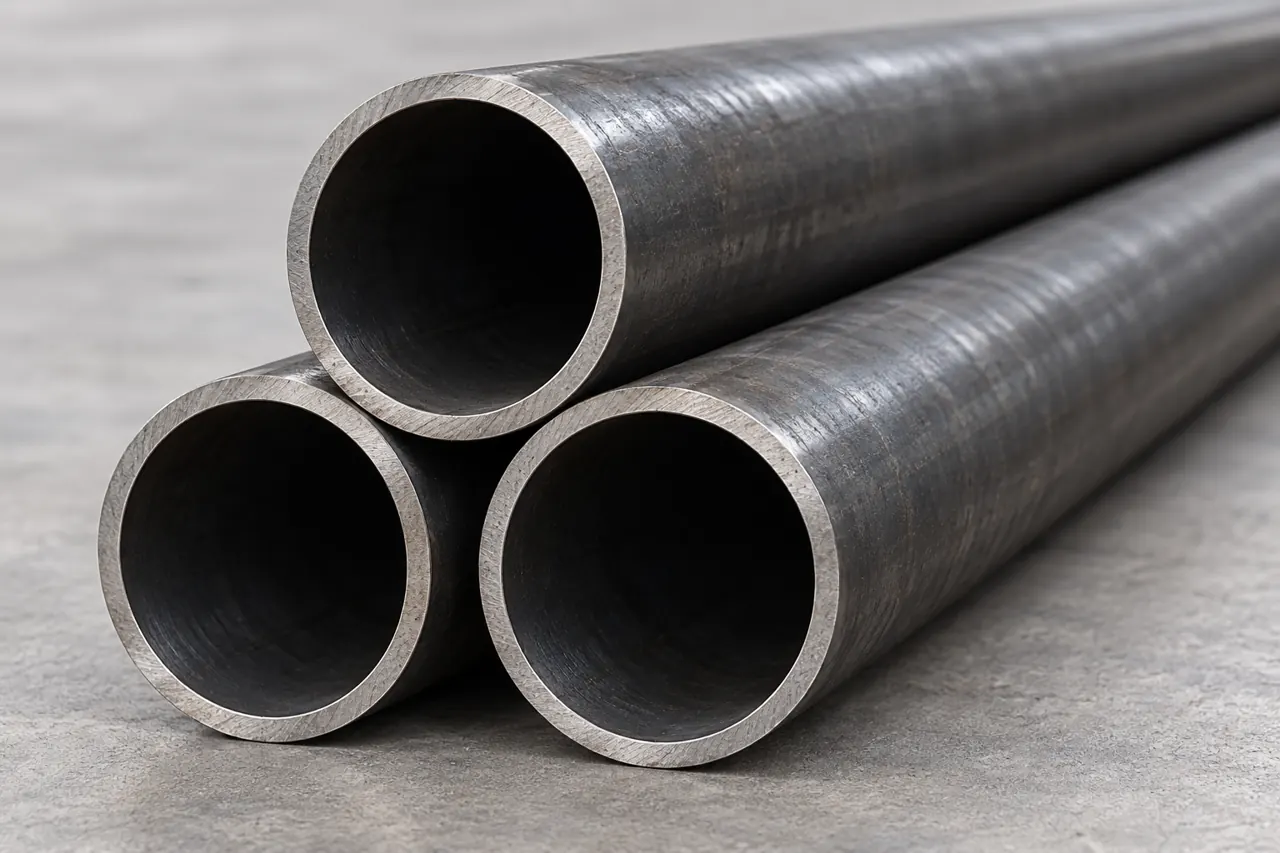
Different dimensions control different interfaces
Outside diameter governs clamps, sleeves and joint geometry; wall affects section and the material available for welding or machining. Nominal pipe size and schedule need a compatible dimensional standard and do not replace actual dimensions.
Define ovality, straightness, cut length and end squareness where they affect assembly. The catalogue's generic ±1% is not adopted as the frame tolerance.
- Outside diameterSet limits that determine clamp engagement and the intended sleeve clearance.
- Wall and beadConfirm available section and any internal weld-bead restriction affecting the joint.
- Shape and endsSpecify relevant ovality, straightness and end squareness for repeatable frame assembly.
A fitting trial should include the intended joint
Trial the intended joint and separate incoming geometry problems from fixture, bending or welding effects.
Test a representative cut, bend, weld or sleeve assembly using identified tube and recorded setup. A sleeve interference can arise from ovality or internal bead even when nominal diameter is correct; a distorted frame can reflect fixture or welding sequence.
Separate incoming geometry from fabrication effects before changing the material grade. Frame design and joint capacity still follow the engineering drawing.
- InputIdentified grade, route and batch
- InterfaceSleeve, bend or welded joint
- ObserveFit and distortion separately
- RetainSetup plus accepted drawing revision
Black delivery is a surface condition, not a coating specification
Agree black surface, oil and preparation requirements against later welding or coating operations.
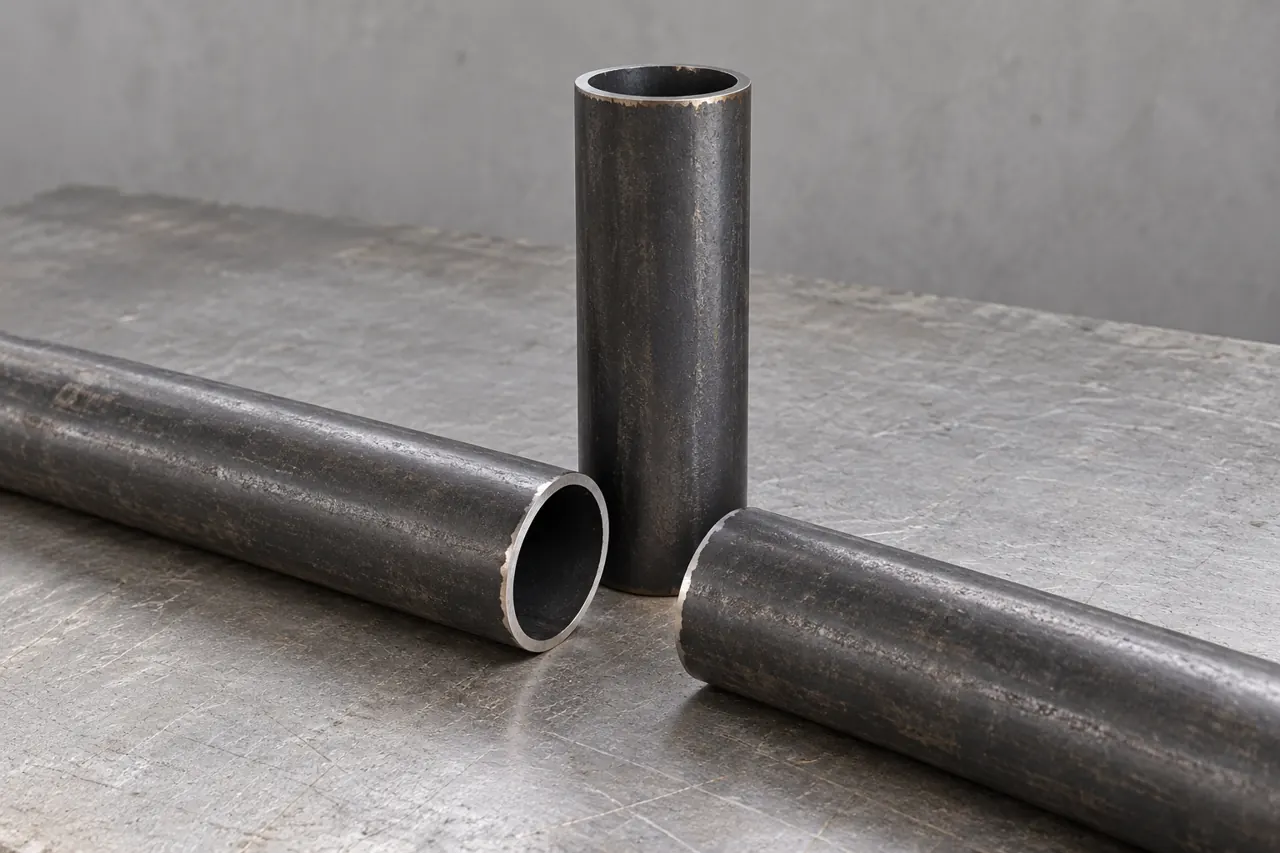
Make black delivery usable for the next operation
Mill scale, surface texture and any oil or temporary protection can influence later welding, painting or handling. The listing records non-oiled supply; agree the actual cleaning and protection required for the job.
If a later coating is needed, assign preparation and coating responsibility and inspect the relevant condition. Black colour does not identify a durable corrosion-protection system.
- Starting surfaceAgree actual scale, oil and temporary protection conditions for the selected tube.
- Preparation responsibilityIdentify who cleans or prepares the surface before the planned coating operation.
- Acceptance stageCheck the condition relevant to the next process rather than black colour alone.
Material and seam evidence should answer different acceptance questions
Request material, dimensional and any seam evidence for their distinct acceptance purposes and represented samples.
A represented material record supports grade identity; a dimensional record supports sampled geometry. Any required seam examination or mechanical test needs its own applicable method, acceptance and traceable sample. Do not assume a catalogue certificate list proves those results.
Use the confirmed QC and batch-record framework to agree this scope before production release, without inventing instruments or frequencies.
- Material identityUse the represented grade record to identify the actual material supplied.
- Measured geometryConnect dimensional readings with the sampled tube and the agreed limits.
- Required seam checksDefine any needed seam examination with its method, acceptance and traceable sample.
Non-pressure use retains the frame engineering requirements
Keep frame engineering requirements explicit; non-pressure use still needs the approved member and connection design.
A non-pressure frame may still need strength, deflection, fatigue or impact performance. Identify those requirements through the component and connection design rather than assuming that any black pipe is a structural substitute.
Conversely, successful frame fabrication does not qualify the tube for water, gas or steam. Those are separate product and system acceptance questions.
- Frame member dutyRetain the designed strength, deflection, fatigue or impact requirements for the component.
- Connection designUse the approved joints and fabrication trial to assess the actual frame assembly.
- Pressure-service changeReview separate product and system requirements before treating frame tube as fluid piping.
Receiving checks should preserve length and batch identity
Check delivery condition and critical dimensions before cutting removes the length and batch reference.
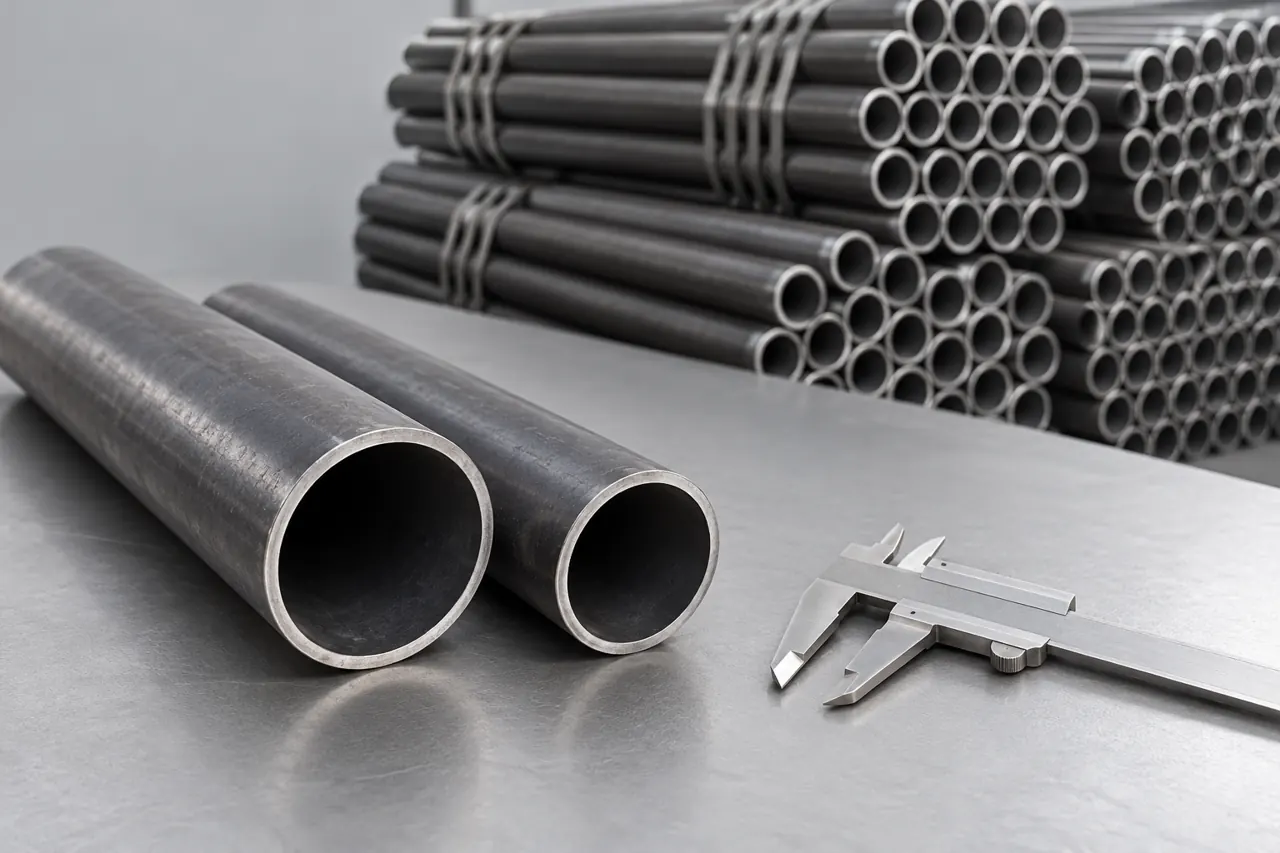
Receive and identify before cutting
Check bundle condition, end damage and the actual dimensions required by the frame before pieces lose their identification through cutting. Photograph the package context and affected length when reporting a discrepancy.
Repeat orders should retain the approved standard/grade, welded route, dimensions, surface and fabrication-trial basis. A change from welded to seamless is still a specification change to review.
- Inspect the bundleRecord transit condition and damaged ends with the original delivery context.
- Check critical dimensionsMeasure the interfaces that decide fit while the tube reference remains available.
- Preserve the baselineCarry grade, route and surface requirements forward with the accepted fabrication trial.
Mark the critical frame interfaces
Mark tube interfaces and seam restrictions on the drawing to support a specific material and processing offer.
Send the frame drawing and intended joints so we can discuss tube dimensions, seam restrictions and the evidence needed for your fabrication trial.
Qingdao Relia Industries Co., Ltd.
Contact address: Shuyuan Road, Qingdao, Shandong, China
- Actual outside diameter and wall
- Material basis and drawing revision
- Sleeve bend and joint details
- Cut lengths and end requirements
- Surface preparation and coating plan
Enquiry scope and supporting detail
Send actual section dimensions, wall limits, lengths, material basis and the intended joints, bends or sleeve fits. Mark the dimensions that decide assembly acceptance and identify any seam or surface restriction. We can then define a specific tube offer and relevant batch records, with cut supply and commercial conditions separated from unsupported pressure or certification claims.
- TubeMaterial · outside diameter · wall
- DrawingLengths · tolerances · ends
- OrderProcessing · records · packing