

80-Mesh Garnet Procurement for Waterjet Cutting Shops
For waterjet cutting, choose garnet that feeds steadily and produces the edge your parts require. This guide helps you define the actual 80-grade distribution, check dry delivery and compare cuts under recorded head conditions. Use accepted parts, taper and rework to judge the switch rather than abrasive price or an 80-mesh label alone.
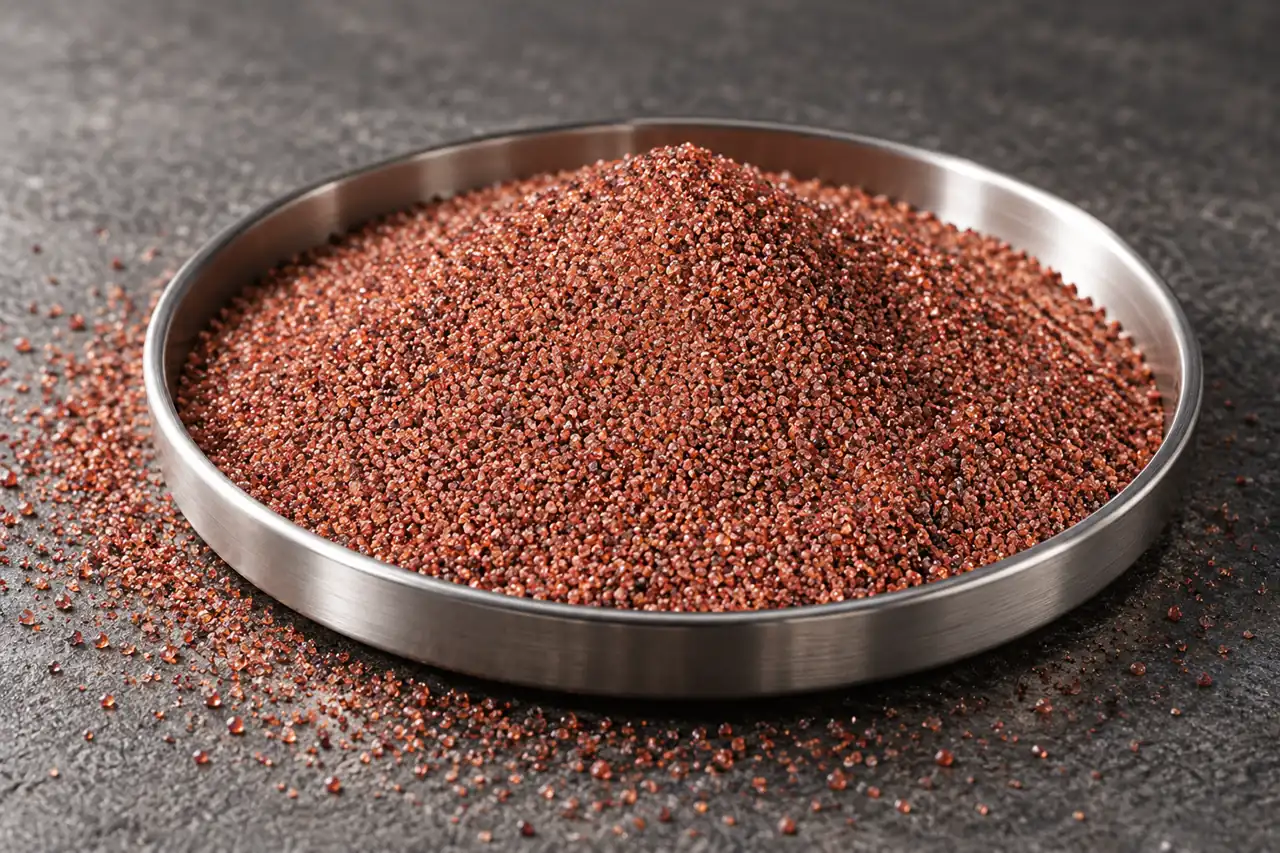
Select garnet from the cut you need
For a waterjet cutting shop, treat 80-mesh garnet as a defined abrasive population that must feed through the approved head and deliver the required edge on your material. Select mineral identity, grading, particle condition and clean dry delivery together; an 80 label alone cannot predict speed, taper or nozzle life. Relia supplies the listed garnet enquiry and can discuss a product-specific offer and evidence. Start with material/thickness, cutting head, existing abrasive and accepted edge criteria. Compare steady feeding, actual consumption and accepted cuts under recorded settings before switching the shop's routine abrasive supply.
- Workpiece requirementState material, thickness and the edge quality that makes a part acceptable.
- Abrasive identityDefine the selected mineral, grading convention and physical particle condition for the head.
- Operating comparisonRecord feed and head condition so accepted cuts can be compared fairly.
Selection context and decision detail
| Buyer requirement | Relia response | Evidence or condition |
|---|---|---|
| 80-grade waterjet abrasive | Discuss the actual Garnet/80# item | Mineral identity and full distribution required |
| Clean steady delivery | Define dry pack and handling requirements | Head compatibility and flow reviewed on actual equipment |
| Batch and cut evidence | Corresponding inspection records can be provided | Accepted edge and consumption measured in a controlled trial |
Garnet supply has an individual material and producer basis
Identify the selected mineral producer and relevant particle records separately from the confirmed cast-steel abrasive production route.
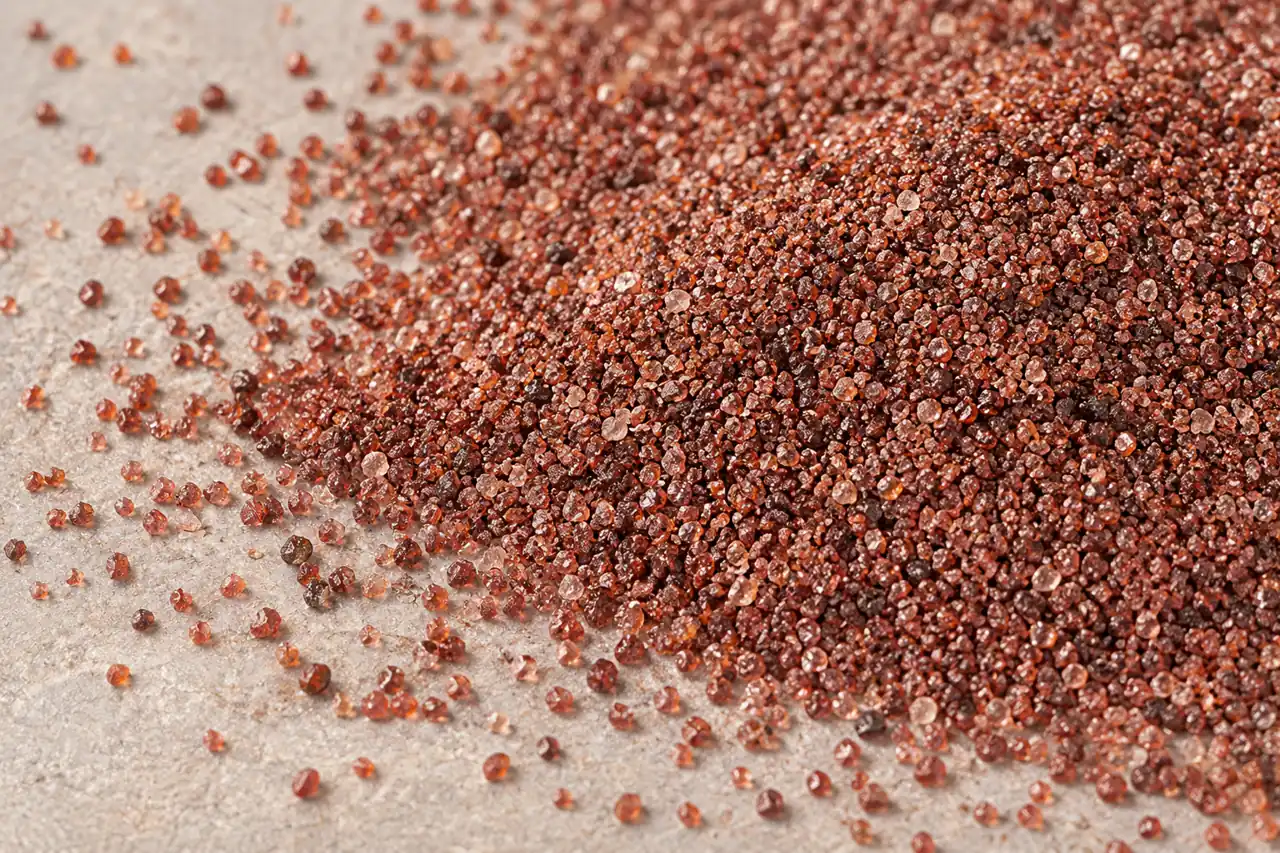
Connect the mineral offer to the trial sample
Relia manufactures cast steel shot/grit and steel wire; garnet is a separate mineral supply item. Identify the selected producer, mineral basis and processing/inspection scope in the offer rather than applying our cast-steel route to this abrasive.
Incoming, process and final inspection are performed and corresponding batch records can be provided. Agree which mineral, distribution and physical-condition records represent the selected garnet, with any additional waterjet trial evidence required by your process. A material supply role does not qualify a cutting head or establish an OEM approval.
- Selected producerIdentify the actual garnet source and processing responsibility in the supply offer.
- Particle evidenceAgree mineral identity, distribution and physical-condition records for the represented material.
- Process evidenceKeep the cutting trial and required head compatibility review separate from mineral supply records.
The actual selection is 80 Garnet 80#
Define the grading convention and delivered fractions for the actual 80-grade selection rather than the broader body range.
The catalogue has one actual 80/Garnet/80# combination. Its body also includes 20/40 and 30/60 families, Round/Angular wording and shot-blasting use. Those fields do not create additional actual waterjet variants or one verified 80-mesh distribution.
Specify the grading convention, delivered sieve fractions, mineral identity and required particle condition. The broad hardness and colour fields need material evidence; do not use them as proof of cutting quality, mineral purity or compatibility with every stone and metal.
- Selected combinationUse the actual 80 Garnet 80# selection as the starting material enquiry reference.
- Named gradingState the grading convention and delivered sieve fractions rather than the broader body families.
- Particle identityConfirm mineral and particle-condition evidence separately from hardness, colour or a cutting-efficiency label.
Product references for your shortlist
Open the product details, then discuss the exact specification for your application.
80-grade garnet cutting enquiry
An enquiry reference for the actual garnet selection evaluated against waterjet feed behavior and the required metal or stone edge.
Particle delivery is part of the cutting mechanism
Keep particles dry and clean, recording head condition because delivery behavior is part of the cutting mechanism.
The high-pressure water stream entrains abrasive, and accelerated particles perform erosion at the workpiece. The incoming size population and particle condition affect what can be delivered through the head; the abrasive label is only one input.
Keep material dry and protected from debris. Moisture can cause clumping, while foreign particles or an unsuitable coarse tail can obstruct delivery. Use the cutting-head maker's permitted abrasive and maintenance procedure. A garnet source change should not conceal a change in mixing tube, orifice or feed system condition.
- PackDry, clean and identified
- DeliveryStable flow within equipment envelope
- HeadRecorded condition and permitted abrasive
- PartRequired erosion/cut quality assessed
A cut-quality trial needs the same material and geometry
Compare representative material, thickness and geometry under recorded settings, assessing edge, taper and dimensions separately.
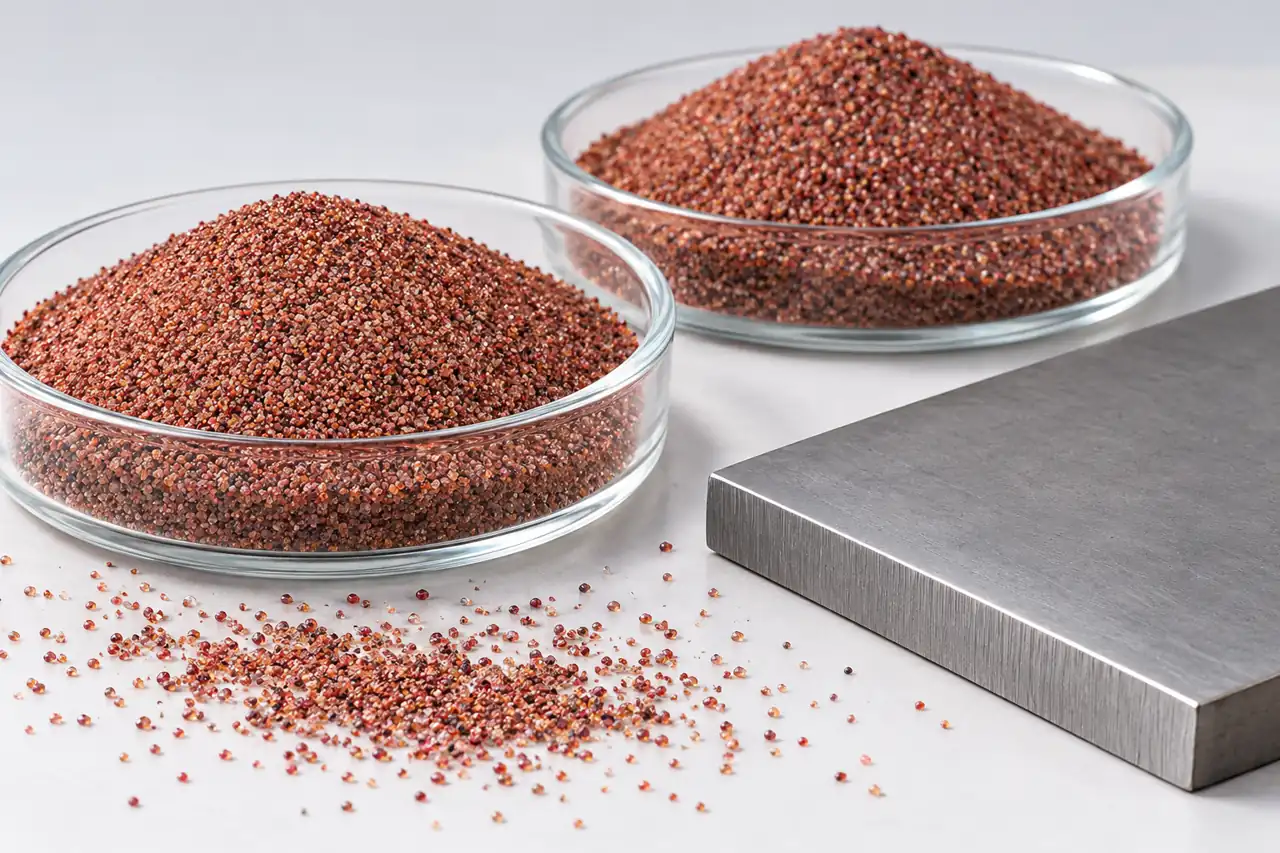
Compare the edge under representative cutting conditions
Compare representative substrate, thickness, geometry, pierce strategy and finish requirement with the baseline. Record pressure, speed, standoff, abrasive feed and head condition according to the machine procedure. A straight external edge and a tight feature can impose different quality demands.
The garnet dishes and plain metal coupon are AI-assisted references, not a measured edge test. Assess the required edge texture, taper, dimensions and any secondary finishing through their specified criteria. A faster traverse is useful only if the part remains acceptable.
- Representative featuresUse the actual material and thickness with relevant straight and tight geometries.
- Recorded settingsRetain pressure, speed, standoff, feed and head condition used for the comparison.
- Accepted resultAssess edge texture, taper and dimensions with any required secondary finishing included.
Flow variation should be separated from mineral cutting behavior
Distinguish intermittent feeding from a steady poor cut, retaining samples from new supply and the actual feed path.
Intermittent abrasive delivery can leave a different signature from an abrasive that feeds steadily but cuts too slowly. Record actual feed behavior, interruptions and the point at which edge quality changes. Review moisture, debris, hoses and the head before attributing every defect to mineral hardness.
For a supplied-particle concern, retain an unopened sample and a sample from the feed path separately. Connect them with the bag/lot reference and recorded cut conditions so the comparison describes the material that reached the process.
- InterruptionMoisture, debris and delivery path
- Steady poor cutMaterial, grading and actual settings
- SampleNew supply versus feed path
- RecordHead, part and lot linked
Consumption comparisons follow accepted cutting output
Compare abrasive additions with accepted output, including recuts and secondary finishing under the same acceptance conditions.
Compare abrasive added with accepted parts or cut length under the same material, thickness and edge requirement. Include rejects, recuts and required secondary work. A lower bag price can be offset by slower accepted production or more finishing.
No catalogue cutting-rate, nozzle-life or universal-consumption result is established. Keep wear observations and machine component changes visible rather than assigning a whole production shift to a new bag of garnet.
- InputActual abrasive additions
- OutputAccepted parts or cut length
- ReworkRecuts and secondary finish
- ConditionSame material, thickness and acceptance
Packing should protect clean dry flow to the hopper
Protect dry flow through receipt, storage and refill, keeping chips and other abrasive grades out of the hopper.
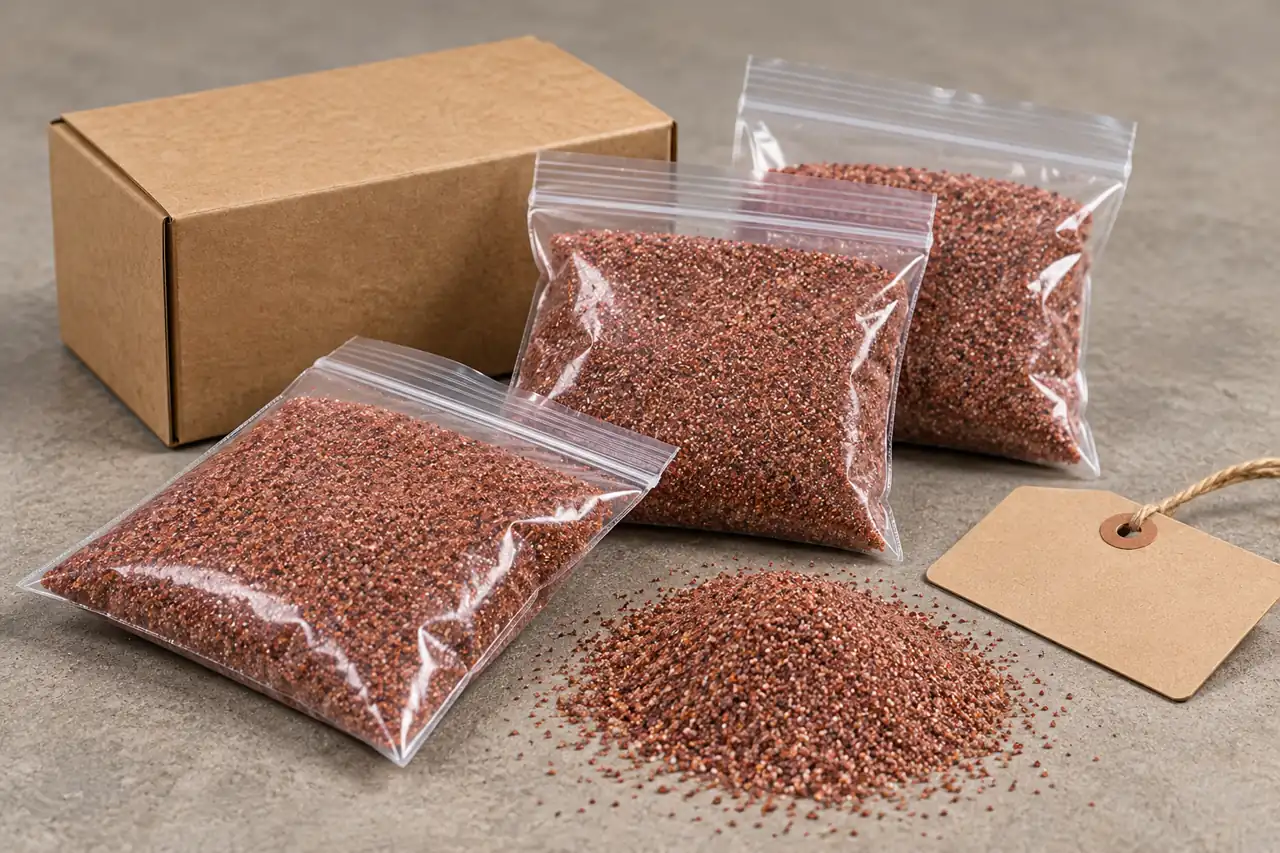
Preserve clean dry delivery to the hopper
Agree net pack contents, identification and moisture protection for your receiving and refill method. Keep opened material covered and use clean handling. Do not allow metal chips or another abrasive grade to enter the hopper with otherwise conforming garnet.
The sample bags, carton and blank tag shown are AI-assisted packing illustrations. They do not establish the actual pack specification, label service or shipment. Match received material and corresponding records with the selected 80-grade order line.
- Receive identified packsCheck agreed contents, protection and order-line identity before material enters shop storage.
- Store opened materialKeep garnet covered and use clean handling to prevent moisture and debris entry.
- Refill the hopperKeep chips and different abrasive grades separate during the actual refill operation.
A repeat order retains the complete approved abrasive
Repeat the approved mineral and distribution, investigating incoming material, handling and equipment changes when quality drifts.
Preserve the mineral identity, producer, grading and particle-condition baseline alongside the accepted cutting trial. A shared 80 label cannot authorize a different distribution or contaminated pack. Review changes before replacing stock.
If quality drifts, retain the affected part and samples with feed and head-condition records. Distinguish incoming abrasive, storage/handling and equipment causes so the next action addresses the observed mechanism.
- ApprovedMineral and distribution baseline
- ReceivePack and batch match
- ObserveFeed and edge evidence
- ReviewSupply, handling or head change
Describe the cutting head and accepted edge
Send head details, material and accepted-edge criteria to define the selected garnet and a useful trial comparison.
Share the material and edge requirement with current feed or cost concerns so we can discuss a selected garnet and a representative cutting comparison.
Qingdao Relia Industries Co., Ltd.
Contact address: Shuyuan Road, Qingdao, Shandong, China
- Workpiece material thickness and geometry
- Cutting head and mixing-tube reference
- Approved abrasive and current garnet
- Edge taper and dimensional limits
- Trial output quantity and packing
Enquiry scope and supporting detail
Send material/thickness, head and mixing-tube reference, approved abrasive envelope, current garnet and actual failure or cost concern. Add edge/taper/dimensional requirements and comparable operating conditions. Request the selected mineral and sieve evidence with a representative trial quantity.
Include packing, destination and the output used for comparison. We can discuss the defined garnet supply; actual availability, samples and commercial conditions are confirmed for that offer.
- CuttingMachine, nozzle guidance and material
- AbrasiveCurrent reference and required grading evidence
- SupplyTrial quantity, repeat demand and destination