

Conductive Steel Balls for Electroplating Tooling
Choose conductive steel balls around the parts, contacts and bath in your plating process. This guide helps you select a useful size distribution, check separation and surface condition, and compare deposit results on real components. It also shows how to distinguish a media problem from load movement, nesting or poor electrical contact.
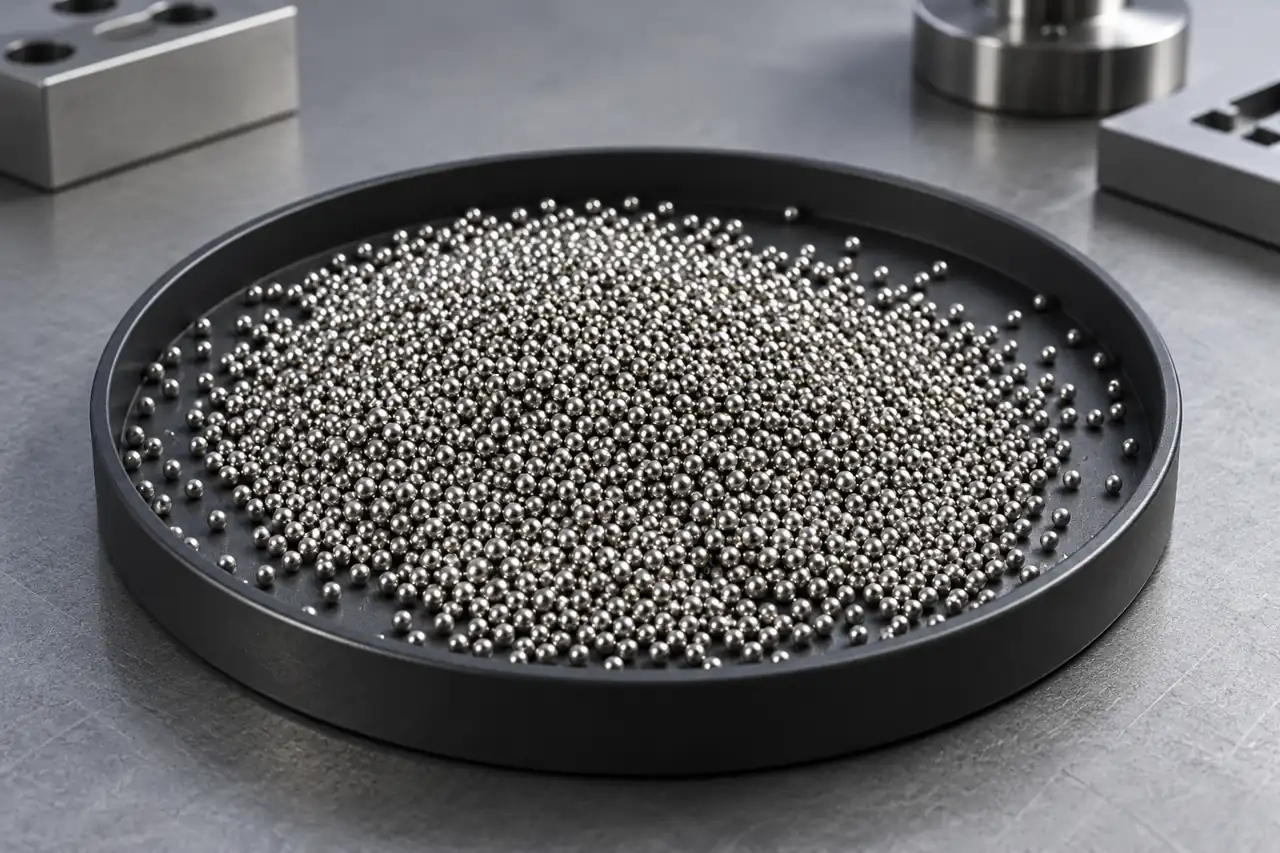
Select conductive media for the actual load
For plating engineers and tooling buyers, choose conductive steel balls by the electrical contact they must support, the parts they mix with and the bath they enter. The alloy-steel candidate listed at 0.2–2.5 mm is a starting range for selecting a controlled size distribution. Smaller balls are not automatically better: they must circulate, separate from parts and remain compatible with the process. Begin with the part dimensions, barrel or fixture arrangement, chemistry and current operating problem, then evaluate an identified sample against deposit uniformity, contact stability and contamination limits.
- Parts and separationIdentify component recesses and size relationships that govern mixing and media removal.
- Electrical contactsDescribe how balls, parts and the cathode arrangement maintain useful contact.
- Bath exposureSet the alloy and surface restrictions relevant to the actual plating chemistry.
Selection context and decision detail
| Buyer requirement | Relia response | Evidence or condition |
|---|---|---|
| Stable current contact | Select alloy-steel media for the tooling arrangement | Process trial includes contact and deposit results |
| Controlled mixing and separation | Define nominal size and distribution within the listed range | Part features, barrel and separation equipment govern choice |
| Repeatable media supply | Identify source, surface state and lot records | Approval applies to the evaluated process conditions |
Supply responsibilities follow the selected conductive medium
Identify the conductive-media producer and applicable lot records through the selected supply offer and preparation scope.
Relia supplies the conductive steel-ball candidate for a tooling-specific enquiry. Its confirmed manufacturing operations include steel wire and cast steel abrasives; these do not establish in-house manufacture of this conductive-ball grade. The technical offer should identify the selected material, producer and responsibility for preparation and release.
Relia performs incoming, in-process and final inspection in its confirmed manufacturing scope and can provide corresponding batch records. For purchased conductive media, agree which producer or receiving records apply to the actual lot. A company quality reference alone does not qualify the balls for an electronic plating process.
- SupplyExact conductive medium and producer
- PreparationSurface state and release responsibility
- EvidenceApplicable producer or receiving records
- ApprovalBuyer process and component criteria
Ball size changes mixing and separation
Choose a controlled distribution that mixes with the parts without entering recesses or defeating separation.
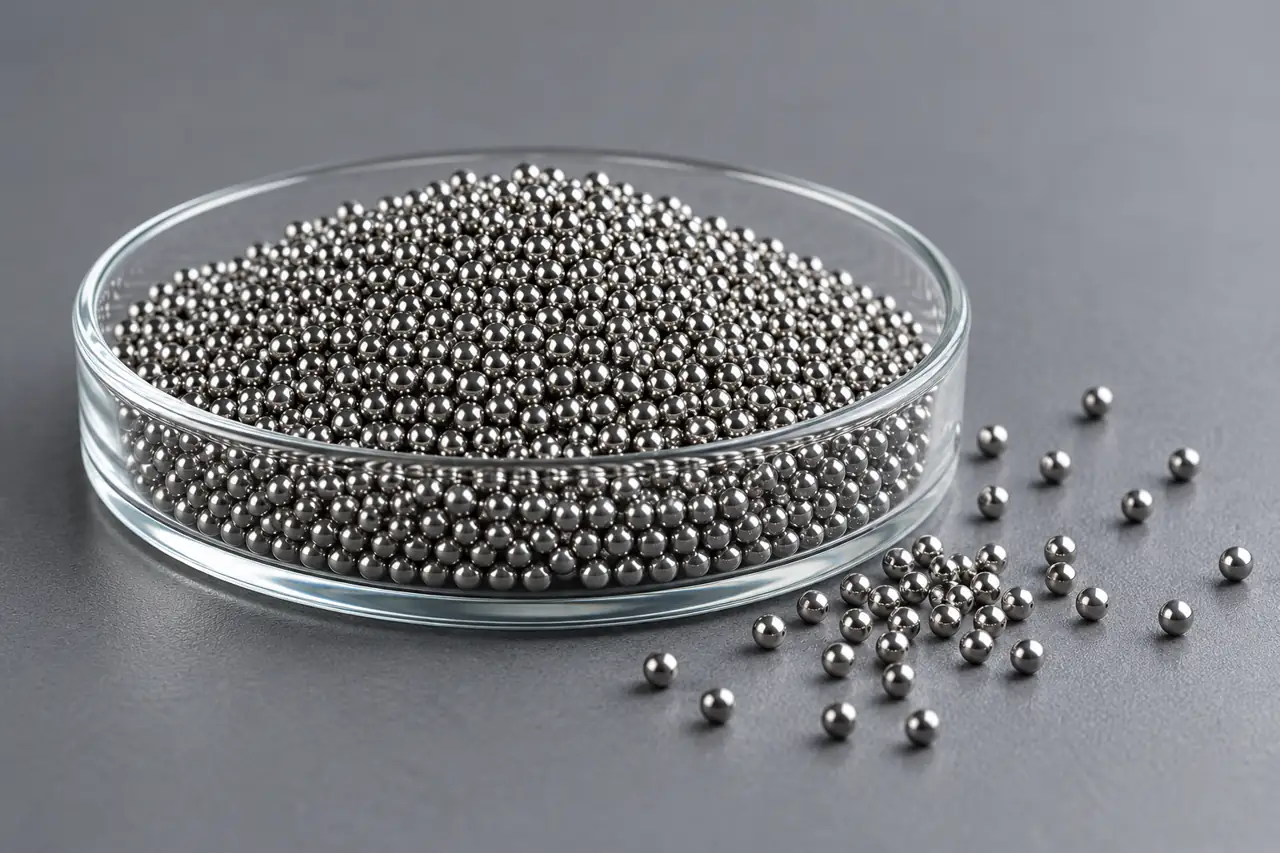
Connect ball size to movement and recovery
The product description identifies alloy steel, a round form and a 0.2–2.5 mm selection range. Select a nominal size and permitted distribution within the agreed offer, rather than treating the whole interval as one interchangeable product.
A medium that enters a recess or overlaps the part size can complicate separation; a different size or density can change how the load mixes. Review the smallest part feature, barrel perforation, separation screen and magnetic handling method together. The accompanying AI-assisted image shows spherical media, without establishing size, alloy or electrical performance.
- Part featuresCheck whether the selected balls can enter recesses or nest with components.
- Barrel and screensCompare ball distribution with perforations, separation screens and the recovery arrangement.
- Load mixingEvaluate the selected size under the intended load rather than nominal diameter alone.
Product references for your shortlist
Open the product details, then discuss the exact specification for your application.
Conductive balls for plating trials
An alloy-steel media candidate for a tooling-specific trial of contact behavior, separation and component deposit quality.
Contact continuity connects material choice to plating behaviour
Useful electrical contact depends on surface interfaces and load movement as well as the ball material.
A metallic ball conducts through its body, but useful current also depends on contact with neighbouring media, parts and the cathode arrangement. Oxide, accumulated deposit, soil or insufficient mixing can alter those interfaces. A bulk conductivity label therefore cannot predict coating uniformity on its own.
Record the media size, quantity, surface preparation and reuse condition during evaluation, alongside the equipment contact arrangement. Compare part results from equivalent loading conditions. If contact is unstable, investigate both the media surface and the load movement before changing chemistry or increasing current.
- InterfaceBall · part · cathode contacts
- ConditionSurface state and load movement
- ObservationContact stability and component coverage
- DecisionSupported material and operating scope
Bath compatibility is a separate material decision
Assess bath compatibility and marking risk separately from the ability to make electrical contact.
Confirm the alloy designation and whether the balls enter the process bare, pretreated or with an agreed deposit. Chemical attack or transferable residues can introduce unwanted material even when electrical contact appears satisfactory. Hardness also affects resistance to deformation and potential marking of delicate parts; the catalogue reference range is not an approved limit for every component.
Ask the process owner to define the bath exposure and unacceptable contamination or part damage. Link the proposed chemistry and surface condition to the sample identity. Mechanical stainless balls, abrasive shot and conductive media serve different qualification needs.
- AlloyIdentity and bath exposure
- SurfacePreparation and transferable residues
- MechanicalMarking or deformation concern
- EvidenceMaterial lot and trial findings
A process trial should expose the actual failure mode
Trial the intended parts and load, distinguishing poor contact from restricted solution exchange or nesting.
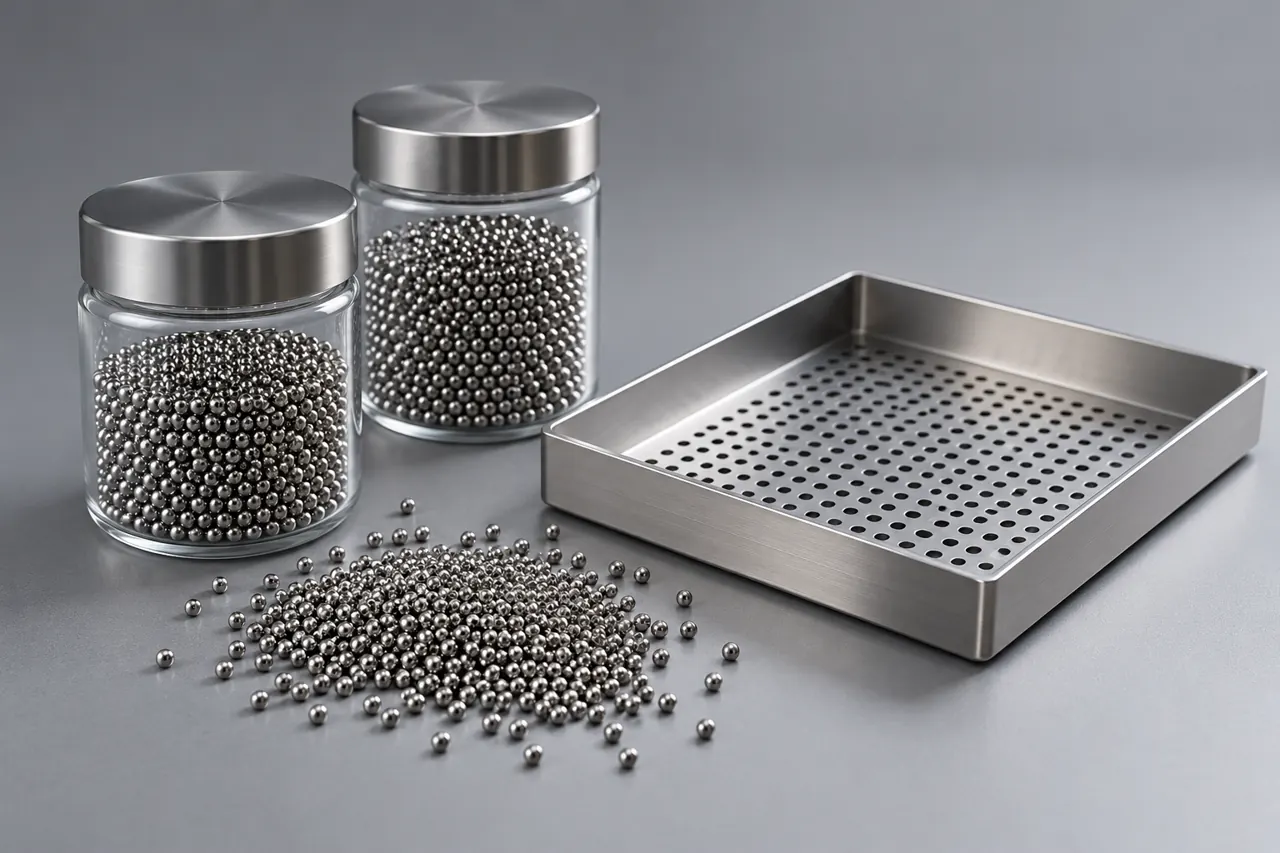
Trial the failure mode you need to solve
Use the intended part family and a documented load arrangement. Retain the initial media condition and compare deposit coverage or thickness at the buyer's critical locations, visible part damage, separation losses and any agreed bath checks. An attractive ball surface does not demonstrate a successful plating result.
For uneven plating, distinguish poor electrical contact from restricted solution exchange and part nesting. Change one relevant variable at a time and retain the operating conditions. The pictured jars and tray illustrate sample handling; they are not evidence of a completed Relia plating trial.
- Deposit locationsCompare coverage or thickness at the component locations that determine acceptance.
- Handling resultRecord marking and separation losses alongside the actual media and load conditions.
- Cause reviewSeparate unstable contact from nesting or restricted solution exchange before changing chemistry.
Acceptance combines media checks with component results
Keep ball acceptance separate from component deposit approval, connecting both records through the identified sample.
Set dimensional and surface acceptance for the balls separately from functional approval of the plated components. A media lot may match its size specification while a changed barrel load produces an unacceptable coating.
Specify how the distribution is assessed, what surface defects matter and which material evidence is required. Define the component trial conditions and authority for approval. Relia can review the supply and record requirements against the selected item; deposit quality and compatibility remain tied to the buyer's actual process evaluation.
- Media acceptanceIdentity · size · distribution · surface
- Process approvalLoad · contact arrangement · chemistry
- Component resultCritical deposit locations · damage
- TraceabilitySample and lot tied to both records
Reuse needs a controlled reference condition
Record cleaning, deposits and wear when comparing reused conductive media with a fresh sample.
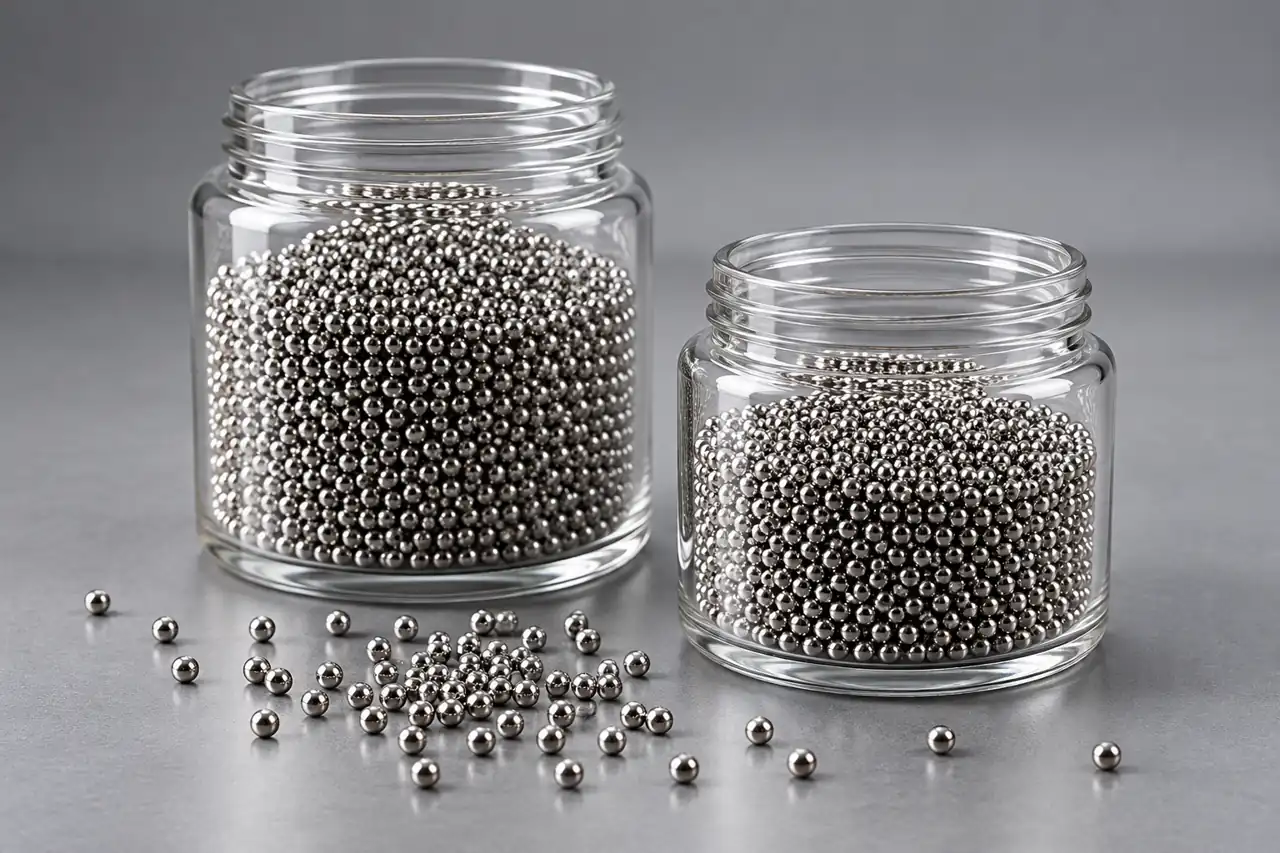
Describe the reused state before comparing media
Conductive media can change during repeated exposure through deposition, cleaning, wear or carryover. A fresh sample comparison is useful only when the condition of the used medium is also known. Keep retained material from the approved state and identify the cleaning or renewal history relevant to the trial.
If a problem emerges, preserve balls, affected parts and the lot reference before blending in replacement media. The AI-assisted storage image explains keeping samples identifiable, rather than promising a specific cleaning service, reuse life or container system.
- Surface historyRecord deposition, cleaning and renewal conditions relevant to the used media sample.
- Retained mediumKeep material from the approved state separate from the newly proposed balls.
- Affected componentsPreserve parts and lot references before replacement media are blended into the charge.
Reorders preserve the qualified combination
Reorder the qualified alloy, distribution and surface state, reviewing source or preparation changes before use.
The repeat-order reference should include alloy, size distribution, surface state and the approved application boundary. Review a proposed change of source or preparation before it enters an established plating process. Matching the nominal diameter alone does not preserve chemical compatibility or contact behaviour.
Separate this tooling medium from zinc anodes or feed forms, which supply metal to a different part of the electrochemical system. The related guide helps organise that distinction. Neither item description establishes a complete plating-line capability or a guaranteed deposit outcome.
- ApproveAlloy, distribution and prepared state
- UseDocument load and reuse condition
- ReorderMatch the qualified combination
- ChangeReview source or preparation before use
Describe the parts and plating load
Send part features, tooling contacts and bath conditions so the sample plan addresses the actual plating problem.
Share the parts, bath and current contact problem so we can discuss a defined ball sample and the media and component checks that matter.
Qingdao Relia Industries Co., Ltd.
Contact address: Shuyuan Road, Qingdao, Shandong, China
- Part dimensions and smallest recesses
- Barrel contacts and separation screens
- Bath chemistry and surface restrictions
- Current media size and reuse condition
- Deposit criteria and trial quantity
Enquiry scope and supporting detail
Send the component dimensions, smallest recess or separation feature, barrel or tooling contact arrangement, plating chemistry and the problem to solve. Add the proposed media size, quantity, surface restrictions and required material records. Where the current medium works, provide its accepted specification and change restrictions.
Relia can use this information to clarify an alloy-steel ball proposal and the sample evidence needed for a decision. Agree the media checks and component trial acceptance before committing the item to a repeat-order specification.
- PartsDimensions · recesses · separation features
- ToolingContacts · barrel · chemistry
- MediaAlloy · size · surface restrictions
- DecisionSample checks · component acceptance