

First Direct Import of Steel Wire or Shot from China
Make the first import start with a product that works in your operation and an offer whose boundaries are clear. Define the wire or shot, sample acceptance and receiving format together. This guide helps you align batch evidence, packing, documents and delivery responsibilities so the first accepted lot becomes a useful purchasing reference.
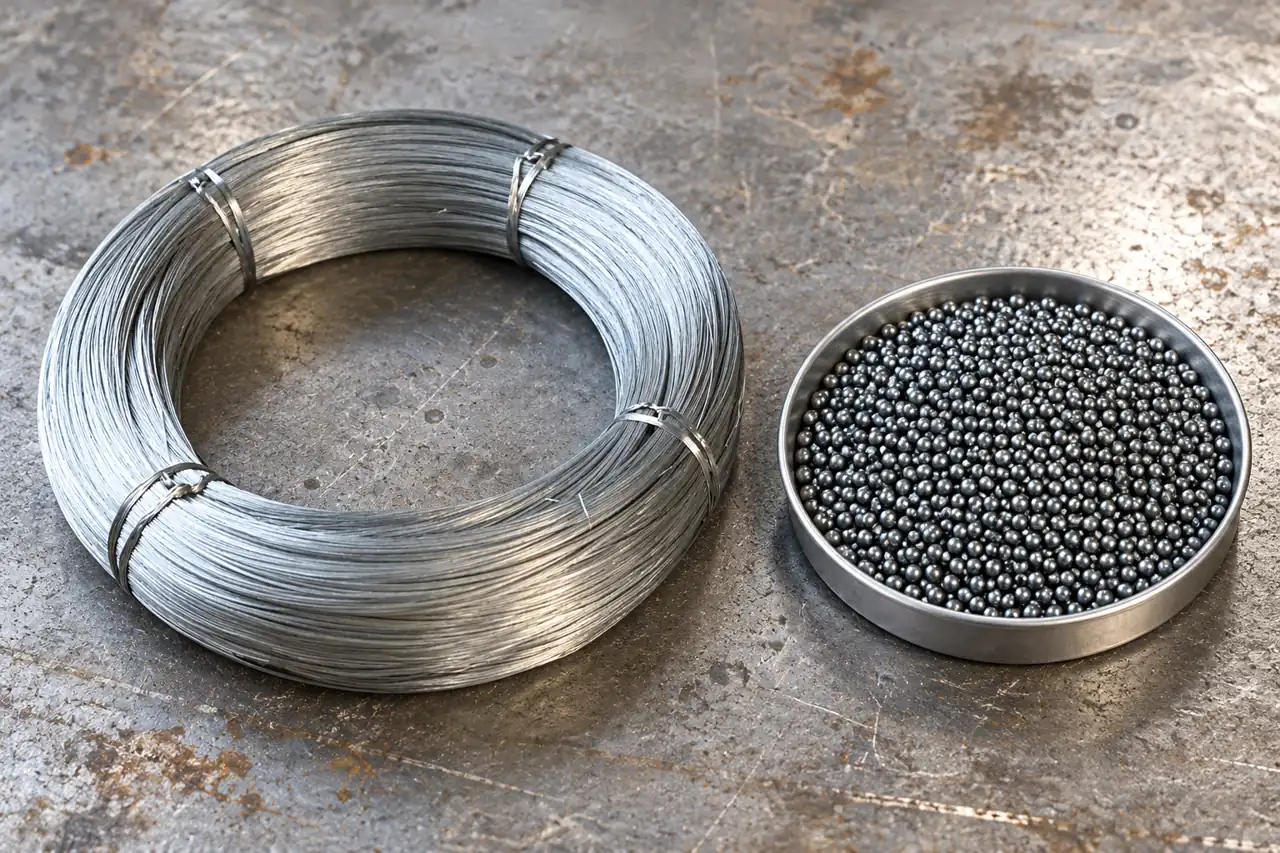
Define the first order on three connected bases
For a first direct import, select one clearly specified wire or blasting-media item and prove that it suits the receiving operation before expanding the order. Galvanized wire needs an agreed section, condition, coating and usable coil; cast steel shot needs a defined particle distribution, hardness requirement and process trial. Begin with the application, required quantity and destination, then compare equivalent product, acceptance, packing and delivery scopes. Relia can review its manufactured wire or cast-shot proposal with batch evidence, while transport responsibilities and destination requirements are resolved before order release.
- Usable productSpecify the actual wire condition or shot properties needed by the receiving operation.
- Acceptance evidenceAgree the representative sample and required records for the supplied material lot.
- Delivery boundaryAlign packing, documents and named delivery responsibilities before comparing the complete offers.
Selection context and decision detail
| Buyer requirement | Relia response | Evidence or condition |
|---|---|---|
| A workable first product | Review manufactured galvanized wire or cast shot | Application-specific sample and lot acceptance |
| Comparable direct-import offers | Define product, packing, documents and delivery scope | Chosen delivery rule includes a precise named place |
| Controlled first receipt | Preserve package and lot evidence before use | Receiving checks connect back to the approved requirement |
The selected material connects to an actual production route
Connect the selected wire or cast abrasive with its actual manufacturing route and corresponding batch evidence.
Relia manufactures steel wire through in-house drawing, annealing and galvanizing. It also manufactures cast steel shot and grit through melting, atomization, heat treatment and grading. Select the relevant route for the product being imported instead of treating all metallic consumables as one interchangeable family.
Relia performs incoming, in-process and final inspection and can provide corresponding batch records. Agree the material represented by those records, the required acceptance evidence and how the shipped lot is identified. Manufacturing confirmation does not itself establish a particular instrument, certification or result for the item under review.
- Wire manufactureDrawing · annealing · galvanizing
- Cast-shot manufactureMelting · atomization · heat treatment · grading
- QC stagesIncoming · in-process · final inspection
- EvidenceCorresponding records for the supplied lot
A representative sample should answer the application question
Use the sample to answer the relevant wire handling or shot treatment question.
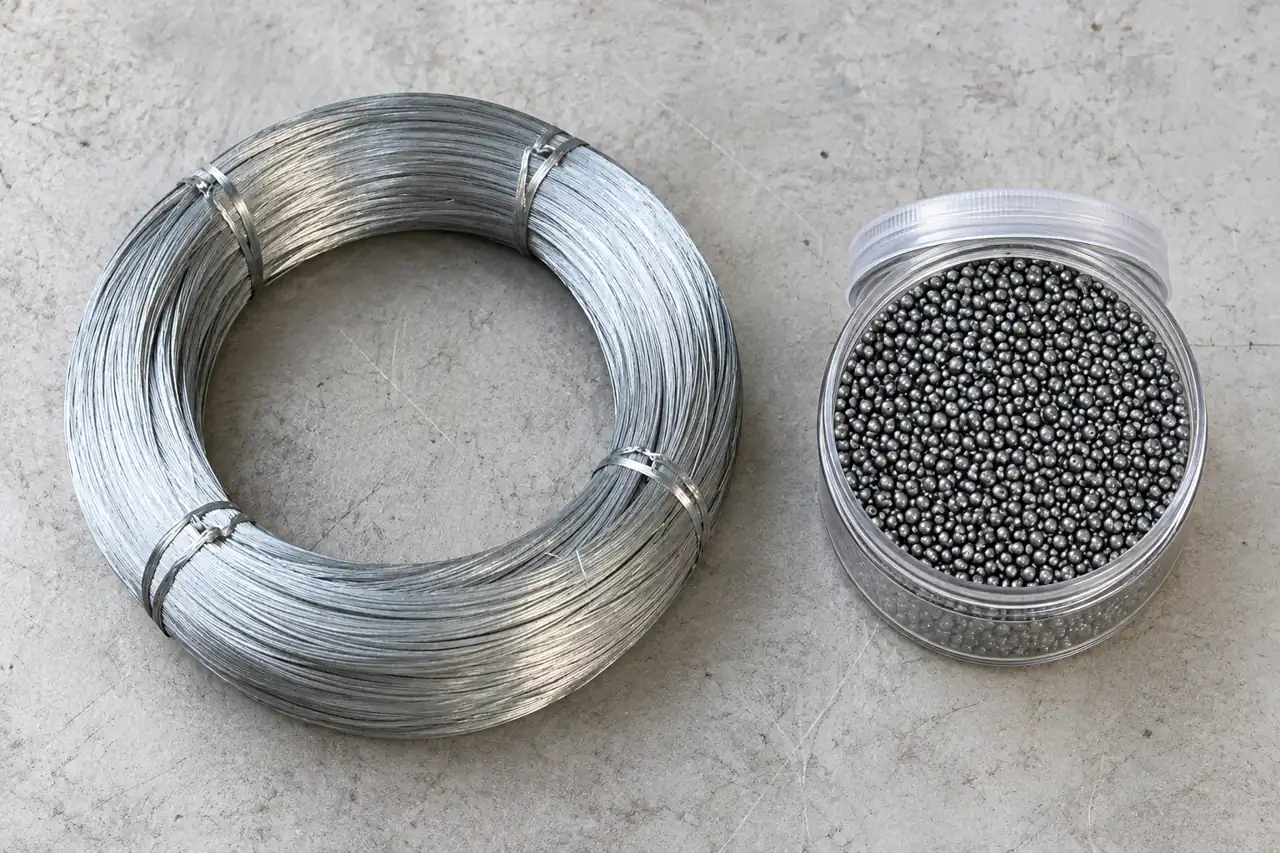
Match sample evaluation to the product
For galvanized wire, assess the required forming, tying or feeding behaviour as well as dimensions and coating condition. Drawing and thermal condition influence that behaviour; a bright zinc surface does not establish ductility or customer suitability. A production coil may need a different handling trial from a short sample.
For cast shot, evaluate an identified fresh-media sample in the intended machine and workpiece context. Keep size, hardness requirement and operating conditions with the result. The AI-assisted coil and shot jar illustrate separate samples, not an actual qualified batch or a guaranteed cleaning outcome.
- Wire applicationAssess the required forming, tying or feeding behaviour alongside dimensions and coating.
- Shot applicationAssess the selected fresh media on representative workpieces with the recorded machine condition.
- Production representationUse a sample format that represents coil handling or the relevant treatment comparison.
Product references for your shortlist
Open the product details, then discuss the exact specification for your application.
Galvanized wire for a first import
A starting wire candidate when final section, delivered condition and usable coil format are defined for the receiving line.
Cast steel shot for a first import
A starting abrasive candidate when particle condition and grading can be assessed against the intended machine and workpiece.
Wire dimensions and shot grading need different measurements
Wire geometry and shot distribution require different measurements for the actual offered condition.
The galvanized-wire candidate provides size options from 1.8 to 10 mm. Define round diameter or flat-section dimensions, tolerances and delivered condition in the offer. The cast-shot candidate lists 42–53 HRC as a catalogue range; its selected hardness and particle distribution require actual acceptance evidence.
For shot, atomization and subsequent treatment establish particle form and condition, while grading controls the supplied distribution. Hardness, shape and sieve results answer different questions. A fresh-media specification does not describe the entire used operating mix in a recirculating machine. Define the actual offered shot geometry and grading before trial.
- Wire geometrySelect round diameter or flat dimensions; define tolerances within the 1.8–10 mm enquiry range.
- Shot hardnessTreat 42–53 HRC as a catalogue range; request evidence for the selected supplied condition.
- Shot distributionCompare the agreed sieve fractions and particle form rather than relying on a nominal size.
- Used operating mixIdentify used media separately because wear and replenishment change the population inside the machine.
The delivery term needs a named rule and place
Name the delivery rule, point and edition while reviewing cost and risk responsibilities separately.
When using Incoterms rules, identify the chosen rule, precise named port/place or point, and edition. Review carriage, insurance, loading, unloading and the point of risk transfer with the parties handling the transaction. A supplier paying freight to a destination does not necessarily retain risk until arrival; C-rules distinguish those points.
Keep product specification, payment and other contract requirements explicit because the delivery rule does not settle every sale condition. Confirm destination import requirements with the responsible local party. This enquiry guide does not assign a tariff, commodity classification or clearance approval.
- TermChosen rule and edition
- PlacePrecise named port/place/point
- ResponsibilitiesCarriage, insurance and risk reviewed separately
- ContractProduct, payment and destination requirements explicit
Packing must suit unloading and production use
Choose packing around unloading, storage and issue to the actual production operation.
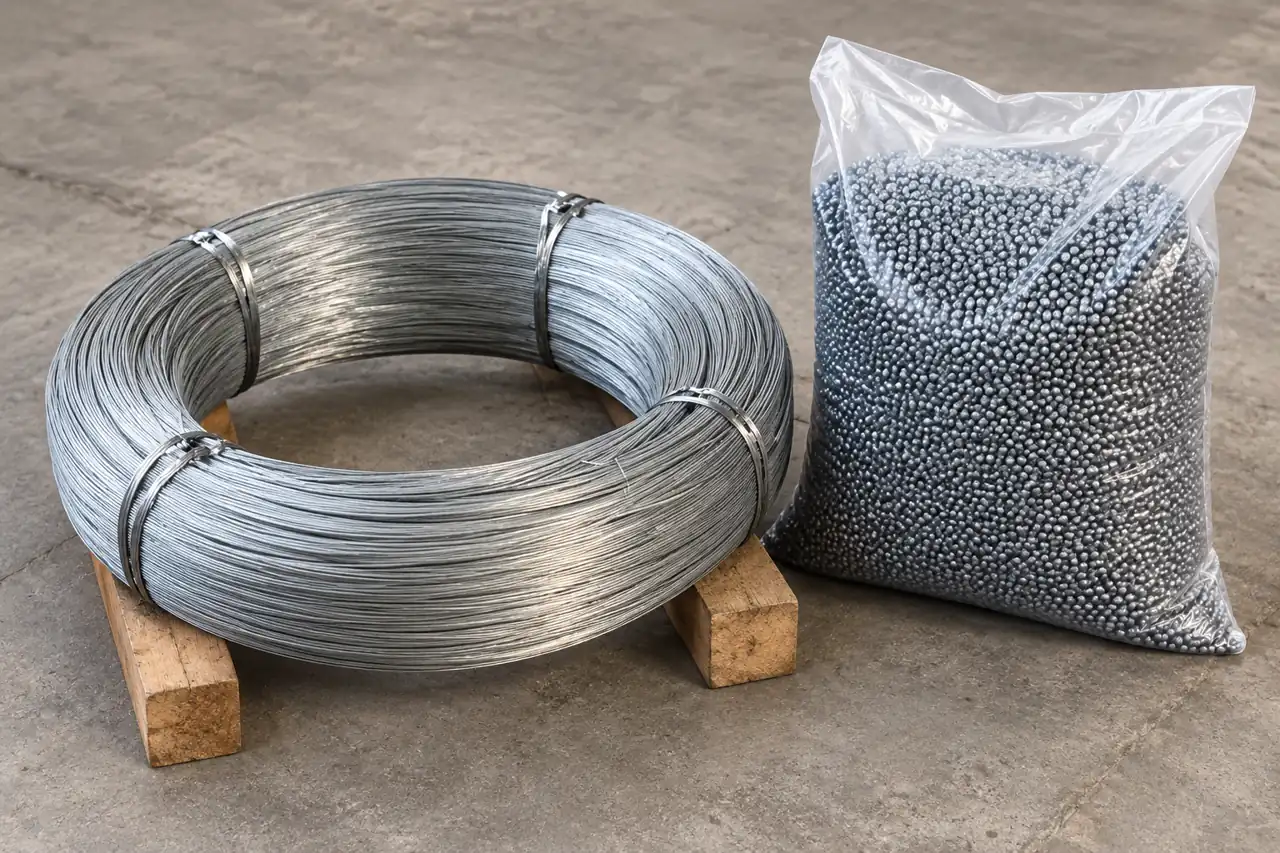
Plan the format your team receives
For wire, define coil mass and envelope, handling access and the payoff or dispensing arrangement at the destination. For shot, agree manageable package contents, moisture protection and lot identification. Relate the proposal to unloading, storage and issue to production, not simply the appearance of a pallet or sack.
The AI-assisted coil supports and media bag show receiving considerations without defining a tested protection system or promised shipment format. Confirm the actual packing and transport scope in the offer before relying on it for freight or warehouse planning.
- Wire coilsDefine unit mass, envelope and access around unloading and the intended payoff.
- Shot packagesAgree manageable contents, moisture protection and identity for storage and machine issue.
- Actual transport scopeReview the offered protection and handling arrangements instead of relying on an illustrative pack.
Shipment documents and product records remain distinguishable
Keep shipment documents and product inspection records distinct while reconciling item, package and lot identities.
Agree the commercial, packing and transport documents needed for the selected transaction, together with the product-specific material and inspection records. Their identities should reconcile: order item, supplied quantity, packages and the production lot represented by the technical evidence.
Review records before release against the agreed acceptance plan. A generic quality certificate does not replace a missing lot result, and a product test record does not establish destination clearance. Compare the same document, packing and delivery scope across quotations, including exclusions, rather than ranking different scopes by one total price.
- ShipmentCommercial, packing and transport documents
- ProductApplicable material and inspection records
- IdentityOrder item · package · manufacturing lot
- ComparisonSame scope, quantity and stated exclusions
First receipt should preserve the lot before use
Preserve package condition and material identity before mixing the first receipt into stock or use.
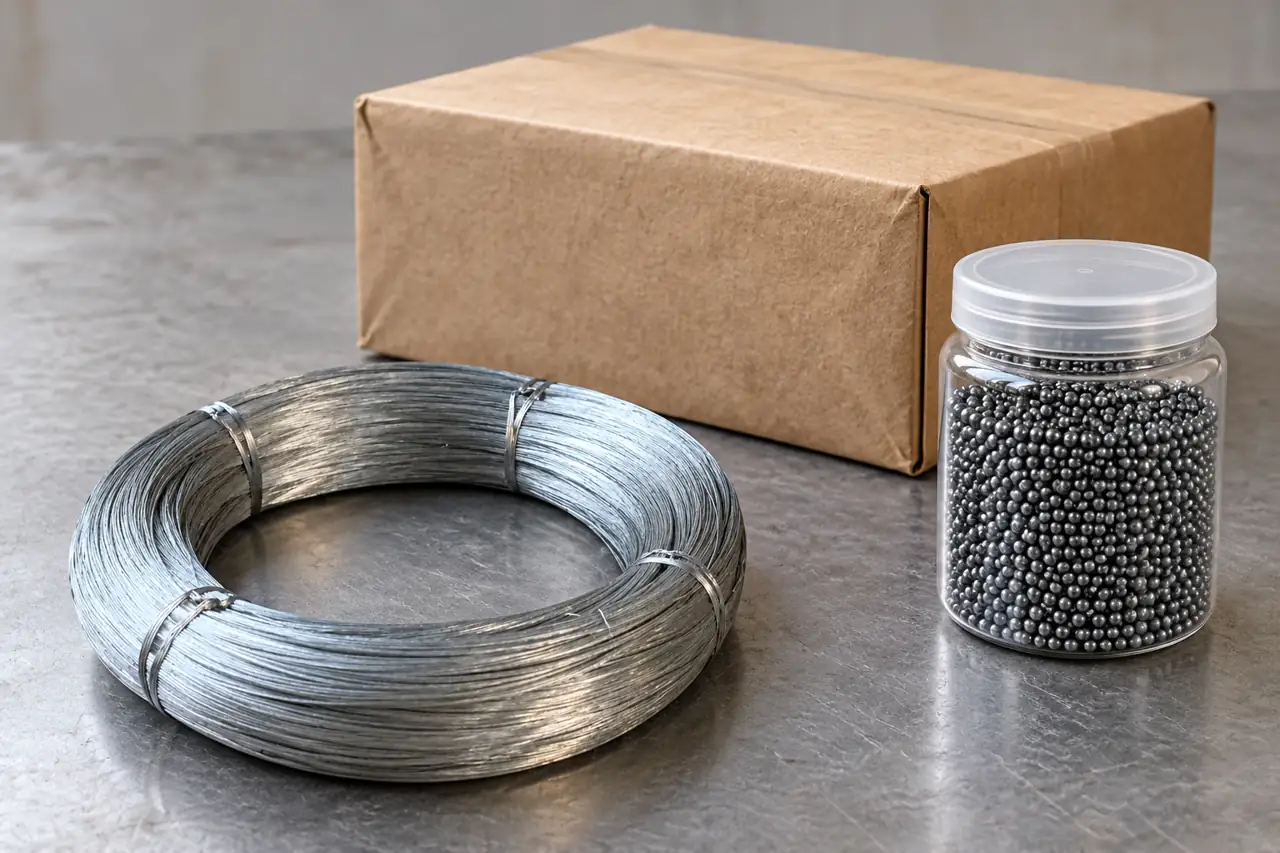
Preserve the first receipt evidence
Record package condition, item identity and quantity while the goods remain distinguishable. Inspect the wire or shot against the accepted requirements and retain the relevant labels and material where agreed. Investigate a suspected mismatch before mixing it with existing stock or adding fresh media to the machine.
The illustrated coil, jar and plain carton explain this receiving sequence; they are not a shipment or inspection record. Separate transport damage, incorrect product identity and a failed application trial so the evidence addresses the actual problem.
- Record the arrivalIdentify package condition, item references and quantities while material remains distinguishable.
- Inspect the productCheck the accepted requirements and preserve relevant labels and retained material.
- Release for useResolve identity or condition questions before blending stock or adding shot to the machine.
The first accepted lot becomes a bounded reference
Use the accepted first lot as a bounded reference for the same product and conditions.
Retain the accepted technical offer, sample identity, relevant batch records, packing definition and receiving findings. A satisfactory first lot provides a reference for repeat supply of that item under its approved conditions. It does not automatically approve a different wire grade, coating, shot distribution or future delivery commitment.
For a later assortment, keep the line-level controls described in the mixed-specification guide. Review substitutions and changes to material, condition, route or packing against the established acceptance basis rather than relying on a photograph or the history of an unrelated product.
- ApproveSpecific material, sample and technical offer
- ReceiveRecord package and lot evidence
- RetainAccepted conditions and receiving findings
- RepeatReview any product, route or packing change
Prepare the product and first receipt brief
Send the product and first receipt requirements together before confirming the technical and commercial release.
Tell us what the material must do and how your team will receive it. We can clarify the candidate, sample evidence and delivery scope for the first order.
Qingdao Relia Industries Co., Ltd.
Contact address: Shuyuan Road, Qingdao, Shandong, China
- Application and selected product requirement
- Quantity destination and named delivery point
- Sample purpose and acceptance criteria
- Coil or media packing limits
- Product and shipment document list
Enquiry scope and supporting detail
Send the application, selected wire or cast-shot requirement, quantity, destination and proposed delivery point. Add the sample purpose, acceptance criteria, packing limits and document list. For wire, include coil/payoff needs; for shot, include the machine, workpiece and current media information relevant to trial design.
Contact Relia through [email protected], phone +86 18561762631 or WhatsApp +1 404 203 0971. Use the response to agree the exact product, batch evidence and commercial responsibilities before release, then keep the accepted package for receiving and the next-order comparison.
- ApplicationWire use or machine/workpiece context
- ProductSpecification · quantity · sample purpose
- DeliveryDestination · named point · packing limits
- AcceptanceLot records and first-receipt criteria