

Mixed-Specification Wire Orders for Import Distributors
Build a mixed-wire import order as a set of individually approved resale items. This guide connects each SKU’s section, condition and coating with its coil unit, quantity basis and manufacturing lot. It helps you compare the same assortment across offers and preserve separate acceptance identities through samples, combined delivery and later replenishment.
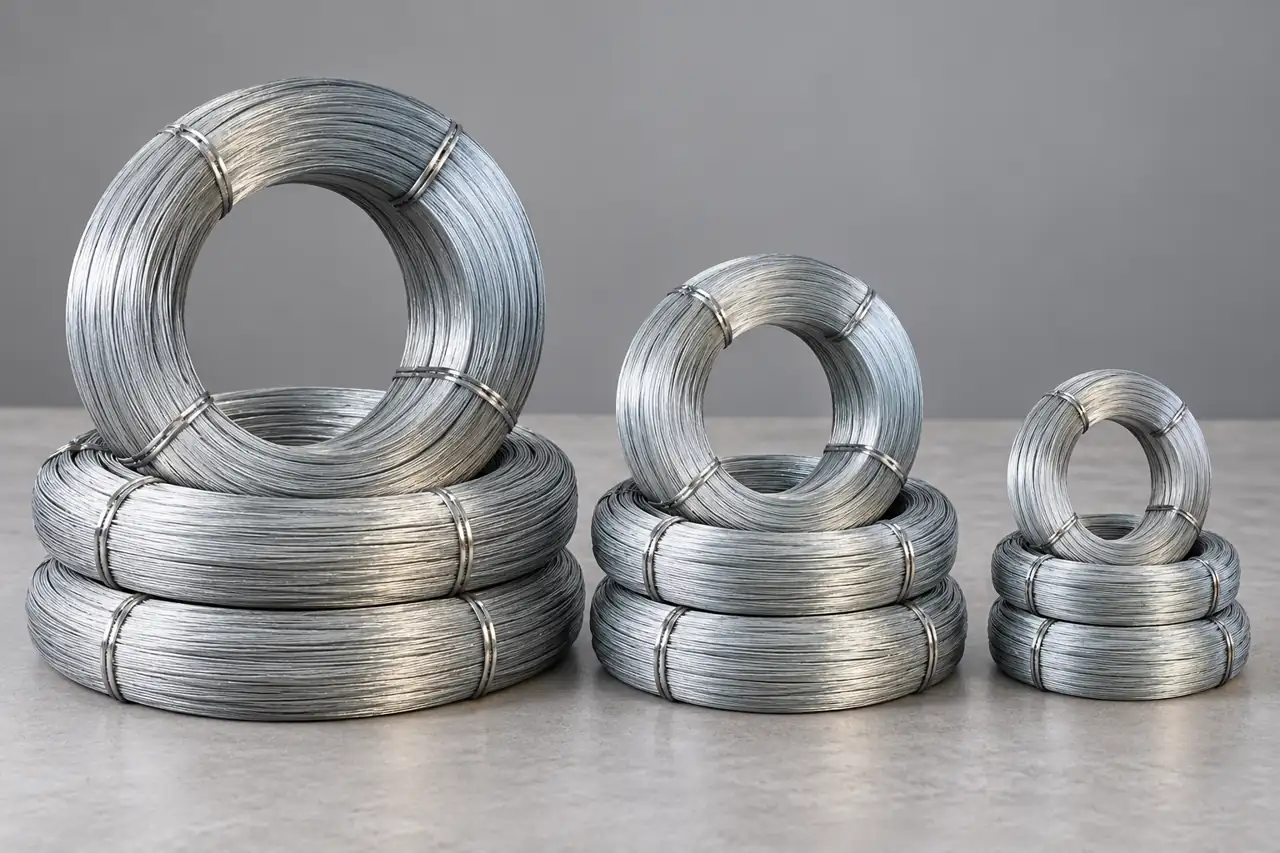
Build the assortment one controlled item at a time
For import distributors, build a mixed galvanized-wire order around the requirements of each resale item, rather than one average wire specification. Select the grade, section, supplied condition, coating requirement and usable coil format by SKU. The galvanized and binding-wire candidates provide size enquiries from 1.8 to 10 mm, while gauge descriptions require a named system and an agreed metric equivalent. Start with the customer application and stock schedule, then confirm the manufacturing route, sample approval and quantity basis for each line. Combining lines must preserve their separate acceptance and lot identity.
- Customer requirementTranslate each resale use into its selected material, section, condition and coating.
- SKU approvalDefine a sample and acceptance basis for the individual wire and coil variant.
- Combined orderKeep separate quantities, lots and agreed package identities in the final assortment schedule.
Selection context and decision detail
| Buyer requirement | Relia response | Evidence or condition |
|---|---|---|
| Distinct resale specifications | Review each galvanized/binding-wire line by SKU | Selected grade, section, condition and coating remain explicit |
| Usable customer coils | Define net contents and dispensing/payoff format | Representative variant samples establish handling fit |
| Controlled mixed-order receiving | Preserve SKU-to-lot and record linkage | Joint supply and special marking are agreed order terms |
Each order line connects to a defined manufacturing route
Connect every selected wire route and manufacturing lot with its own SKU acceptance and batch records.
Relia manufactures steel wire with in-house drawing, annealing and galvanizing. A mixed enquiry can therefore be reviewed against the actual wire route required by each line, including the selected material, final section and delivery condition. Joint supply, quantities and packaging arrangements are established in the proposal for the requested assortment.
Relia performs incoming, in-process and final inspection and can provide corresponding batch records. Keep that evidence linked to each manufacturing lot and SKU. Approval of one wire condition does not release a different diameter or coating requirement, even when both items share the same distributor stock family.
- Wire routeSelected grade · drawing · thermal condition
- FinishAgreed galvanizing and coating acceptance
- Lot evidenceIncoming · process · final inspection records
- AssortmentSeparate release criteria and proposal per SKU
Wire section and coil format are separate choices
Specify wire section separately from coil format and name the gauge system before agreeing a metric size.
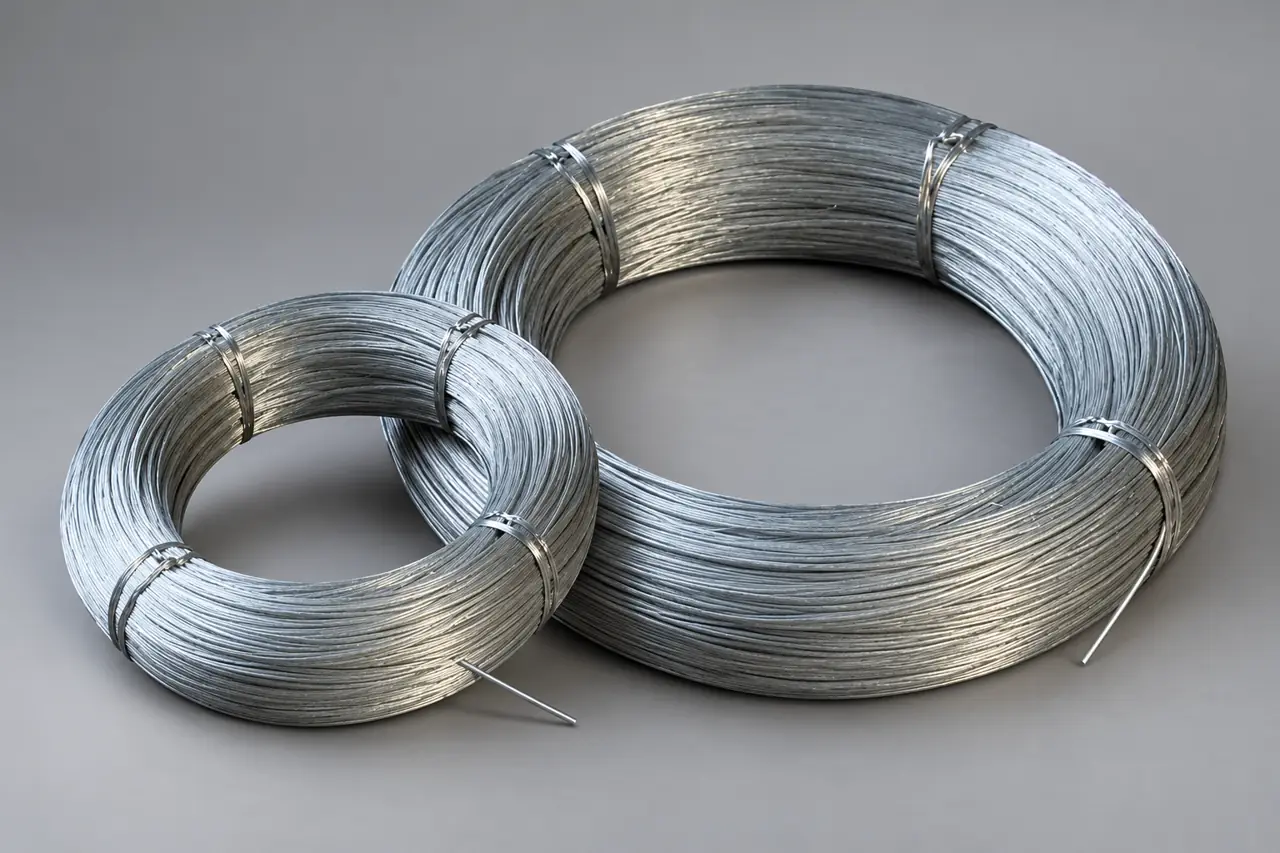
Separate the wire section from the coil unit
The galvanized-wire and binding-wire candidates both show selectable sizes of 1.8, 2, 2.5, 3, 5, 8 and 10 mm. A requested size outside those options needs a separate technical response. For gauge-based descriptions, name the system and confirm the selected metric dimension without assuming a conversion.
State whether the required section is round or flat; flat wire needs width and thickness, not just a diameter label. Define net coil mass, inner opening and outer envelope separately. The AI-assisted image compares coil formats; overall coil size does not prove wire diameter or net contents.
- Round-wire sizeSelect actual diameter and limits using the named gauge system where relevant.
- Flat-wire sizeSpecify width and thickness rather than relying on a diameter-only choice.
- Coil formatDefine net mass, inner opening and outside envelope as separate package requirements.
Product references for your shortlist
Open the product details, then discuss the exact specification for your application.
Hot-dipped galvanized wire-size enquiry
A wire candidate for an assortment line with selected material, actual section and a defined coil unit for resale.
Galvanized binding-wire size enquiry
A binding-wire candidate to define by customer use, named gauge convention and agreed metric geometry within the assortment.
Drawing and annealing influence the customer operation
Select drawing and annealing condition for each customer operation rather than substituting a convenient neighbouring wire size.
Drawing reduces the section and changes the wire's mechanical condition through cold work. Annealing can restore ductility where the selected binding or forming operation requires it. Two lines with a similar appearance may therefore feed, bend or tie differently if their material or final condition differs.
Translate the customer use into the relevant mechanical and forming acceptance for that SKU. Retain the offered grade and route with dimensional results and a representative application trial. Avoid replacing a line's agreed condition with whichever neighbouring size is easiest to combine into an assortment.
- DrawingFinal section and cold-work condition
- AnnealingDuctility restored where specified
- Customer effectFeeding · bending · tying response
- ValidationCondition record and representative trial
Galvanizing requires its own acceptance field
Define coating and mechanics independently because galvanized appearance does not establish coating quantity or forming behaviour.
A zinc coating protects the wire surface, but galvanized appearance alone does not define coating quantity, adhesion or the underlying mechanical condition. Specify the coating requirement and the relevant evidence independently of diameter and temper. Under ASTM A641/A641M, a regular-coating designation does not establish a stated minimum coating mass.
The candidates identify hot-dip galvanizing and alternative low-carbon grades such as Q195, Q235, SAE1006 and SAE1008. Select the actual material for each offer line. Binding-use wording does not provide a verified tie capacity or make every listed grade interchangeable.
- CoreSelected material and section
- MechanicalAgreed delivered condition
- CoatingQuantity/adhesion acceptance
- EvidenceResults tied to the actual SKU and lot
Variant samples should represent the approved use
Choose representative variant samples and distinguish dimensional, forming and coil-handling approval scopes.
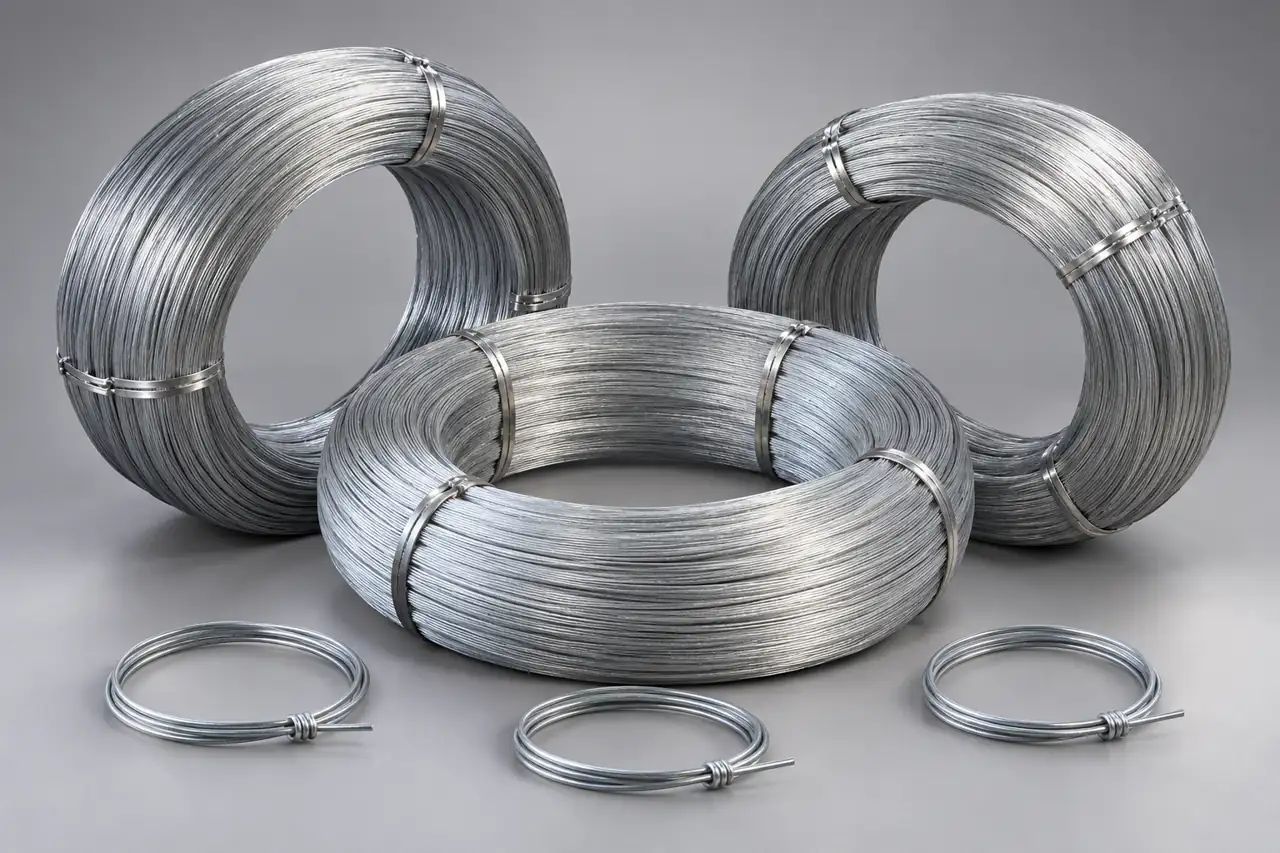
Choose samples for the question being approved
Choose samples that represent the material, section, coating and condition being approved. A short length may help assess dimensions and bending, while coil handling needs a format relevant to the customer's payoff or manual dispensing. Define what the trial actually covers.
For a tying problem, record whether the wire breaks, resists forming, sheds coating or tangles during dispensing. These observations lead to different material, finish or coil investigations. The AI-assisted image shows a sample assortment, not an actual qualified batch; each retained sample needs its own SKU and lot reference.
- Dimensional sampleUse identified material to verify selected section and the agreed measurement basis.
- Forming sampleAssess bending or tying against the actual customer operation and supplied condition.
- Handling sampleUse a relevant coil format to review payoff or manual dispensing behaviour.
Stock identity and batch identity serve different purposes
Preserve both commercial SKU and manufacturing lot while reconciling net coil contents with the purchasing unit.
The distributor SKU identifies the commercial item sold to customers. The manufacturing lot identifies the supply represented by material and inspection records. Preserve both when one SKU spans several lots or one shipment includes several specifications.
Agree the fields needed on individual coils, outer packages and the packing list. Reconcile net contents, coil count and the purchasing unit without treating gross shipment mass as saleable wire quantity. Barcode, private-label or combined-load arrangements are specific order terms; they are not automatic services implied by a mixed-specification enquiry.
- StockDistributor SKU and revision
- MaterialManufacturing lot and records
- QuantityNet coil contents and purchasing unit
- PackagesCoil/outer-pack/packing-list reconciliation
Receiving segregation keeps a discrepancy contained
Segregate received lines and hold affected packages by SKU and lot when identity or dimensions differ.
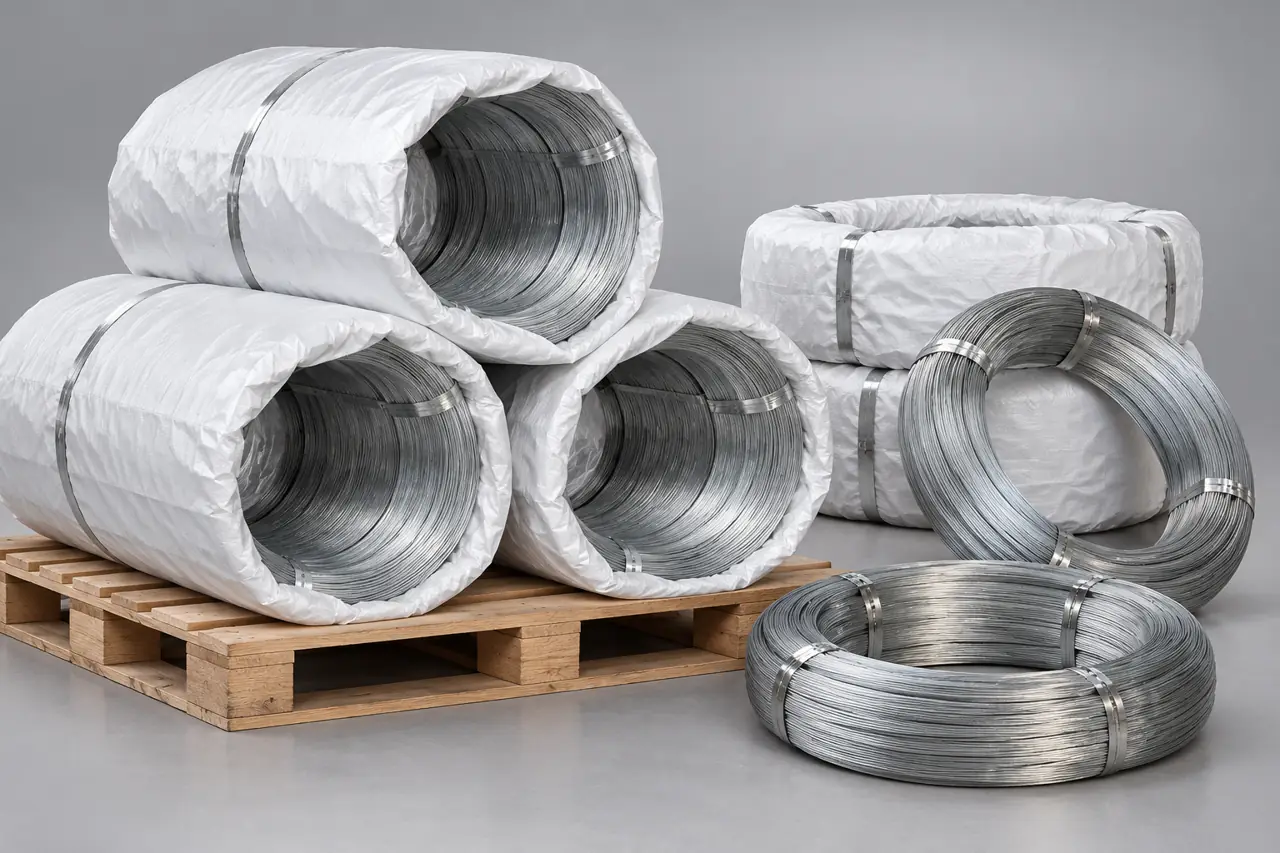
Contain a receiving discrepancy by item and lot
Check the received item against its accepted line revision before distributing it to customers. Inspect package damage and wire condition, reconcile quantity and retain the link to the relevant records. Similar-looking coated coils should not be blended before their identity is confirmed.
If a label or dimension differs, hold the affected packages by SKU and lot and preserve a representative sample. The wrapped coils and pallet in the AI-assisted illustration explain separation and protection. They do not establish actual shipment practice, warehouse stock or an agreed export-packing design.
- Line comparisonMatch received material with its accepted SKU revision before customer distribution.
- Quantity reconciliationCheck package condition and net contents with the relevant delivery records.
- Affected holdKeep uncertain packages and a representative sample separate by SKU and manufacturing lot.
Replenishment preserves the accepted assortment
Compare equivalent assortments and review substitutions at the affected item rather than approving a broad stock family.
Compare offers on the same wire specification, net quantity, coil format, coating acceptance and delivery scope. A lower order total can conceal a changed line mix or package basis. Resolve substitutions at the affected SKU rather than approving the entire assortment through one broad description.
Carry accepted sample and specification revisions into replenishment orders. Review a source, material or route change before release. The first-import guide provides the separate shipment and commercial preparation steps; the wire procurement library helps develop customer-specific requirements without losing line-level control.
- CompareEquivalent specification and net contents
- ApproveVariant sample and accepted revision
- ReceiveSKU, lot and quantity reconciled
- RepeatReview the affected line before substitution
Prepare the line-by-line wire assortment
Send a line-by-line schedule so wire, coil, acceptance and commercial requirements remain explicit for each variant.
Share the resale schedule and the use behind each wire line. We can review a defined assortment with separate sample, quantity, coil and batch-record requirements for every SKU.
Qingdao Relia Industries Co., Ltd.
Contact address: Shuyuan Road, Qingdao, Shandong, China
- Customer use and selected grade
- Round size or flat dimensions
- Condition and coating acceptance
- Per-line quantity and coil format
- Samples records and delivery destination
Enquiry scope and supporting detail
Send the SKU schedule with customer use, selected grade, round diameter or flat dimensions, supplied condition, coating acceptance and quantity per line. Add net coil mass, payoff or dispensing needs, required records and destination. Identify which variants need samples and what their approval must demonstrate.
Contact Relia at [email protected], phone +86 18561762631 or WhatsApp +1 404 203 0971 to review the assortment. Confirm the complete technical and packing proposal for each line before releasing the combined order, then retain that schedule as the receiving and replenishment reference.
- AssortmentSKU · customer use · grade
- WireRound/flat section · condition · coating
- CoilNet mass · envelope · dispensing
- AcceptanceSamples · records · quantity · destination