

Galvanized Steel Strand for Engineer-Specified Guying Projects
For engineer-specified guying, buy the strand construction, strength grade and coating as one defined material. This guide helps you connect the finished strand with compatible terminations, continuous lengths and reel handling. Use it to compare the offered evidence with the project requirement before a replacement or trial supply is released.
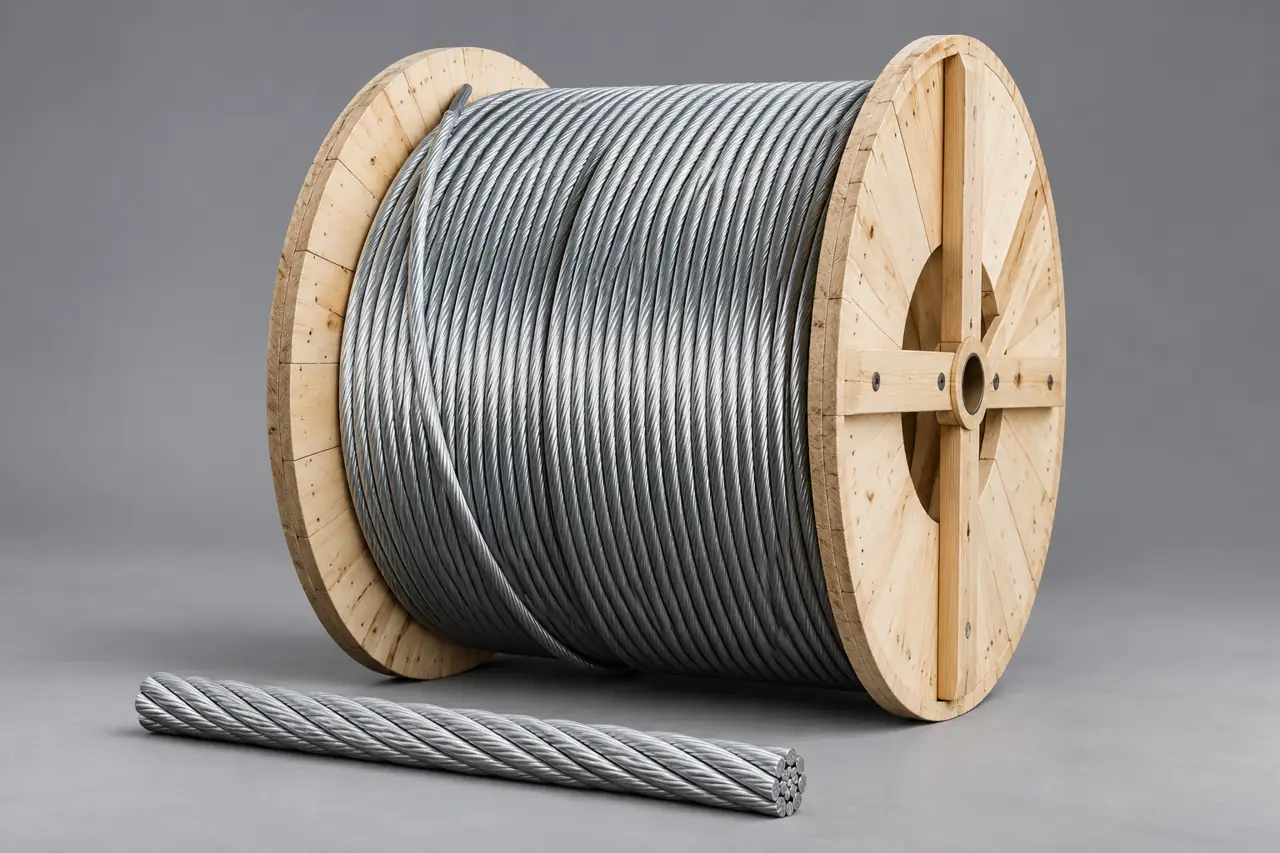
Define the guying strand as a complete specification
For pole, messenger and greenhouse-project buyers, use the engineer-specified galvanized strand construction, strength grade and coating requirement as the purchasing basis. A nominal diameter or a general communications-use label does not determine acceptable guying capacity. The listed carbon-steel strand is a candidate for a project-specific offer. Start with the approved drawing, wire arrangement, minimum breaking requirement and termination interface. Compare finished-strand evidence and individual-wire coating requirements separately, then agree supplied lengths, reel handling and lot identification before the engineer releases the selected material.
- Construction and gradeSet wire arrangement and mechanical requirement from the engineer-approved material specification.
- Protective coatingName coating type and class separately from the required finished-strand strength.
- Installation interfacesConnect continuous lengths and termination compatibility to the project drawing and reel plan.
Selection context and decision detail
| Buyer requirement | Relia response | Evidence or condition |
|---|---|---|
| Engineer-defined guying duty | Review galvanized strand against the approved schedule | Construction and strength requirements come from the project |
| Coated finished strand | Separate strand mechanical and wire/coating evidence | Offered lot must meet the selected specification |
| Compatible installation supply | Define lengths, reels and termination interfaces | Engineer and hardware requirements govern release |
Wire manufacture and finished strand supply have distinct scopes
Define finished-strand and termination responsibilities separately from the confirmed drawing, annealing and galvanizing of steel wire.
Relia manufactures steel wire through confirmed in-house drawing, annealing and galvanizing operations. It can review the listed galvanized steel strand for a defined project, while the offer identifies the actual stranding and termination responsibilities. Wire manufacture alone does not establish in-house strand closing or a qualified finished assembly.
Relia performs incoming, in-process and final inspection and can provide corresponding batch records for its manufacturing scope. The project order should specify which finished-strand and constituent-wire records are required, who issues them and how they connect to the delivered reels. Installation design and approval remain with the project engineer.
- Wire manufactureDrawing · annealing · galvanizing
- Finished strandActual stranding and release responsibility
- EvidenceApplicable wire and strand batch records
- DesignProject engineer and termination interface
Construction and grade define different parts of the specification
Specify wire arrangement, lay and strength grade independently; diameter alone cannot establish the finished-strand requirement.
State the number and arrangement of wires, lay requirement, nominal strand diameter and strength grade. Construction affects the finished metallic section and interfaces; grade defines a separate mechanical requirement. Neither can be derived reliably from a catalogue diameter option.
ASTM A475 addresses metallic-coated steel wire strand for guys, messengers and similar uses when that specification is selected. It separates strand strength requirements from coating classes and types. Use the project's applicable standard and edition in the offer. Do not substitute a prestressing strand designation merely because both products consist of multiple wires.
- Wire constructionState wire count, arrangement, lay and nominal diameter for the finished strand.
- Mechanical requirementSpecify strength grade or breaking requirement under the project’s applicable product standard.
- Metallic coatingDefine coating type and class separately from the required strand mechanical performance.
Product references for your shortlist
Open the product details, then discuss the exact specification for your application.
Galvanized strand for guying enquiries
A strand supply reference for an engineer-defined construction, coating and strength requirement in a guying or messenger project.
A strand sample reveals form and handling interfaces
Compare the identified strand with the actual grip interface and required geometry using the agreed measurement basis.
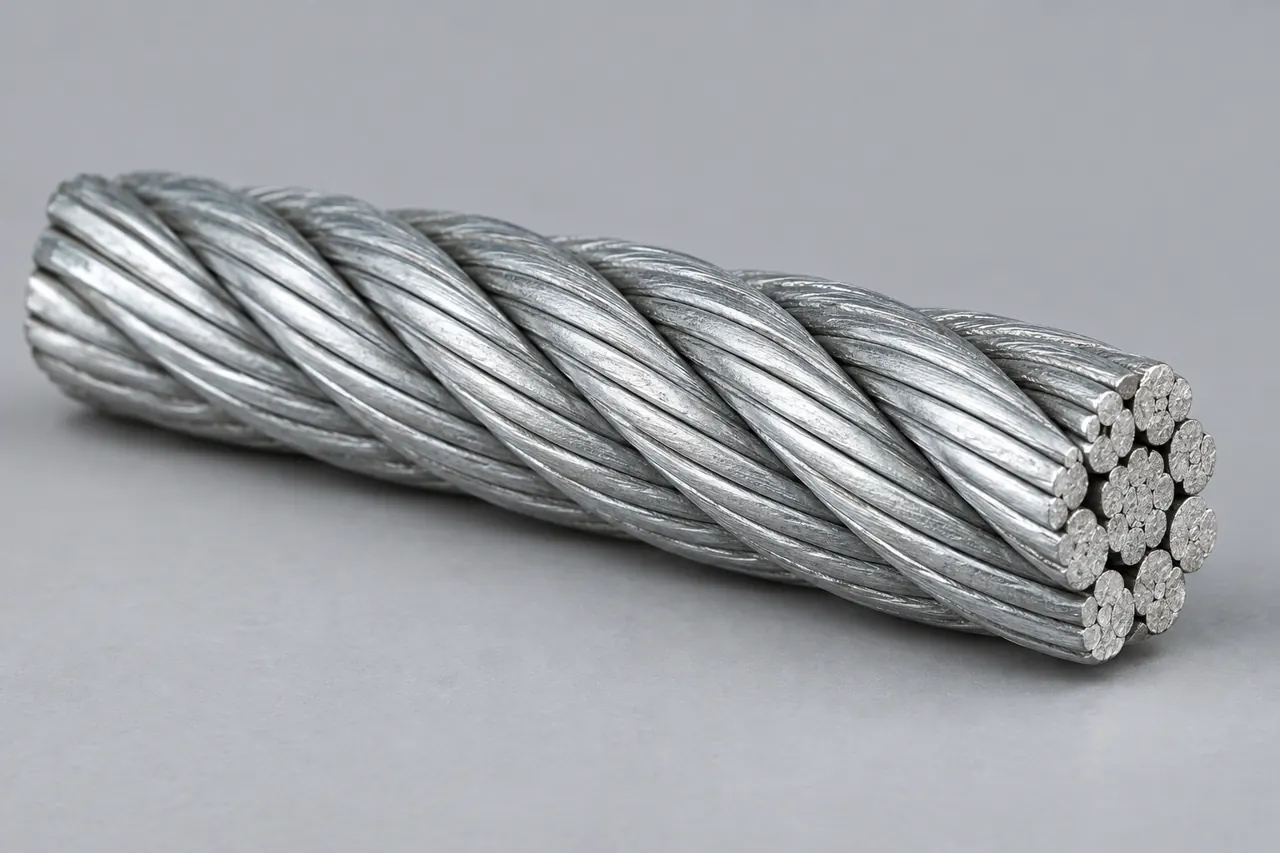
Compare sample form with the intended grip
Compare an identified sample with the required wire arrangement and the intended grip or termination system. Measure diameter on the agreed basis and inspect the lay, exposed wire condition and end preparation. The engineer or hardware supplier must review the actual combination rather than accept a visual resemblance.
The AI-assisted close-up shows a multiwire strand end. It does not establish a seven-wire construction, grade, diameter or breaking force. The broad catalogue size choices are enquiry options; the exact supply specification is fixed in the technical quotation.
- Wire arrangementCheck the identified sample against the required construction and lay specification.
- Diameter basisMeasure the actual strand using the basis agreed for the project supply.
- Hardware fitReview the selected grip or termination compatibility with the engineer or hardware supplier.
Galvanizing and strength need separate evidence
Request finished-strand mechanical evidence separately from constituent-wire and coating records tied to the represented lot.
Drawing changes wire dimensions and mechanical condition; galvanizing adds a protective metallic layer. The finished strand then combines several wires in a geometry that must meet the selected strand requirements. Coating appearance cannot establish the breaking performance of that finished product.
Request the applicable strand mechanical record and the required wire/coating evidence with their lot identities. Coating quantity and adhesion address different aspects of protection. Review any specified joints or repairs under the chosen standard. Avoid translating the word galvanized into an unlimited outdoor life or accepting wire tensile data as the only assembly evidence.
- Wire conditionDimension and material evidence
- Finished strandSpecified mechanical result and lot
- CoatingQuantity and adhesion requirements
- ReviewDistinct records reconciled to the offer
Reel format affects the condition delivered to installation
Match continuous lengths and reel dimensions to handling and payoff requirements without losing the required material condition.
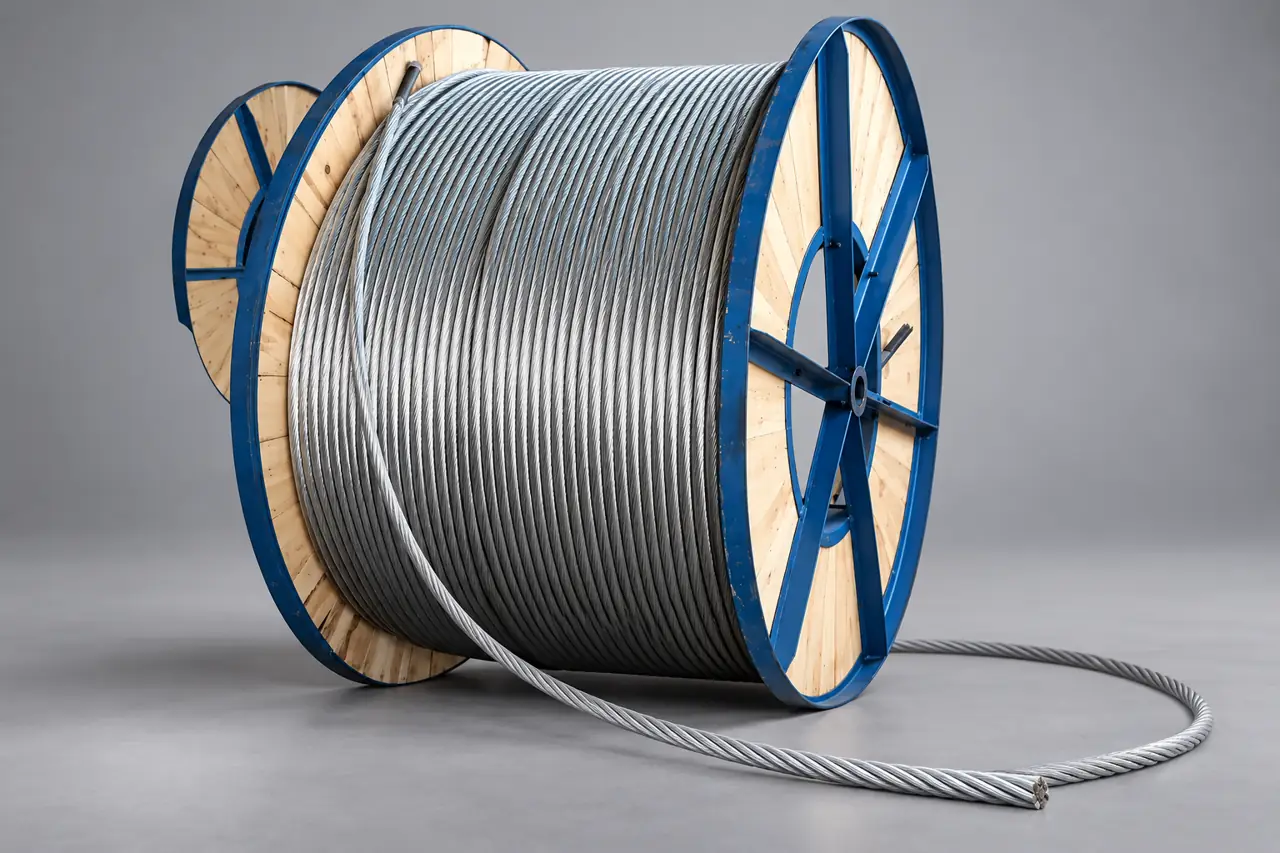
Deliver the required continuous lengths
Specify continuous lengths, tolerances and permitted joins or end treatment as required by the project. Match reel dimensions and handling arrangements to the intended payoff and transport route. Uncontrolled twisting, sharp bending or damaged flanges can alter the condition presented to the installer.
The reel illustration is relevant to handling planning but provides no approved minimum bend diameter or lifting method. Use the selected producer's handling instructions and the project installation procedure. Do not cut required project lengths from an unspecified mix of short pieces simply to satisfy total mass.
- Length scheduleState continuous lengths, tolerances and any permitted joints or end treatment.
- Reel interfaceMatch reel dimensions and handling arrangements to transport and the intended payoff.
- Handling conditionUse selected producer instructions to avoid damaging bending or uncontrolled twisting during handling.
Terminations complete a different acceptance question
Review the complete strand, termination and attachment load path with the responsible project engineer.
The guying load path includes the strand, grip or end fitting and its attachment to the structure and anchor. A finished-strand breaking result does not by itself approve that complete system. State whether the order is bare strand or includes a defined termination assembly, with clear responsibilities.
Provide the termination manufacturer's construction and diameter compatibility requirements to the engineer. Any assembly evaluation follows the project acceptance plan. Relia's supply review can reconcile the material and documentation scope; this does not imply design approval, installation services or in-house termination manufacture.
- MaterialAccepted strand construction and grade
- HardwareCompatible grip or end fitting
- AssemblyDefined test or approval scope
- AuthorityEngineer approves full project load path
Receiving records should identify each reel
Reconcile reel identity, scheduled length and records before installation teams cut or mix the supplied material.
Keep the specified construction, grade, coating requirement, length and lot associated with the reel reference. Reconcile the received labels, packing list and material records before releasing reels to installation teams. Similar-looking strands intended for different duties should remain distinguishable.
If coating damage, unwinding problems or an incorrect arrangement is found, identify the affected reel and preserve its end and labels. Record the location and nature of the condition before cutting or blending material. Agreed marking and packing details belong in the order rather than being inferred from the catalogue photograph.
- Reel identityConstruction · grade · coating · lot
- LengthScheduled continuous supply and counts
- EvidencePacking list and records reconciled
- ReceivingDamage or discrepancy retained by reel
A substitution needs engineering review
Refer construction, grade, coating or interface substitutions for engineering review before accepting an apparent size equivalent.
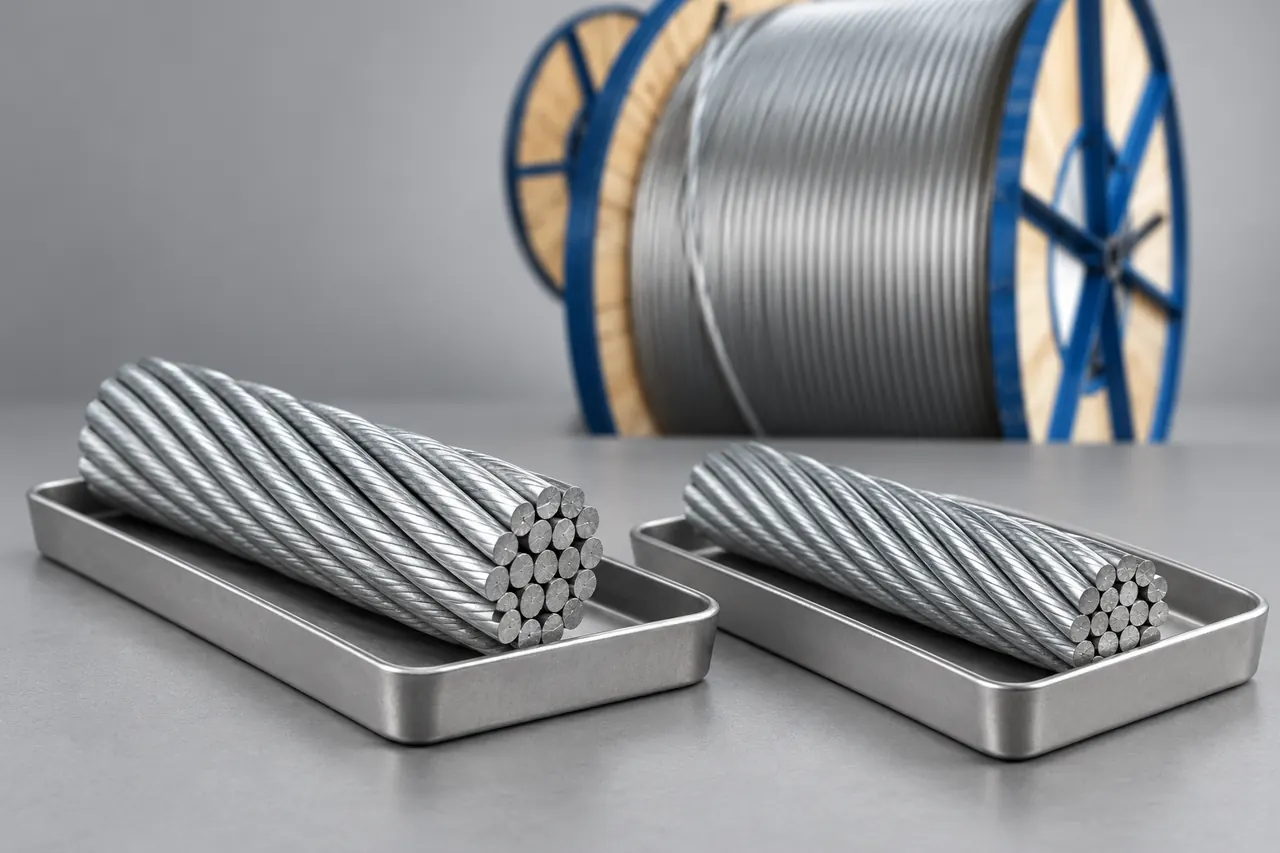
Review substitutions across the whole interface
A proposed change of wire arrangement, strand grade, coating class or termination interface can affect more than nominal size. Send the revised offer and evidence to the responsible engineer before accepting a substitution. The installed load and support geometry remain part of the project design.
The illustrated reel and exposed cut ends show relevant product form only. For a disputed lot, compare its identity and measurements with the approved revision. Keep this material separate from prestressing supply, whose stress-relaxation and concrete-system requirements call for a different specification review.
- Construction changeCompare revised wire arrangement and grade with the approved material requirement.
- Coating changeReview a proposed coating type or class against the project protection specification.
- Termination changeConfirm the revised strand and hardware combination before the engineer authorizes release.
Define the strand and hardware interface
Send the approved strand and hardware requirements together to define the material offer and release evidence.
Share the engineer-approved strand schedule and termination requirements so we can discuss a defined material offer and the evidence needed for project release.
Qingdao Relia Industries Co., Ltd.
Contact address: Shuyuan Road, Qingdao, Shandong, China
- Construction lay and exact diameter
- Strength grade or breaking requirement
- Coating type class and standard
- Continuous lengths and reel limits
- Termination interface and approval records
Enquiry scope and supporting detail
Send the drawing revision, application, construction, diameter, strength grade or minimum breaking requirement, coating type/class and applicable standard. Include the specified lengths, hardware interface and whether termination assemblies are included. List the lot records and engineer approvals needed for release.
Relia can then clarify the selected galvanized strand proposal, manufacturing and supply responsibilities, and available supporting evidence. Agree the finished-strand acceptance basis before comparing price or approving a replacement, with the project engineer retaining responsibility for the guying system design.
- ProjectDrawing · duty · design authority
- StrandConstruction · size · mechanical requirement
- ProtectionCoating type/class · record basis
- InterfacesLengths · reels · terminations