

Stainless Spring Wire for Corrosive-Service Components
Choose stainless spring wire by alloy and delivered condition together with the service exposure and forming demand. Then validate representative springs for the dimensions, loads and additional service checks your design requires. This guide helps you connect wire evidence with coiling behaviour and investigate surface or corrosion problems without confusing them with alloy identity alone.
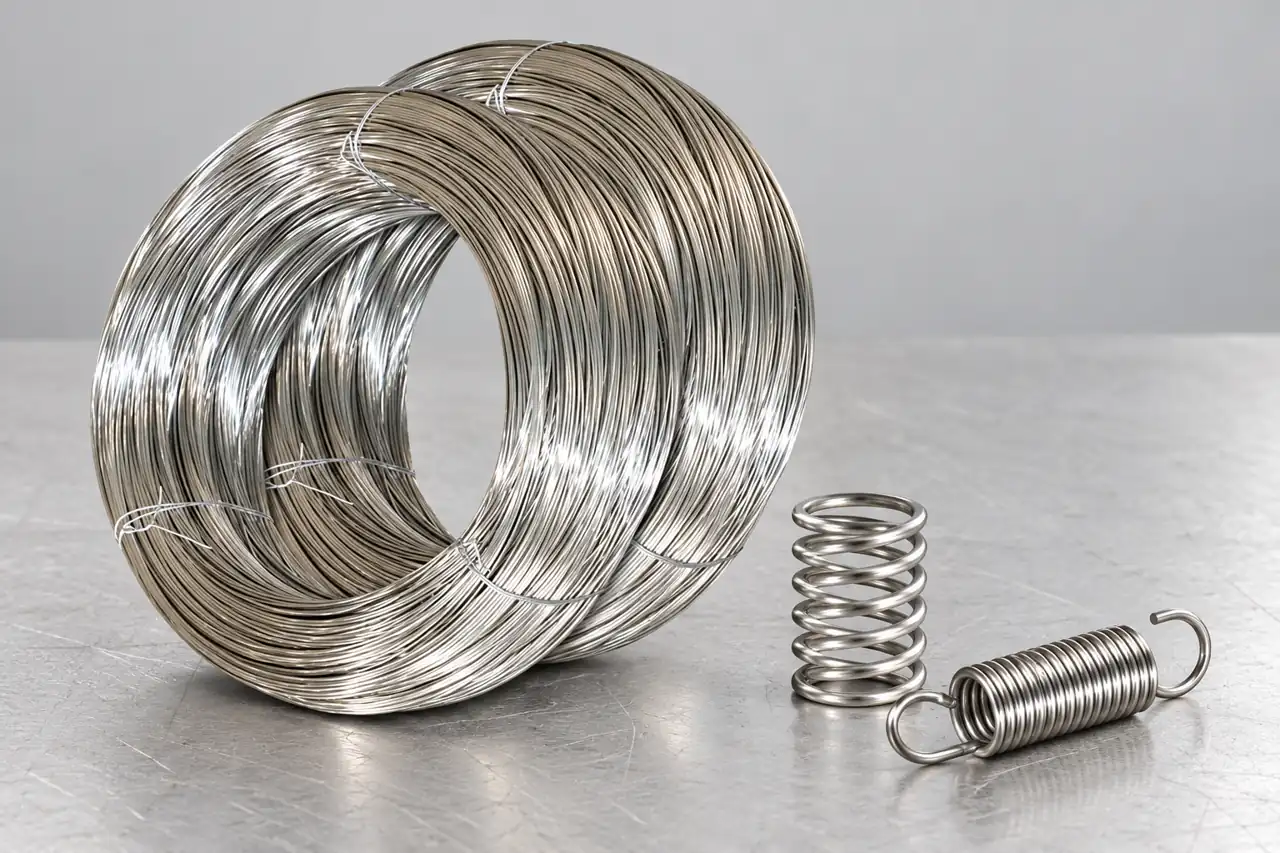
Choose alloy and spring condition together
For spring components exposed to moisture, chemicals or chlorides, select a named stainless grade and delivered spring-wire condition together with the service environment and forming demand. Corrosion resistance alone does not establish the strength, load retention or fatigue behavior of the finished spring. Relia manufactures steel wire and can discuss the listed stainless spring-wire candidate against your drawing. Start with fluid or atmosphere, temperature, wire diameter, spring geometry and required mechanical evidence. Then qualify forming and service-related performance on representative springs, using a documented wire identity rather than assuming every alloy in a catalogue title is interchangeable.
- Service environmentDescribe chemicals, moisture, chlorides and temperature relevant to the actual spring duty.
- Delivered wireDefine the selected stainless designation, section, mechanical condition and surface requirements.
- Component evaluationPlan forming and service related checks on representative springs under the design acceptance.
Selection context and decision detail
| Buyer requirement | Relia response | Evidence or condition |
|---|---|---|
| Corrosive-service spring | Discuss a named stainless-wire offer | Environment, grade and spring properties assessed together |
| Defined delivery condition | In-house wire drawing and annealing capability | Actual stainless route and treatment must be named |
| Traceable wire evidence | Incoming, process and final batch records available | Finished-spring load and endurance remain separate |
The wire route and batch record must describe the offered alloy
Connect the offered alloy and route with Relia wire manufacture and corresponding batch records.
Relia performs steel-wire drawing, annealing and galvanizing in-house and carries out incoming, process and final inspection. Corresponding batch records can be provided. For stainless spring wire, identify the particular drawing and delivered-condition route in the offer; the general galvanizing capability is not a coating requirement for this stainless item.
The catalogue model says 304 while its title lists 201, 204, 304, 316, 301, 302 and 631. Select the actual designation and condition before requesting the relevant material and mechanical evidence. No title list establishes all grade-and-temper combinations.
- Confirmed operationsWire drawing, annealing and galvanizing
- Selected stainless itemNamed alloy, temper and surface
- EvidenceCorresponding incoming, process and final batch records
Alloy identity and service exposure are linked decisions
Describe exposure and select the actual alloy rather than accepting a broad family of catalogue grades.
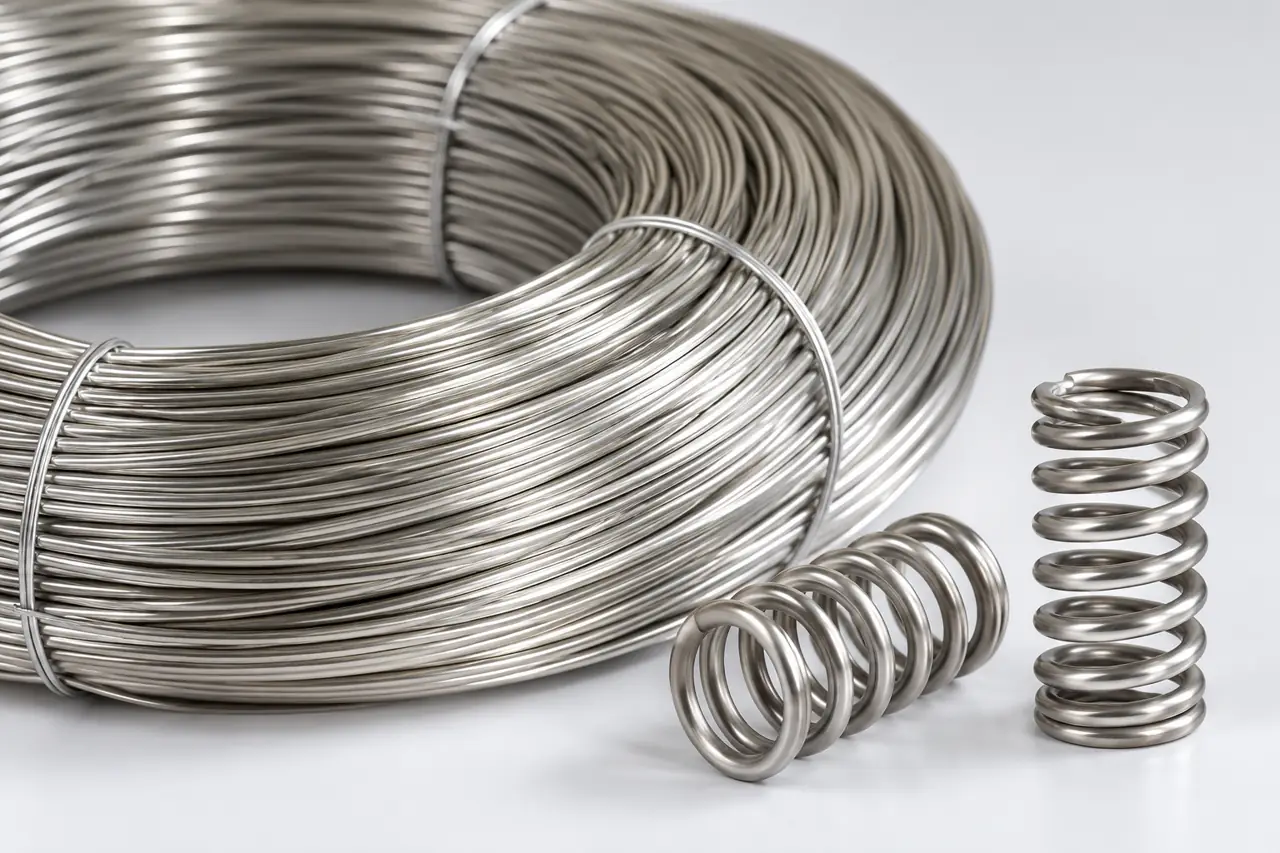
Connect material choice with exposure
The listing has eighteen diameter choices spanning 1–50 mm, but it does not map each size to a defined alloy or spring temper. Bright and fog surface wording also needs one selected surface description. A steelmaker name in the grade field is not the wire's chemical designation.
Describe chloride exposure, cleaning chemicals, temperature and wet/dry cycling. Molybdenum-containing 316 can offer greater chloride resistance than 304 in relevant environments, yet neither is a universal corrosion-proof spring material. The responsible design team should select the alloy for the actual service and required spring properties.
- Actual alloy identityUse the selected chemical designation rather than a model or supplier name.
- Service conditionsRecord wet and dry cycling, cleaning chemicals and temperatures that affect corrosion.
- Required spring propertiesBalance the environmental requirement with the strength and forming condition needed for the component.
Product references for your shortlist
Open the product details, then discuss the exact specification for your application.
Stainless spring wire candidate
A candidate for a defined stainless spring alloy and temper enquiry with representative forming and service related acceptance.
Cold work creates strength and consumes forming capacity
Cold work changes strength and forming capacity while any later treatment needs its own defined scope.
Drawing reduces section and changes deformation history. The resulting strength and remaining ductility affect coiling load, springback and the risk of cracking at a tight feature. A spring temper therefore needs measured mechanical evidence and a stated condition, not only the stainless family name.
If a specified stress-relief or age-hardening treatment follows forming, identify who performs it and which material state the acceptance result represents. Different alloy families need different routes. Our general annealing capability does not establish a particular 631 age-hardening cycle or an approved finished-spring treatment.
- Drawing historySection and deformation condition
- Specified treatmentActual route and responsible provider
- Wire acceptanceDimensions, mechanics and surface
- Spring validationGeometry, load and required service tests
Spring design turns small wire differences into part differences
Small dimensional or surface differences can affect spring forming and repeated load behaviour.
Diameter variation changes section and forming geometry. Surface seams, scratches or embedded debris can become local initiation sites under repeated loading. Identify which dimensional and surface limits are critical for your spring rather than accepting only a nominal diameter and polished appearance.
Agree diameter/ovality readings, the mechanical-test condition and relevant forming assessment. ASTM A313/A313M provides a stainless spring-wire framework with material and mechanical requirements; its name in a request does not mean the listed wire already has a matching batch certificate. Use the ordered edition and actual product scope.
- Diameter/ovalityRecorded locations and limits
- SurfaceAgreed defects and handling damage
- MechanicsCondition and applicable test basis
- ApplicationCoiling and finished-spring acceptance
Formed-spring trials separate geometry from endurance
Assess spring geometry and load response separately from fatigue or environmental validation.
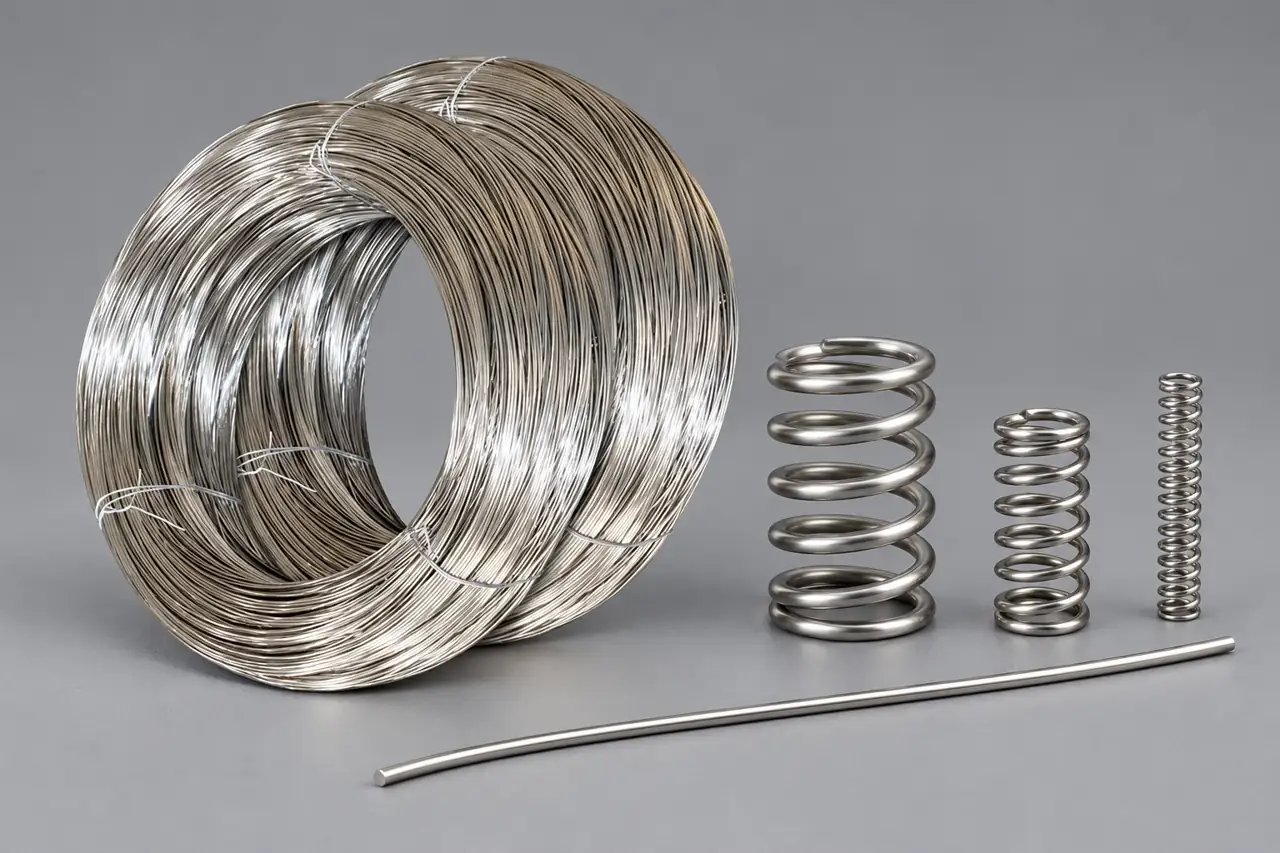
Separate the formed spring decisions
Coil representative springs with the production tooling and record the wire batch, setup, spring dimensions and any cracks or surface marks. Compare free length and the specified load-deflection result after the required processing. A successful coil shape does not establish fatigue life or corrosion performance.
Where the design requires cyclic or environmental validation, define it separately with the component team. The illustrated springs and retained wire are AI-assisted examples; they do not show a measured fatigue result or an approved service exposure.
- Coil representative partsUse the trial wire batch and production tooling with the setup identified.
- Measure the springReview geometry, surface marks and the specified load response after required processing.
- Validate required servicePerform separately defined cyclic or environmental assessment where the component design requires it.
A pit or handling mark can change the failure path
Keep failure location and exposure history when distinguishing forming, corrosion and repeated load damage.
When a spring fails, distinguish forming cracks, service corrosion and repeated-load damage. Record the failure location, time in service and exposure history with the remaining wire and spring samples. A localized surface flaw can matter even when a bulk tensile result meets its requirement.
Keep contact with carbon-steel debris and unsuitable cleaning practices out of the approved handling route. For a staining issue, review alloy identity, surface history and environment before interpreting every mark as proof of an incorrect bulk alloy.
- Forming crackBend demand, surface and condition
- Service stain/pitAlloy, exposure and handling history
- Cyclic fractureLocation, load history and defect evidence
- RecordWire batch and component state kept linked
Inspection records should connect wire and spring states
Connect wire records with spring evidence while preserving the different material states they describe.
Use the corresponding batch records for the offered stainless wire and add your forming and finished-spring evidence under a shared material reference. Incoming composition and surface checks, process-state evidence and final wire acceptance answer different questions from an assembled spring's load or endurance test.
State which records and applicable methods are needed for the order. Numerical strength, fatigue life and inspection frequency are not supplied by the broad catalogue description. Keep any unverified requirement visible rather than replacing it with a general quality claim.
- Wire batchMaterial and corresponding staged inspection
- Forming setupTooling and processing state
- Component resultGeometry and load assessment
- Service validationRequired fatigue/environment evidence
Repeat orders preserve alloy, temper and payoff together
Preserve alloy, temper, surface and payoff together when accepting repeat wire supply.
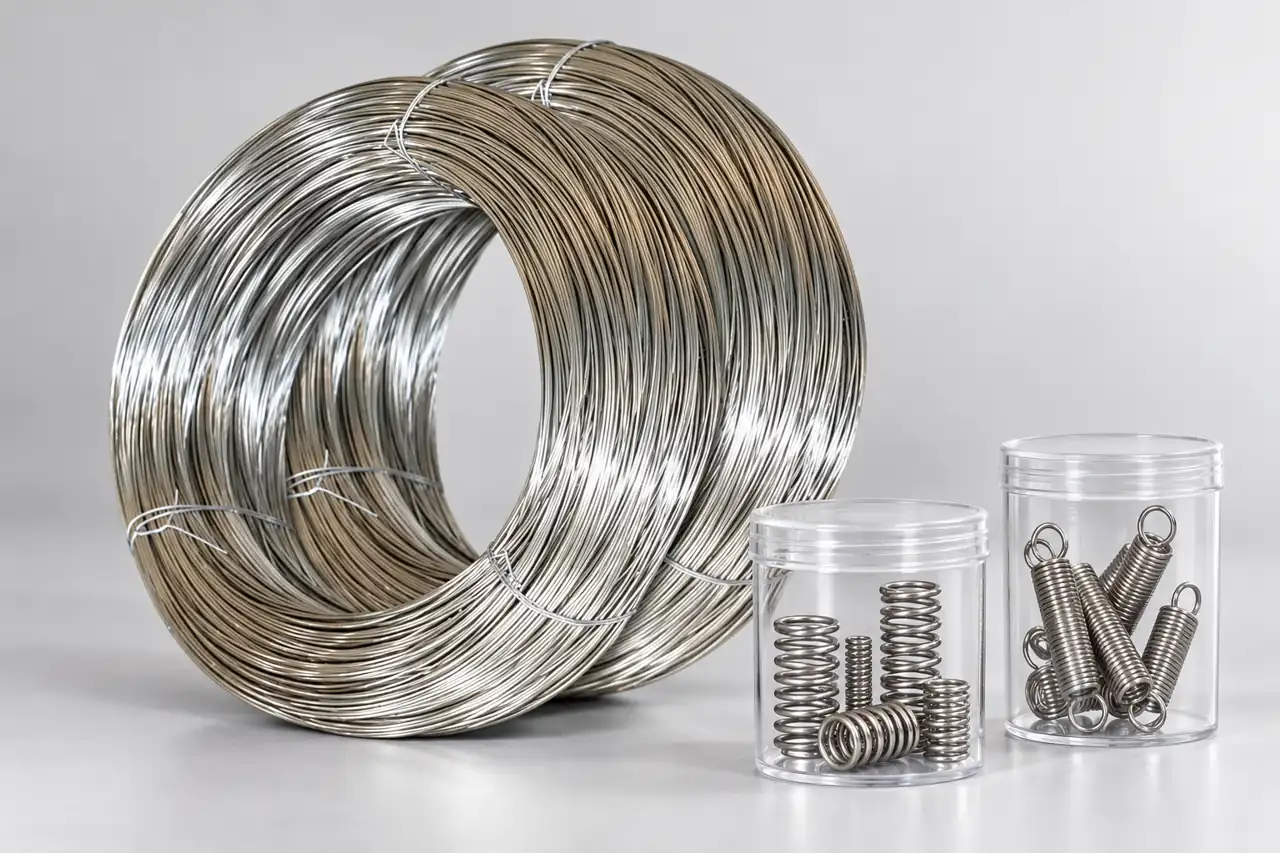
Repeat the condition the spring approved
Retain the approved alloy, diameter limits, delivered condition, surface and coil arrangement with the representative wire and spring samples. A visually similar coil can change coiling behavior if its condition or payout characteristics differ. Review those changes before releasing replenishment.
Protect the wire from surface damage and incompatible shop contamination. The sample containers in the illustration support the retained-reference discussion; they are not proof of a proprietary inspection system or a shipment ready for a particular customer.
- Wire material revisionRetain the actual alloy and dimensional limits from the accepted material.
- Surface and temperPreserve the delivered condition and surface relevant to the successful coiling trial.
- Payoff and protectionKeep coil presentation and handling controls that avoid damage or incompatible contamination.
Send the spring duty with the wire condition
Send the spring drawing and exposure requirements to define a relevant wire offer and trial.
Tell us how the spring is formed and the environment it must work in. We can discuss the wire candidate and the material and trial evidence needed.
Qingdao Relia Industries Co., Ltd.
Contact address: Shuyuan Road, Qingdao, Shandong, China
- Spring drawing and forming route
- Selected alloy or service exposure
- Wire diameter limits and temper
- Temperature chemicals and required loads
- Coil constraints and trial acceptance
Enquiry scope and supporting detail
Send the specified alloy or the environment that must be assessed, wire diameter and limits, delivered condition, spring drawing and required forming route. Include service temperature, chemicals or chlorides, load/cycle requirements and the test or reference that governs acceptance.
Add trial quantity, coil/payoff constraints and destination. We can discuss the relevant wire manufacturing route and request the product-specific batch evidence for a defined offer. Any special treatment, sample plan, certification and commercial schedule must be confirmed for that selected supply.
- ApplicationExposure · duty · component drawing
- WireAlloy · diameter · supplied condition
- EvaluationForming · service approval · packing