

Contract Laser-Cutting RFQs for Drawing-Based Sheet Parts
Compare laser cut parts against the same drawing, material and finished edge requirement. The useful offer defines the actual processor and what happens after cutting as well as the profile itself. This guide helps you prepare critical feature acceptance, a representative first article and protected part identity for a usable sheet part delivery.
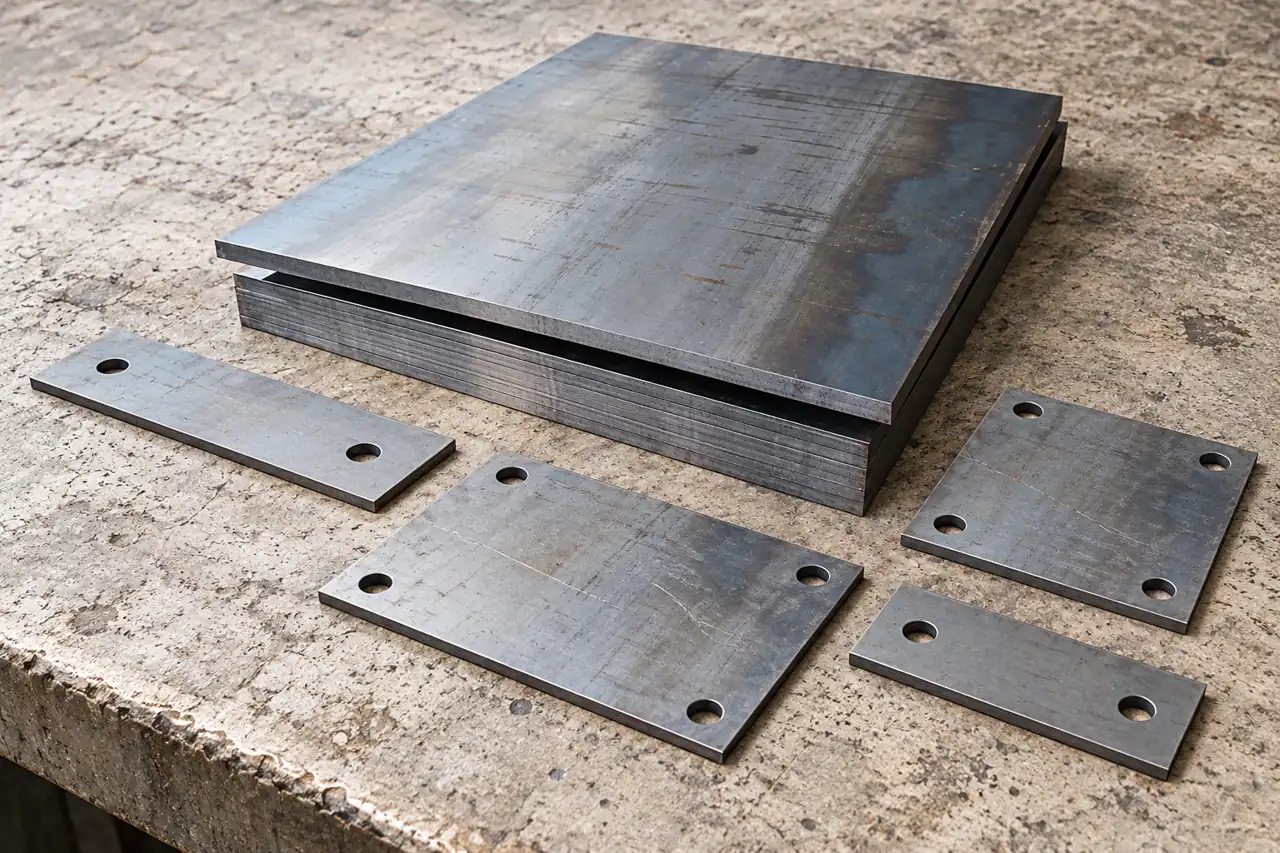
Define the laser cut deliverable
For fabricators sourcing laser-cut sheet parts, compare offers against one drawing revision, selected material and an accepted edge condition. Relia can review a plate-and-processing enquiry; its plate manufacture and laser-equipment catalogue do not by themselves establish an operating contract-cutting service. The next decision is whether the proposed provider can produce your actual holes, contours and supplied finish without unacceptable distortion or secondary work. Send the drawing, grade, thickness, quantities and next operation so the quotation identifies the processor, first-article evidence and a complete deliverable rather than an unspecified cutting price.
- Controlled drawingIdentify the governing geometry, revision and critical features used to price the part.
- Selected materialFix grade, thickness and supplied condition for the actual cutting proposal.
- Finished boundaryState edge acceptance and included secondary work needed before the next operation.
Selection context and decision detail
| Buyer requirement | Relia response | Evidence or condition |
|---|---|---|
| Drawing-based usable parts | Review material and processing enquiry | One revision, grade, thickness and supplied state |
| Production and QC evidence | Plate manufacture and batch records available | Cutting ownership and part records confirmed separately |
| Same-scope quotation | Identify actual processor and included work | First article, secondary operations and terms |
Keep material production and cutting responsibility explicit
Separate parent material evidence from the actual cutting provider and processed part acceptance.
Relia manufactures steel plate and coil, with selected rolling performed in-house. Incoming, in-process and final inspections are performed, and corresponding batch records can be provided. Confirm which records cover the parent material and which cover processed parts. Laser-cutting ownership, machinery operation and a customer-material service are separate points for the actual offer.
The plate listing requires one chosen A36/Q235 identity and exact thickness. The laser-equipment entry has 3015-1500W and 3015-3000W options although its title names other powers. Neither a power label nor that equipment offer proves a contract processor's part tolerance.
- MaterialSelected grade, thickness, condition and lot
- ProcessingActual operator, included operations and exclusions
- AcceptancePart revision, inspection basis and first-article result
Give the quote one controlled geometry
Give the quote one governed drawing revision with explicit datums, features and machining allowance.
Supply a dimensioned drawing with units, revision, datums and quantities; provide a cutting file where requested, but identify which document governs conflicts. Specify whether profiles are finished or include machining stock. Mark functional holes, mating edges, slots and any rolling-direction restriction. A CAD outline alone may omit thickness, tolerances, thread preparation or face requirements, so obtain a resolved technical reference before a price becomes an order.
- Geometry authorityApproved drawing and file revision
- Critical featuresDatums, holes, slots and mating edges
- Supplied stateAs-cut, deburred or prepared for later work
- ChangesWritten resolution before production release
Product references for your shortlist
Open the product details, then discuss the exact specification for your application.
Carbon steel plate for cut parts
A starting material candidate when the laser cut part requires a selected grade, exact thickness and defined parent stock.
Laser energy and assist gas affect the cut edge
Laser energy and assist gas influence edge condition while heat and sequence can affect geometry.
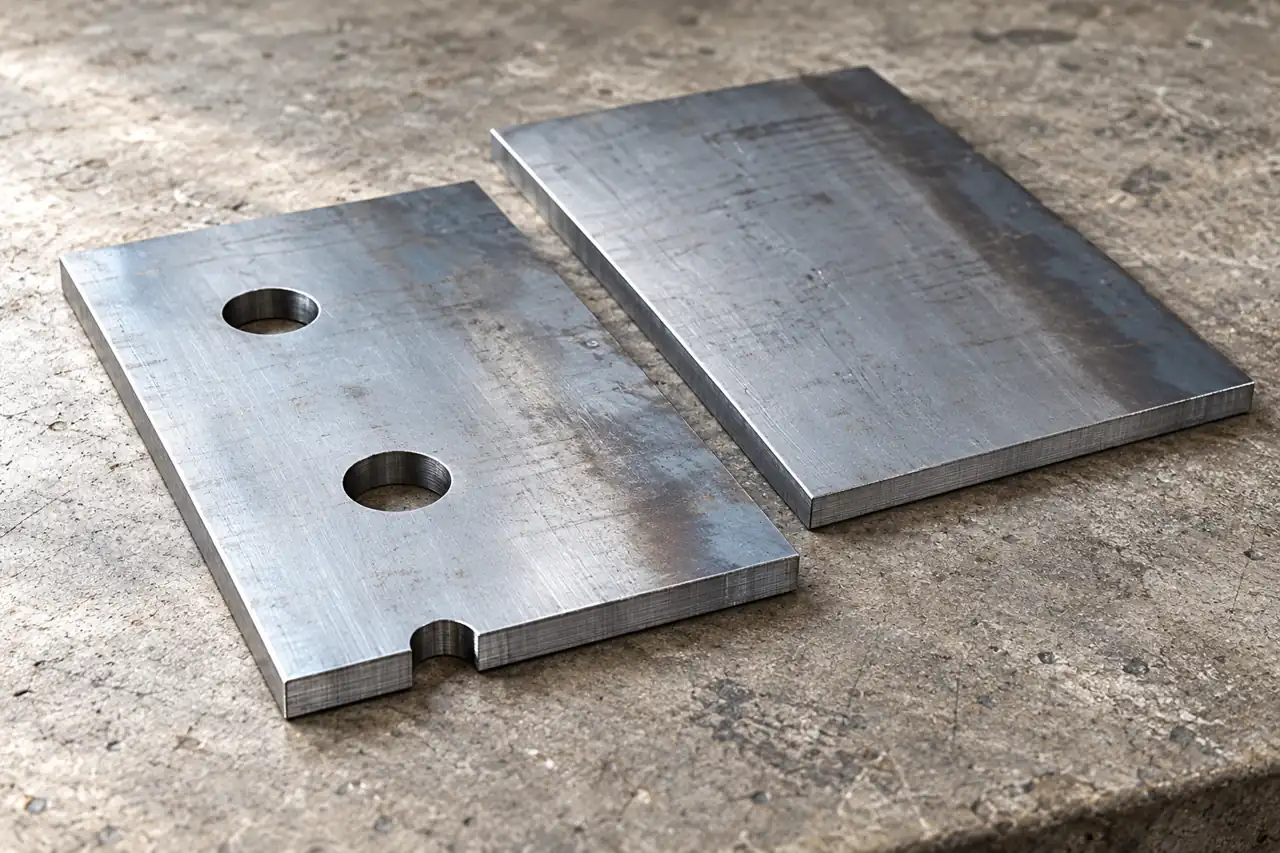
Connect the edge with the next operation
A focused beam heats the material; process gas helps clear the cut and affects edge oxidation. Oxygen-assisted cutting and inert-gas fusion cutting do not leave the same surface condition. Heat input and the cutting sequence can also influence local geometry and distortion.
Specify the required edge for welding, painting, sealing or machining, including relevant burr, adherent dross, oxide or heat-affected-condition restrictions. No generic laser-power figure establishes those results for every grade, thickness and feature. Request an actual representative cut rather than a universal thickness or speed claim.
- Gas and surfaceSpecify oxide or surface restrictions relevant to welding, painting or other later work.
- Burr and residueDefine permitted dross and burr using the acceptance required for the part.
- Released geometryCheck heat related movement and edge geometry on a representative finished cut.
Inspect the features that decide assembly fit
Inspect the features that control fit using drawing datums and the released part condition.
Check hole size and position from the drawing datums, then assess contour, edge squareness and released-part flatness where required. Fine-looking top edges do not prove the bottom edge or a small internal feature is acceptable. A pattern of defects near corners or closely spaced features may need process review rather than a change to the material specification. Retain measured locations and observations with the part and file revision.
- Mating featuresPosition, size and orientation from the approved datums
- Cut facesAgreed edge/oxide/dross criteria on relevant surfaces
- Released partFlatness and distortion with defined supports
- Later operationFit, welding or coating check under its own criteria
Confirm the real processor and included operations
Confirm who cuts the parts and which preparation or secondary operations the offer includes.
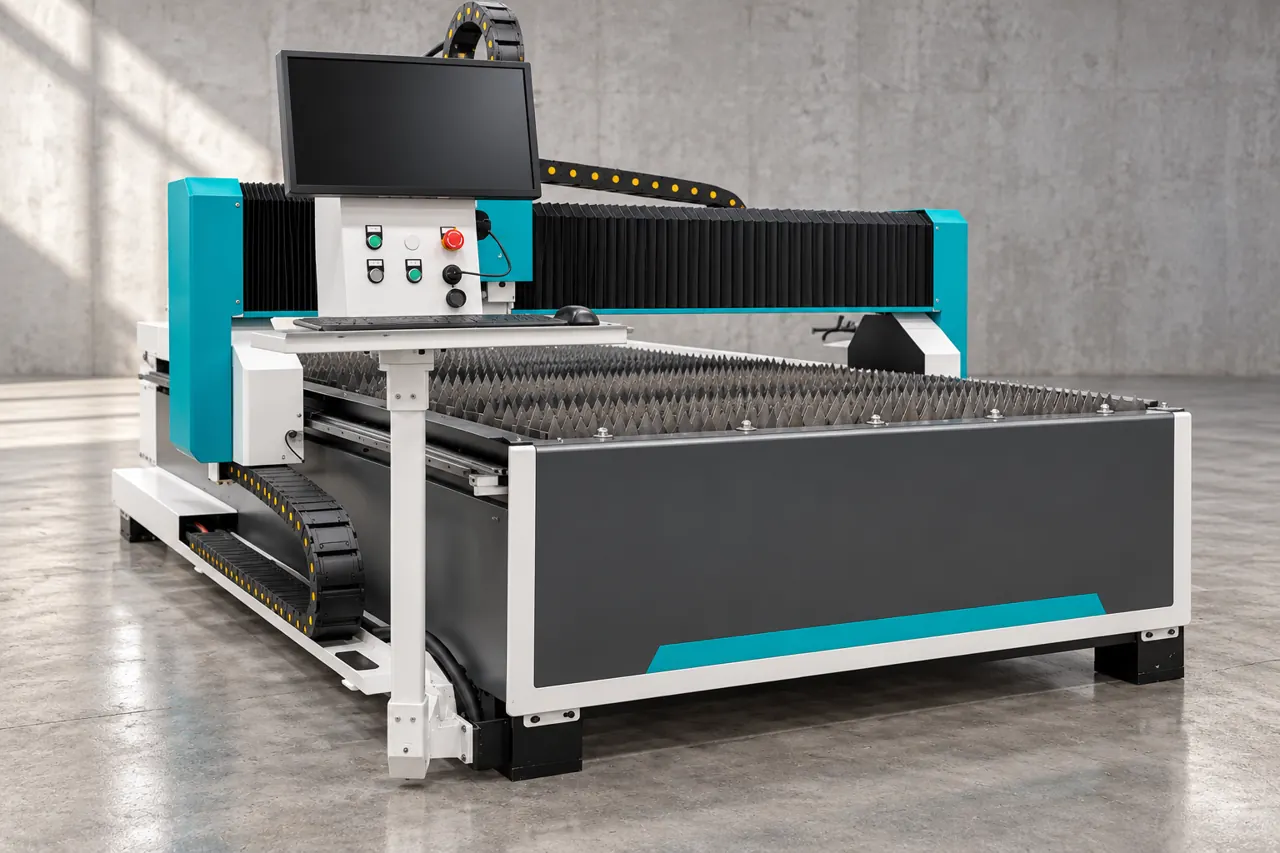
Confirm what the processor supplies
Identify the actual cutting provider and whether the quote includes material receipt, nesting, cutting, deburring, protective film removal or additional finishing. Do not infer tapping, countersinking, bending or welding from the existence of a laser-cut profile. For buyer-owned material, agree suitability review and what happens if surface condition, grade or flatness prevents the requested result. An equipment illustration explains the process category; it does not document Relia's machinery ownership.
- Actual cutting providerIdentify who receives the material and performs the proposed nesting and cutting.
- Included preparationState whether deburring, film removal and other requested work are included.
- Additional operationsDefine tapping, countersinking or bending separately when the drawing requires those finished features.
Release the batch through a representative first article
Choose a first article that represents difficult features and retain the actual measured acceptance.
Choose geometry and material that represent the difficult production features, not only a large simple rectangle. Review dimensional readings, both cut faces, edge condition and the required fit or subsequent operation. Approve a defined drawing revision and any accepted deviation. A change of material condition, thickness, processor or finishing scope needs a stated review rule; retain the actual first-article result so repeat orders preserve the reason for approval.
- PrepareApproved drawing, material and processing scope
- CutRepresentative first article at the actual provider
- CheckCritical geometry, edge and downstream result
- ReleaseRecorded approval and controlled changes
Protect part identity and vulnerable edges
Protect similar profiles and vulnerable edges while keeping part and parent material identities usable.
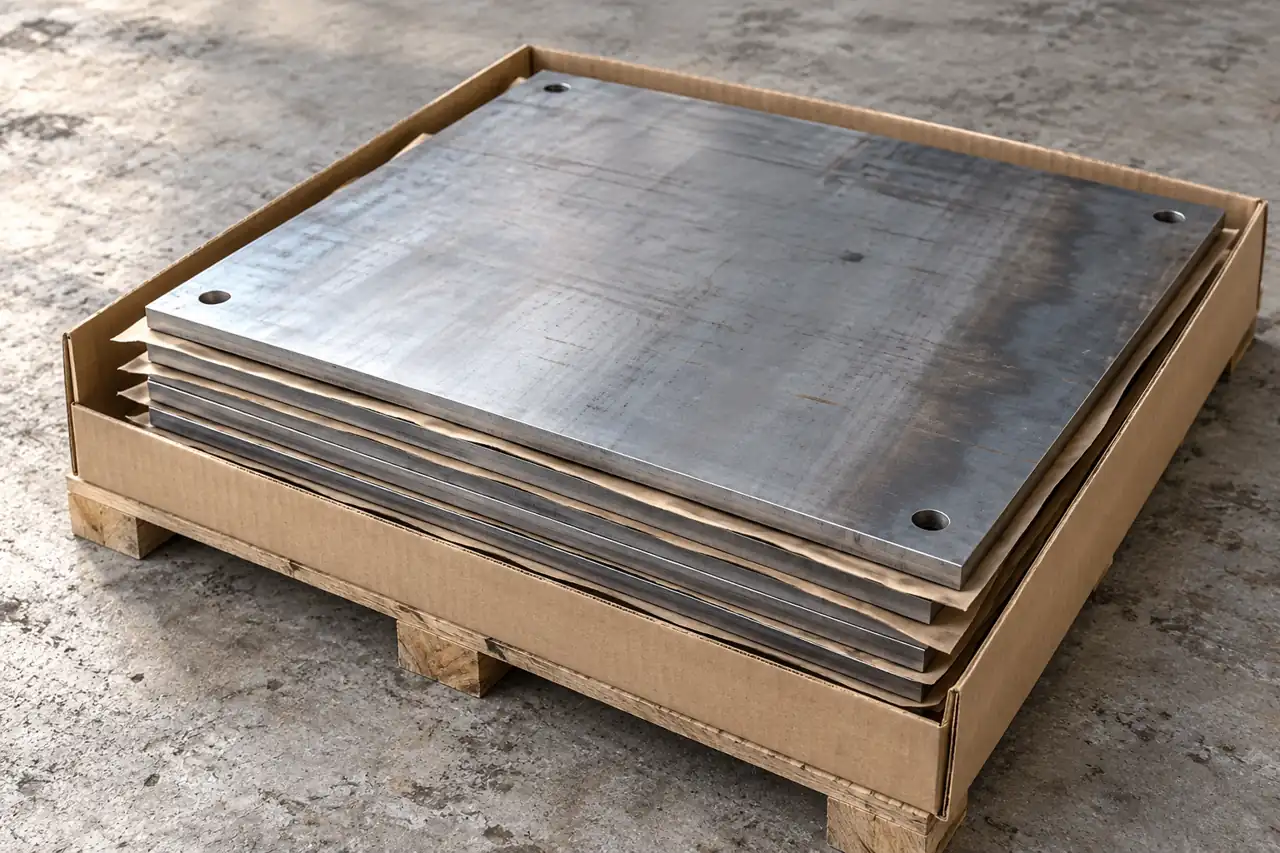
Keep parts identifiable after cutting
Specify how similar profiles are distinguished, how faces are separated and how small parts remain associated with their order line. Packing must suit real part mass and sharp edges without transferring dirt or damaging the accepted surface. Retain the parent-material connection after nesting and pack separation. Record receiving condition before parts are mixed or reworked; an outer carton description is insufficient when different drawing revisions share a shipment.
- Separate similar profilesUse order and revision references that remain usable after nesting and pack separation.
- Protect vulnerable surfacesAgree face and edge protection suited to actual part size and mass.
- Record the receiptPreserve material connection and receiving condition before parts are mixed or reworked.
Compare cost at the same finished-part boundary
Compare the same finished part scope and preserve evidence before rework of a disputed item.
Separate material, cutting, extra piercing or secondary operations, inspection and packing. State the quantity and mass basis and the ownership of remnants or rejected customer material. If a discrepancy appears, preserve the affected edge, part orientation, drawing/file revisions and inspection readings before rework. Agree claim examination and disposition in the order rather than assuming a fixed remedy or free additional finishing.
- Material scopeIdentify the material charge and the drawing revision that defines the purchased part.
- Added operationsSeparate cutting, extra piercing, secondary finishing, inspection and packing in each quotation.
- Quantity basisState the mass or quantity basis and ownership of remnants or rejected customer material.
- Claim evidencePreserve the affected edge, orientation, file revisions and readings before agreed examination or rework.
Prepare the drawing and finished edge requirement
Send material, drawing and edge requirements together so the proposal defines one complete processed part.
Send the part drawing and tell us what happens after cutting. We can review the material candidate and clarify the processor, first article and included operations.
Qingdao Relia Industries Co., Ltd.
Contact address: Shuyuan Road, Qingdao, Shandong, China
- Drawing revision datums and cutting file
- Material grade thickness and condition
- Critical holes contours and allowances
- Edge flatness and next operation
- Quantities ownership and required records
Enquiry scope and supporting detail
Send the controlled drawing and cutting file, selected grade, thickness, supplied condition, quantities and destination. Include critical features, edge/flatness acceptance, next operation, material ownership and required records. Relia can clarify the relevant material and proposed processing scope; cutting availability, processor, sample terms, commercial basis and delivery must be confirmed for this job.
- ReferenceDrawing, file, units and revision
- AcceptanceMaterial, dimensions, edge and downstream use
- OrderProcessor, quantities, records and packing