

Profiled Roofing Sheets Supplied to Project Cut Lengths
Turn a roof layout into an orderable panel schedule by fixing the installed profile and effective cover first. This guide connects laps, substrate and coating with cut lengths and receiving limits. It helps you distinguish the panel supply specification from the roof design and approve a representative formed sheet before comparing quantities or repeat offers.
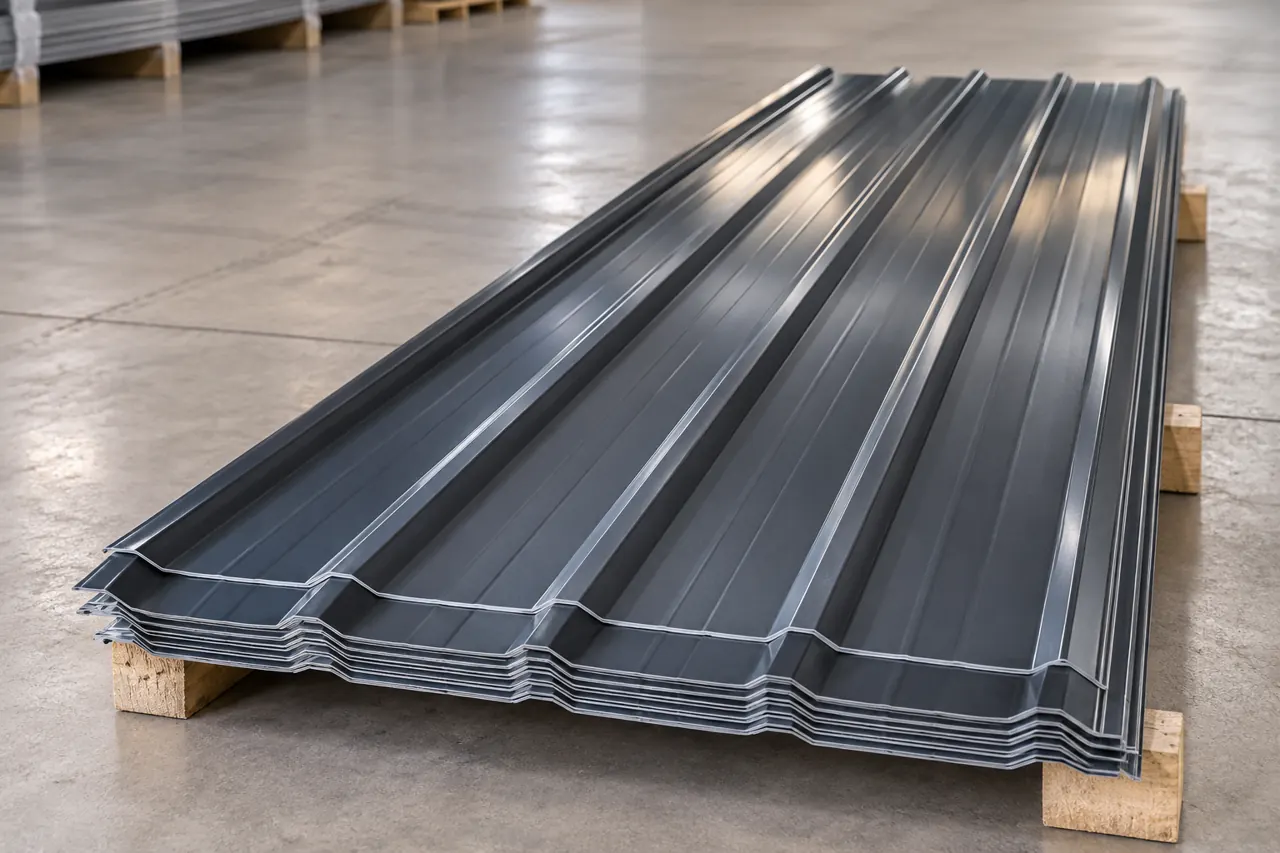
Build quantities from installed geometry
If you are buying cut-length roof sheets, settle the installed profile and effective cover width before converting roof area into a sheet quantity. Start with the designer's profile, support and fastening schedule, then define substrate gauge, coating and finished length. Relia manufactures steel plate and coil; roofing profile forming and coating responsibility are agreed for the actual order. Send the roof layout and lap details so the offer can identify a compatible panel and a dimensional trial rather than treat an overall width or colour name as a roof-system approval.
- Approved profileFix ribs, side laps and the cross-section used by the roof design.
- Effective coverIdentify the installed width contribution under the specified overlap and orientation.
- Sheet scheduleConvert the layout into marked lengths and counts using that approved cover.
Selection context and decision detail
| Buyer requirement | Relia response | Evidence / condition |
|---|---|---|
| Installed coverage | Roof-sheet supply review | Approved profile and effective cover basis |
| Defined panel route | Rolling plus order-specific downstream scope | Substrate, metallic/paint coating and cut length |
| Traceable release | QC stages and batch records | Formed sample, geometry and sheet schedule |
The roofing offer should identify each production stage
Assign rolling, coating, profiling and cutting responsibilities to the actual selected panel offer.
Relia carries out selected plate/coil hot or cold rolling in-house. Coating, galvanizing and colour coating are agreed per order; profile forming and cut-length responsibility also need explicit allocation. Incoming, in-process and final inspection and corresponding batch records are confirmed, with the panel-specific scope agreed before release.
Product 1399 offers 1400–1799 mm length and 665–1100 mm width, describes 0.15–1.2 mm thickness and a wave profile, but requests 760/850 mm in its title. Neither requested width establishes effective cover.
- Rolling scopeIdentify the selected plate or coil rolling route and represented input material.
- Coating scopeAgree responsibility for the actual metallic coating, paint system and supplied condition.
- Panel conversionAssign profile forming and cut lengths with the panel-specific inspection and record scope.
Effective cover depends on the actual lap geometry
Use the specified side-lap geometry to define effective cover rather than substituting overall sheet width.
Overall panel width includes material used in the side lap. Effective cover is the installed contribution under the specified overlap; it must match the selected profile and orientation. Specify rib pitch, depth, lap edges and the measurement basis on one cross-section.
A similar-looking corrugation can change coverage and fastener positions. Do not calculate quantity by substituting overall width for the approved cover dimension.
- Overall widthFull panel edge-to-edge dimension
- Effective coverInstalled contribution with specified lap
- ProfilePitch, depth and lap orientation
- QuantityApproved cover times layout schedule
Product references for your shortlist
Open the product details, then discuss the exact specification for your application.
Profiled coated roofing-sheet enquiry
A panel candidate for defining the actual wave profile, installed cover, coating package and marked cut lengths.
Gauge and coating identity need separate evidence
Specify base steel, finished thickness and coating separately from colour and visible-face appearance.
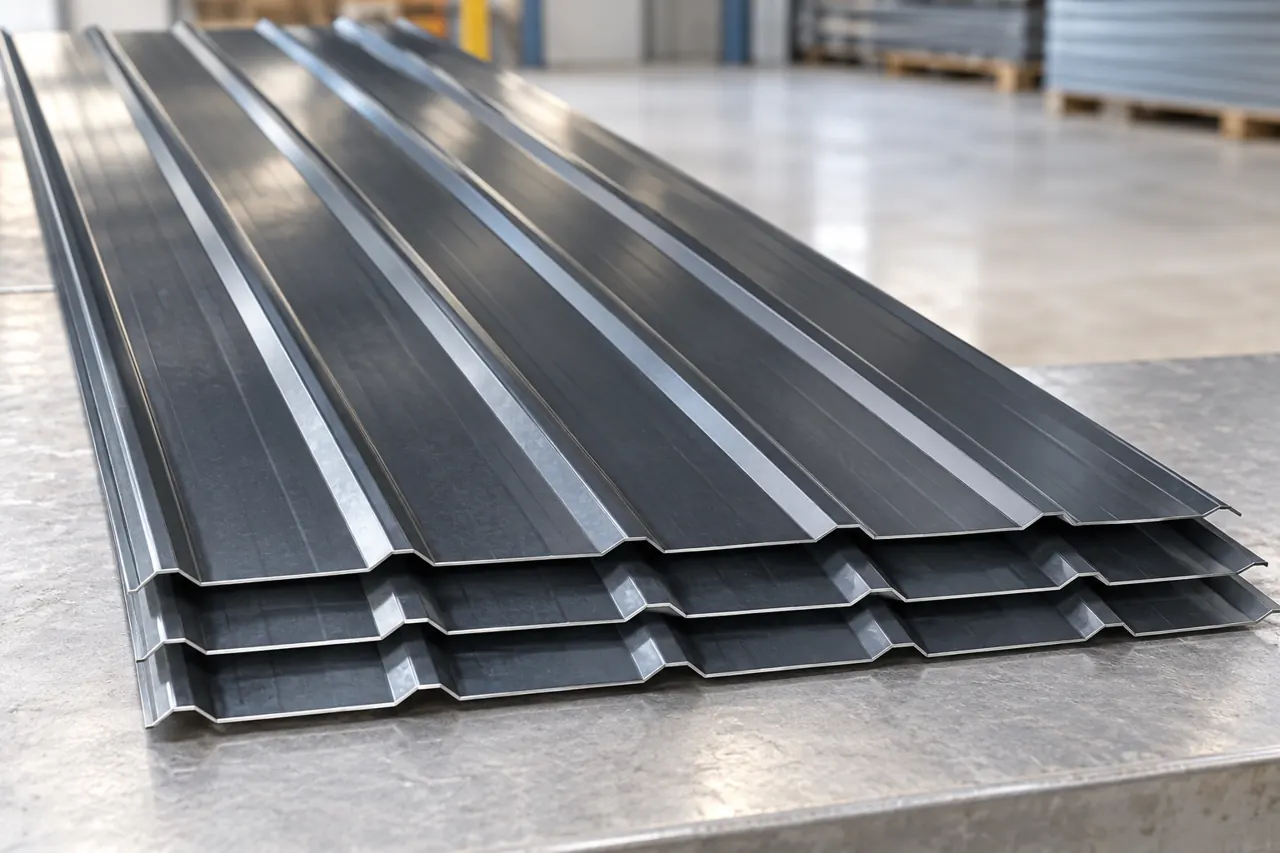
Keep material and appearance acceptance distinct
Define base-steel versus finished coated thickness, selected substrate grade, metallic coating and paint system. PPGI and PPGL identify different metallic substrate requests, while this body mixes galvanized and other coating terms. Z30–Z40 lacks an agreed mass basis.
Approve the actual colour reference and visible face separately from metal identity. The dark profiled illustrations show form, not a validated RAL match or coating thickness.
- Metal baselineSpecify substrate grade and whether gauge refers to base or coated thickness.
- Coating packageDefine metallic coating and paint requirements for the actual selected panel.
- Colour referenceApprove the required visible face and colour sample separately from material identity.
Roll forming translates flat input into installed geometry
Check the formed ribs, laps and surface because flat input dimensions do not establish the final profile.
Progressive bending establishes ribs and laps, while springback, alignment and contact can affect the final profile and surface. Check a formed sample against pitch, depth, cover and critical bend condition rather than only measuring flat input.
Keep input lot and forming conditions with the result so a later change can be traced to material or setup. No particular forming line or speed is confirmed.
- IdentifyInput lot and coating package
- FormSelected rib and lap geometry
- MeasurePitch, depth and effective cover
- RetainApproved sample and revision
Cut length should follow a roof layout and installation datum
Build marked lengths around the roof datum, end laps and overhang requirements used for installation.
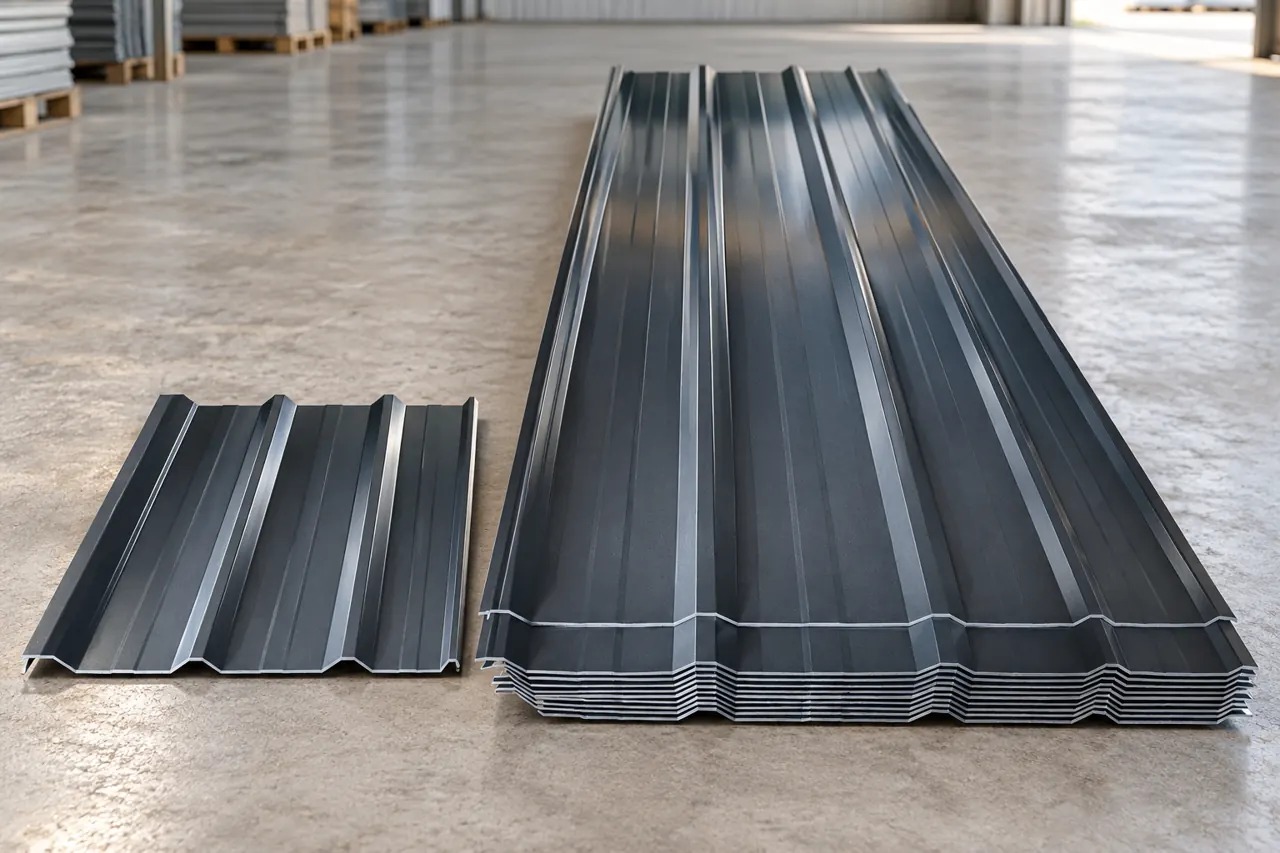
Define each cut length for installation
Define whether the ordered length includes the required end lap or overhang, and identify the reference edge and squareness needed at installation. Mixed lengths need a piece schedule that the receiving crew can interpret.
The listing's length band is a supply reference. Longer panels, special cuts and tolerances need confirmation for the actual handling and production plan.
- Length datumState the reference edge and whether ordered length includes laps or overhangs.
- Piece scheduleList panel marks, lengths and counts in the receiving crew’s working sequence.
- Handling checkConfirm the actual lengths and package constraints against the agreed production plan.
Panel supply does not replace the roof-system design
Keep span, restraint, fastening and weathering design with the responsible roof-system designer.
Support spacing, loads, fastening, laps and end conditions affect roof behavior together. A thicker sheet or stronger grade alone does not establish an allowable span or watertight assembly.
Preserve the responsible designer's schedule and installation details. Catalogue mid-hard, wear-resistant or certificate wording is not a project calculation or weathering warranty.
- Panel supplyVerify the approved profile, material and sheet schedule for the supplied panels.
- Roof designRetain the designer’s support spacing, loads, fasteners, laps and end conditions.
- System evidenceUse the required assembly assessment rather than deriving span or watertightness from sheet thickness.
Packing and receiving should preserve profile and surface
Inspect nested sheets and critical lap edges before handling or installation hides transport damage.
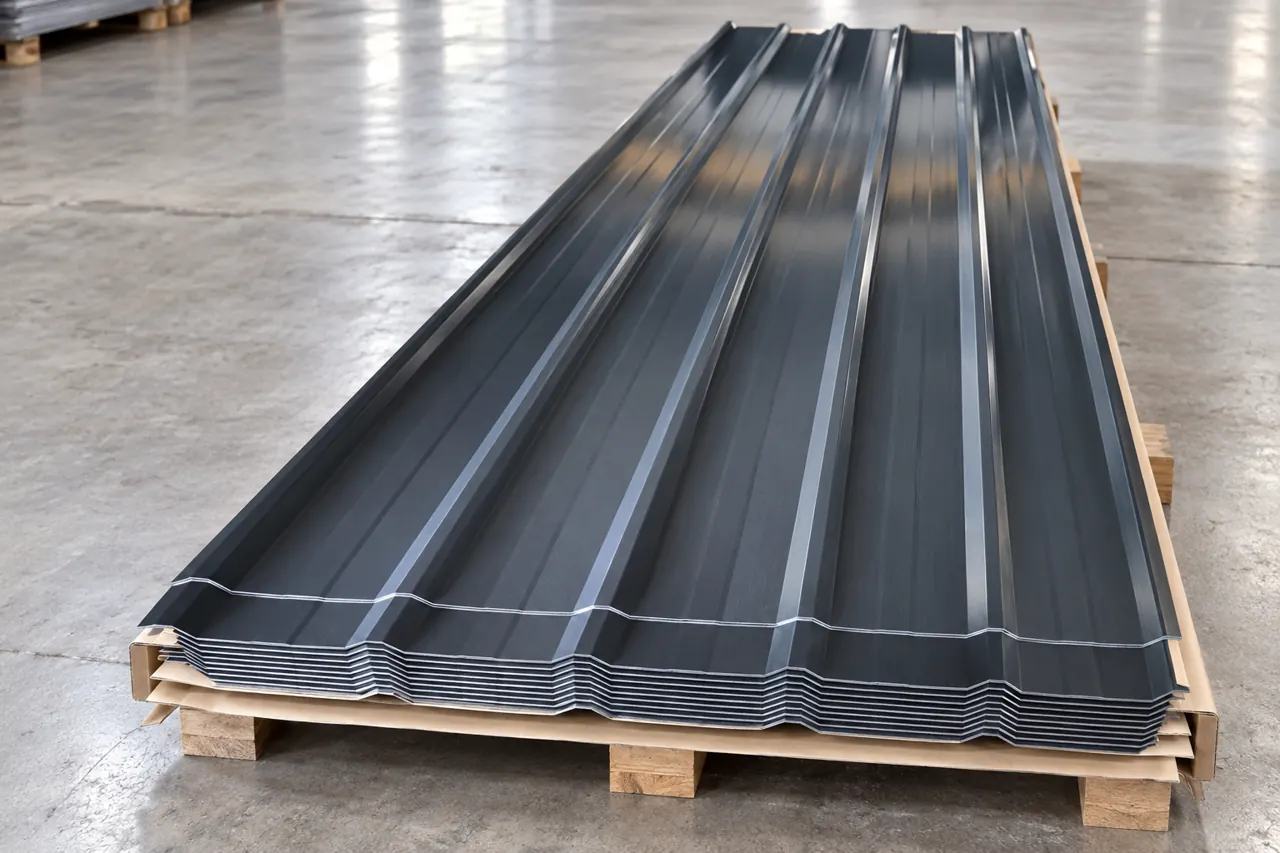
Protect the features that make panels fit
Check supports, compressed or bent ribs, lap-edge damage and coating marks before sheets are spread across the roof. Retain package and piece context when reporting a discrepancy.
A clean top sheet does not establish the state of all nested faces. Agree handling, package arrangement and storage to avoid distortion and retained moisture.
- Profile conditionCheck supported packs for compressed ribs, bent ends and distorted lap edges.
- Surface conditionLook beyond the clean top sheet for damage on nested coated faces.
- Receiving evidenceKeep package and piece context before sheets are spread across the roof.
Acceptance should link the installed sample to the sheet schedule
Retain the approved profile, cover basis, length schedule and coating reference as one repeat-supply baseline.
Retain the approved profile sample, actual cover basis, length revision and coating reference with relevant batch records. Separate material, panel geometry and installation results so a lap mismatch is not dismissed as a cosmetic issue.
Repeat orders should preserve the same profile and coating package; a nominally similar wave or width needs review.
- DesignCurrent approved layout
- ScheduleLengths and counts by mark
- OfferSupplier response and exceptions
- ReleaseApproved revision retained
Prepare the roof profile and panel schedule
Send the layout and profile details so quantities and commercial terms follow the actual sheet schedule.
Share the roof layout and the profile your designer has selected. We can review the actual panel geometry, material package and receiving requirements against a marked sheet schedule.
Qingdao Relia Industries Co., Ltd.
Contact address: Shuyuan Road, Qingdao, Shandong, China
- Profile drawing and effective cover
- Panel marks lengths and counts
- Lap and fastening schedule
- Substrate gauge coating and colour
- Handling limits and required records
Enquiry scope and supporting detail
Send the profile drawing, effective and overall widths, panel lengths, laps, material/coating requirements and support/fastener schedule. Mark handling limits and required inspection evidence. We can then define production responsibility and a representative panel check, with quantity and commercial terms based on the actual sheet schedule.
- GeometryProfile and effective cover
- ScheduleMarks, lengths and quantities
- MaterialSubstrate, coating and colour
- DeliveryProtection and receiving limits