

Finished Low-Carbon Wire for Nail-Making Machines
Buy ready-to-feed nail wire at the diameter and forming condition your machine needs. This guide connects wire section, heading response and surface with the actual payoff and tooling route. It helps you define a representative coil trial that checks feeding, nail heads and points before approving a complete finished-wire specification for repeat supply.
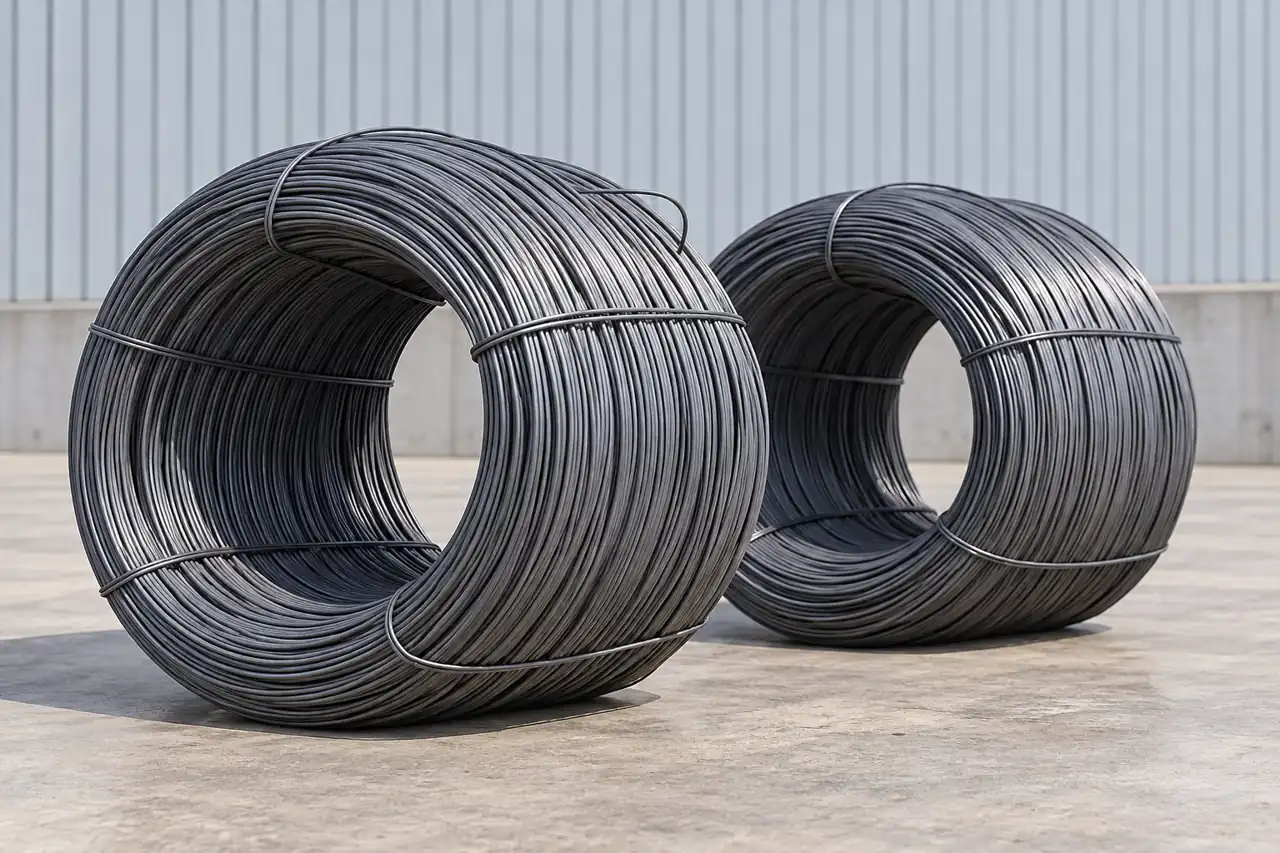
Define the wire from the nail and machine
For nail factories that do not draw wire before the nail machine, buy finished low-carbon wire at the required feed diameter and forming condition. The Q195/Q235 drawn-wire candidate offers diameter enquiries from 1 to 6 mm, with the selected grade, size and coil form fixed in the quotation. Choose against the nail drawing, machine tooling and payoff system. Control diameter consistency, surface integrity and the balance of feed stiffness and heading ductility, then trial the proposed coil through feeding, head forming and point cutting before approving repeat supply.
- Nail requirementIdentify shank, head, point and final dimensions on the required nail drawing.
- Finished feedSet actual wire diameter, supplied condition and surface for the machine route.
- Coil approvalRun a representative payoff and nail-forming trial before freezing the repeat specification.
Selection context and decision detail
| Buyer requirement | Relia response | Evidence or condition |
|---|---|---|
| No further wire drawing | Supply proposal targets the finished feed diameter | Machine and nail schedule define the accepted item |
| Stable head and point formation | Select low-carbon grade and drawing/annealing condition | Lot evidence and actual machine trial establish fit |
| Reliable coil feeding | Define payoff-compatible coil and surface state | Representative unwinding and forming checks before repeat supply |
The finished-wire route can be manufactured in-house
Select final drawing, thermal condition and surface within the confirmed in-house wire route rather than applying every process indiscriminately.
Relia manufactures steel wire and performs drawing, annealing and galvanizing in-house. For ready-to-feed nail wire, the agreed route should deliver the final diameter and mechanical condition required by the buyer's machine. Annealing or a galvanized finish is selected where the specification calls for it, rather than applied indiscriminately to every nail-wire order.
Relia performs incoming, in-process and final inspection and can provide corresponding batch records. Link the chosen material, final drawing/thermal condition, dimensional evidence and coil identity to the accepted supply specification. Finished nail production and machine performance remain part of the buyer's process trial.
- RouteFinal drawing and thermal condition as specified
- SurfaceUncoated or coated state agreed for the item
- EvidenceIncoming, process and final batch records
- ApprovalIdentified wire coil and nail trial scope
Final diameter controls both the shank and forming volume
Set actual diameter and blank length together because wire cross-section changes both shank geometry and available heading volume.
Use the nail shank drawing and the machine's feed/grip requirements to set wire diameter and tolerance. An increase in wire cross-section changes the metal available in a blank of the same length, which can affect the formed head as well as shank size. Tooling and cut length must be considered with the selected feed wire.
The catalogue provides discrete diameter options including 1, 1.2, 1.5, 1.8, 2, 2.5, 3, 5, 5.5 and 6 mm. These are selection references, not one machine's operating range. Confirm the exact finished diameter and supplied coil form in the offer.
- MachineRequired final feed diameter and tooling
- NailShank and head drawing requirements
- VolumeWire cross-section and blank length
- AcceptanceSelected diameter, tolerance and coil form
Product references for your shortlist
Open the product details, then discuss the exact specification for your application.
Finished low-carbon nail-wire enquiry
A drawn-wire candidate for selecting final feed diameter and condition around a nail machine that performs no further drawing.
Drawing and annealing set the heading condition
Balance feed stiffness and heading ductility through the selected wire condition rather than maximizing one mechanical value.
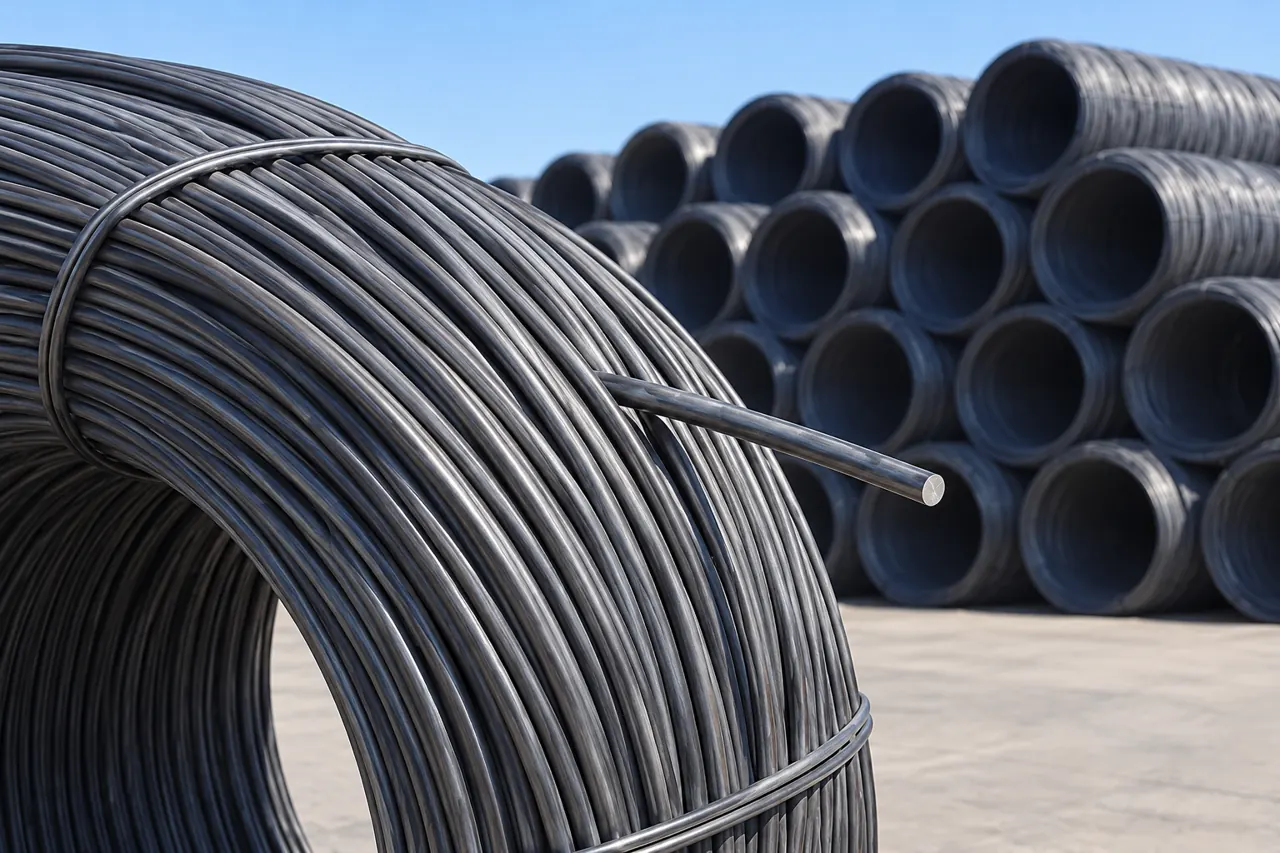
Balance the condition needed by the machine
Drawing reduces the section and work-hardens the wire. That can support feed stiffness but also changes ductility and forming force. Annealing can restore formability where required, while an excessively soft condition may create a different feeding or gripping problem. The useful target is stable nail production, not the lowest hardness or highest tensile value in isolation.
Agree material identity and the mechanical acceptance appropriate to the chosen route. Link the lot's dimensional and condition records with a heading trial. The AI-assisted coil/end image shows solid wire form, not verified chemistry, strength or ductility.
- Drawn conditionReview section reduction and the feed stiffness available in the supplied wire.
- Selected annealingDefine any required formability change without assuming softer wire always feeds better.
- Heading evidenceConnect lot condition records with the actual nail-head trial and accepted result.
Payoff behaviour is part of ready-to-feed acceptance
Trial the actual coil format because winding, cast and kinks can interrupt feeding without a diameter change.
A finished diameter is useful only if the coil can feed reliably into the straightener and tooling. Define coil mass and envelope, inner opening, winding presentation and free-end access against the actual payoff arrangement. Cast, tangling, kinks or damaged wraps can cause feeding interruptions without a change in nominal wire size.
Use a representative coil or an agreed trial format to assess unwinding and straightening. Record the observed problem before changing both material condition and machine settings. A smaller laboratory sample alone may not reproduce the handling of a production coil.
- Coil interfaceMass · envelope · inner opening
- UnwindWrap condition and free-end access
- Straighten/feedCast, kinks and grip response
- Trial recordLot and machine conditions retained
The production trial should separate material and tooling causes
Record the complete nail-making sequence and preserve affected wire and nails when separating material from tooling defects.
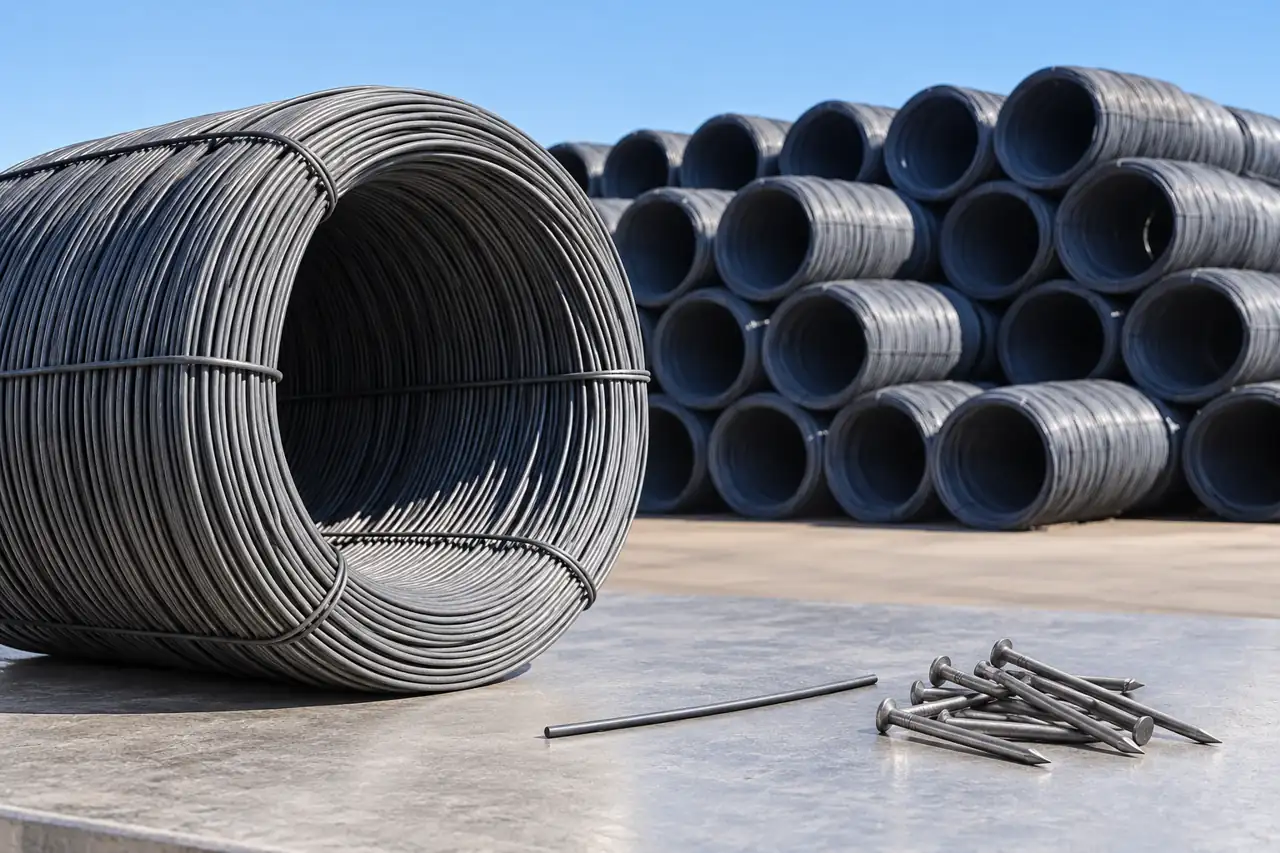
Follow the production trial through the nail
Run the selected wire through the intended straightening, gripping, head-forming and point-cutting sequence. Nail machines use different forming arrangements, so the buyer's actual route defines the test. Record the machine/tooling condition and adjustments alongside the wire lot.
Inspect the nail head, shank straightness, point and specified dimensions. Split heads can involve material surface defects or formability, while worn tooling and setup can also produce defects. Preserve wire and nails from the affected stage. The nail-and-coil image illustrates the application without claiming that these are Relia-produced or qualified nails.
- Feed and gripRecord straightening, payoff and gripping conditions with the identified wire coil.
- Head and pointRun the intended head-forming and point-cutting sequence using the actual tooling.
- Defect reviewRetain affected wire and nails to compare material findings with setup and tool condition.
Wire checks should explain the finished-nail result
Connect size, surface and condition findings with the nail result to identify the relevant failure mechanism.
Measure diameter at the agreed locations and orientations to capture the relevant size variation. Inspect the surface for seams, rust, scratches or damage that can affect feeding and local deformation. Use the specified material and mechanical record to define the condition tested, rather than treating the grade name as the entire acceptance plan.
Connect those findings with the nail trial. A seam that opens during heading calls for a different investigation from a repeated tool mark or inconsistent cut. Set the acceptance limits and any additional tests by the buyer's nail and wire specifications.
- WireSize variation · surface · condition
- MechanismFeed stiffness and local deformation
- NailHead · shank · point · dimensions
- DiagnosisMaterial finding versus tooling/setup cause
Coil protection preserves the approved feed state
Protect wraps and surfaces while preserving coil identity through partial use and repeat feeding.
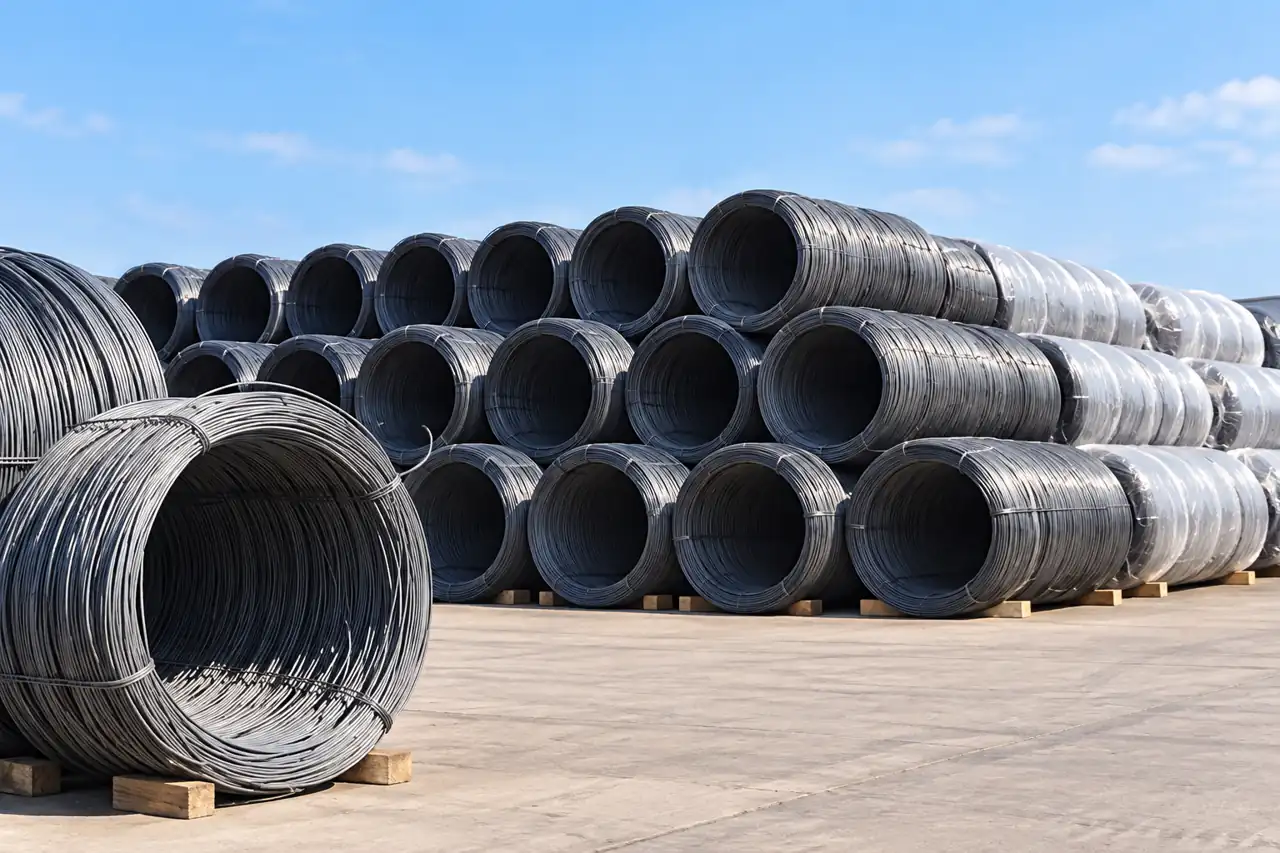
Preserve ready-to-feed wire through handling
Avoid handling damage that introduces sharp bends, disturbed wraps or surface corrosion before the wire reaches the machine. Define packaging and storage requirements for the selected uncoated or coated surface and intended transport route. Retain the coil identity through partial use so a later feed problem can be traced to the correct lot.
The AI-assisted staged-coil image is a handling illustration, not evidence of factory stock or a particular export packing service. Do not combine coils with different approved conditions simply because their diameter labels match.
- Wrap conditionAvoid disturbed winding and sharp bends before the coil reaches the payoff.
- Surface protectionAgree protection for the selected uncoated or coated state and transport route.
- Partial-coil identityKeep the lot connected as the machine consumes and later reloads the coil.
The quote should exclude an unintended drawing step
State that finished wire needs no further reduction so a different feedstock route is not quoted as equivalent.
State explicitly that the buyer needs finished feed wire and plans no further diameter reduction before nail making. Agree final size, material, mechanical condition, surface state and payoff-compatible coil format. If the factory operates its own drawing line, use a separate wire-rod enquiry because that starting product has different route and acceptance needs.
Compare offers on this complete basis, including applicable batch evidence and the trial reference. A lower price for a different feed condition or straight length is not equivalent to the accepted continuous-coil item.
- Buyer routeNo further diameter reduction
- Finished feedGrade · diameter · condition · surface
- CoilPayoff-compatible continuous supply
- ComparisonEquivalent item and batch evidence
Define the finished wire and nail trial
Send the machine feed, nail drawing and trial requirements so the finished-wire offer can be defined.
Share the nail drawing and the feed your machine needs. We can review a finished-wire route and representative coil trial without introducing an unintended diameter-reduction step.
Qingdao Relia Industries Co., Ltd.
Contact address: Shuyuan Road, Qingdao, Shandong, China
- Nail drawing and machine sequence
- Final feed diameter and tolerance
- Grade condition and surface requirements
- Payoff dimensions and coil format
- Required records and nail acceptance
Enquiry scope and supporting detail
Send the nail drawing or size schedule, machine feed diameter/tolerance, forming sequence and required material condition. Add the payoff dimensions, coil requirements, acceptable surface state and the production issue to avoid. Identify the material/dimensional records and nail trial criteria needed for release.
Relia can review the finished drawn-wire proposal against its in-house wire route and confirm the selected grade, final condition and batch evidence in the technical offer. Approve an identified coil through the intended nail-making process before using that specification for repeat supply.
- Nail and machineDrawing · feed tolerance · forming route
- WireGrade · condition · surface
- PayoffCoil envelope and unwinding needs
- ReleaseLot records and representative coil trial