

Black Annealed Tie Wire for Construction Wholesalers
Choose black annealed tie wire around the tie your customers make and the coil they handle on site. This guide connects measured diameter, supplied condition and surface with bending, twisting and practical payout. Use a representative completed tie and receiving checks to create a wholesale stock item that can be reordered by a clear specification.
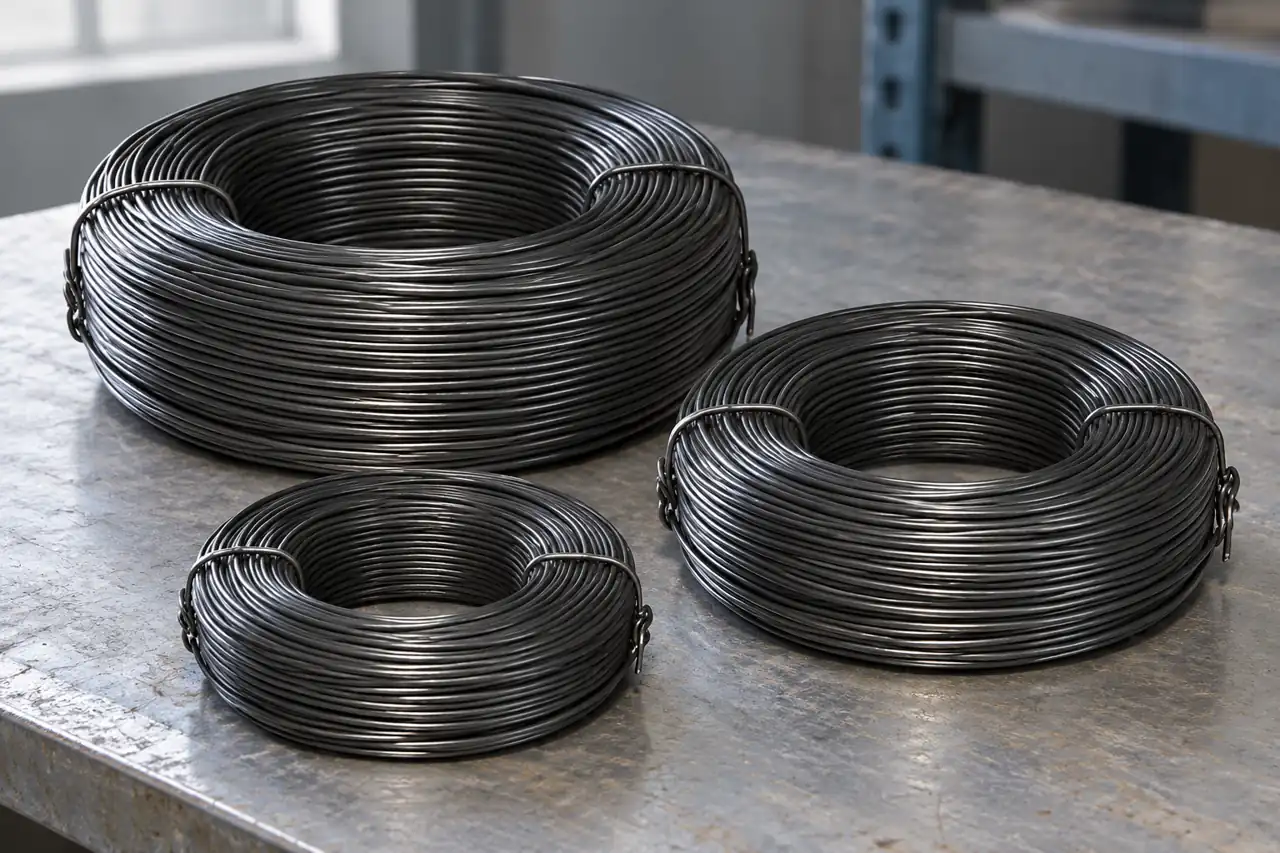
Define one reorderable wholesale tie-wire item
For a construction wholesaler, select black annealed tie wire by the measured diameter, supplied ductility, installation method and coil unit your customers actually use. A wire must close a useful tie without excessive breakage while remaining practical to handle; black colour or the soft label does not establish that balance. Relia manufactures wire with drawing and annealing in-house and can discuss the listed 0.7–4 mm candidate with corresponding batch evidence. Start with the site tie geometry, current wire and pack size, then approve actual bending/twisting and receiving checks before turning a catalogue range into a repeat wholesale stock code.
- Site taskIdentify the bar or bundle geometry and the actual closing method.
- Wire selectionSet measured diameter, supplied condition and surface for that tying task.
- Wholesale unitTrial the coil format and retain its identity with the approved tie.
Selection context and decision detail
| Buyer requirement | Relia response | Evidence or condition |
|---|---|---|
| Useful construction tie | Own wire drawing and annealing | Actual diameter and closing task govern selection |
| Wholesale stock identity | Discuss a defined coil/unit offer | BWG/range wording needs one controlled size |
| Batch and site evidence | Corresponding staged inspection records available | Completed-tie behavior approved separately |
Drawing and annealing connect supply to handling behavior
Connect the selected drawing and annealing route with represented batch records and the intended tie acceptance.
Relia manufactures steel wire, operating drawing, annealing and galvanizing in-house. For black annealed tie wire, the selected drawing/annealing sequence and black surface condition belong in the offer. Incoming, process and final inspection are performed, and corresponding batch records can be provided.
Use those records to identify the actual material and delivered condition behind the stock code. Our manufacturing scope does not supply a finished tie rating, structural approval or a universal bend limit. Agree the installation-related acceptance required by the customers you serve.
- Own stagesDrawing and annealing for selected black wire
- InspectionIncoming, process and final batch evidence
- Site taskRepresentative finished tie and handling
Gauge wording needs one measured diameter
Select one numerical diameter and limits rather than using BWG wording or a range as the receiving specification.
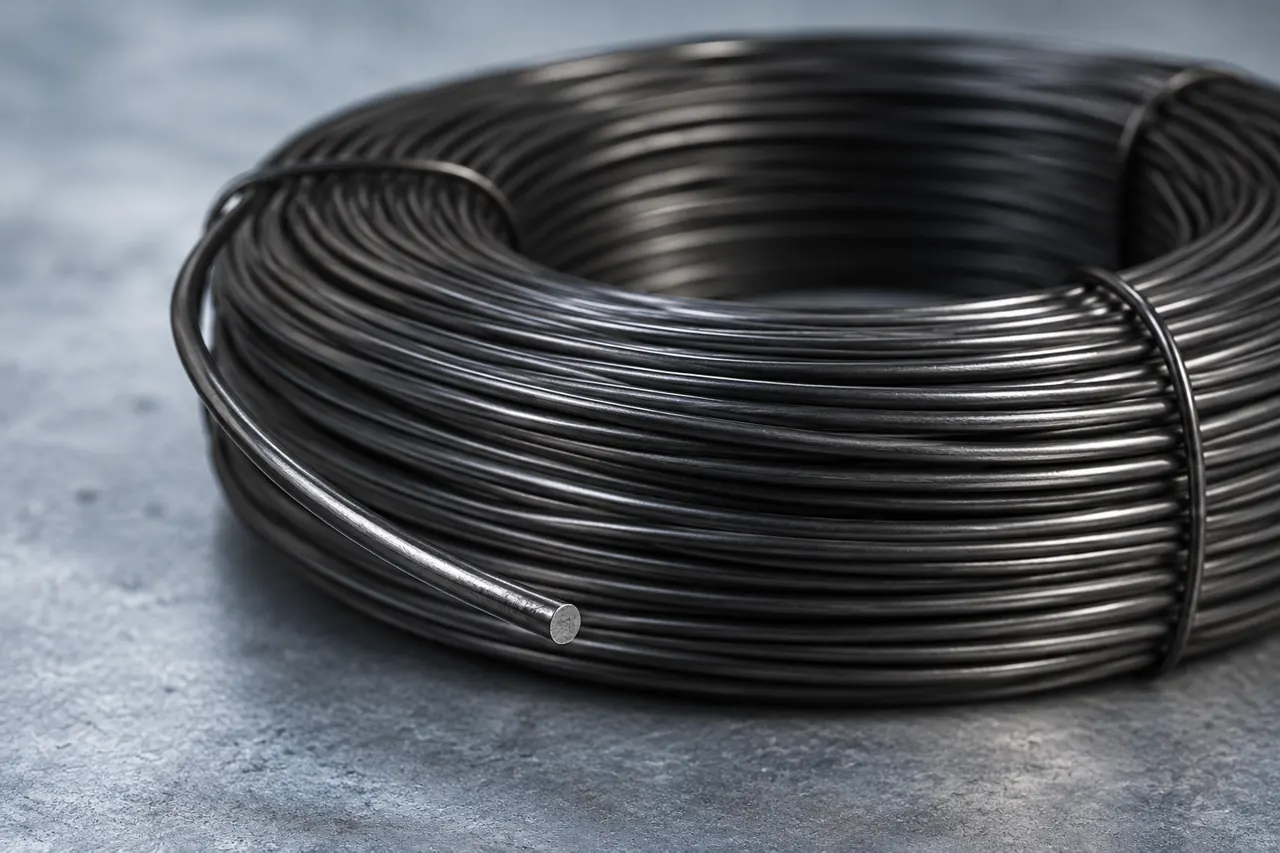
Turn a gauge request into a measured wire
The listing has a single 0.7–4 mm range option and a BWG16 title request. State the named gauge convention if used, then select a numerical diameter with its limits. A range option cannot tell receiving staff which individual wire should arrive.
The body gives 350–550 MPa tensile and ±0.03 mm references, but their applicability to the selected size/condition must be confirmed. Isolated carbon and manganese figures do not establish one material grade. Black and bright-finish wording also needs one supplied-surface description.
- Gauge conventionName the gauge system if BWG wording forms part of the request.
- Selected diameterChoose one numerical size from the enquiry range and state its limits.
- Applicable resultsConfirm which dimensional and mechanical references apply to the selected supplied condition.
Product references for your shortlist
Open the product details, then discuss the exact specification for your application.
Black annealed tie-wire small-coil enquiry
A candidate for defining a measured tie-wire size and coil unit around a construction wholesaler’s actual site task.
Annealed condition must still survive the completed tie
Approve bending and twisting together because easy bending alone does not establish a usable completed tie.
Drawing introduces deformation and changes the strength/ductility balance; annealing changes the condition available for subsequent tying. The useful target is a wire that bends and twists as required while supporting the intended binding task. Excessively easy bending alone is not a complete acceptance rule.
Assess representative site ties, including the smallest local bend and actual closing method. Record fracture, springback and handling effort against agreed criteria. A tensile result and a successful straight bend represent different tests from a finished twist.
- Wire conditionStrength and remaining ductility
- Local deformationActual bend and twist demand
- Released tieSpringback, fracture and geometry
- ApprovalNamed task and material reference
Coil geometry influences practical site use
Trial the coil opening, winding and unit mass in the way customers actually cut and handle wire.
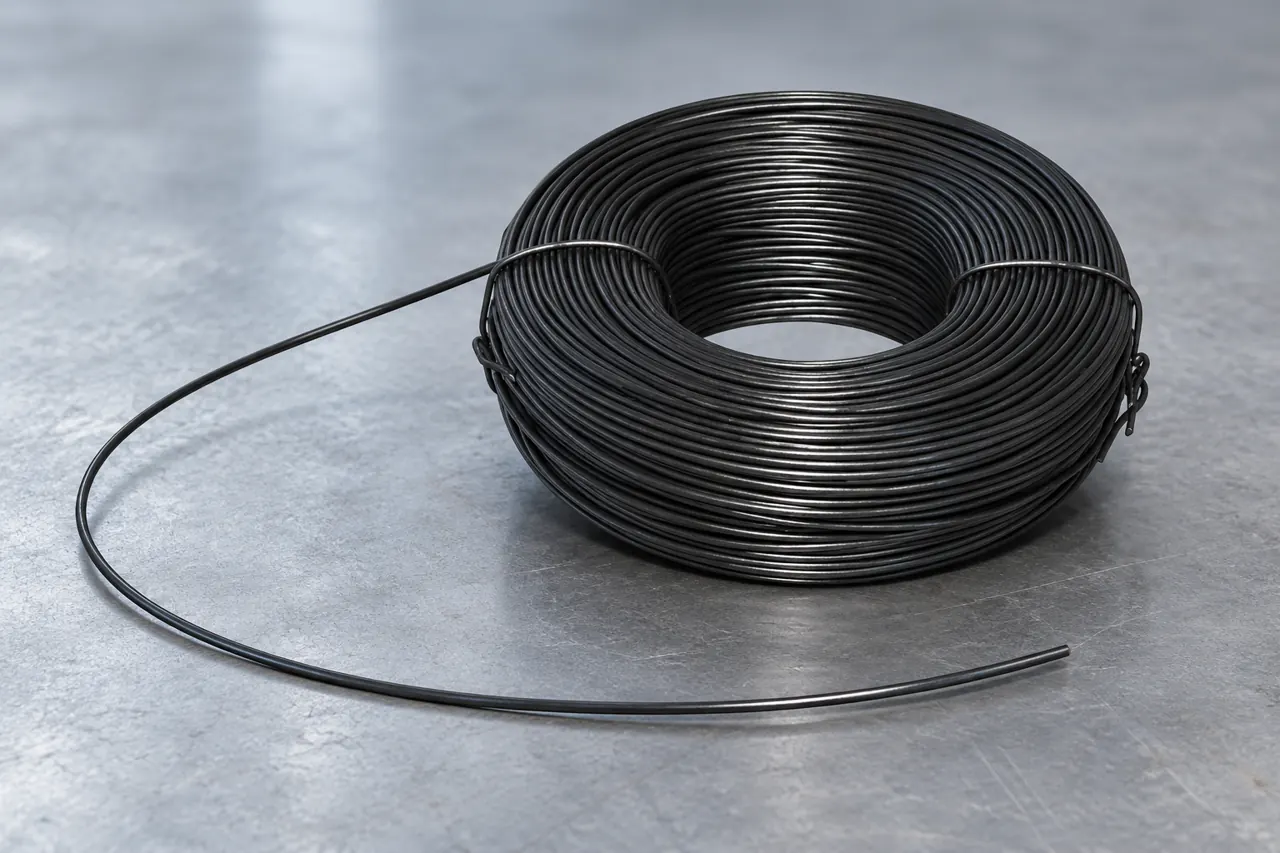
Review the coil as a working unit
A compact coil can fit a worker's handling method yet pay out poorly if turns cross or spring free. Unit mass, opening and winding affect how the customer cuts lengths and controls loose ends. Define those features alongside the wire identity.
The small coil and loose length are AI-assisted illustrations. They do not establish a standard customer pack or measured ease of tying. Trial the proposed unit in the actual use pattern before converting every bulk order into that format.
- Handling fitCheck opening and unit mass against the way customers carry the wire.
- Payout behaviourObserve crossed turns, loose ends and practical cutting during representative use.
- Format approvalRetain the tested arrangement before requesting it as the wholesale supply unit.
Surface acceptance separates appearance from corrosion behavior
Define black-wire surface and storage requirements separately from any need for zinc-based corrosion protection.
Black annealed wire is not specified by a zinc coating here. Confirm any required oil/residue condition and acceptable surface rust or cleanliness rather than assuming that a dark finish is corrosion protection. Handling and storage exposure can affect the usable surface.
Keep surface observations separate from wire fractures and tie geometry. If the application requires galvanizing or another protection, use a separately defined product and trial rather than silently substituting it into the black-wire approval.
- Surface identityBlack uncoated supply
- ConditionAgreed residue/rust limits
- StorageProtection for actual exposure
- Different protectionSeparate product/approval if required
Warehouse units should preserve size and lot identity
Link the wholesale stock code with actual wire condition, unit pack and manufacturing lot.
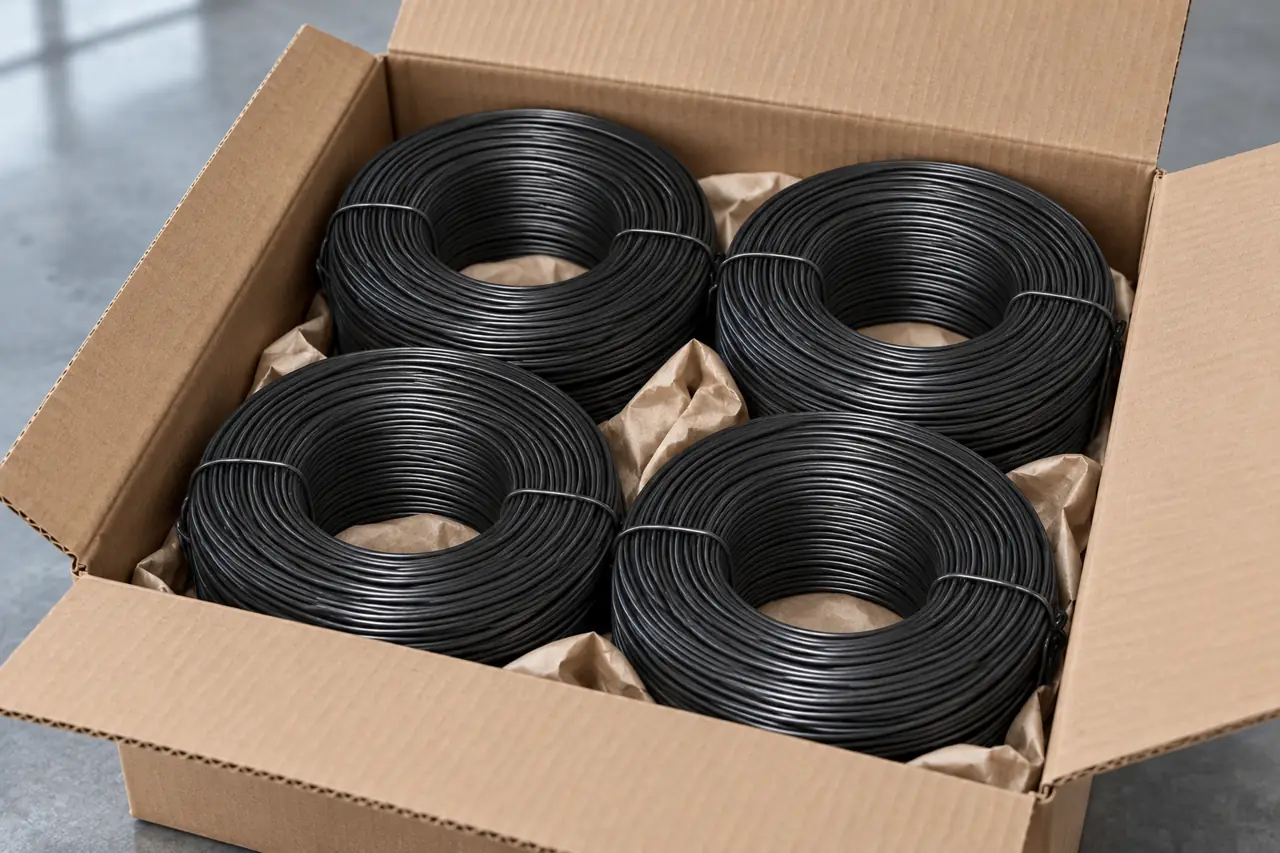
Keep the sales code linked to the batch
A wholesale stock code should identify actual diameter, material/condition and unit pack. Keep the supplied batch separate from that commercial code and link both in receiving records. Prevent a visually similar but heavier or differently annealed coil from entering the same released bin.
The carton of small coils is an AI-assisted packing scene, not an agreed count or private-label service. Custom unit masses, labels and mixed orders must be confirmed in the particular offer.
- Stock definitionIdentify actual diameter, material condition and the agreed unit package.
- Batch connectionLink that commercial code with the manufacturing lot in receiving records.
- Bin separationKeep similar-looking but differently sized or conditioned coils out of released stock.
Incoming and application evidence answer different questions
Keep receiving checks and completed-tie evidence connected so a break complaint can be investigated meaningfully.
At receipt, reconcile pack identity and net quantity, then use the agreed dimensional, surface and mechanical checks. Link corresponding batch records to the sampled coils. A clean outer turn cannot establish the whole pack's condition.
Keep an unused sample and a representative completed tie from the approval. If a site reports breaks, retain the failed location, customer method and batch reference so the review can distinguish material condition, surface damage and excessive twisting.
- ReceivingSize, pack and net contents
- Wire evidenceCorresponding represented batch
- ApplicationUnused and tied references
- ClaimFailure location, method and lot
Repeat supply follows the accepted site task
Preserve the accepted diameter, condition, surface and coil arrangement when reviewing repeat supply or customer changes.
Preserve the approved diameter, condition, surface and coil arrangement rather than reordering by BWG wording alone. Review changes in material, processing or unit mass before replacing stock. A different customer joint may need a different length or closing behavior even when the wire is unchanged.
Compare complaints and returns with actual accepted stock movement and site observations. The catalogue delivery or MOQ fields do not establish a confirmed replenishment programme; agree commercial conditions against the defined stock item.
- BaselineDiameter, condition and coil
- RepeatSame controlled stock identity
- ChangeMaterial, processing or unit mass
- ReviewSite fit and commercial scope
Define the tie and wholesale unit
Send the real tie geometry and unit requirements so the offer represents the intended site task.
Share the tie your customers make and the coil format they use. We can review a selected wire condition and the sample checks needed for repeat stock.
Qingdao Relia Industries Co., Ltd.
Contact address: Shuyuan Road, Qingdao, Shandong, China
- Numerical diameter and limits
- Tie geometry and closing method
- Supplied condition and surface requirements
- Coil unit and payout needs
- Wholesale quantity and destination
Enquiry scope and supporting detail
Send the numerical diameter, selected material/condition and sample or image of the intended tie. Include the bar/bundle geometry, tool or hand-closing method, surface requirements and preferred coil/unit arrangement. State the dimensional and forming evidence required for wholesale acceptance.
Add quantity and destination and request corresponding batch records with the offer. We can discuss the black-annealed route and a representative sample; actual pack formats and commercial schedule are confirmed for the chosen supply.
- WireDiameter, tolerance and form
- CoilNet weight and unit count
- AcceptanceHandling and surface checks
- DeliveryDestination and quantity mix