

Steel Coil Slitting for Buyer-Specified Strip Requirements
Specify slit strip as usable feedstock for the next line: finished width, edge, shape and coil presentation must work together. This guide helps you build a coherent slit schedule, separate material from processing responsibility and approve a representative coil. You can then compare offers by accepted output rather than an undefined charge per input tonne.
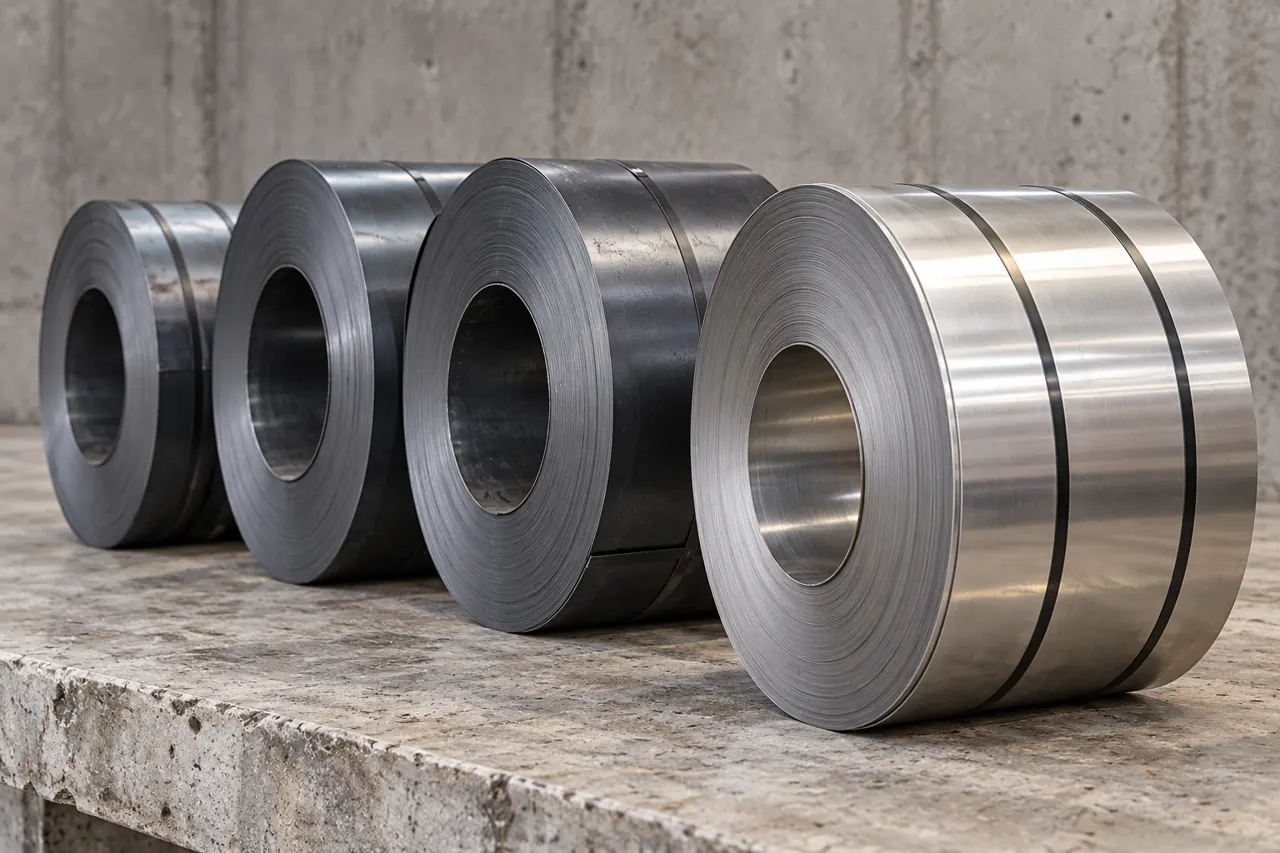
Define the strip your line can use
For stamping and forming buyers, a coil-slitting offer is usable only when strip width, cut-edge condition and payoff format match the next line. Relia can review carbon-steel and stainless-strip catalogue candidates with a buyer-specified slit schedule; the actual slitting provider and any customer-owned-coil service must be confirmed. Specify the master material, finished widths, edge acceptance and recoiling envelope together. Send the downstream forming duty and inspection basis so the offer can distinguish material supply, processing, usable output and the first-coil trial rather than quote an undefined narrow strip.
- Finished stripState width, tolerance and edge acceptance for the downstream stamping or forming duty.
- Master materialIdentify grade, thickness and rolling condition before planning the slit layout.
- Payoff packageDefine the coil envelope and winding requirements around the intended receiving mandrel.
Selection context and decision detail
| Buyer requirement | Relia response | Evidence or condition |
|---|---|---|
| Usable slit strip | Review material and output schedule | Grade, gauge, widths, edge and payoff limits |
| Manufacturing and records | Selected rolling plus batch QC records | Exact alloy, process and inspection scope confirmed |
| Slitting or customer-owned material | Confirm actual provider and responsibility | No blanket service or yield commitment |
Fix the rolling and slitting responsibilities
Keep selected rolling scope distinct from the actual slitting, coating and customer material responsibilities.
Relia manufactures steel plate and coil, with hot or cold rolling performed in-house for the selected product. Incoming, in-process and final inspections are performed, and corresponding batch records can be provided. This does not establish every alloy, slitting operation or coating stage as in-house; identify the actual offered route and provider.
The carbon-coil listing includes 0.2–4, 4–60 and 60–115 mm categories although its title mentions 0.12 mm. The stainless-strip option is Customized while its detail gives 0.3–3.0 mm. Resolve thickness and coil versus plate form before planning a slit pattern.
- Material routeSelected grade, rolling condition and surface
- Slitting scopeActual processor, input limits and output requirements
- Inspection scopeApplicable stage, sampled position and batch record
Make the slit schedule physically coherent
Define every finished width and quantity while allowing the processor to confirm the actual slit layout.
List every finished width, its tolerance and accepted mass or length. Show the proposed number of strands across the master width and allow the actual processor to identify edge trim and setup feasibility. A theoretical width sum is not a yield guarantee. Mark any orientation-sensitive face or rolling direction, and state whether over-width stock may be accepted. Keep alternative layouts as separate proposals so a cheaper offer does not silently change the purchased strip mix.
- MasterIdentity, thickness, usable width and coil condition
- StrandsFinished widths, tolerances and quantities
- TrimProcessor-confirmed allowance and ownership
- ReleaseOne approved layout or a stated alternative
Product references for your shortlist
Open the product details, then discuss the exact specification for your application.
Carbon steel coil for slit strip
A candidate master material when selected grade, thickness and rolling condition must support a buyer specified strip schedule.
Stainless strip coil enquiry
A candidate when the strip requirement needs a selected stainless grade, surface and defined recoiled supply format.
Cut-edge formation creates a separate quality decision
Width acceptance does not establish burr, fracture or surface condition at the slit edge.
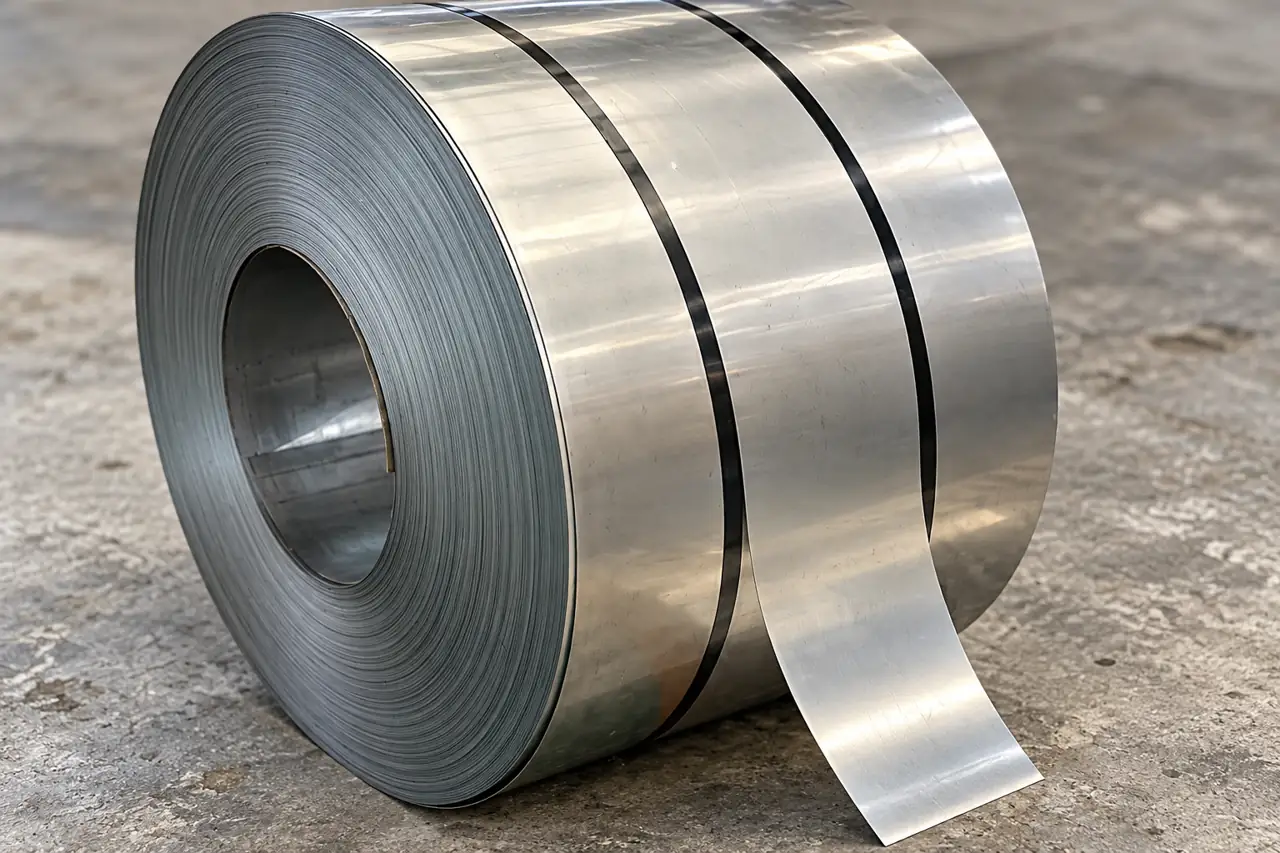
Accept the edge separately from width
Rotary shear slitting deforms and fractures the strip between cutting edges. Clearance, tool condition and material response influence rollover, fracture and burr, so there is no universal setting that proves an acceptable edge for all grades and thicknesses.
Define the edge characteristic that matters to stamping, welding or handling and its measurement basis. Preserve edge identity and sampling position across and along the coil. Width can pass while burr or local damage causes feeding, forming or welding problems; inspect those characteristics separately.
- Slit edge conditionDefine permitted burr, fracture and local damage for the actual downstream operation.
- Sampling positionRetain edge identity and locations across and along the represented output coil.
- Functional consequenceConnect the observed edge with feeding, forming or welding requirements in the trial.
Read strip shape before blaming the material
Measure relevant strip shape using a defined free specimen and compare it with actual tracking behaviour.
Longitudinal splitting and recoiling can expose or redistribute stresses already present in the strip. Define camber and other relevant shape limits against an agreed specimen length and support condition. A curved unrestrained strip and a poorly tracking tensioned strip are different observations. Record the master coil, strand position and payoff conditions during a trial so the parties can distinguish incoming shape, slitting effects and downstream handling instead of applying an unsupported flatness promise.
- Identify positionMaster coil, strand number and sample location
- Release a specimenUse the agreed free-state shape setup
- Trial the lineRecord payoff, guides and accepted forming result
- ComparePreserve width, edge and shape findings together
Recoiling is part of the functional supply
Define the recoiled package so acceptable strip can mount and feed on the intended line.
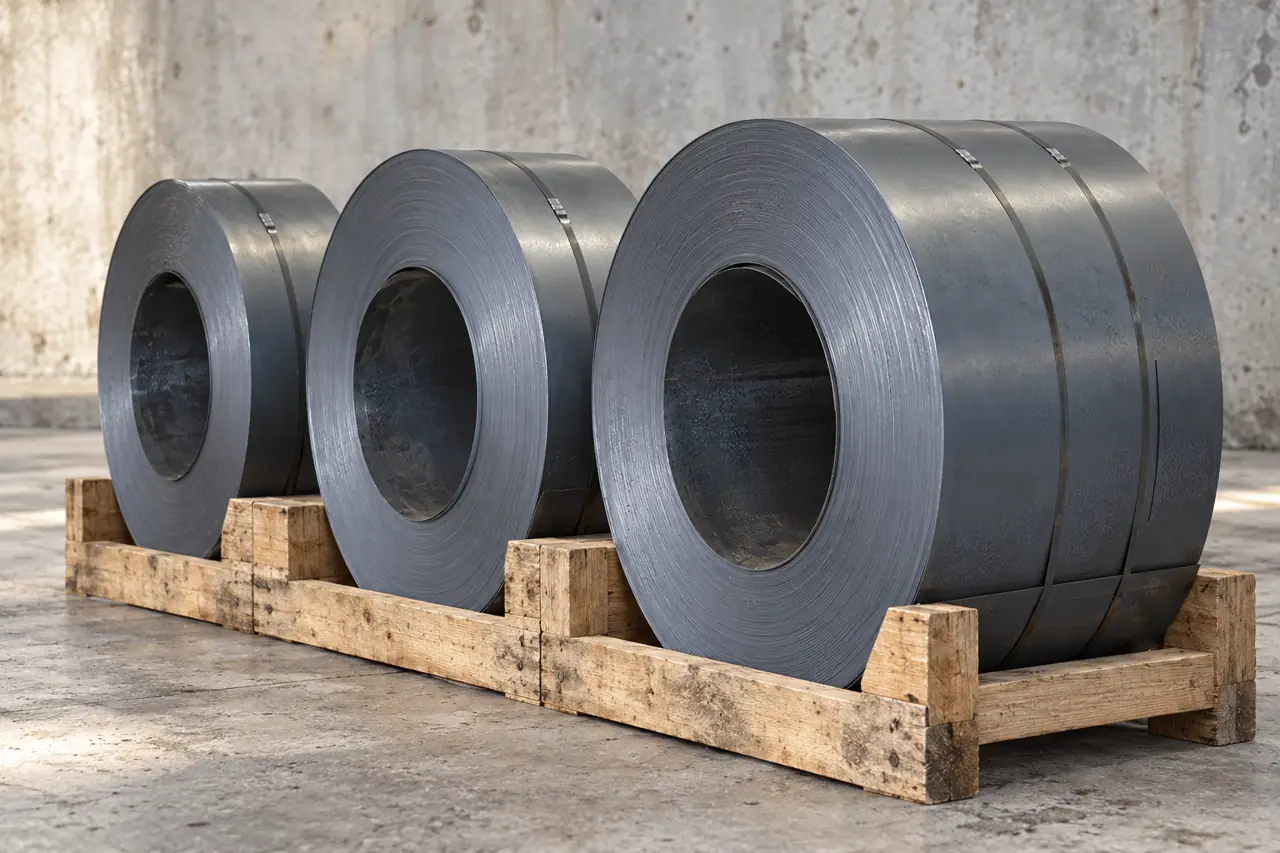
Define the functional recoiled package
Specify coil ID, maximum OD, usable mass range, winding direction and the actual payoff mandrel limits. Agree how the strip tail, face protection and separation are handled. Uneven winding or telescoping can make acceptable strip difficult to mount and feed; tightly wound appearance alone is not proof of suitable tension or shape. Ask the provider to confirm the recoiling arrangement for the selected gauge and width, then test the resulting package on the intended line.
- Mandrel fitState inside diameter and the permitted outside diameter for the actual payoff.
- Usable coil massAgree the unit range and winding direction for the selected strip width.
- Winding conditionReview telescoping, tails and surface protection before accepting the production coil format.
Keep material balance and processing charges visible
Compare usable output and processing charges using a clear material balance and quantity basis.
For an owned master coil, record accepted input mass, output by slit width, edge trim, rejected strip and remaining stock. Agree who owns each remainder and who authorizes rework. For finished material supply, state net strip mass separately from cores or packing where relevant. Compare the same grade, edge preparation, recoiling format, inspection and transport protection; a low charge per input tonne is not directly comparable with a price per accepted output tonne.
- ReceivedInput identity, mass and observed condition
- ProducedAccepted strips by approved width schedule
- SeparatedTrim, rejects and remnant disposition
- PricedSame quantity basis and included work
Approve a coil that represents the repeat order
Approve a coil that represents the ordered material, edge, shape and package rather than a hand sample.
Define trial quantity and material condition rather than approving only a hand-cut strip. Inspect width, edge, shape and coil geometry, then run the agreed downstream check. Keep the output-coil identity with the parent coil and setup reference. A change in master grade, thickness, condition or recoiling package can alter the trial result; agree which changes require review before treating the next shipment as a repeat.
- ConfirmInput and output specification
- TrialRepresentative slitting and recoiling scope
- EvaluateDimensional, edge and line-performance evidence
- RetainApproval revision and proposed-change rules
Protect the edge and retain parent-coil identity
Protect exposed edges and preserve the parent coil connection before strip enters production.
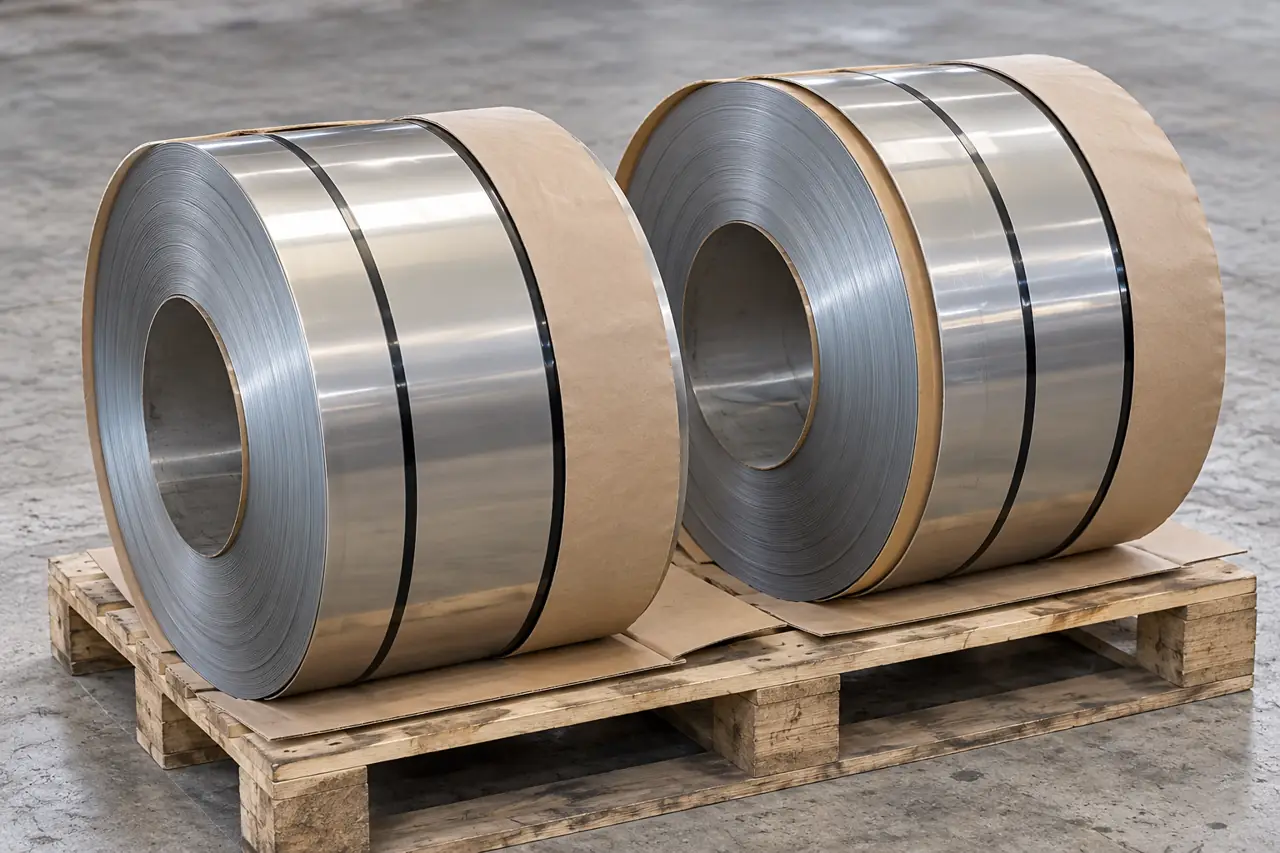
Preserve strip condition and identity
Agree a supported packing arrangement suited to the actual coil mass and orientation. Protect exposed edges and surfaces without hiding identification or damaging sensitive finish. Keep each output coil traceable to its parent material and width schedule; an outer pack code alone may be lost when coils are separated. Record handling damage before payoff so an edge defect observed in production can be compared with its receiving condition.
- Protect the packageUse supports and edge protection suited to the actual coil mass and orientation.
- Retain parent identityConnect each output coil and width schedule to the represented master material.
- Record receiving conditionDocument exposed edge or handling damage before the coil enters the payoff.
Build the master and output strip schedule
Send master material and finished strip requirements together to define the actual supply and processing offer.
Share the material and the widths your line needs after slitting. We can clarify the candidate supply, processing responsibility and representative coil acceptance for the job.
Qingdao Relia Industries Co., Ltd.
Contact address: Shuyuan Road, Qingdao, Shandong, China
- Master grade gauge and ownership
- Finished widths tolerances and quantities
- Slit edge and strip shape limits
- Coil envelope and payoff arrangement
- Downstream operation and required records
Enquiry scope and supporting detail
Send the grade, selected rolling condition, master dimensions and ownership, then each slit width, tolerance and quantity. Add edge and shape criteria, coil envelope, downstream operation, records and destination. Relia can clarify the relevant material candidate and the work to be confirmed. Slitting availability, coating responsibility, customer-material acceptance, sample arrangements and delivery terms remain subject to the specific offer.
- InputGrade, condition, master coil and ownership
- OutputWidth mix, edge, shape and payoff envelope
- AgreementProcessor, material balance, records and terms