

Own-Brand Steel Shot and Grit for Import Distributors
Build an own brand abrasive range around a defined product before settling its presentation. Keep shot or grit specification, customer application and batch identity connected to the distributor code. This guide helps you review media approval, proposed packaging and repeat order changes as separate decisions, so a branded pack identifies a consistent purchasing requirement.

Define what the distributor code identifies
For import distributors developing an own-brand abrasive range, approve the media specification and the requested package as two controlled parts of the order. Relia manufactures cast steel shot and grit and can review actual catalogue candidates against your customers' blasting requirements. Own-brand artwork, printed packaging, barcode arrangements and related commercial services require a specific offer; an unmarked bag illustration does not establish their availability. Send the proposed product schedule, acceptance basis and packaging brief so each distributor code can identify a defined abrasive, its batch evidence and the separately agreed presentation.
- Technical materialSet shot or grit form, grading and condition for the intended customer applications.
- Batch connectionKeep the selected material revision and represented lot evidence behind the sales code.
- Requested presentationDefine the proposed pack and artwork separately for confirmation in the actual offer.
Selection context and decision detail
| Buyer requirement | Relia response | Evidence or condition |
|---|---|---|
| A controlled own-brand range | Review manufactured cast-shot/grit candidates | Each distributor code maps to a complete specification |
| Traceable material supply | Corresponding batch inspection records available | Lot-to-pack mapping and report scope agreed |
| Requested branded presentation | Review an explicit packaging and artwork brief | Availability, proof, quantities and terms confirmed |
Connect each distributor code to a manufactured abrasive
Connect each distributor item with the selected manufactured media and relevant batch evidence.
Relia performs cast-steel abrasive melting, atomization, heat treatment and grading in-house. Incoming, in-process and final inspections are performed, and corresponding batch records can be provided. Agree the selected product and report scope before assigning your own code.
The cast-shot candidate gives a 42–53 HRC reference. The steel-sand listing names S70–S780 and SAE/ISO requirements in its title, while its detailed grading fields use another basis. Define actual shot or grit geometry, one grading convention and relevant condition limits; a family title is not a batch result or a compliance certificate.
- Distributor identityOne code linked to one controlled material revision
- Manufacturing identitySelected cast shot or grit and represented lot
- Acceptance identityAgreed grading, particle condition and report scope
Approve material behaviour before the package design
Qualify media contact behaviour before a package design becomes the main product reference.

Approve the media before its presentation
Melting establishes the steel composition; atomization forms the initial cast-particle population; heat treatment changes its supplied condition; grading controls the size population offered. Shot and angular grit present different contact geometry. Those characteristics affect surface action and breakdown, so a matching bag weight or distributor label cannot make two abrasives interchangeable.
Qualify the selected material through agreed incoming checks and an application trial where required. Retain the approved specification, sample identity and results before a packaging change can obscure the original reference.
- Fix particle identityDefine material, form, grading and supplied condition for the selected abrasive.
- Evaluate relevant behaviourUse agreed incoming checks and any required application trial for the customer duty.
- Retain the approvalKeep specification, sample identity and results before changing the product presentation.
Product references for your shortlist
Open the product details, then discuss the exact specification for your application.
Cast shot for a distributor range
A candidate for an own brand impact cleaning item with a controlled abrasive identity and customer application basis.
Steel grit for a distributor range
A candidate where the branded product must identify a defined angular abrasive rather than an interchangeable family name.
Describe the packaging request as an offered scope
Describe artwork, closure and identification as a packaging scope that the actual offer must confirm.
Specify pack size, material, closure, handling method and required moisture protection. Provide controlled artwork, language, quantity units and the location of any proposed code or barcode. Ask which parts can actually be offered and how a packaging sample will be reviewed. Printing, barcode generation, particular bag construction and mixed branded ranges remain order-specific requests, rather than confirmed standard services.
- Physical packageNet content, closure, protection and handling
- Artwork inputRevision, language and intended product claims
- IdentificationRequested code, lot reference and reading position
- Offer responseConfirmed scope, sample gate and excluded requests
Preserve the link from the sales code to the lot
Keep the distributor code connected to material revision, supplier lot and delivered quantity.
Maintain a cross-reference between the distributor SKU, approved material revision, supplier lot and delivered package quantity. If a local label is applied or material is repacked, preserve the original lot connection rather than replacing it with a marketing code. Agree who maintains that mapping and which records accompany delivery. A barcode can carry an identifier, but it cannot create traceability without a reliable underlying record.
- Product revisionMaterial, geometry, grading and accepted condition
- Pack mappingDistributor SKU connected to supplier lot
- Document mappingPacking list and relevant batch records
- After openingLot retained through storage and onward supply
Review a pack sample through actual handling tasks
Review the proposed pack through the actual identification and handling tasks at receiving and resale.
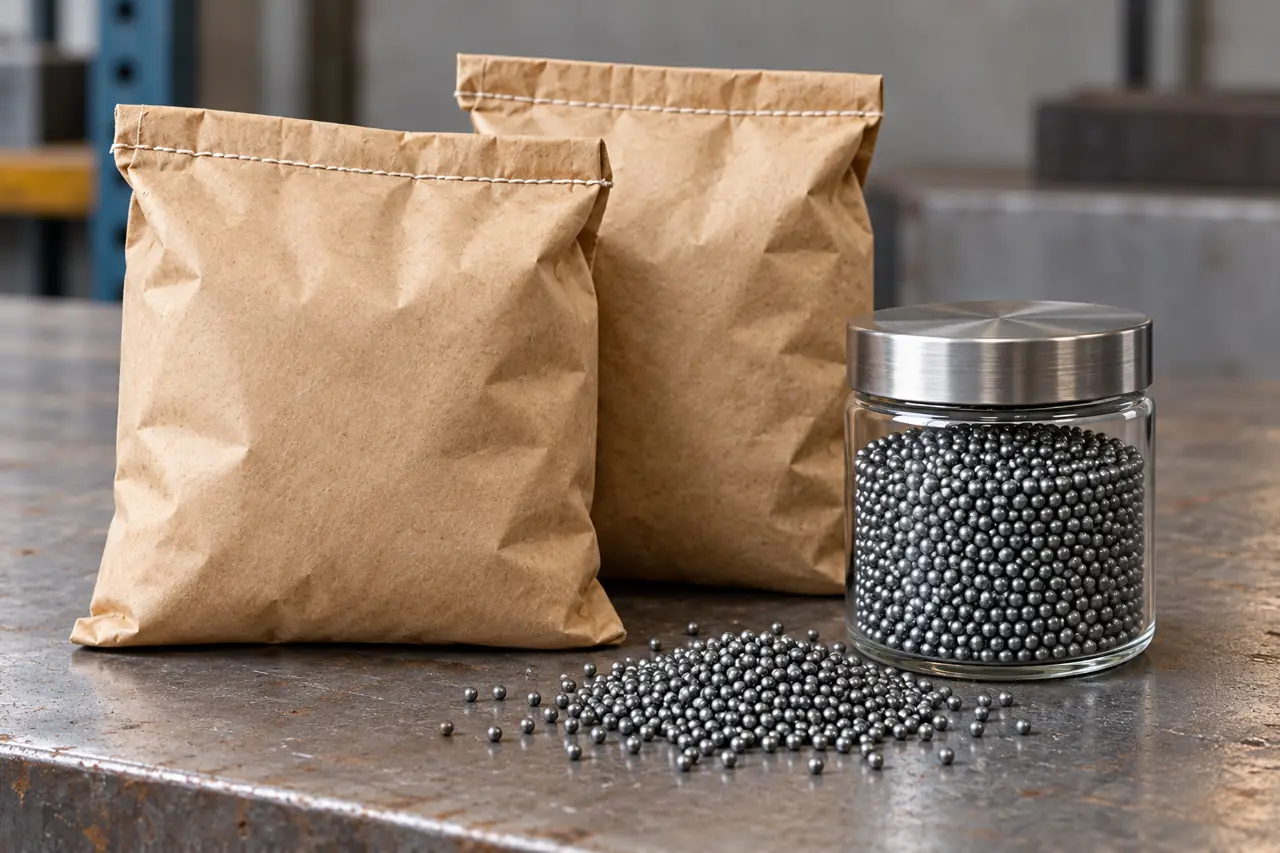
Review the pack in normal use
Check whether the proposed filled package can be identified, moved, opened and resealed as required by your receiving and resale operations. Review closure, contents declaration, label position and the preservation of lot identity after opening. Define any required transport or moisture-protection evidence separately. The plain sacks and jar pictured here illustrate presentation only; they are neither an approved branded sample nor proof of package strength or shelf life.
- Identify the contentsCheck declared quantity, label position and readable lot connection on the proposed sample.
- Handle and openAssess the filled pack against the actual receiving, resale and resealing tasks.
- Confirm protection evidenceSpecify any required transport or moisture assessment separately from the presentation review.
Approve artwork and material changes through separate gates
Keep artwork approval separate from material approval so either change remains visible.
A new logo or language revision should not silently change media grade, hardness basis, geometry or source. Likewise, unchanged artwork must not hide a material substitution. Approve technical claims against the selected product and evidence; do not print an unverified certificate, performance figure or standard conformity statement. Record who authorizes each change and whether it requires only an artwork proof, a new material review, or both.
- Artwork revisionReview changed graphics or language without silently altering the approved material identity.
- Material revisionReview changes in grade, hardness, geometry or source even when the artwork remains unchanged.
- Combined revisionRecord both approvals when both scopes change, with technical claims supported by agreed evidence.
Separate first-order costs from repeat supply
Separate initial setup or sample costs from the complete material and repeat supply scope.

Separate one time and repeat scope
Request an offer that identifies actual media quantity and specification, proposed pack format and any artwork, setup or sample charges. Confirm minimum quantities, timing and delivery scope for the selected combination; none follows automatically from a catalogue entry. State what happens to unused packaging after a revision. Compare complete offers so a lower unit price does not conceal a different abrasive or an incomplete packaging scope.
- Material supplyCompare the same abrasive identity and net quantity in the actual proposal.
- Initial preparationIdentify any proposed artwork, setup or sample charges and their approval scope.
- Repeat presentationAgree the pack revision and the treatment of unused packaging after changes.
Reorder against both approved baselines
Reorder against both material and packaging revisions and preserve affected packs during a discrepancy review.
Carry the material revision and packaging/artwork revision into every repeat enquiry. Compare the proposed lot evidence and any declared changes before release. For a discrepancy, preserve affected packs, lot marks, documents and representative media before repacking or use. Distinguish a printing error from a material deviation and agree authorized disposition. A distributor brand should make the accepted product easier to identify, not become its only technical definition.
- ReferenceMaterial and packaging revisions together
- CompareActual offer, batch evidence and declared differences
- ContainAffected packs, markings and material samples
- AuthorizeSeparate technical and presentation decisions
Define the abrasive range and proposed presentation
Send the abrasive range and presentation requirements to define the actual own brand proposal.
Share the media your customers need and the presentation you want reviewed. We can discuss the material candidates, batch evidence and separately confirmable packaging scope.
Qingdao Relia Industries Co., Ltd.
Contact address: Shuyuan Road, Qingdao, Shandong, China
- Distributor codes and abrasive specifications
- Customer applications and acceptance methods
- Pack size closure and artwork files
- Required lot identification and languages
- Initial and repeat quantities
Enquiry scope and supporting detail
Send the proposed distributor codes, shot/grit specifications, application requirements and acceptance methods. Add pack sizes, artwork files, label languages, desired identification, initial/repeat quantities and destination. Relia can review the manufactured abrasive candidates and available batch evidence. Branded packaging, coding arrangements, sample terms and commercial commitments require confirmation in the actual offer.
- Material scheduleGeometry, grading, condition and acceptance
- Presentation briefPack, artwork, identification and handling
- Commercial scopeQuantities, sample gate and delivery terms