

Shear Studs for Drawing-Based Structural Project Orders
Buy shear studs as an approved component package for a defined structural connection. This guide separates supplied geometry from installed height, component records from welding qualification and stud supply from site responsibility. Use the drawing and base or deck detail to specify the actual stud, matching consumables and joint evidence before comparing project orders.
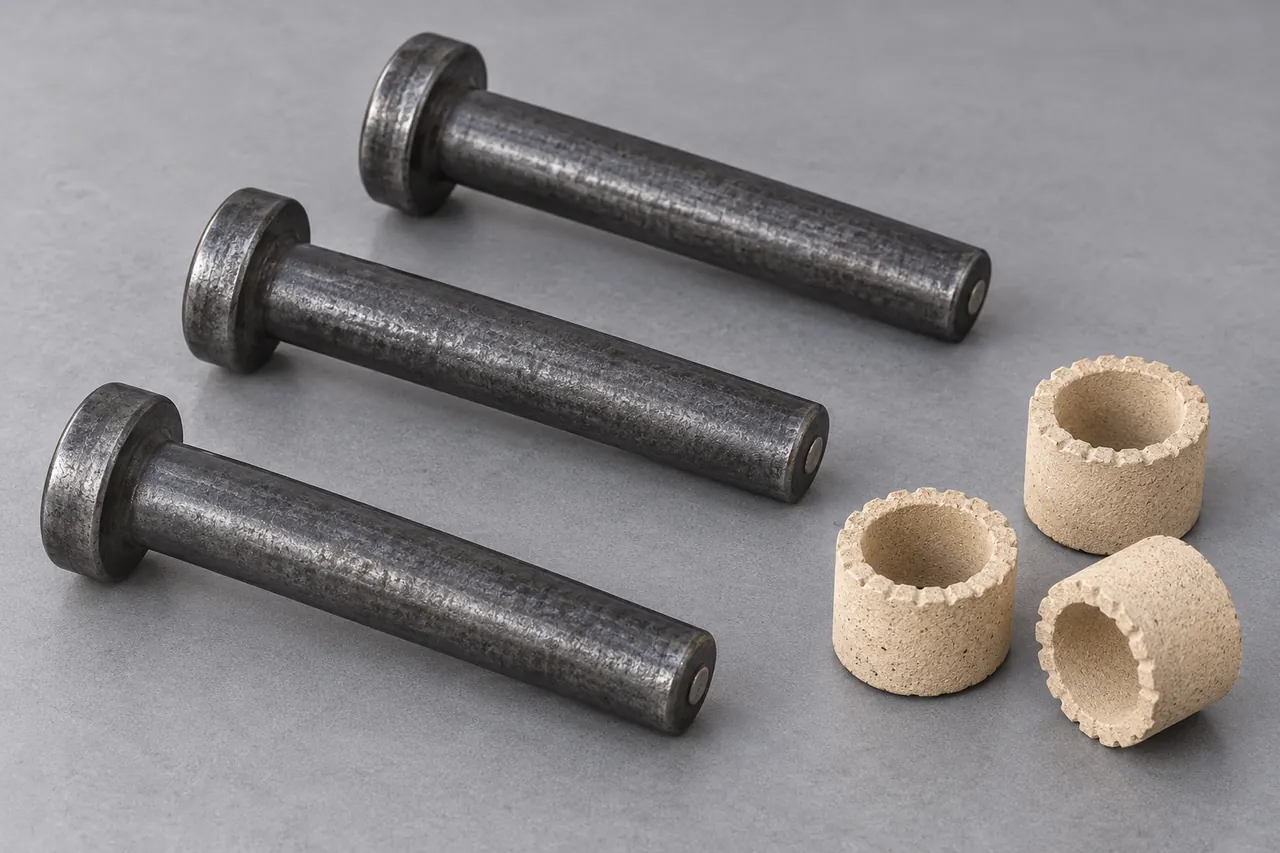
Define the connection before selecting the package
For a shear-stud order, buy the approved stud geometry and welding package for the actual steel-and-concrete detail rather than a diameter label alone. Start with the designer's shank, head and final installed height, then define base material, surface and welding route. Relia supports stud supply and selection, while stud manufacture and site welding are not confirmed as in-house. Send the connection drawing and qualification requirements so the offer can identify the real stud, compatible consumables and records before any structural performance is assumed.
- Component drawingSpecify shank, head and length convention from the current approved stud detail.
- Welding arrangementIdentify the base or deck configuration and the responsible welding provider.
- Approval packageAgree component records, matching consumables and represented joint evidence before release.
Selection context and decision detail
| Buyer requirement | Relia response | Evidence / condition |
|---|---|---|
| Designed connector input | Shear-stud supply and selection | Actual shank/head, length convention and layout |
| Compatible welding interface | Component/consumable scope review | Base/deck arrangement and qualified procedure |
| Traceable project evidence | QC records and assigned welding checks | Stud conformity separate from composite capacity |
Stud supply should separate the component from the welded connection
Assign component supply and welded-connection responsibilities separately, with records representing the selected stud.
Relia supports fastener supply and selection. Shear-stud manufacture, ceramic production and structural stud welding are not confirmed as in-house. Company incoming, in-process and final QC with corresponding batch records is confirmed; agree the actual producer and component evidence, with welding responsibility assigned separately.
Product 3914 offers cylindrical-head type, 60 mm length and M19 size wording with no thread in the technical fields. Confirm actual shank/head dimensions, material and the applicable standard rather than interpret M19 as a threaded connection or a verified 19×60 installed stud.
- Stud supplyIdentify the actual producer and records representing the selected component.
- Welded connectionAssign welding responsibility and required joint evidence separately from the stud offer.
- Actual geometryConfirm shank, head and length convention rather than inferring threads from the size label.
Stud geometry must match both welding and concrete details
Define shank, head, weld end and length convention against the drawing before assessing installed clearances.
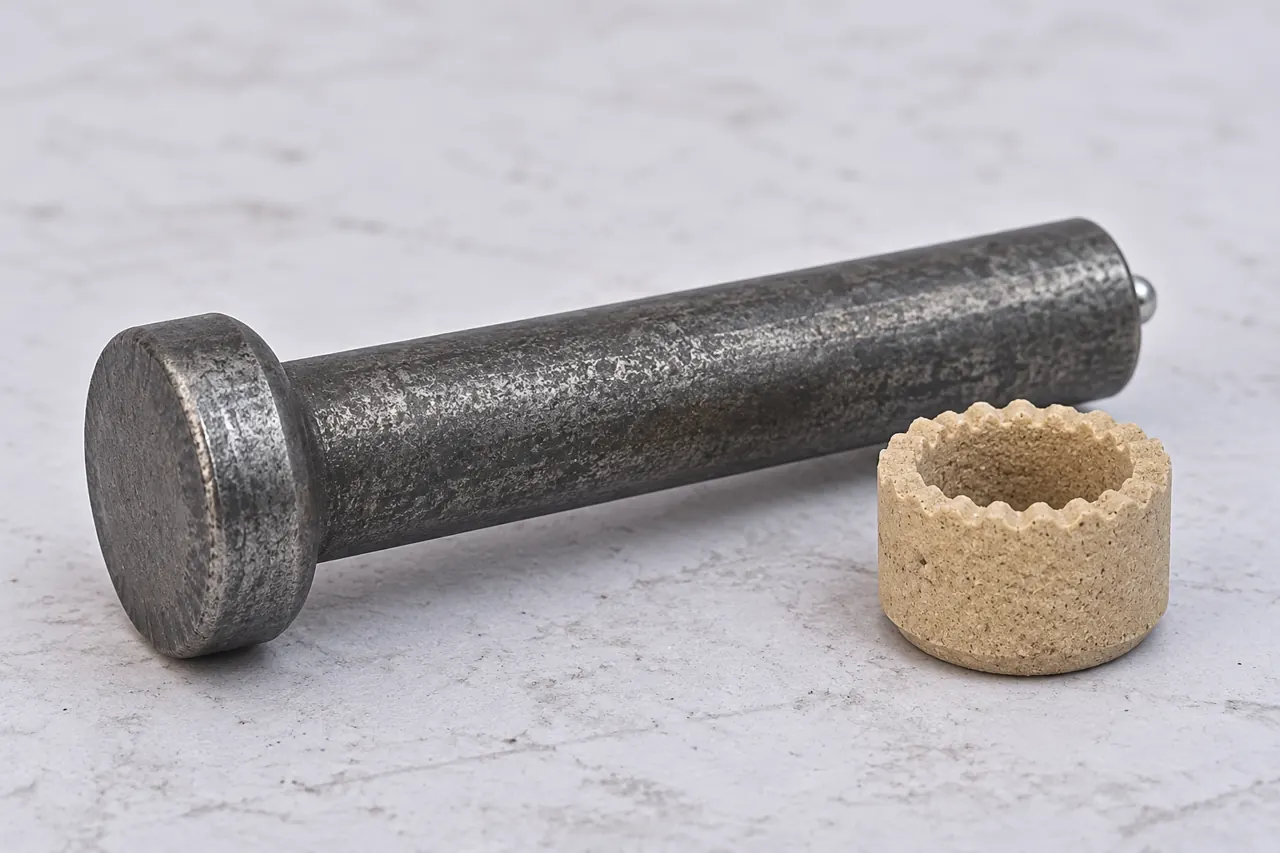
Keep supplied length and installed height distinct
Specify shank diameter, head dimensions, length convention and weld-end form using the approved drawing. Distinguish supplied length from the final installed height after welding, and preserve the designer's concrete/deck clearances and layout.
A stud that fits a box or gun chuck is not automatically the designed shear connector. Actual dimensional and material records should represent the selected component.
- Supplied geometryDefine the actual shank, head and weld-end dimensions of the delivered stud.
- Installed heightState the final height required after welding in the project detail.
- Design clearancesPreserve concrete and deck clearances and the specified layout around the connector.
Product references for your shortlist
Open the product details, then discuss the exact specification for your application.
Cylindrical-head carbon-steel shear studs
A component candidate for a drawing-based stud package with defined supplied length and welding interfaces.
Arc welding joins the stud tip to the actual base
Use the approved drawn-arc setup that represents the actual stud and base arrangement.
In a drawn-arc process, the gun lifts the stud to establish an arc between its tip and the workpiece. The mating regions melt and the stud returns into the molten zone before solidification. The qualified setup must therefore represent the stud, base and selected process.
Use the responsible welding provider's procedure and approved component orientation; product illustrations are not an assembly or operating instruction.
- PositionApproved stud and actual base arrangement
- ArcTip and base reach the qualified molten condition
- JoinControlled return into the weld zone
- VerifySpecified joint evidence and identity
Surface and deck conditions can change the welding task
Distinguish direct-to-steel from through-deck welding because preparation and joint conditions change the qualification task.
Direct-to-steel and through-deck welding are different joint arrangements. Base surface, deck condition, contact and access can affect whether the intended process produces the required joint.
Identify the actual arrangement and preparation responsibility before selecting consumables or accepting a trial. A successful bare-plate coupon does not automatically qualify every coated deck or field condition.
- Direct-to-steel jointDefine the actual base surface, access and preparation for the selected process.
- Through-deck jointReview deck condition and contact rather than extending a bare-plate trial automatically.
- Preparation responsibilityAssign the actual preparation and trial conditions before selecting consumables or accepting results.
Ferrules and gun interfaces need a compatible selection
Select ferrules, shielding and gun interfaces through the actual process documentation rather than a loose accessory image.
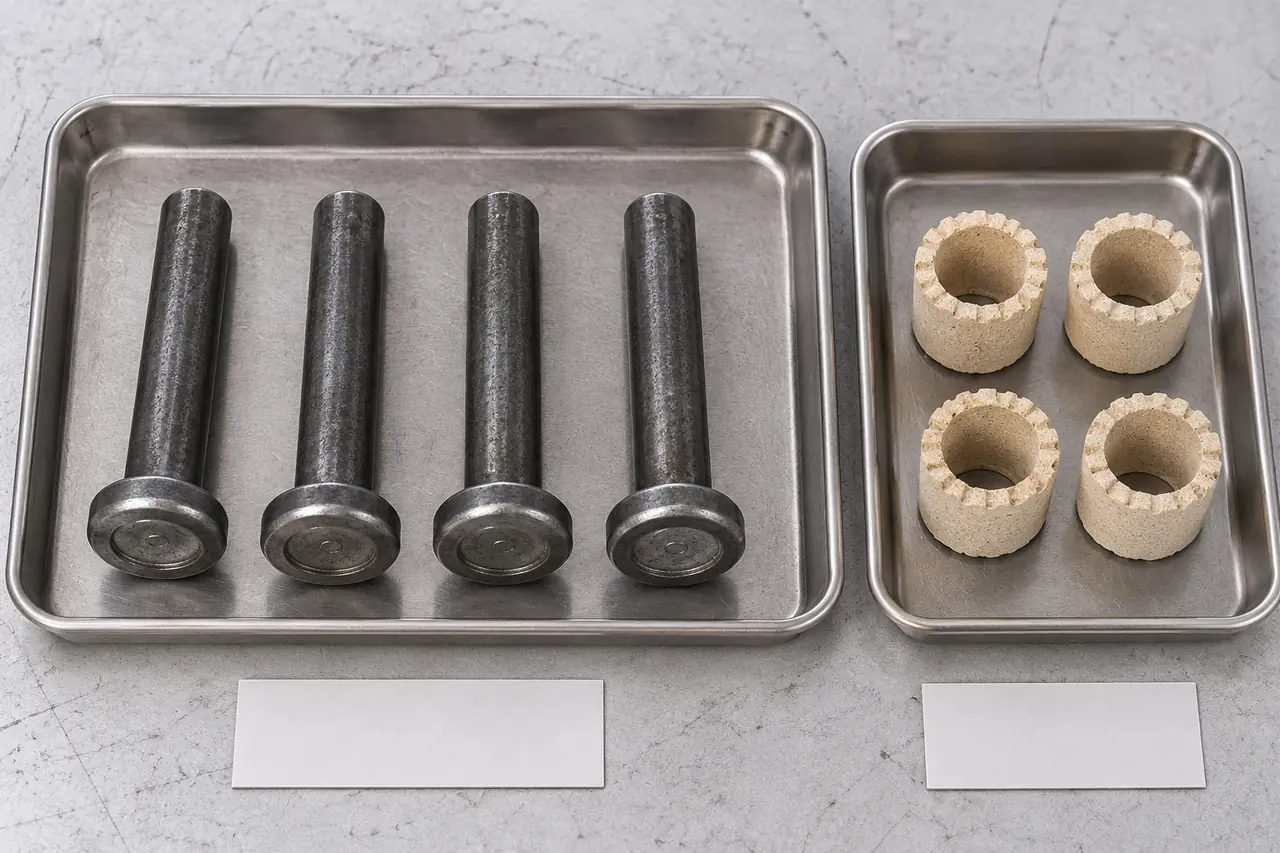
Match interfaces at the actual weld zone
Confirm required ferrule or shielding arrangement, chuck and other interfaces through the selected stud/process documentation. Ferrule form and placement belong at the actual welding zone under the approved setup, not wherever a loose ring fits.
Separate stud, consumable and equipment scope in the offer. No ceramic type or complete welding kit is implied by the presence of a ring in an illustration.
- Process consumablesIdentify the required ferrule or shielding through the selected process documentation.
- Gun interfaceCheck chuck and component compatibility against the approved equipment and stud package.
- Offer boundaryList studs, consumables and equipment separately with their assigned supply responsibilities.
Qualification should represent material and the intended joint
Qualify the intended stud, base and welding route with the responsible provider and project acceptance requirements.
Use the actual stud, base thickness/condition and selected direct or through-deck route for the required procedure or trial. Define visual and any specified mechanical or other checks with the responsible engineer/welding provider.
Retain component identity, procedure and represented results. A catalogue stud name or general QC statement cannot replace welding qualification or project acceptance.
- Actual componentsUse the selected stud and the relevant base thickness and condition.
- Welding routeRepresent the intended direct or through-deck arrangement in the procedure or trial.
- Accepted resultsRetain component identity, procedure and required checks with the responsible project review.
Composite action depends on the complete connection design
Assess composite action through the complete design rather than inferring resistance from a stud size.
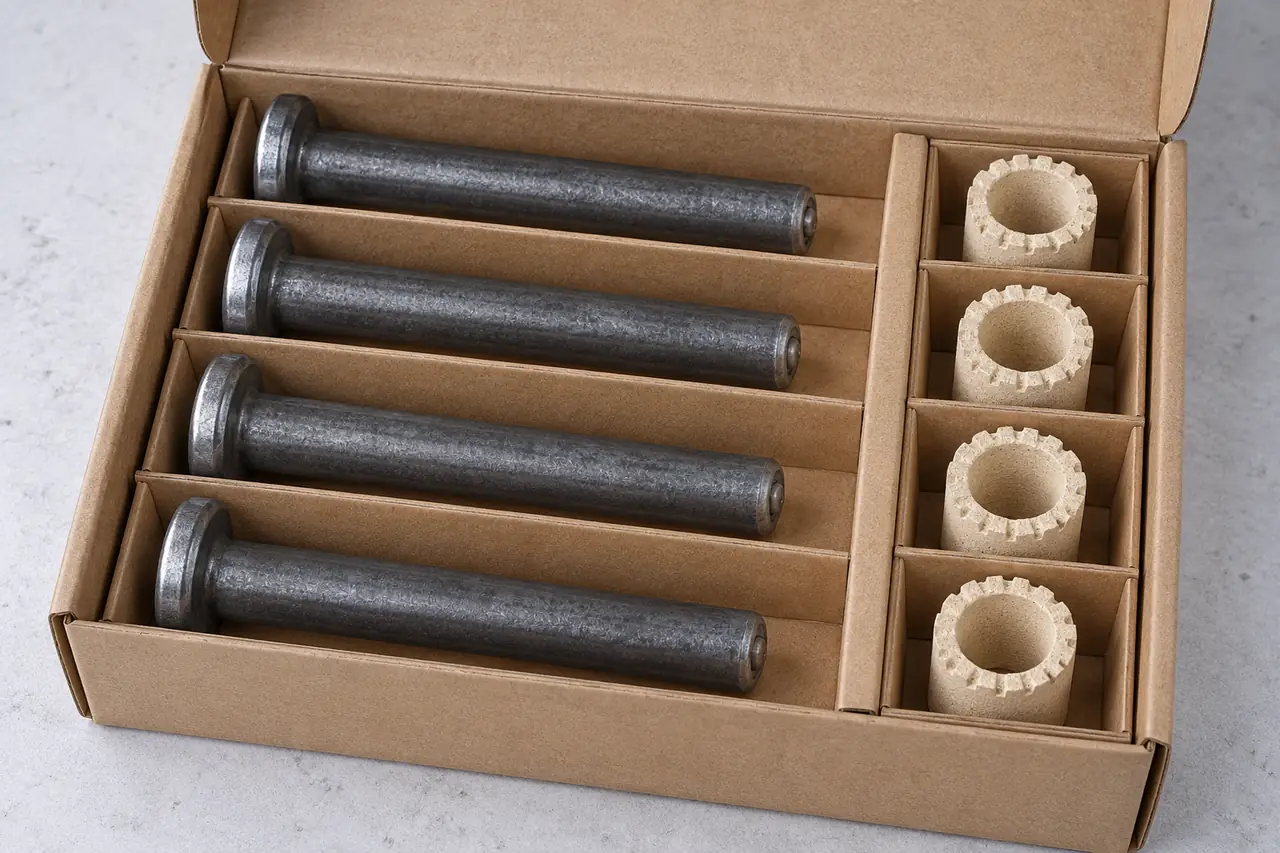
Keep three structural evidence scopes separate
Shear connectors transfer force between steel and concrete so the intended composite behavior can develop. Their design depends on the actual stud layout, concrete, steel/deck geometry and load case.
Component conformity and a sound represented weld are necessary evidence scopes but do not alone establish the whole beam's capacity. Do not infer a shear resistance from the 19×60 designation.
- Component evidenceVerify the represented stud geometry and material against the approved component requirement.
- Joint evidenceConnect welding procedure and results with the actual stud and base arrangement.
- Design assessmentRetain the designer assessment of layout, concrete and steel or deck geometry.
Receiving and repeat orders should preserve the approved package
Preserve component revision, source, consumables and qualification references through receiving and repeat orders.
Check head/shank geometry, weld-end condition, surface, quantity and package identity against the accepted component revision. Keep studs and matching consumables identifiable before site use.
Retain the producer/material records and welding-qualification reference through repeat orders. Review changes in length convention, stud source or consumable before substituting a similar-looking component.
- ApproveDrawing, material and sample evidence
- ReviseIdentify changed dimensions or requirements
- RepeatOrder against the accepted revision
Prepare the stud and joint schedule
Send the geometry, base or deck details and required evidence to define the project supply package.
Share the approved stud detail and the base or deck arrangement. We can review the component supply package while the responsible project team defines welding and structural acceptance.
Qingdao Relia Industries Co., Ltd.
Contact address: Shuyuan Road, Qingdao, Shandong, China
- Stud drawing and length convention
- Installed height and layout requirements
- Base steel and deck arrangement
- Consumables and welding evidence
- Component quantity and packing
Enquiry scope and supporting detail
Send the approved shank/head drawing, length convention and installed-height requirement with base/deck details and stud layout. Include material/surface criteria, required consumables and procedure/project evidence. We can then define the actual stud supply and assigned welding interface, with quantity, packaging and commercial conditions tied to that package.
- StudDrawing, dimensions, material and quantity
- ProjectWelding-related approval and inspection needs
- ScopeAccessories, records, packing and destination