

Steel Plate Supply with Drawing-Based Blank Cutting
Buy plate blanks as material and usable geometry together. Select the grade, supplied condition and parent thickness, then define the cut shape, edges and allowance needed by your next operation. This guide helps you choose the acceptance point, qualify a representative blank and preserve material identity when the original plate is divided.
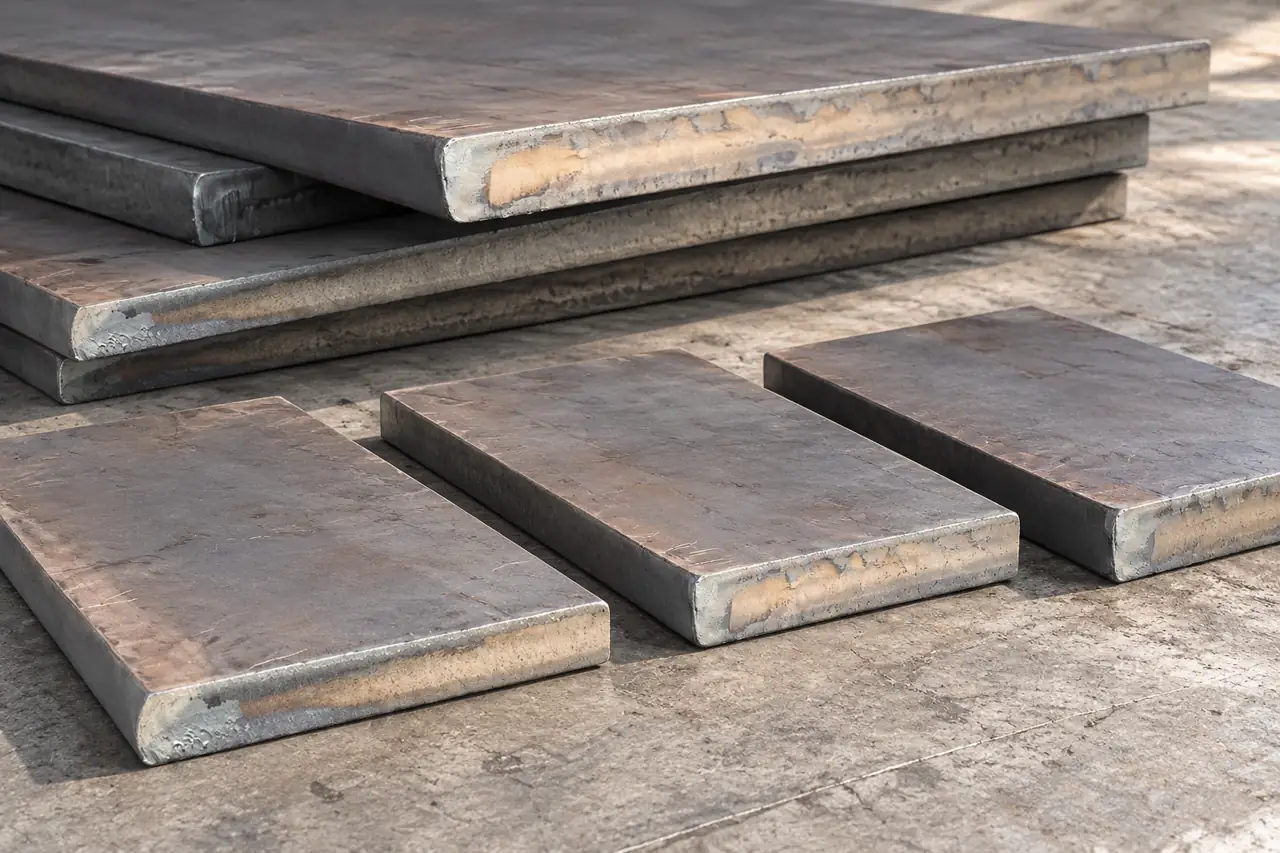
Define the material and usable blank
For fabricators buying plate blanks, order the material and the usable cut shape as two connected acceptance decisions. Relia manufactures steel plate and can review a drawing-based supply enquiry; the selected cutting route and provider must be confirmed rather than inferred from a catalogue service list. Start with one grade, delivery condition and parent thickness, then define blank dimensions, edge requirements and any machining allowance. Send the drawing revision and next operation so the offer can identify what is supplied, what is inspected after cutting and how each blank retains its material identity.
- Parent materialSelect one grade, delivery condition and thickness for the plate being divided.
- Finished blankState dimensions, edge condition and allowance for the intended next operation.
- Release evidenceIdentify the material and processed geometry records required before the blank is accepted.
Selection context and decision detail
| Buyer requirement | Relia response | Evidence or condition |
|---|---|---|
| Plate matched to the fabrication | In-house plate supply reviewed against the schedule | One selected grade, condition and actual size |
| Usable cut blanks | Cutting and edge scope confirmed in the offer | Provider, drawing revision and post-cut acceptance |
| Traceable release | Batch inspection records can be provided | Connect parent material with blank identity |
Define the parent plate and the blank separately
Define the parent grade and condition separately from additional cutting responsibility and finished blank acceptance.
Relia performs steel plate and coil rolling in-house for the selected product. Incoming, in-process and final inspections are performed, with corresponding batch records available. Cutting, bending or other additional work needs an order-specific responsibility and inspection scope.
The A36/Q235 plate listing offers four thickness bands from 0.2–300 mm while its detail also states 4–200 mm. Those are enquiry references, not a verified size matrix. Select one actual grade and condition; A36 and Q235 are not interchangeable merely because both occur in a title.
- Parent materialSelected standard, grade, thickness and delivery condition
- Cut blankControlled outline, dimensions and allowance
- Processing scopeActual cutting provider and included edge preparation
Use the next operation to set blank allowance
Use machining, welding or another next operation to decide the blank dimensions and allowance.
A machining blank needs sufficient material around the finished profile and a datum strategy; an as-cut weldment part may instead need its final outline and joint preparation. State which dimensions are blank dimensions and which belong to a later operation. Keep holes, bevels and corner details explicit. A thick plate with the correct outside rectangle can still be unusable if the drawing expected finished holes or an edge ready for welding.
- Drawing revisionApproved outline, units and datum references
- AllowanceMachining stock or finished as-cut dimension
- Additional featuresHoles, bevels and edge preparation included or excluded
- Release stateCondition in which the buyer receives the blank
Product references for your shortlist
Open the product details, then discuss the exact specification for your application.
Hot rolled plate for cut blanks
A candidate parent stock for drawing based blanks where exact material identity and postcut geometry both need acceptance.
The cutting route changes the edge and local condition
Select cutting with the edge and local material condition needed for later fabrication.
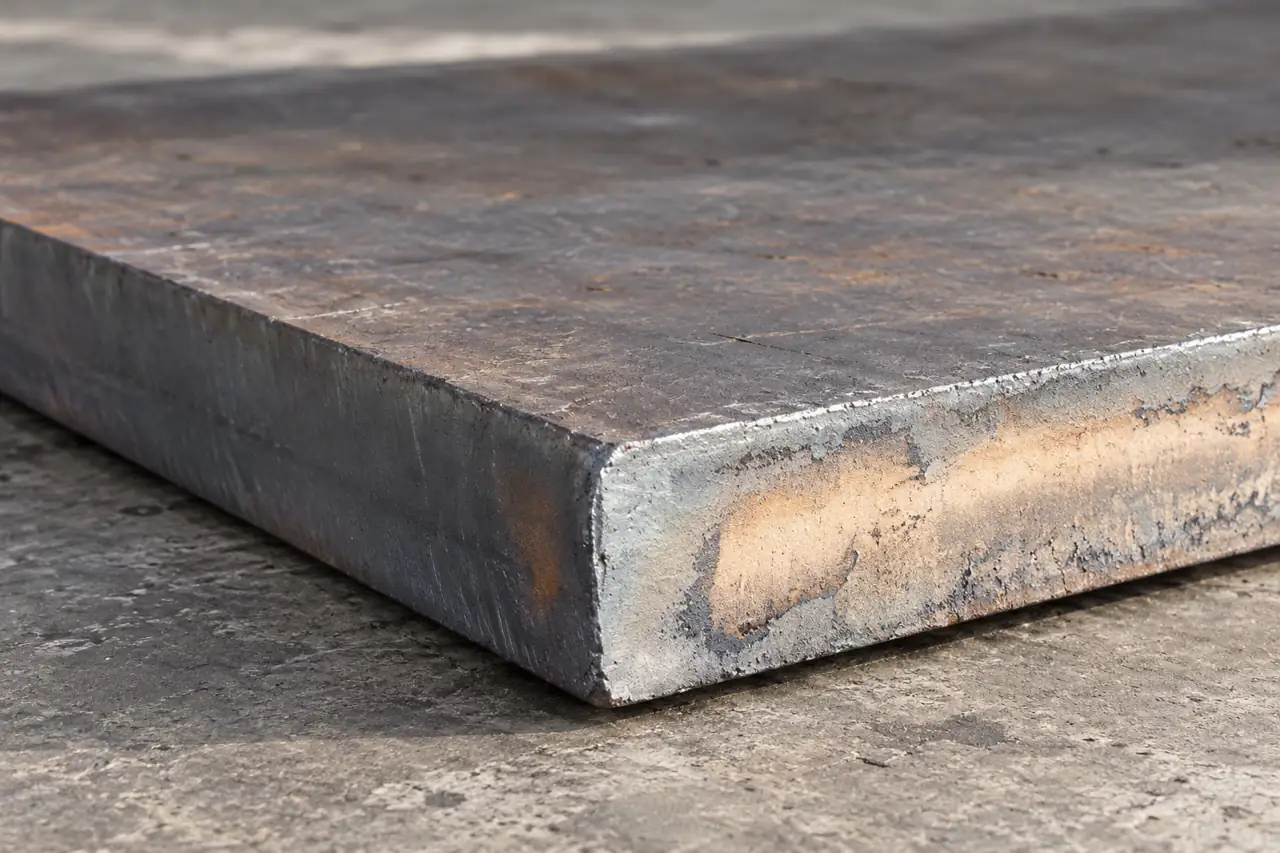
Choose cutting around the edge duty
Thermal cutting heats the edge region and can create a heat-affected zone; the resulting local condition depends on the steel and process. Mechanical separation produces a different deformation and burr pattern. Neither route is universally acceptable simply because the overall size passes.
Choose the route with the intended machining, welding or loaded-edge duty in mind. Specify relevant edge geometry, adherent residue, cracks or local-condition evidence without inventing a universal heat-affected depth or treatment. Generic cutting guidance does not establish Relia ownership of a particular cutter.
- Thermal separationConsider the local heated condition and required edge acceptance for later machining or welding.
- Mechanical separationConsider deformation and burr requirements alongside the finished size of the blank.
- Specified restrictionsKeep the permitted route and any required local condition evidence explicit in the offer.
Measure the released blank with agreed datums
Check the released blank and support condition instead of relying only on parent plate dimensions.
Define thickness, length, width, diagonals, edge squareness and flatness as applicable to the drawing. State where readings are taken and the support condition. Separation can release or redistribute residual stress, so inspect the actual blank after the relevant operation rather than relying solely on the parent-plate report. If a later machining sequence is sensitive to movement, qualify that sequence on representative material instead of treating initial flatness as a guarantee against distortion.
- LocateUse the approved datum and measurement orientation
- MeasureCheck cut geometry and agreed flatness setup
- Assess edgeApply the selected surface and local-condition criteria
- IdentifyRetain blank and parent-material references
Approve a first blank that represents production
Use a representative first blank to qualify geometry, edge and the intended downstream operation.
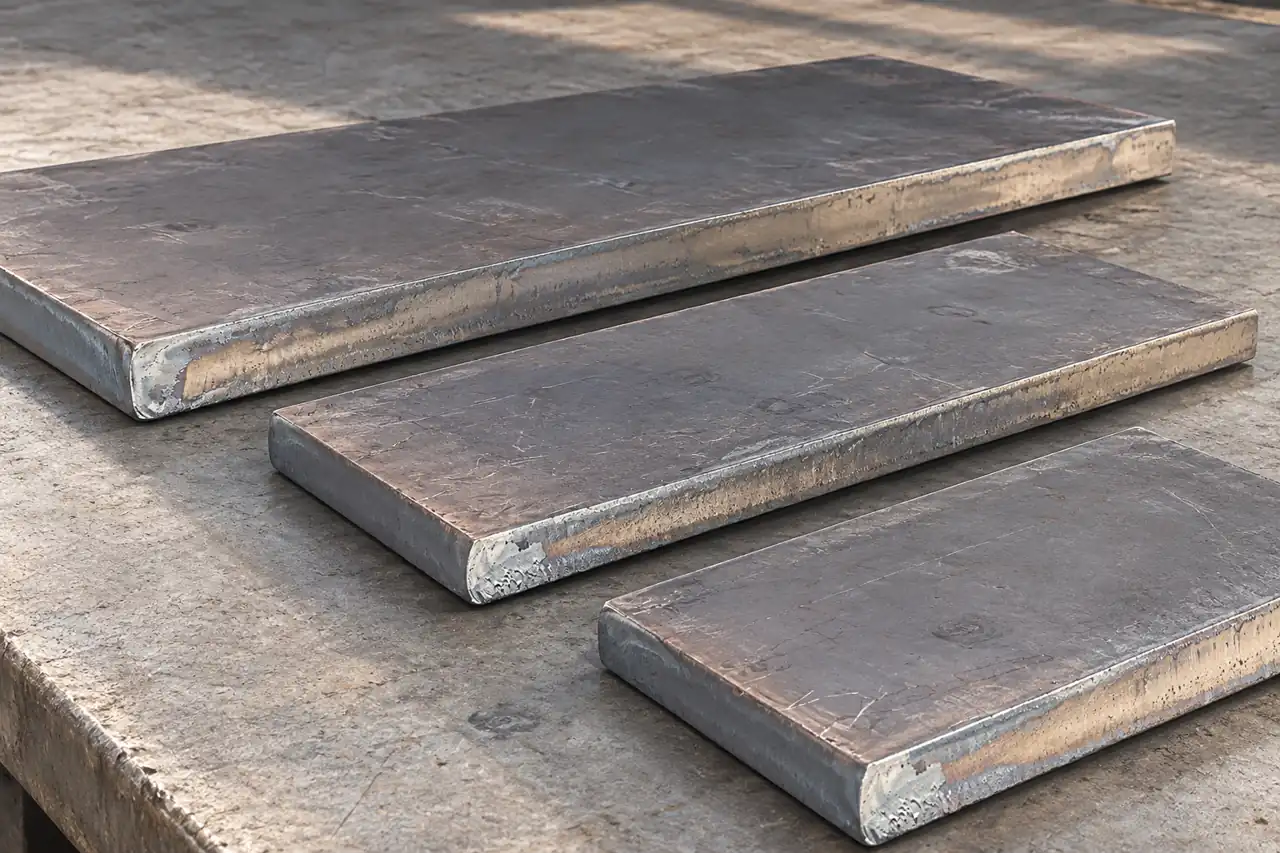
Approve a representative first blank
Select a representative grade, thickness, geometry and processing route for the first article. Retain the drawing revision with dimensional readings, edge observations and the intended fit or machining check. A small rectangular offcut cannot validate a long narrow blank susceptible to movement. Record any accepted deviation and its scope so the approval does not quietly change the full batch or unrelated drawing positions.
- Select representative stockUse the ordered material, thickness and shape that represent the difficult production features.
- Inspect after processingRetain dimensional readings and edge observations with the controlled drawing and route.
- Confirm downstream fitUse the intended machining or assembly check and document any accepted deviation.
Transfer material identity when the plate is divided
Retain the parent material connection when cutting separates pieces and original identifying marks.
The parent heat or plate record is useful only if delivered blanks can be connected with it. Agree the marking transfer or pack-level identification appropriate to the blank size and surface. Keep the cutting list, parent material reference and blank quantity together, and identify any mixed heats explicitly. Chemistry and tensile records describe represented material; they do not establish the finished blank's dimensions, hole positions or edge condition.
- ParentHeat/plate identity and applicable material evidence
- DivisionCutting list and quantity reconciliation
- BlankAgreed piece or pack reference
- AcceptancePost-cut geometry and disposition record
Support the stack without concealing the supplied condition
Support the actual blank geometry and keep material and drawing positions distinguishable in the stack.
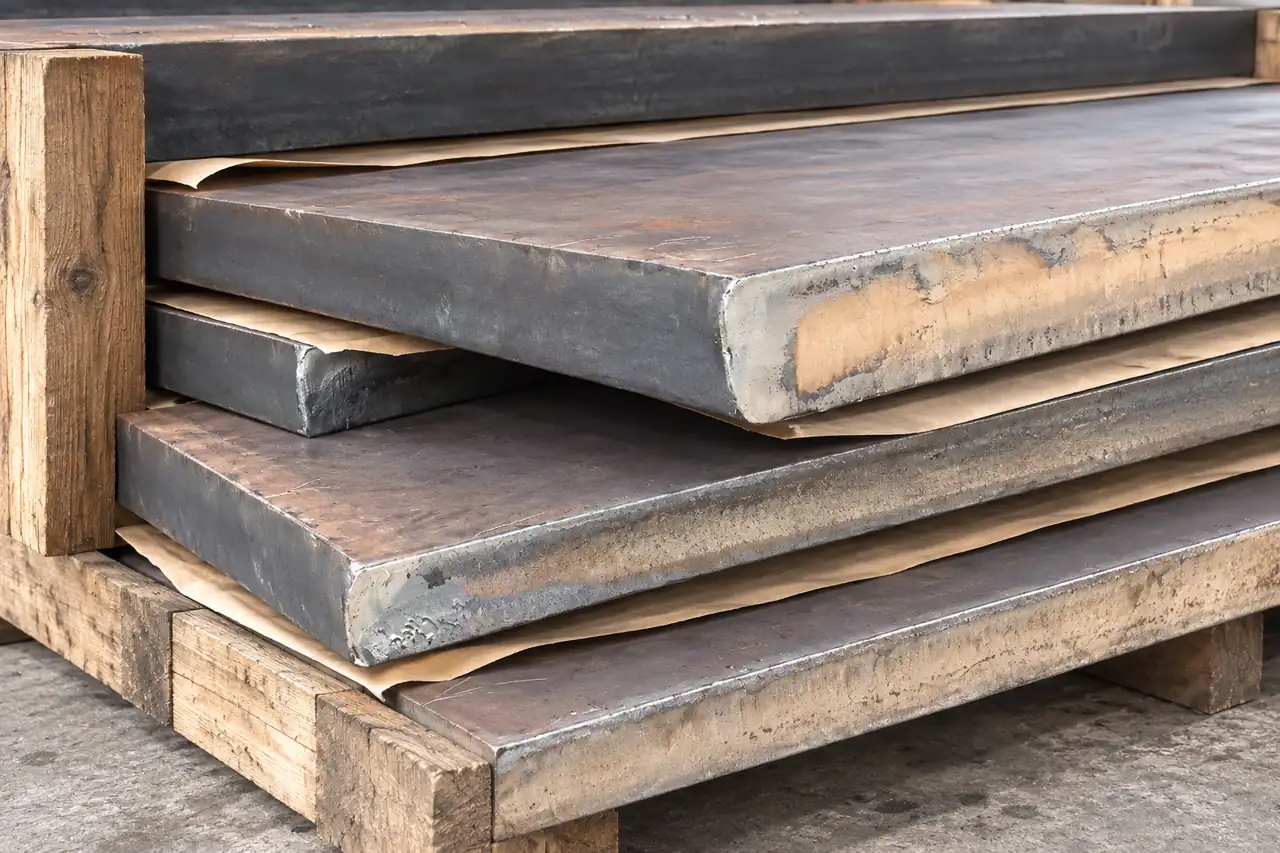
Preserve the blank through handling
Agree bundle mass, lifting access, support and separation around the actual blank geometry. Small blanks may need controlled packs, while long or heavy pieces need support that limits handling damage. Protect edges and keep grade, thickness and drawing positions distinguishable. Photograph receiving damage before pieces are mixed or processed; the illustration on this page shows a packing idea, not a verified load-bearing package or a completed shipment.
- Stack and supportMatch lifting access and support to the actual shape, length and mass.
- Protect the edgesAgree protection and separation that preserve the accepted surface and vulnerable details.
- Keep item identityDistinguish grade, thickness and drawing position before receipt or further processing.
Compare the complete usable-blank scope
Compare the same usable blank scope, mass basis and responsibility before accepting the total price.
Separate the price basis for material, cutting, edge preparation, inspection, remnants and packing. Confirm whether mass is theoretical parent stock, actual input or accepted output. If a blank fails, preserve its orientation, parent reference, measurements and the affected edge before rework. Agree examination and disposition rather than assuming scrap ownership, free replacement or a fixed claim remedy. Delivery and sample terms require the current quotation.
- Included blank workCompare material, cutting, edge preparation, inspection and packing against the same blank revision.
- Mass definitionDistinguish theoretical parent stock, actual input and accepted output when comparing the price basis.
- Remnant ownershipAgree the treatment and ownership of remnants and rejected blanks within the quoted scope.
- Discrepancy evidenceRetain orientation, parent reference, readings and the affected edge before examination or rework.
Send the parent material and blank drawing
Send material and processed blank requirements together so the offer identifies the complete deliverable.
Show us the drawing and the operation that follows cutting. We can review the material candidate and clarify the processed dimensions, evidence and responsibilities in the offer.
Qingdao Relia Industries Co., Ltd.
Contact address: Shuyuan Road, Qingdao, Shandong, China
- Selected grade condition and parent thickness
- Blank drawing revision and quantities
- Machining allowance and route restrictions
- Edge flatness and dimensional limits
- Material records and packing requirements
Enquiry scope and supporting detail
Send the selected standard and grade, delivery condition, parent thickness, drawing revision, blank quantities and destination. Add machining allowance, cutting-route restrictions, edge and flatness criteria, required records and packing limits. Relia can review the material candidate and clarify the proposed processing responsibility. The final offer should state one coherent deliverable and the acceptance evidence required before release.
- MaterialStandard, grade, condition and parent thickness
- BlankDrawing revision, allowance, geometry and edges
- SupplyProcessor, records, quantities and packing