

Stainless Cable Supply for Outdoor Railing Projects
For outdoor railings, select stainless cable together with its terminals, lengths and supporting structure. This guide helps you define the rope construction, exposure and length datum, then separate bare-cable evidence from assembly and installed-system approval. Use it to prepare a supply brief that matches the engineered railing and the installer’s actual adjustment needs.
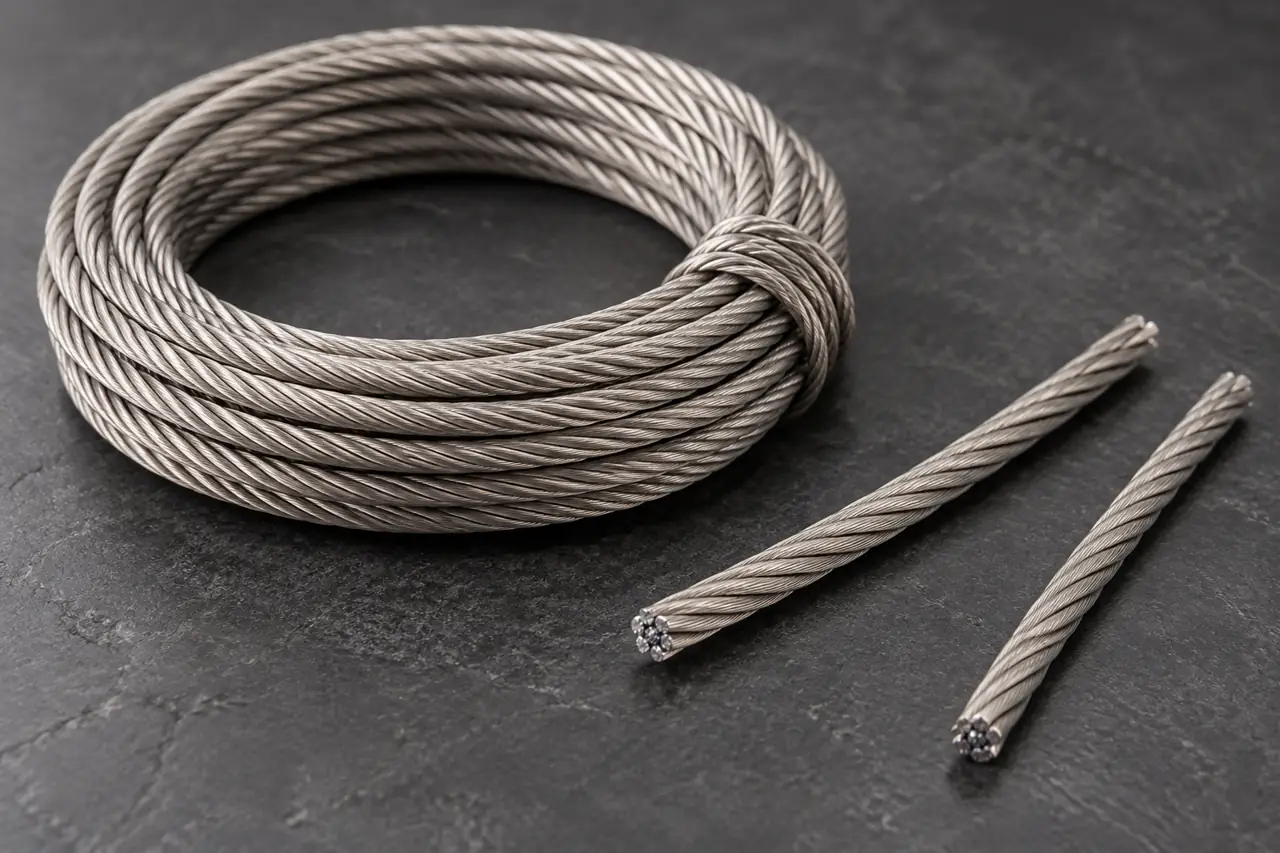
Define cable within the railing system
For an outdoor railing project, specify stainless cable as part of the engineered guard system: alloy, rope construction, diameter, terminals, length and support layout must work together. Select the cable and fittings against the project's structural and exposure requirements rather than a construction-use catalogue label. Relia supplies the listed stainless-rope enquiry and can discuss its actual configuration and evidence. Start with the railing drawing, environment, terminal arrangement and required assembly acceptance. A rope breaking-force record cannot establish the installed guard's load performance, opening compliance or corrosion life; the responsible design team controls those requirements.
- Cable specificationSelect alloy, construction and diameter from the engineered railing requirement and exposure.
- Terminal interfaceIdentify compatible end fittings and the length datum used for the assembly.
- Installed systemKeep post, anchor and installation requirements tied to the project design.
Selection context and decision detail
| Buyer requirement | Relia response | Evidence or condition |
|---|---|---|
| Engineered railing cable | Discuss the listed stainless-rope supply | Alloy, construction, fittings and layout must be defined |
| Supply responsibility | Core-wire manufacture is confirmed | Rope closing and terminal assembly allocated separately |
| Acceptance evidence | Corresponding batch records can be provided | Rope, assembly and installed-system decisions remain distinct |
Rope supply is separate from core-wire manufacture
Identify rope and terminal supply responsibilities separately from the confirmed core-wire manufacturing operations and their batch records.
Relia manufactures steel wire with drawing, annealing and galvanizing in-house. Its confirmed quality stages include incoming, process and final inspection, with corresponding batch records available. Finished rope adds stranding, closing and, if ordered, terminal assembly; those operations are not confirmed as in-house from the wire scope.
The selected cable offer should identify the actual rope producer, alloy, construction, finish and assembly responsibilities. Agree the relevant records and any additional assembly evidence instead of treating general wire manufacturing as a complete railing-system qualification.
- WireConfirmed own core operations
- RopeActual producer, stranding and closing
- AssemblyFittings, tests and responsible provider
The diameter menu does not define the cable construction
Define one alloy and cable construction because a diameter option cannot establish wire arrangement or assembly behavior.
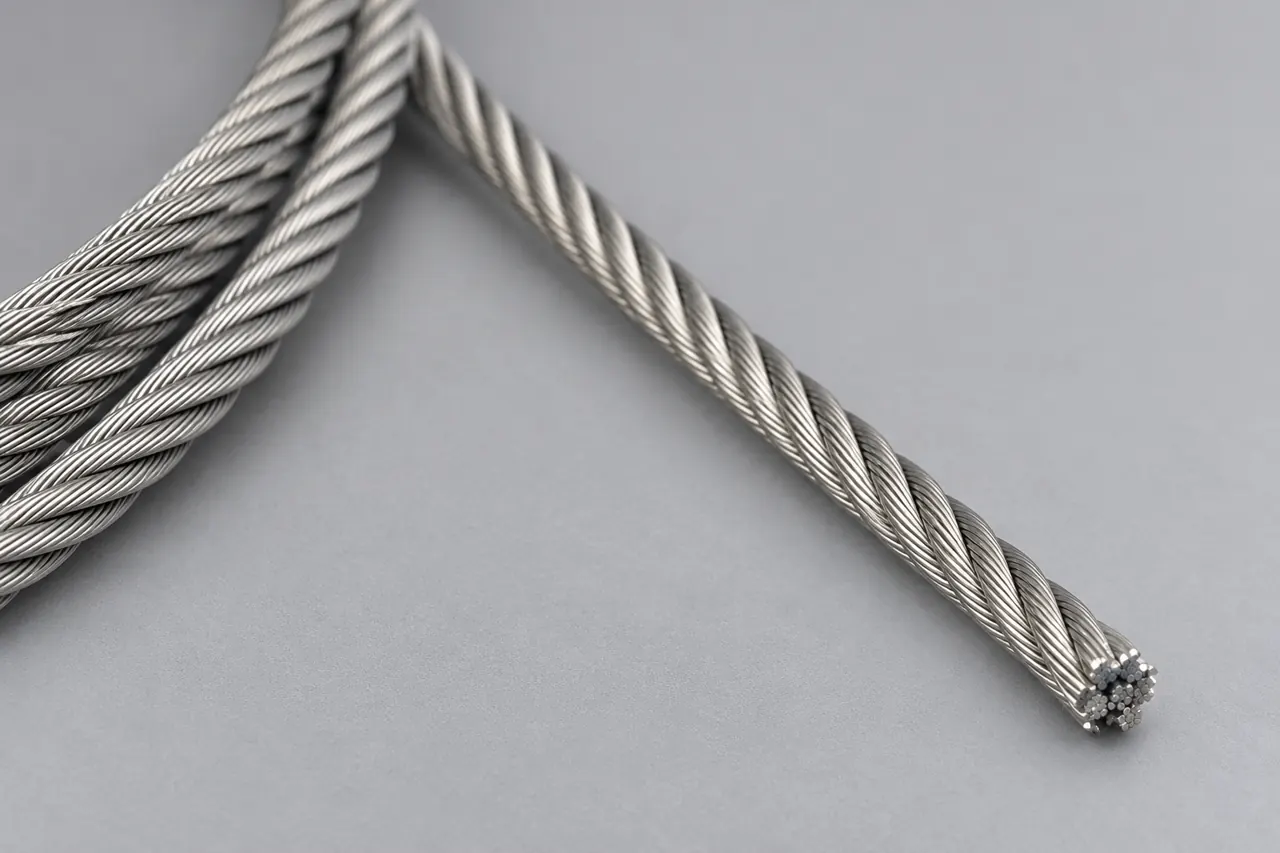
Describe more than the cable diameter
The stainless-rope listing has eighteen diameter options from 1 to 50 mm. Title requests such as 0.8 or 4 mm are not automatically actual choices. Its broad material and black-painting fields also require reconciliation with a selected stainless cable.
Name the exact alloy, strand construction, core if applicable, lay, surface and diameter basis. A same-diameter rope can have different wire arrangement and response. The listing provides no configuration-specific assembly working load or approved outdoor corrosion classification.
- Alloy and surfaceName the actual stainless designation and condition selected for outdoor exposure.
- Rope constructionSpecify wire arrangement, lay and any core instead of inferring them from size.
- Dimensional basisAgree diameter measurement and the end condition for the cable being offered.
Product references for your shortlist
Open the product details, then discuss the exact specification for your application.
Stainless railing-cable enquiry
A supply reference for a defined stainless rope configuration, cut length and terminal scope within an engineered outdoor railing project.
Cable tension transfers load into fittings and supports
Keep cable, terminal and support acceptance distinct while following the design’s installation tension and deflection requirements.
A railing cable's tension is carried through its terminals into posts and anchors. Geometry, cable sag and installation tension affect that load path; the strength of bare rope alone cannot qualify a terminal or post. More tension is not a universal way to improve a guard.
Use the engineered system design for layout, permissible deflection and installation requirements. Specify terminal compatibility and any required assembly tests for the actual cable construction. Keep bare-rope, completed-assembly and installed-system evidence distinct.
- CableSelected construction and strength basis
- TerminalCompatible attachment and assembly evidence
- SupportPosts and anchors under the design
- SystemProject-controlled load and deflection acceptance
Construction and length control affect installation behavior
Use an explicit bare or fitting datum for lengths, with usable adjustment and end preparation defined.
Wire arrangement influences flexibility and how the cable responds at a terminal or bend. A cut length also needs a datum: bare cable, fitting-to-fitting or installed adjustment range describe different dimensions. A nominal overall length without terminal details can leave no usable adjustment.
Record construction, diameter measurement basis and end preparation with the order drawing. Confirm how cut ends are controlled and protected. The illustrated cable strands identify a rope form; they do not prove a particular construction standard or accepted terminal attachment.
- ConstructionWire arrangement, core and lay
- DiameterNamed measurement basis
- LengthBare or fitting datum and adjustment
- End conditionPreparation and protection
Outdoor exposure needs an alloy and detailing decision
Choose alloy and detailing for actual moisture, chlorides and cleaning conditions, controlling contamination at cuts and fittings.
Stainless performance depends on the actual chloride, moisture and cleaning environment. Crevices and trapped deposits can create local conditions different from an open washed surface. A bright finish or stainless name is not a universal maintenance-free claim.
The design team should choose the alloy and cleaning/detailing requirements for the location. Keep incompatible contamination out of handling, and define the condition supplied at cut ends and fittings. Any corrosion assessment or certificate must describe the selected material rather than a broad grade family.
- ExposureChlorides, moisture and cleaning
- DetailingCrevices and deposit traps
- MaterialSelected alloy and surface
- EvidenceApplicable project assessment
Mock-up review includes more than appearance
Review the representative cable and terminal combination against required assembly behavior rather than a visually straight appearance.
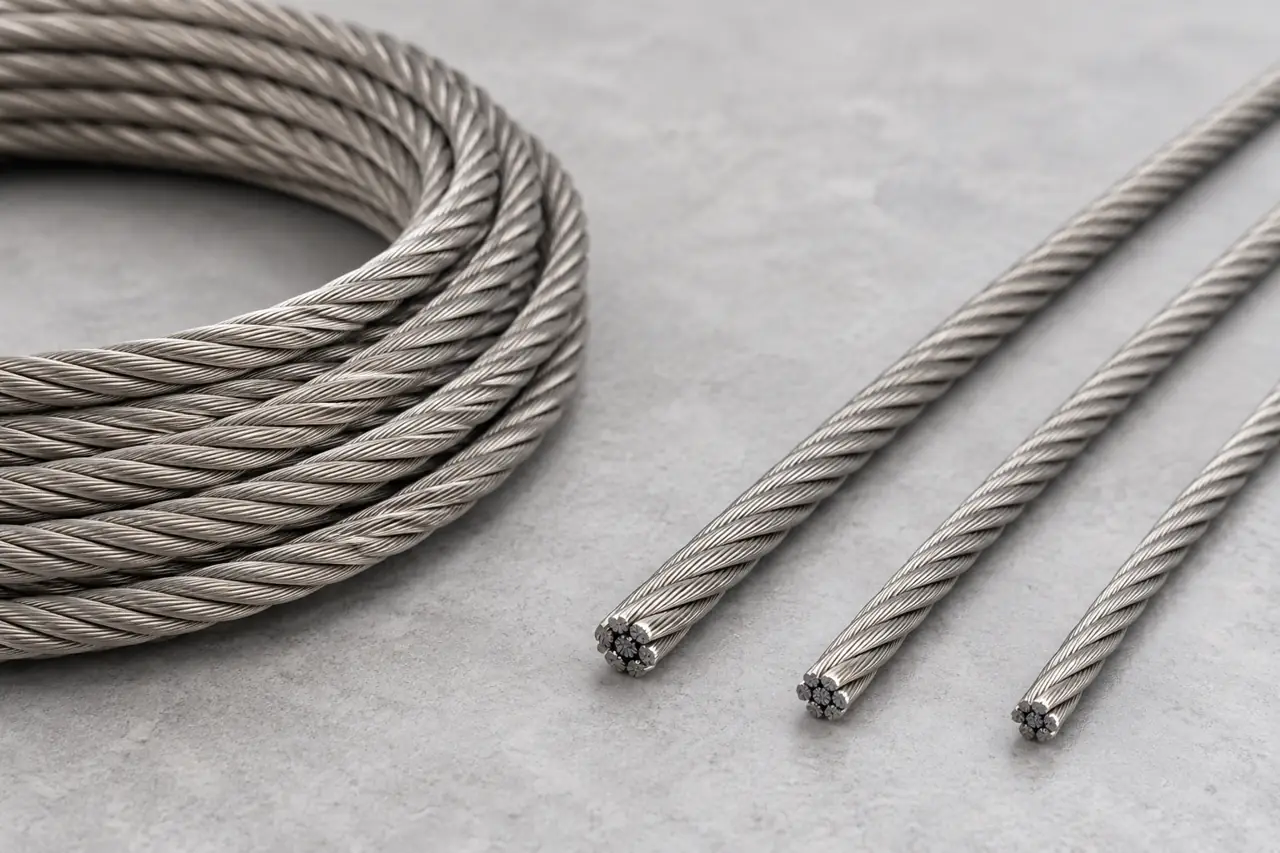
Review the representative assembly under its project scope
Use the defined cable and terminal combination in a representative assembly where required by the project. Assess length adjustment, alignment, termination evidence and the specified system behavior through the approved procedure. Do not infer a building-code or structural result from a visually straight cable.
The coiled rope and loose lengths are AI-assisted material illustrations, not a tested railing assembly. Request the actual material and configuration records before the project releases the selected supply.
- Actual combinationUse the defined cable and terminals rather than substituting visually similar loose material.
- Installation fitCheck alignment, length adjustment and the intended terminal interface in the assembly.
- Required behaviorAssess the project’s specified results through the approved procedure and responsible design review.
Packing must preserve identity through cutting and installation
Preserve rope construction, alloy and lot identity through project cutting, packing and installation handling.
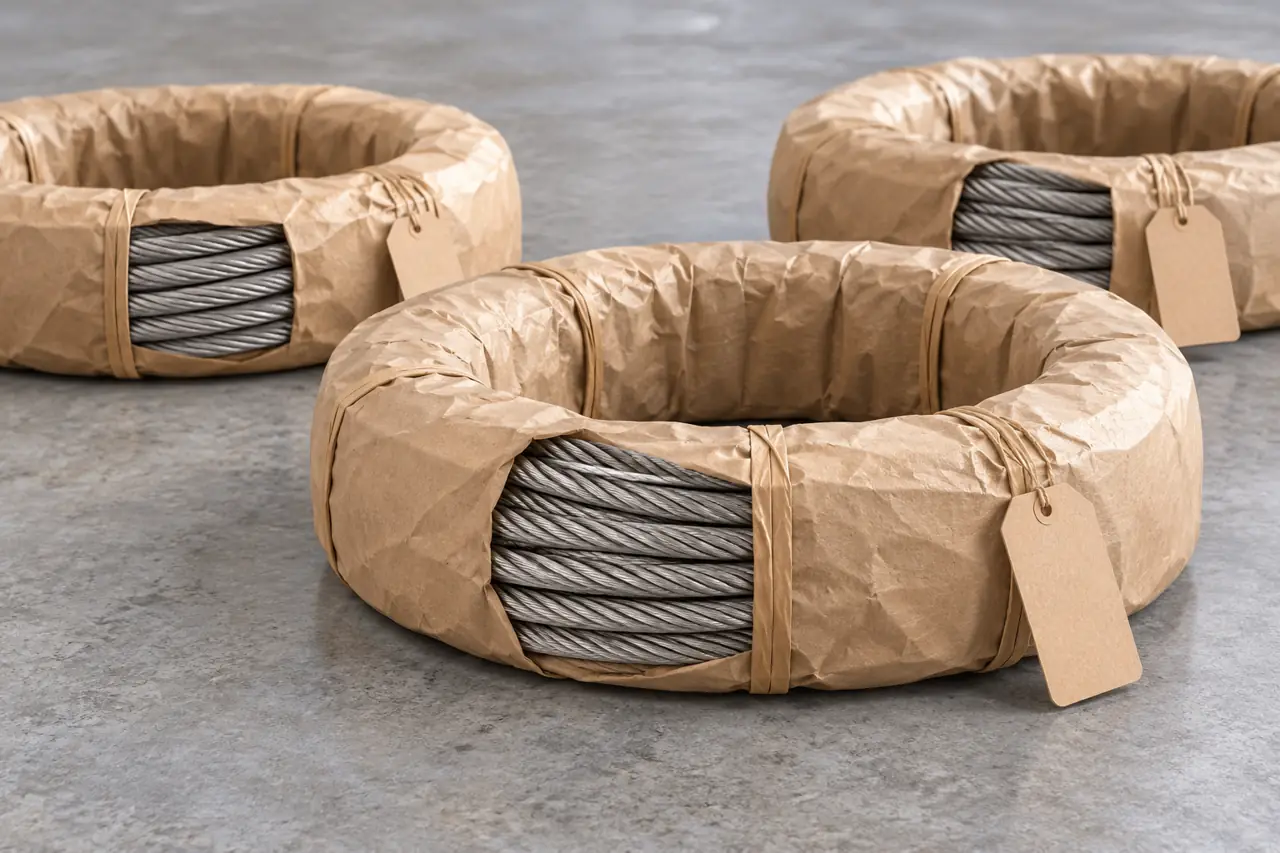
Keep cable identity through cutting and installation
Keep rope construction, alloy, diameter and reel/lot identity linked when material is cut into project lengths. Protect against kinks, surface damage and cross-contamination, and use the selected supplier's handling instructions. An unidentified short offcut is a weak reference for a later assembly issue.
The wrapped coils and blank tags shown do not establish a shipment or custom-marking service. Agree length identification, protection and terminal packing for the actual offer and the installer's receiving method.
- Length referenceConnect project lengths with the original rope construction, alloy and reel or lot.
- Handling protectionAvoid kinks, surface damage and contamination using the selected supplier’s handling instructions.
- Terminal packageAgree end protection and fitting identification for the installer’s actual receiving and assembly method.
Changes require system-aware review
Have the responsible engineer review substitutions that alter construction, alloy or terminal interaction even when diameter matches.
A substitute cable with the same diameter may change construction, alloy, terminal interaction or installed behavior. Retain the approved product and drawing revision and have the responsible engineer review changes before installation.
For a fault, retain the affected cable/terminal, location and installation record with the supplied lot. Separate material identity, fitting condition, post/anchor design and environmental effects so a remedy addresses the relevant load or corrosion mechanism.
- Approved systemCable/terminal drawing and scope
- Proposed changeAlloy, construction, ends or length
- Engineering reviewAffected acceptance and evidence
- ReleaseControlled project revision
Define the cable and terminal scope
Send the engineered layout, terminal scope and length schedule to define the actual cable configuration and evidence.
Share the engineered railing layout and length schedule so we can discuss the supplied cable configuration, end scope and records needed for the project review.
Qingdao Relia Industries Co., Ltd.
Contact address: Shuyuan Road, Qingdao, Shandong, China
- Engineered layout and exposure conditions
- Alloy construction and cable diameter
- Terminal details and length datum
- Adjustment and installation requirements
- Quantities and required assembly evidence
Enquiry scope and supporting detail
Send the engineered layout, cable alloy/construction/diameter, lengths and terminal drawing or reference. Include the exposure, installation/adjustment requirements and specified rope, assembly and system evidence. State whether the request is bare rope or a defined end assembly.
Add quantity, project identification, packing and destination. We can discuss the supplied cable configuration and responsible parties; samples, additional testing and commercial schedule must be confirmed for that actual project scope.
- CableAlloy, construction, diameter and length schedule
- ScopeRaw cable, cut lengths and listed fittings
- ProjectDrawing revision, records and destination