

Stainless Blasting Media for Contamination-Sensitive Parts
Our abrasive catalogue includes stainless steel shot and stainless cut-wire media for industrial finishing enquiries. For a contamination-sensitive part, choose the alloy and particle condition alongside the equipment and acceptance requirements. Stainless media can be part of the selection, but it does not remove contamination already present elsewhere in the process.
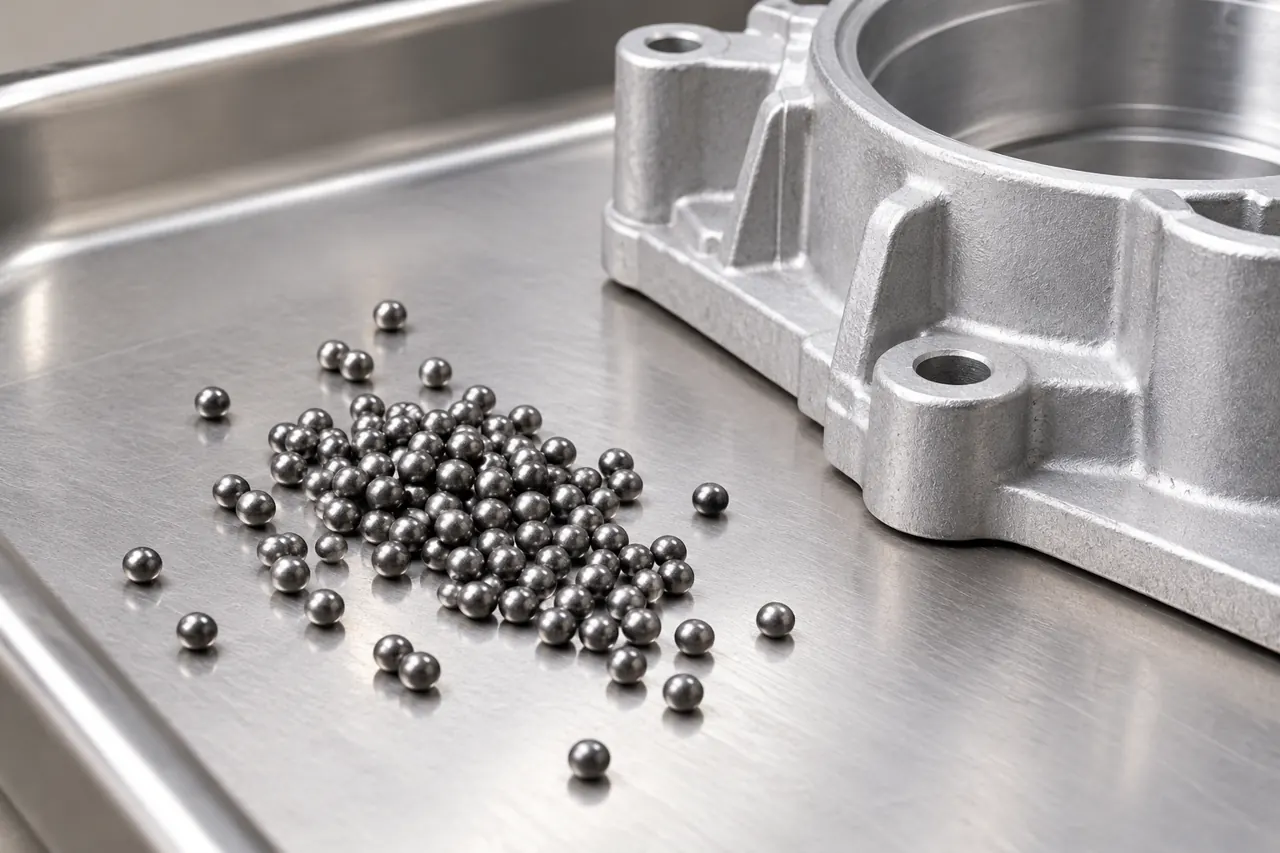
The workpiece defines the contamination limit
Tell us the substrate, the next manufacturing step and the surface checks your customer requires. An aluminum casting, stainless component and decorative part may have different restrictions. We can discuss a media candidate around that requirement while keeping appearance, cleanliness and material acceptance as separate decisions.
Alloy identity and particle form stay distinct
Stainless describes a material family, not one universal composition. Rounded shot and cut-wire particles also have different forms. State the required alloy or chemistry basis, nominal size and particle condition separately. For cut-wire media, identify as-cut or conditioned material rather than assuming the two are interchangeable.
Separate handling supports a cleaner comparison
Keep the candidate material identified through sampling, storage and loading. Review previous media, containers and the machine's condition before the trial. We can discuss the supplied media and packing, while your process team controls the equipment and handling conditions that also influence contamination.
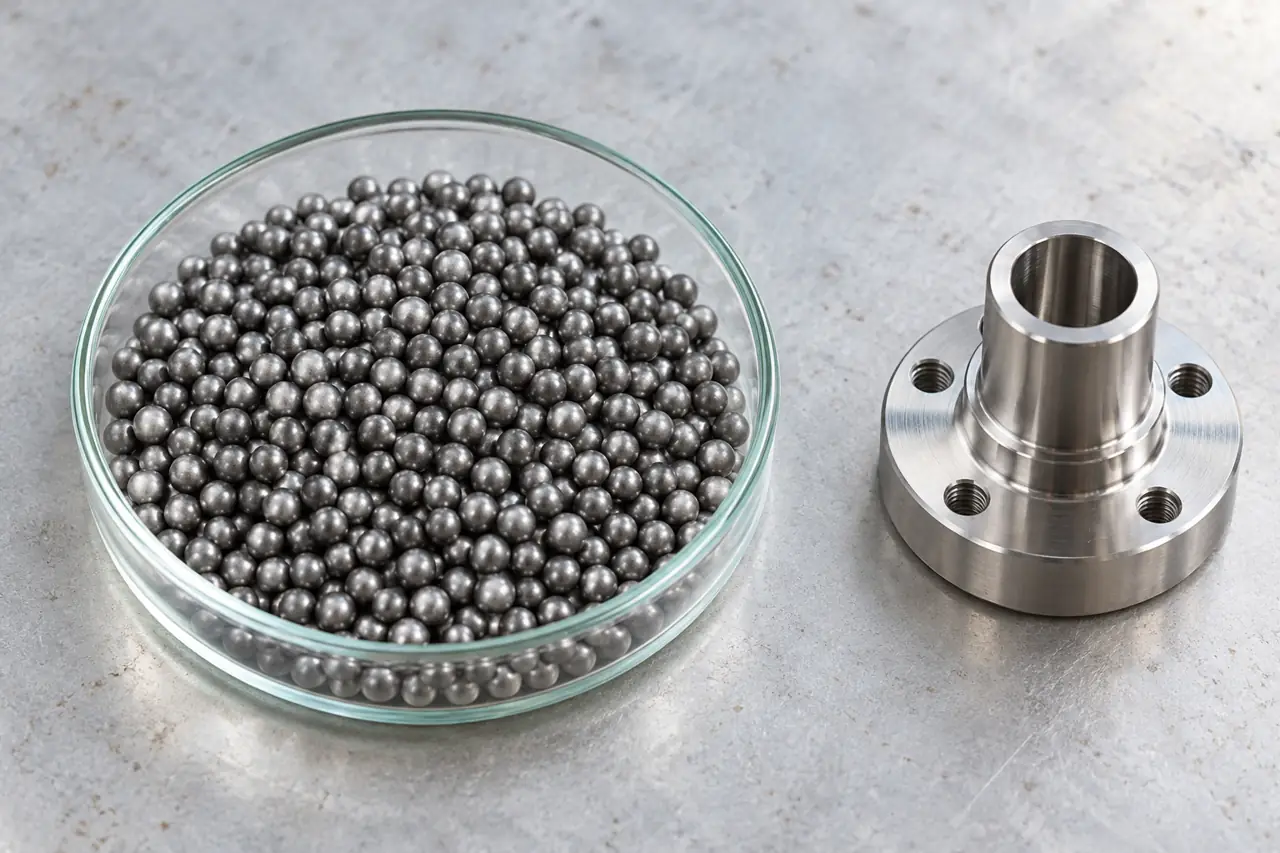
Material evidence needs a defined scope
Include the composition or material-identification evidence required for approval in the enquiry. State which product, lot or sample the record must cover. A general stainless label does not establish a particular alloy, and a company certificate cannot substitute for the product-specific evidence your application requires.
A representative part trial sets the boundary
Use the actual workpiece material and record the equipment preparation and blast settings. Check surface condition and contamination by the agreed methods. Keep any limits visible in the approval record; a trial on a convenient sample does not automatically qualify every component or finishing route.
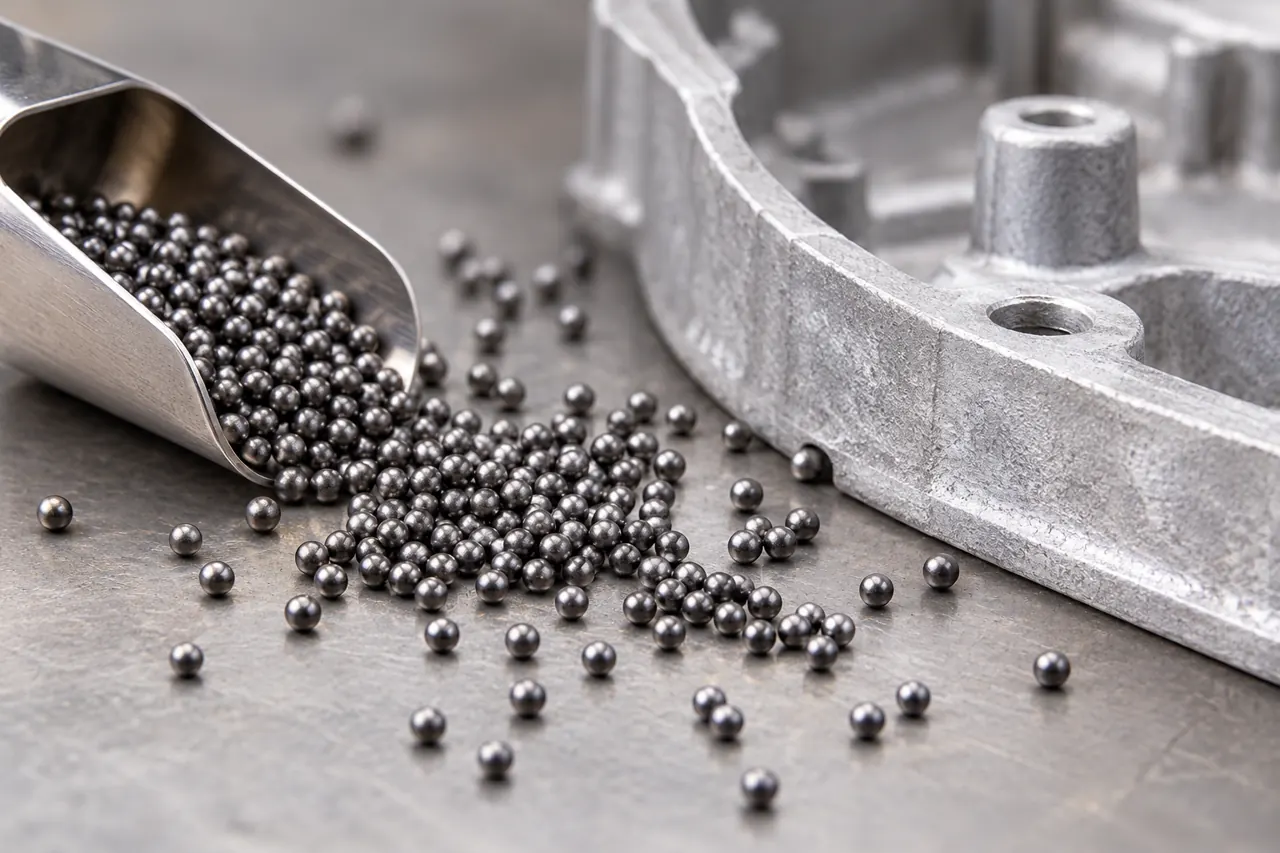
The trial and shipment need the same identity
Retain the approved media description with the sample reference, inspection record and trial conditions. When the order follows, confirm the selected alloy, particle form and grading again. Any proposed difference belongs in the technical discussion before material is released for your application.
Packing should preserve segregation
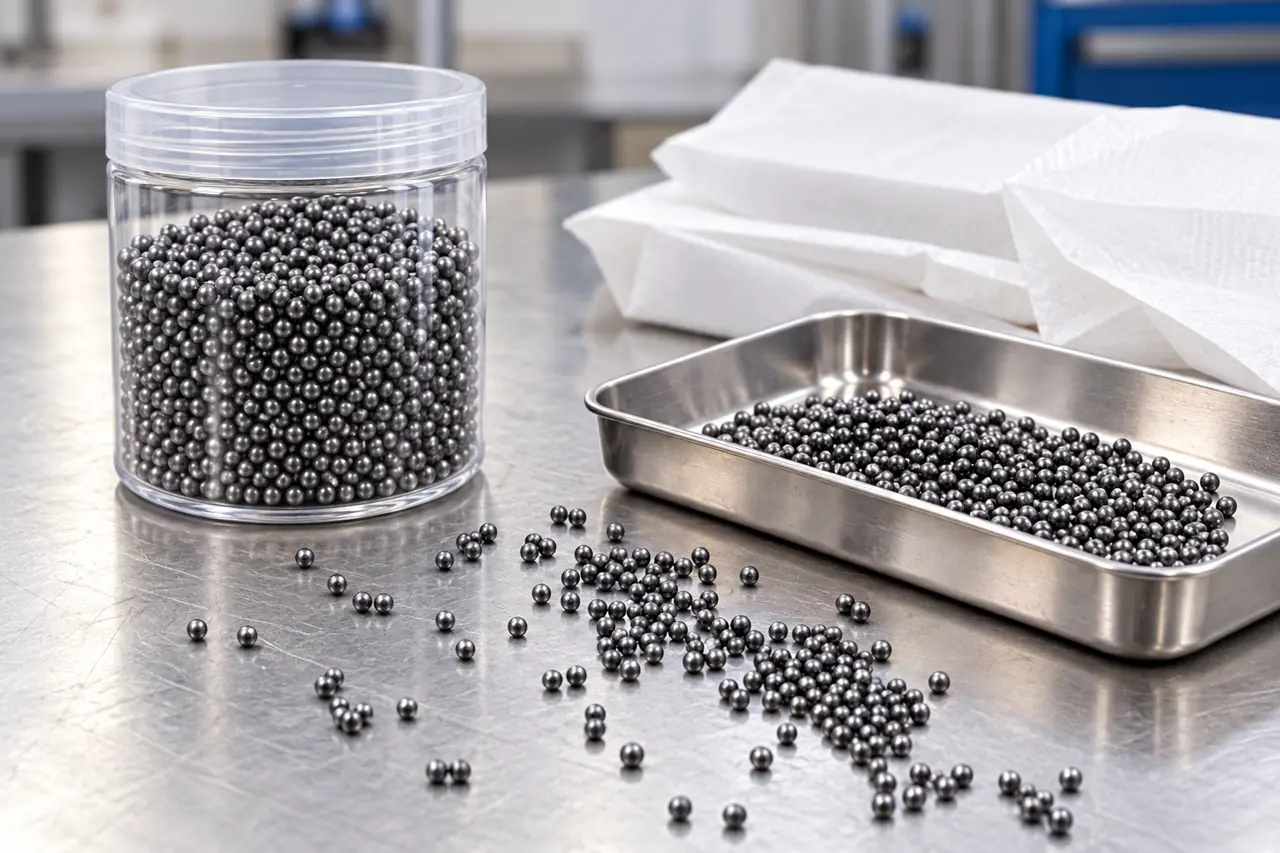
Include packing weight, container preferences and identification requirements with the order brief. Keep stainless media separated from other abrasive stocks during receiving and storage. Ask us to confirm the proposed packing for your order; the image illustrates a handling concept rather than a standard packing commitment.
Requalification follows a material change
A change in alloy, particle form, substrate or equipment history can affect the basis of an earlier approval. Keep those changes visible when you reorder. We can review the new media enquiry with you, and you can decide the additional trial and inspection needed for your process.
Share the surface requirement with the enquiry
Send the workpiece material, contamination restriction, intended finish and candidate media reference. Add quantity, grading, material-evidence requirements and destination. Our team can discuss the listed stainless media and the conditions to confirm in a specific offer, with sample and packing arrangements agreed for your order.