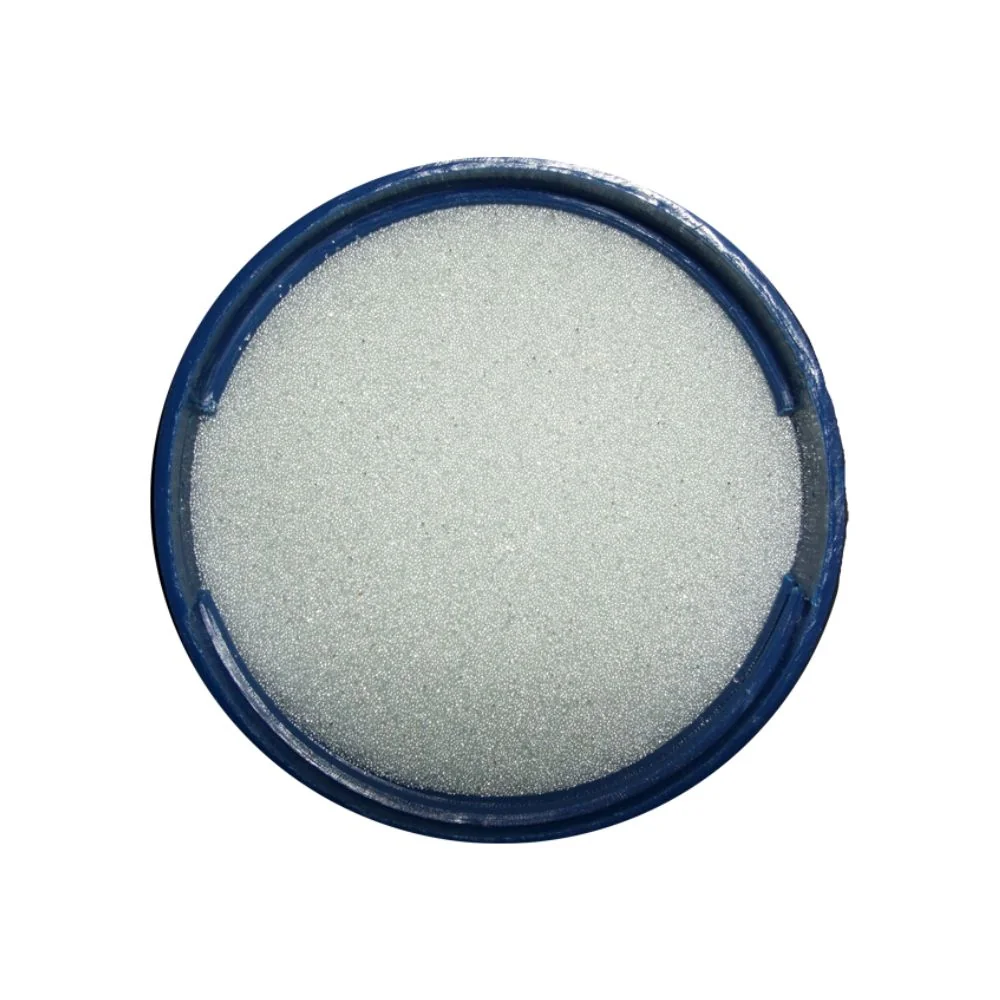
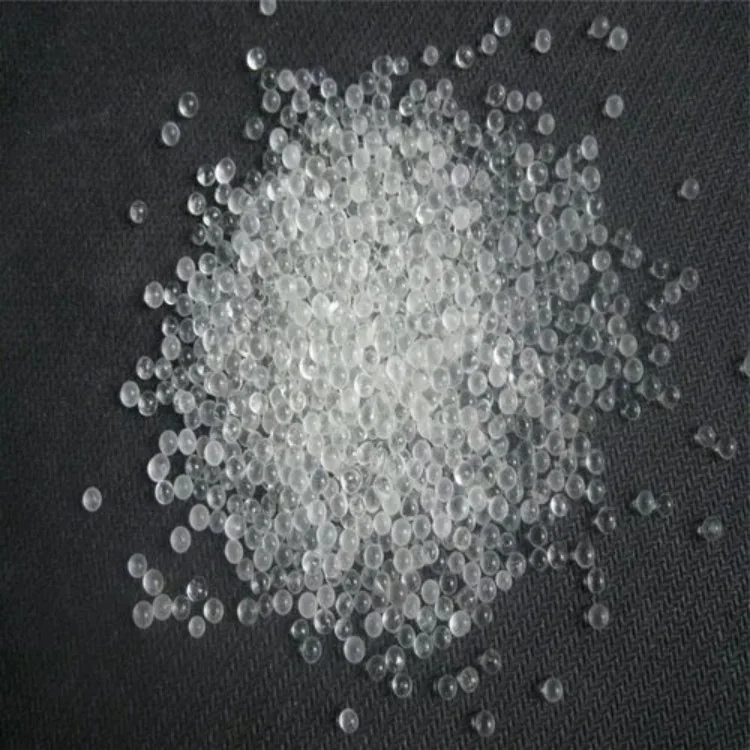
Glass-Bead Supply for Mould Maintenance and Finishing
For mould maintenance, approve glass beads against the surface you need to clean and the features you must preserve. We list glass-bead media for industrial enquiries. Share the mould material, finish target and inspection requirements so a proposed sample can be evaluated on representative parts before a bulk purchase.
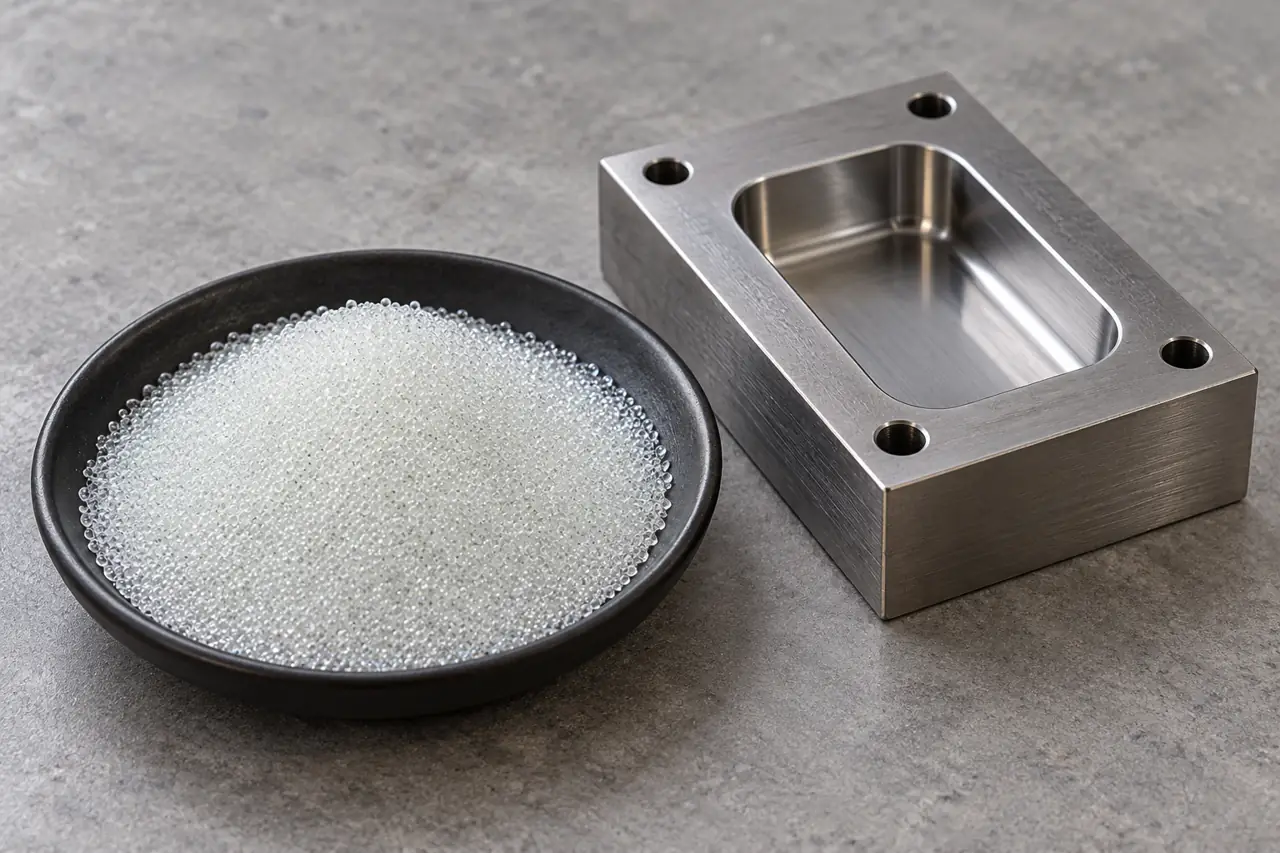
Cleaning and finish targets should be stated separately
Describe the deposit or surface condition to address, then identify the required appearance after treatment. Mark dimensions, sealing faces, fine edges or other features that must remain within their approved limits. A request for gentle cleaning is too broad to define an acceptable result on a precision mould.
Candidate grading must suit the actual trial
State the required bead material and grading basis from your process specification, along with equipment constraints. Ask us to confirm the offered media and available records. A catalogue image can show bead appearance but cannot establish the size distribution, roundness or compatibility with a particular mould-maintenance process.
A sample-part comparison needs the original condition
Record the mould sample before treatment, including photographs taken under comparable lighting and the dimensions your team considers critical. Preserve that baseline with the candidate bead reference. This helps separate cleaning improvement from an unwanted change in surface appearance or functional geometry.
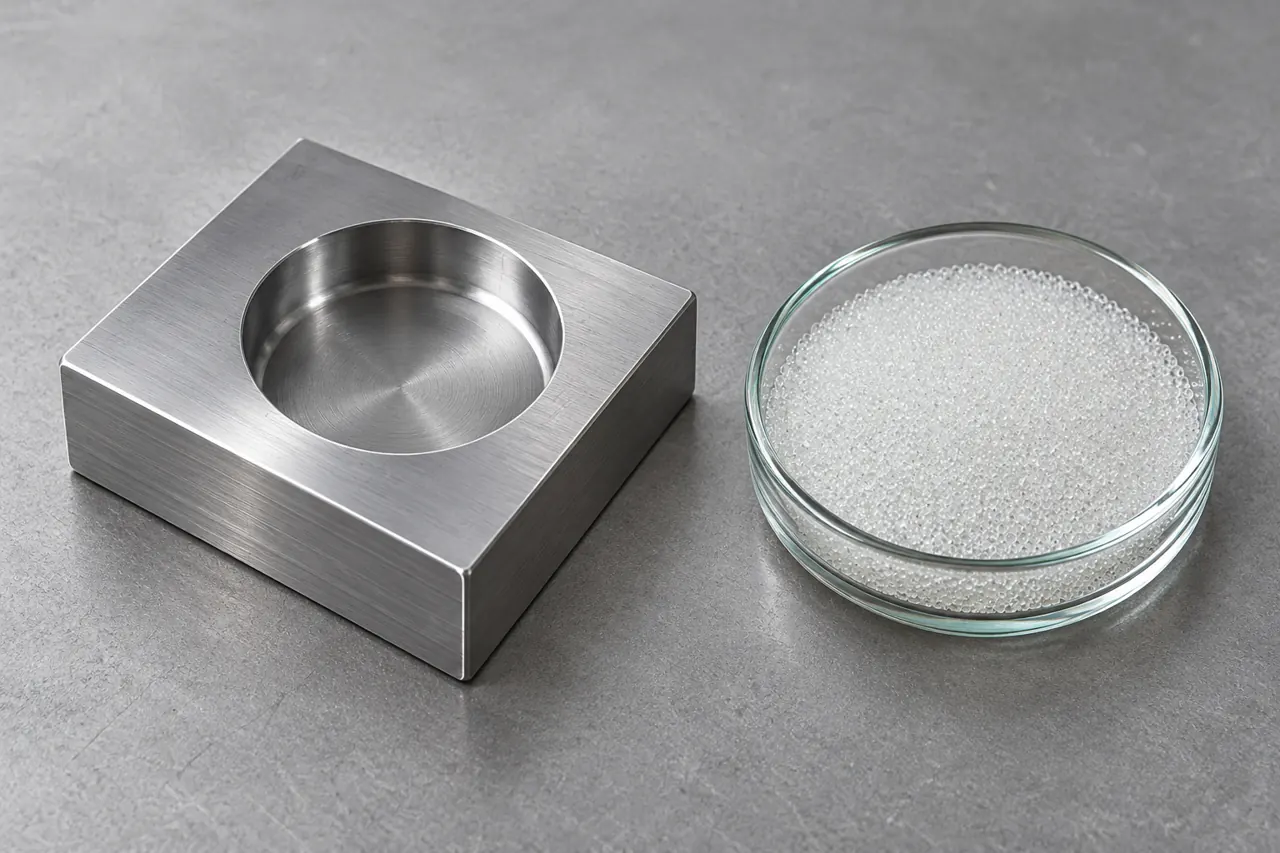
Trial conditions should remain visible in the record
Agree the treatment scope with the responsible process team and record the machine setup, exposure and handling. Limit the initial evaluation to representative features that can be inspected properly. If the settings change during the trial, identify the affected sample rather than treating all outcomes as the same comparison.
Finish approval needs more than a clean photograph
Compare the treated sample with the agreed visual reference and any required dimensional checks. Look at the features identified in the brief, including details that a wide photograph may hide. Material supply cannot promise a damage-free treatment result independently of the equipment, exposure and mould condition.
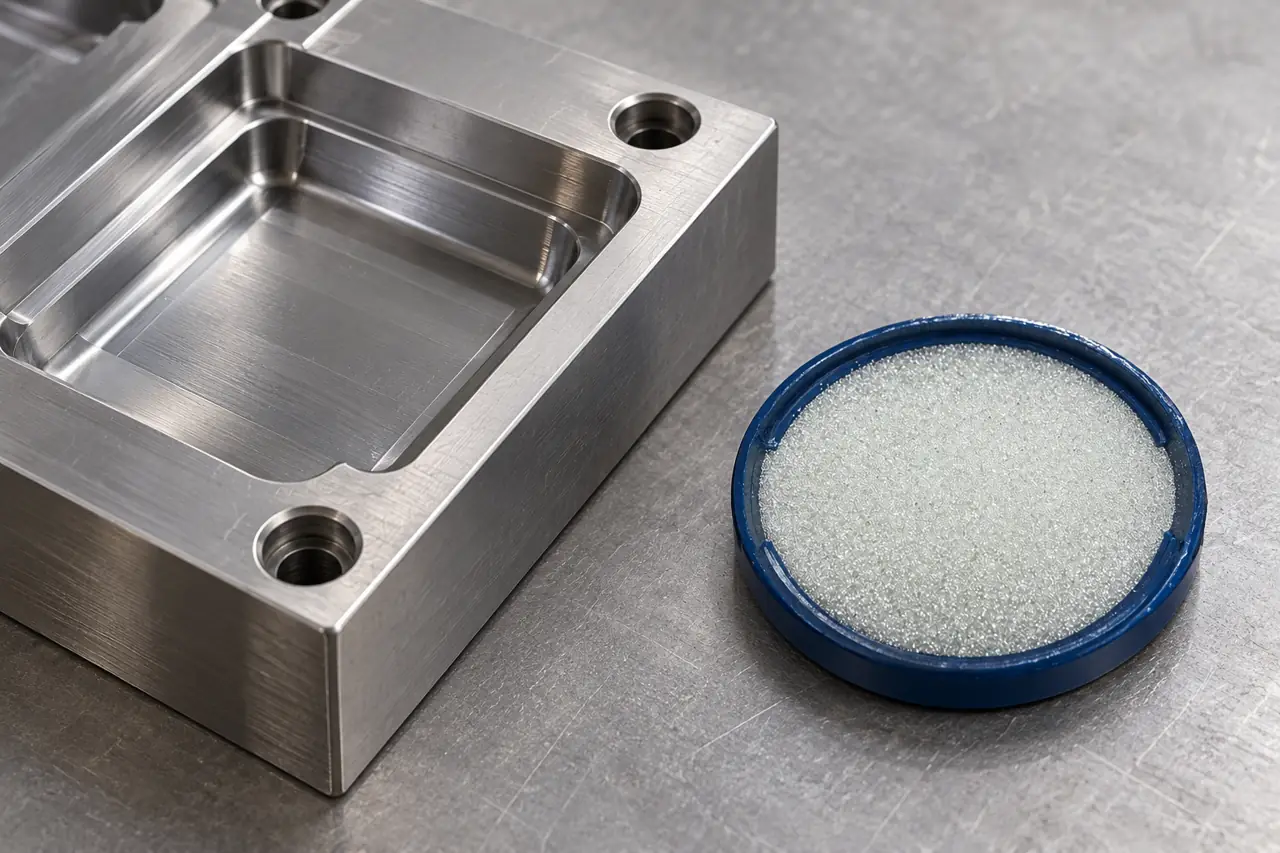
Supplier scope and media evidence should stay separate
Confirm the proposed bead identity, available grading or material records and product-specific supply relationship. Our broader industrial catalogue does not establish every material as manufactured in-house. Request the documents relevant to your approval and keep any unavailable evidence visible in the decision before placing a production order.
A retained sample supports a finish complaint review
Keep unused media, package identification and trial-part records together. For an unexpected finish, preserve the affected area and equipment settings before further treatment changes it. Share the specific deviation with us so the discussion can address the supplied beads alongside the process conditions rather than relying on an unqualified appearance complaint.
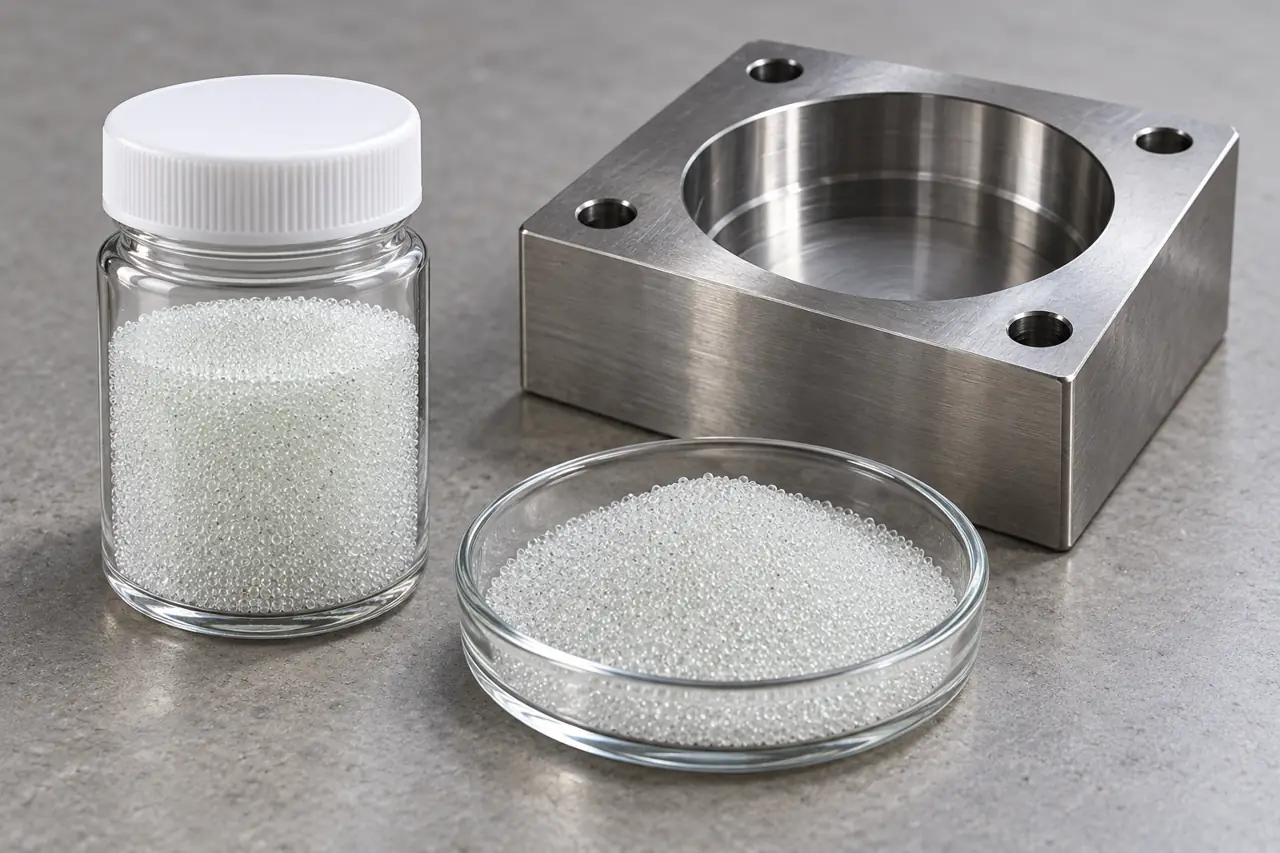
Repeat supply should retain the finish reference
Carry forward the accepted bead specification, material reference and packing requirements, together with the trial’s application limits. Review a new mould material or finish target separately from replenishment. Confirm lot marking, quantity and dispatch terms on the actual order so the receiving team has a clear material acceptance basis.
Send the mould and finish brief with your enquiry
Provide the mould material, starting condition, finish reference and protected features. Add the equipment constraints, trial quantity, acceptance method and required media records. We can discuss the listed glass-bead option and confirm a specific offer for your sample-part evaluation.