

Shot-Blasting Machine Selection for Cast and Forged Parts
Our equipment catalogue includes a tumble-belt shot-blasting machine enquiry. Begin with the parts you need to clean, their loading limits and the required result. We can discuss the listed equipment with you, with the exact machine configuration, site requirements and trial acceptance defined before an order is agreed.
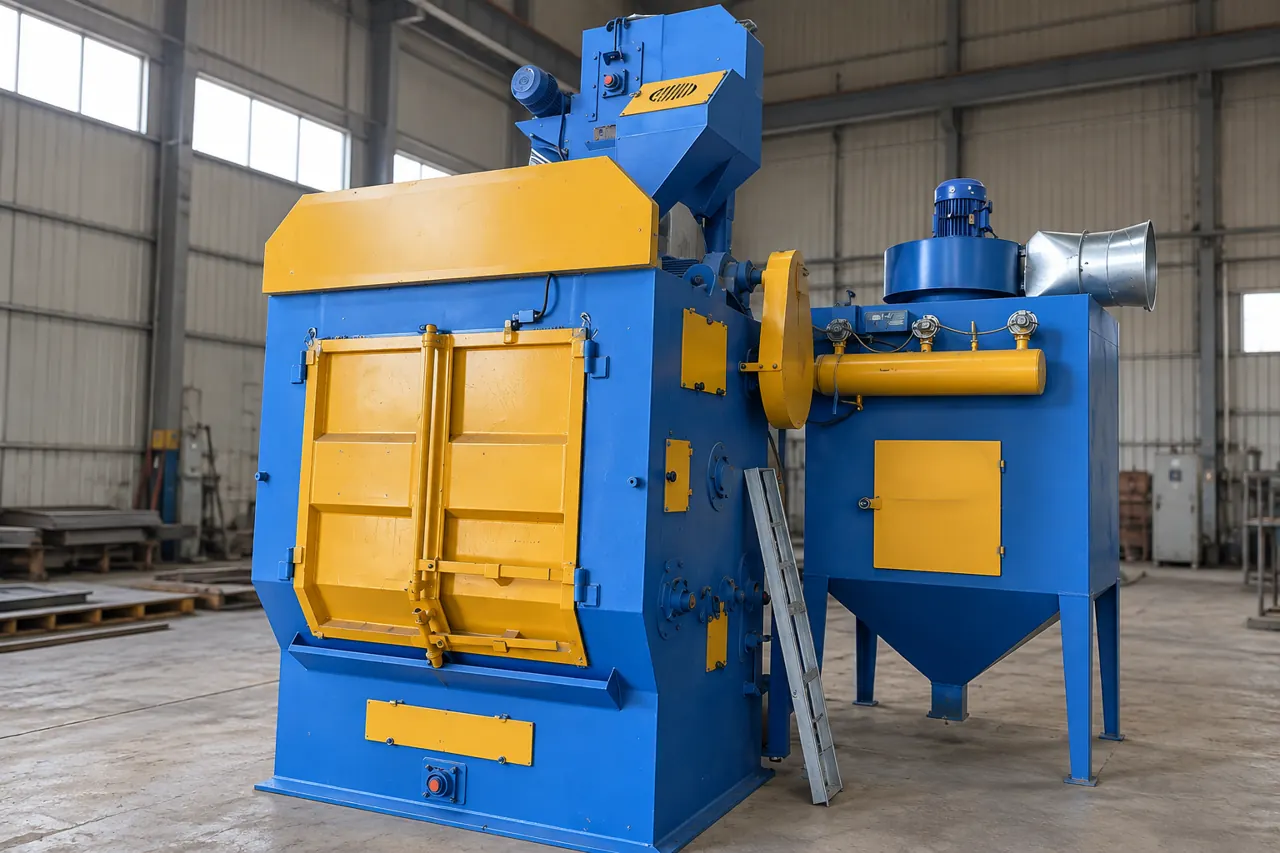
The part mix comes before a machine label
Share the largest and smallest parts, individual weights, geometry and batch composition. Include features that must not strike other parts during handling. A machine configuration should be considered against that actual part mix, rather than selected from a model label or a general cleaning-capacity claim.
Tumbling suitability needs a deliberate review
For a tumble-belt enquiry, describe whether the parts can tolerate the intended movement and contact. Include any restriction on part-to-part impact or trapping. If tumbling is unsuitable, keep another handling approach as a separate equipment discussion instead of assuming a change of blast setting will solve the problem.
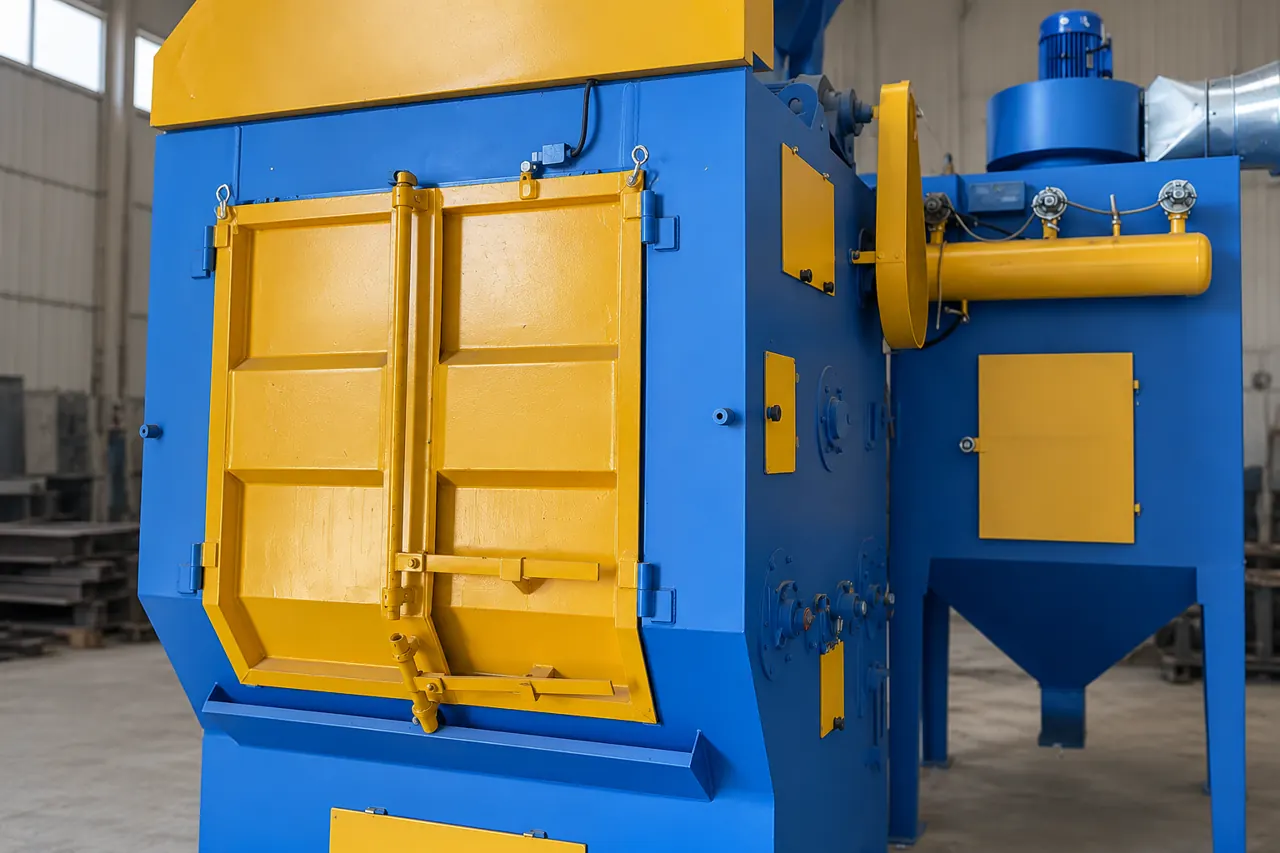
The technical proposal defines the machine
Our listing refers to Q326 and Q3210 labels. Ask us to identify the actual machine offered and its configuration. The chamber, loading arrangement, blast system, separation, dust handling and controls need to be described together, with the limits applicable to your part trial made explicit.
Site requirements need confirmation before purchase
Provide the installation location, available utilities and handling constraints to the equipment review. Ask for the proposed layout, foundation and connection requirements, together with the responsibilities included in the offer. We should confirm these inputs before treating the machine as ready for your site.
A representative part trial makes acceptance concrete
Use your actual part family and a recorded batch arrangement where a trial is agreed. Assess cleaning, part damage, handling and the full operating cycle against defined criteria. Keep observations and limitations with the machine proposal; an isolated clean-part photo cannot establish a production rate for your part mix.
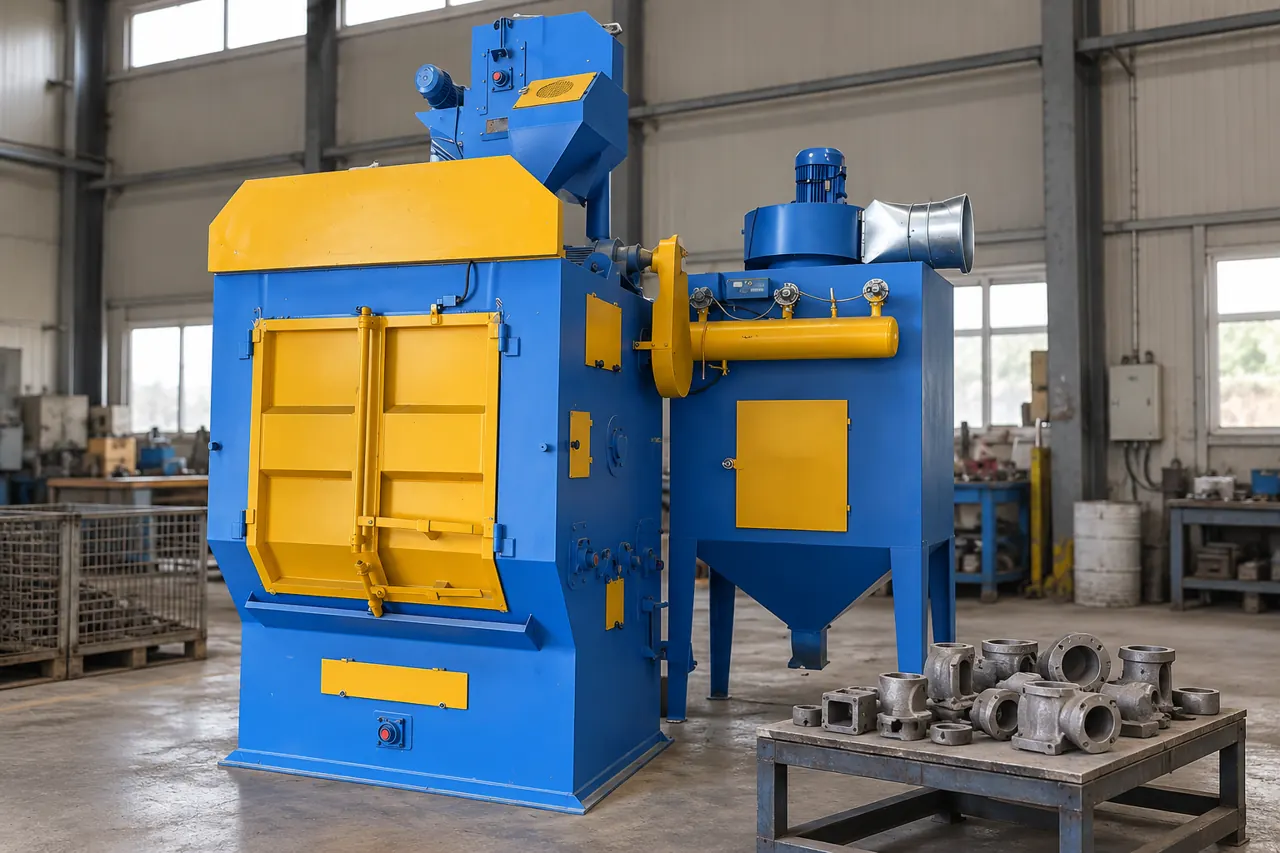
Media and wear items belong in the package review
Include the proposed abrasive, operating consumables and wear-item scope in the technical discussion. Ask for the identified parts and documentation needed by your maintenance team. These items should be confirmed for the actual machine offered rather than inferred from another configuration or a generic equipment description.
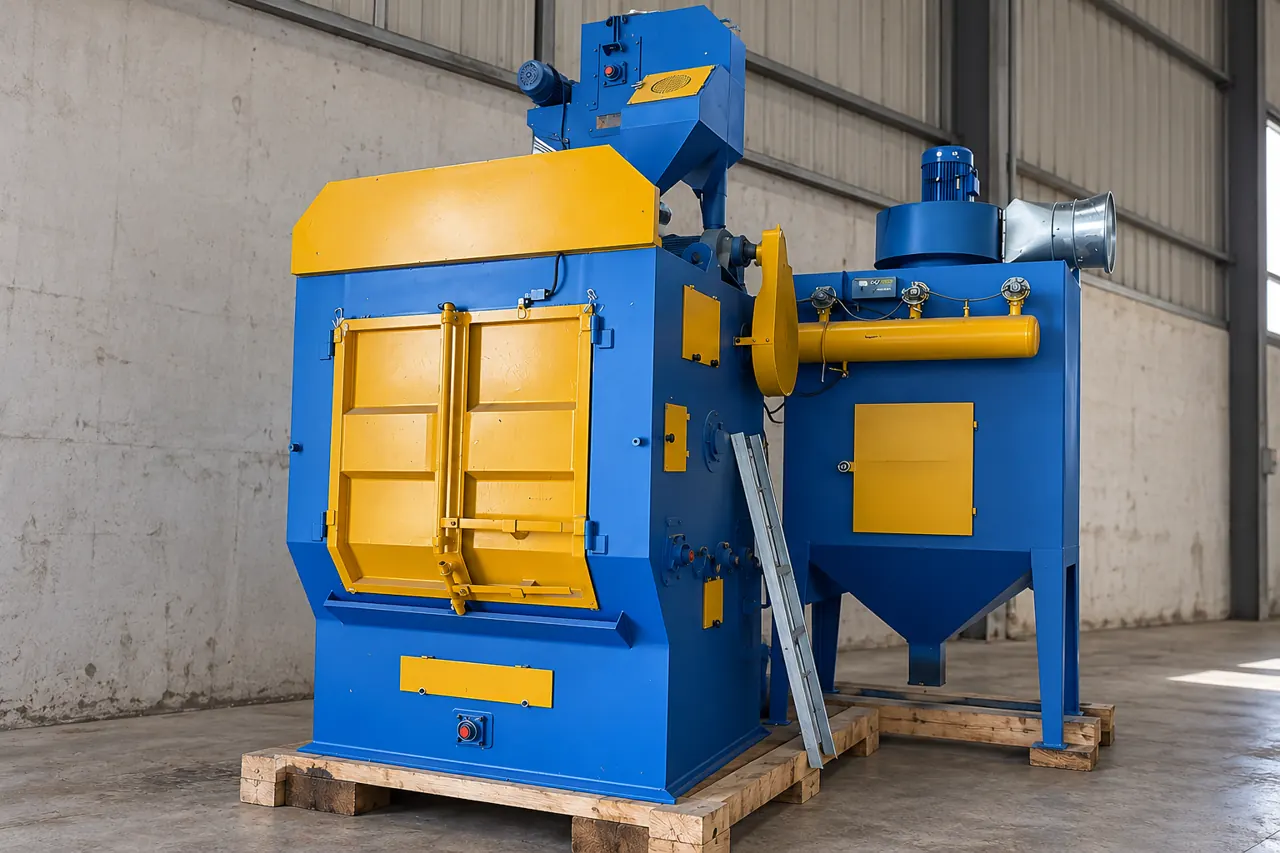
Shipment planning includes the receiving constraints
Discuss the machine dimensions and packing proposal with the offer, then check unloading and access at destination. Confirm which components ship assembled and which require work on site. The illustration is a reference-based equipment visual; the final packing and installation scope follow the agreed machine proposal.
Commercial approval follows the technical scope
Compare equipment quotations against the same configuration, trial criteria, documents and delivery responsibilities. Identify any optional item separately. Keeping the technical package fixed helps you see which differences affect operation or installation, instead of comparing machine prices that cover different supplies.
Send the part and site brief together
Send photographs or drawings of the parts, the intended batch arrangement and surface target. Add site utilities, handling constraints, destination and inspection expectations. Our team can discuss the listed machine and the information needed for a specific technical offer, trial arrangement and commercial quotation.