
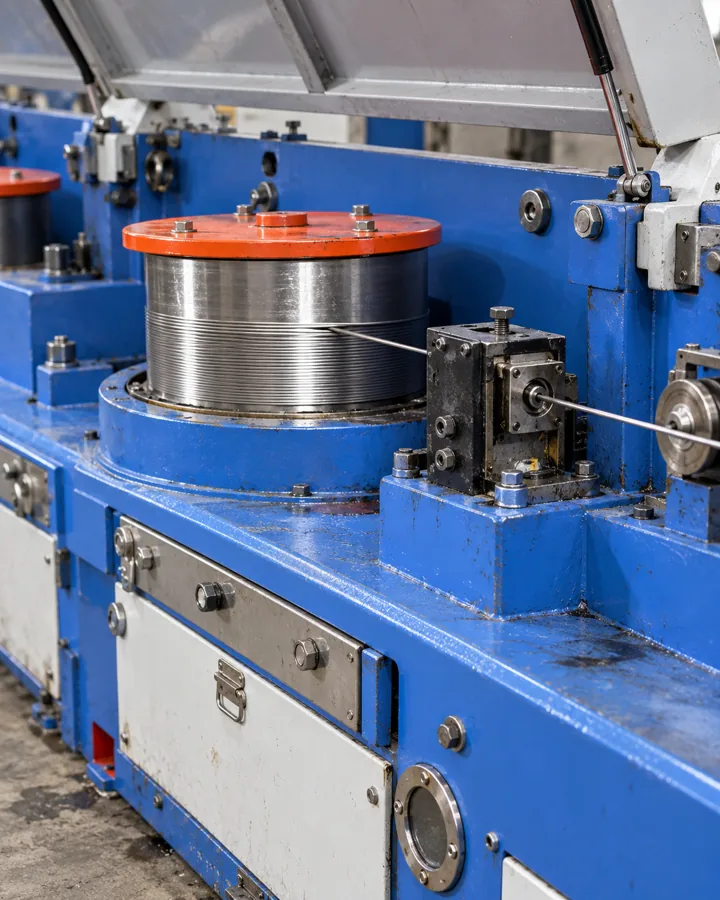
Choose blasting media by material, particle form and the result required on your workpiece. Then define grading, hardness and machine acceptance. Steel shot, steel grit and cut-wire particles are distinct options to assess, rather than interchangeable names for the same media.
Start with the Workpiece and the Surface Target
Describe the substrate, present contamination or scale, and the required final condition. Use those details to compare shot, grit and cut-wire requirements, then qualify the selected media in an appropriate trial. A catalogue application reference is not proof of the result on your component.
Do not assume one media grade suits every metal, component or finish. A change in substrate, geometry, contamination restrictions or equipment can require a new assessment.
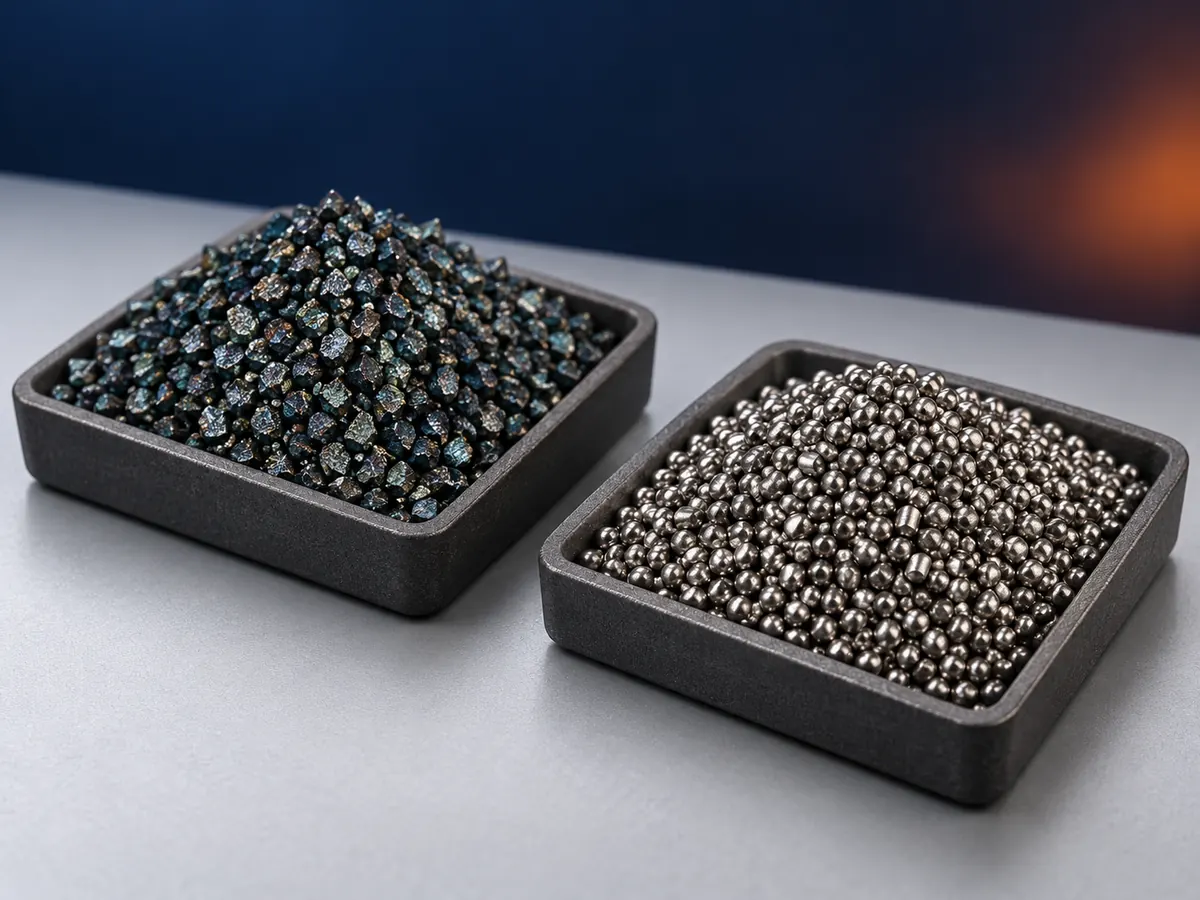
Distinguish Material from Particle Shape
| Media family | What to specify | What to verify |
|---|---|---|
| Steel shot | Selected steel material and required shot form | Particle geometry, grading and surface-treatment acceptance |
| Steel grit | Angular particle requirement and selected G-grade | Shape, distribution and required hardness class |
| Cut-wire shot | Metal identity, cut size and as-cut or rounded condition | Conditioning and particle-form inspection; an as-cut cylinder is not automatically rounded shot |
| Stainless shot | Exact stainless alloy or chemical requirement | Material evidence for the selected batch; a generic steel label does not establish stainless identity |
| Aluminum cut-wire media | Aluminum composition, size and particle condition | Chemistry and particle inspection before a bright-finish trial |
When the workpiece or its contamination limits change, reconsider the abrasive material as well as the size. Changing only a nominal diameter cannot establish that another material or particle form is unnecessary.
Specify Grading and Hardness Separately
A G-grade reference identifies the requested steel-grit grading within the applicable grading specification. State that specification and the actual selected grade; do not turn a grade label into an assumed measured diameter or guaranteed surface result.
Define the required particle-size distribution and its acceptance method. A single nominal size does not describe the complete batch distribution. When using an existing-media reference, include the associated grading document or sample details.
Hardness is a separate acceptance requirement. Name the scale, selected range or class and test basis where applicable. Do not assume all products sharing a grading reference share the same hardness.
Bulk density describes a quantity of particles together with the spaces between them. It is different from the density of the solid particle material. Record which density is required and its measurement method; neither value alone establishes a cleaning rate or media life.
Keep Specialty-Material Requirements Precise
For zinc cut-wire shot, specify particulate form, size and chemistry. Continuous zinc wire is a different supplied form and should have its own specification.
A thermal-spraying reference does not prove that cut shot fits a particular feed system. Identify the exact equipment and feed arrangement and confirm acceptance before selecting the supply form.
For grit and powder, state the grading system, unit and size-distribution requirement. A mesh number, a nominal millimetre size and a broad powder description should not be treated as equivalent without an agreed specification.
White fused alumina and alumina-zirconia are different material identities. Confirm the selected composition rather than accepting a generic abrasive label.
Do not apply a steel hardness-scale entry directly to a ceramic abrasive. Request the measurement basis appropriate to the specified material.
A purity percentage alone does not qualify alumina for a polishing finish or refractory formulation. Chemistry, particle distribution and application-specific acceptance remain necessary.
Qualify the Media for Your Process
Provide the machine type and manufacturer’s media requirements, workpiece details and desired finish. Confirm the permitted particle material, form and size before a representative trial. Process settings must follow the actual equipment and qualified operation; this guide does not prescribe a universal pressure or speed.
- Record the selected material, grading, shape and hardness requirements.
- Agree the inspection records and trial acceptance before evaluation.
- Compare the actual finished workpiece with the agreed surface criteria.
- Confirm the order specification separately from the trial observations.
Explore relevant media in the product catalogue and record the exact product reference in your inquiry. See application-trial planning and inspection and sample acceptance, then send your media requirements.