
Specify steel wire by material, finished diameter and supplied condition. A finished wire rope needs additional construction details. Start by identifying the actual supplied form before selecting grades or comparing nominal sizes.
Single Wire and Finished Rope Need Different Specifications
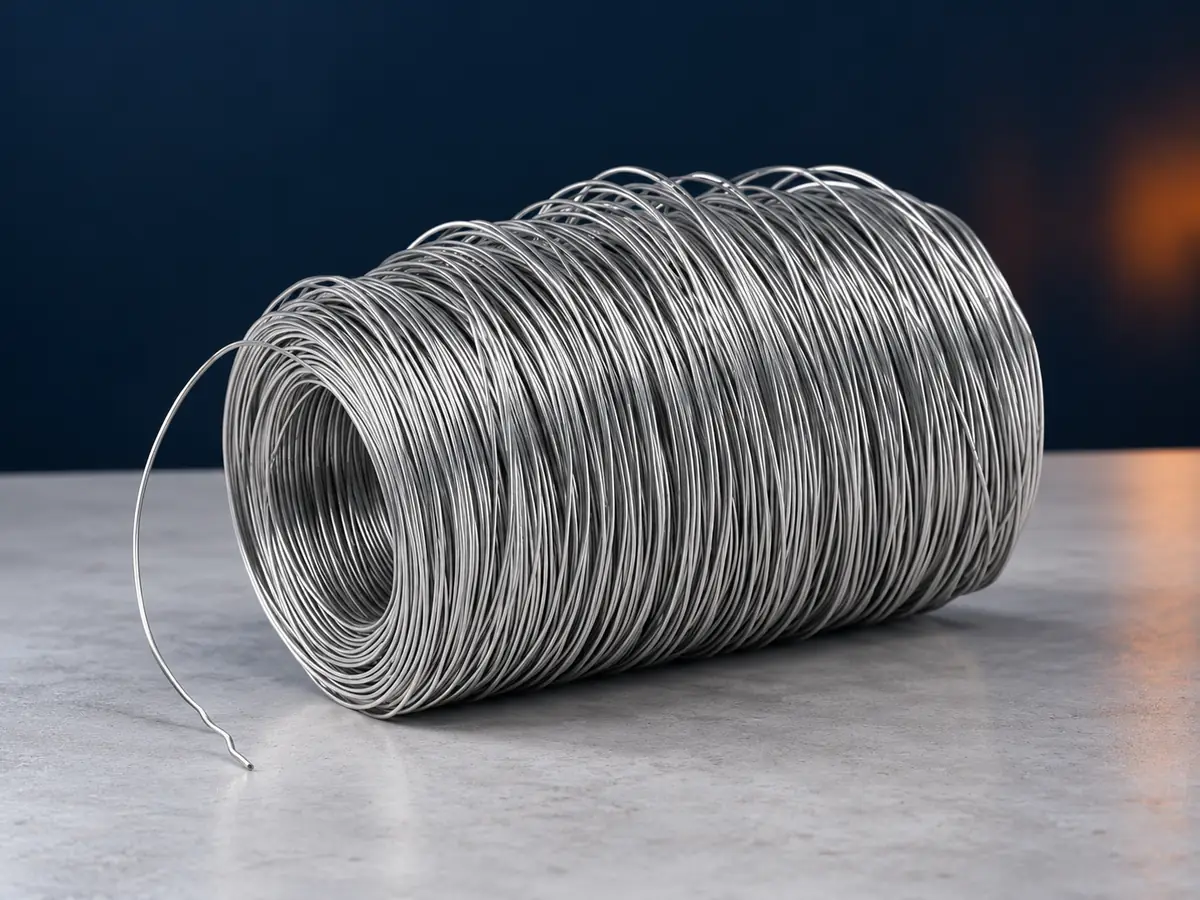
Single wire is a distinct material form from an assembly of wires in a rope. A wire diameter and grade do not define the strand arrangement, core or ends of a finished cable.
| Supplied form | Core information for an inquiry |
|---|---|
| Galvanized or binding wire | Grade, diameter, tolerance, supplied condition, coating and supply format |
| Stainless single wire | Exact grade, diameter, surface and mechanical or forming acceptance |
| Wire rope or cable | Material, finished diameter, strands, core, lay, length, ends and intended duty |
| Wire rod or drawn wire | Required production/supplied state and final dimensions; a rod reference does not by itself define a finished drawn-wire condition |
Define Material and Condition Together
Q195, Q235 and SAE1006 are separate grade references. Choose the applicable standard and exact material requirement rather than assuming equivalent chemistry or mechanical properties.
A grade name alone does not establish the actual tensile strength of supplied wire. State the required mechanical criteria and request the evidence applicable to the selected condition.
For binding wire, define the supplied state, diameter and surface acceptance together with the intended binding arrangement. General softness or high-tensile wording is not a numerical acceptance specification.
For spring-production wire, add the intended forming process, exact material condition, surface criteria and relevant mechanical acceptance. Neither a grade label nor a fine diameter guarantees finished-spring fatigue performance.
Make Dimensions and Coating Measurable
Give the finished diameter, unit and tolerance. Identify whether other measurements refer to a solid wire, a strand or an assembled rope, and include the required length or supply format.
If a gauge reference is used, name its convention and agree the corresponding ordering diameter. Do not assume that the same gauge number means the same size in every system.
For galvanized wire, define the coating acceptance needed for the application, including any applicable measurement or inspection requirement. The word galvanized does not establish a coating mass or guaranteed corrosion life.
Describe the Proposed Fabrication
For bending trials, provide the component geometry, bend requirement and acceptable material and surface condition. Agree what constitutes an acceptable trial before selecting the supplied wire.
For welding, identify the joining process and component acceptance. A listing that mentions welding does not qualify every grade or wire condition for every joint.
Wire rod described for electrode manufacture is not automatically a qualified finished welding consumable. Specify the relevant chemistry and downstream production requirements separately from the final consumable classification.
Complete a Rope or Strand Inquiry
Finished-rope acceptance requires the actual assembly geometry, not just the diameter of its individual wires. Identify the rope construction and intended duty.
State strand arrangement, core and lay with the selected material and diameter. Where the required construction is uncertain, provide the existing rope specification or an application drawing for review.
Give the end arrangement, length and termination acceptance. Confirm whether the inquiry concerns bare rope or a complete assembly rather than assuming fittings are included.
Type 304 is a material requirement, not a working-load rating or lifting approval. Application acceptance requires evidence for the actual rope and any complete assembly.
Prestressing wire and multiwire strand are different constructions. Select one form, nominal size, material standard, strength and relaxation requirements.
A listed prestressing strength class is an ordering requirement, not proof of a measured batch result. Request tensile and relaxation evidence applicable to the actual selected material and system.
Send One Coherent Wire Specification
Keep alternative grades, diameters or rope constructions separate. Include quantity, destination and the required documentation so the quotation can describe the selected configuration clearly.
Use the RFQ checklist, review material inspection requirements, or send a wire inquiry.