Galvanized Coil Feedstock for Roofing-Sheet Forming
Roofing feedstock needs a matched substrate, coating and coil-handling specification. We list galvanized steel-coil candidates for quotation review. Send the roofing profile, material requirement and line limits so the proposed coil can be assessed as feedstock for your forming operation rather than selected from a thickness label alone.
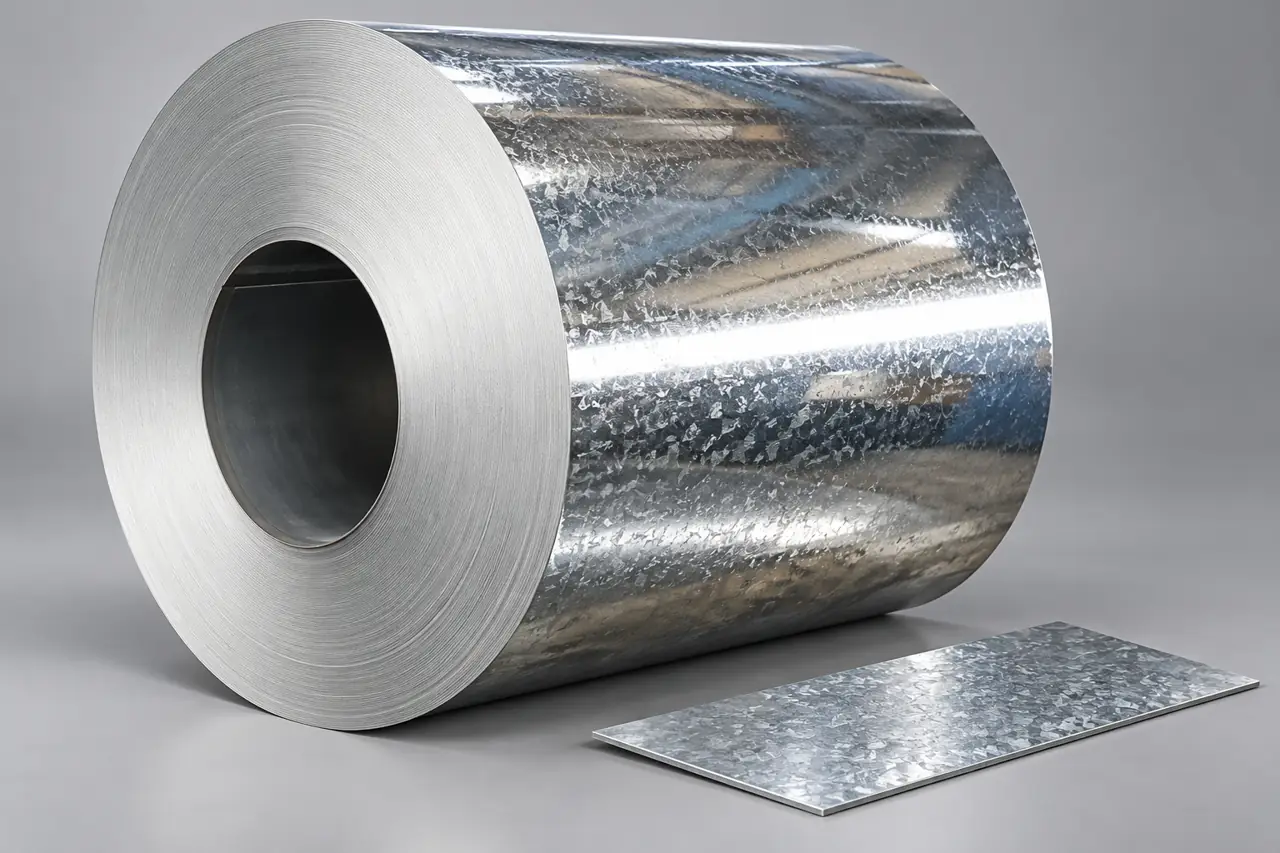
Substrate thickness and coating belong in separate fields
State the thickness basis explicitly, including whether your drawing refers to the steel substrate or another defined measurement. List the coating designation and acceptance requirement separately. This avoids comparing two offers that use the same nominal thickness while describing different material or measurement scopes.
The line interface determines a usable coil format
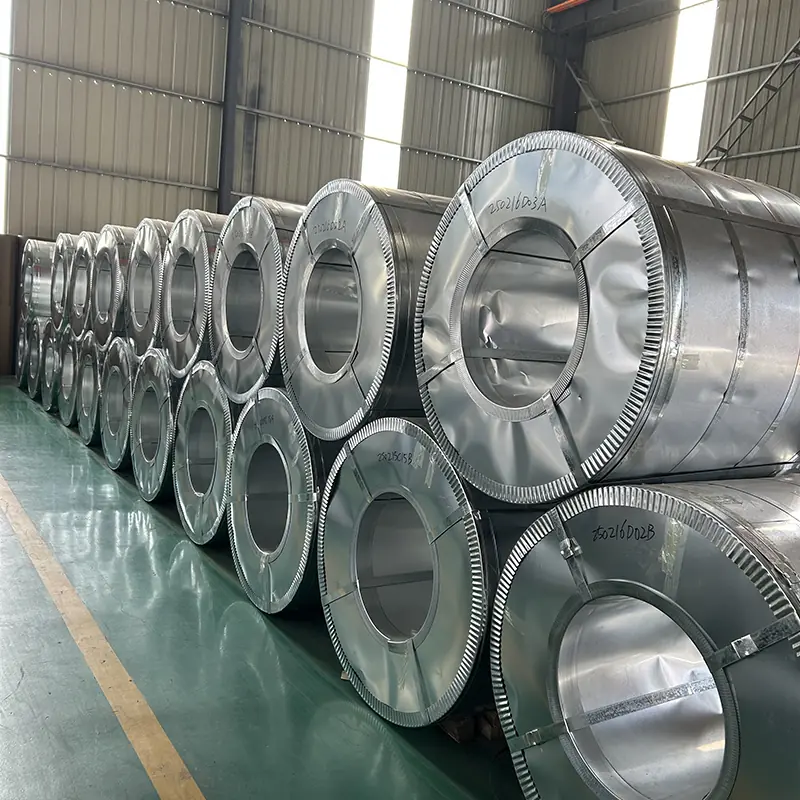
Give the coil width, inner diameter, permitted outer dimensions and handling-mass limit required by your equipment. Include edge and winding requirements where they affect feeding. Confirm that the actual offered coil meets those limits before treating a broad catalogue range as a machine-ready supply.
A material sample should show the offered surface
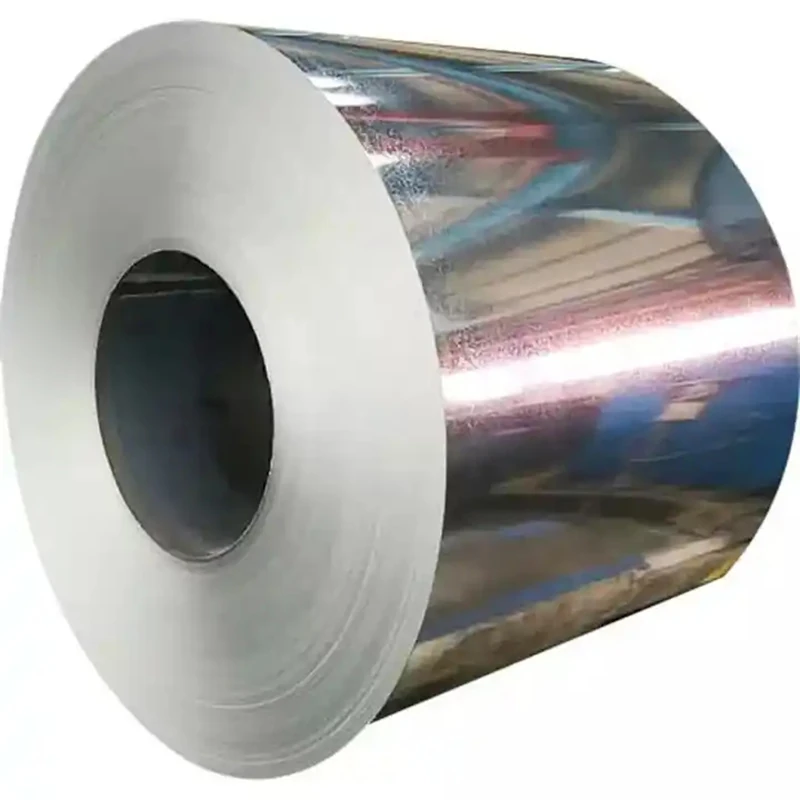
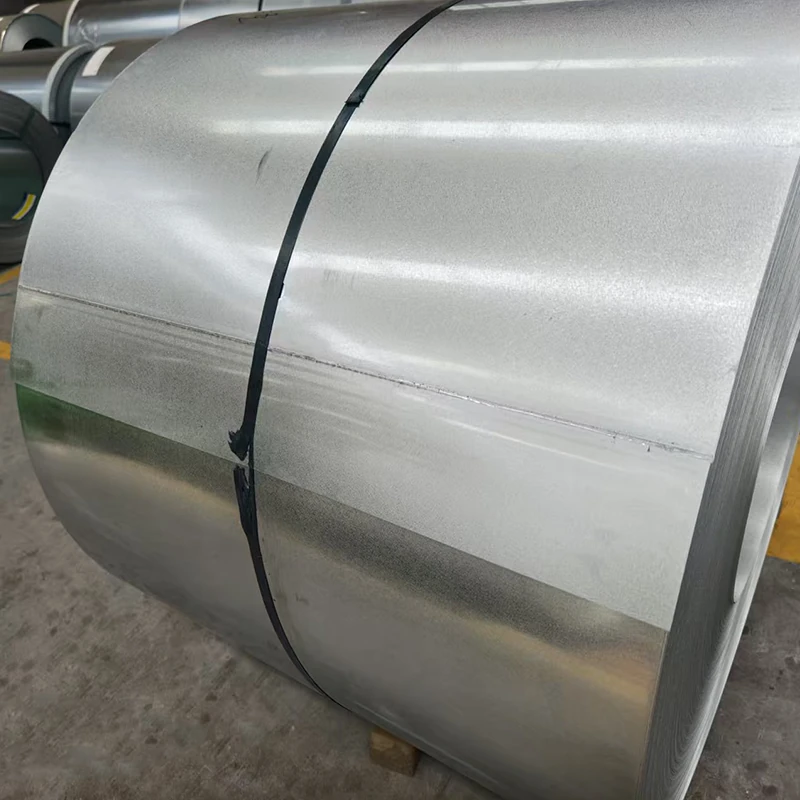
Use a representative sample to discuss surface appearance and the proposed galvanized condition. Keep the product identity and supporting records with it. A shiny sample does not establish coating quantity, substrate grade or forming performance; those requirements need their agreed document and inspection basis.
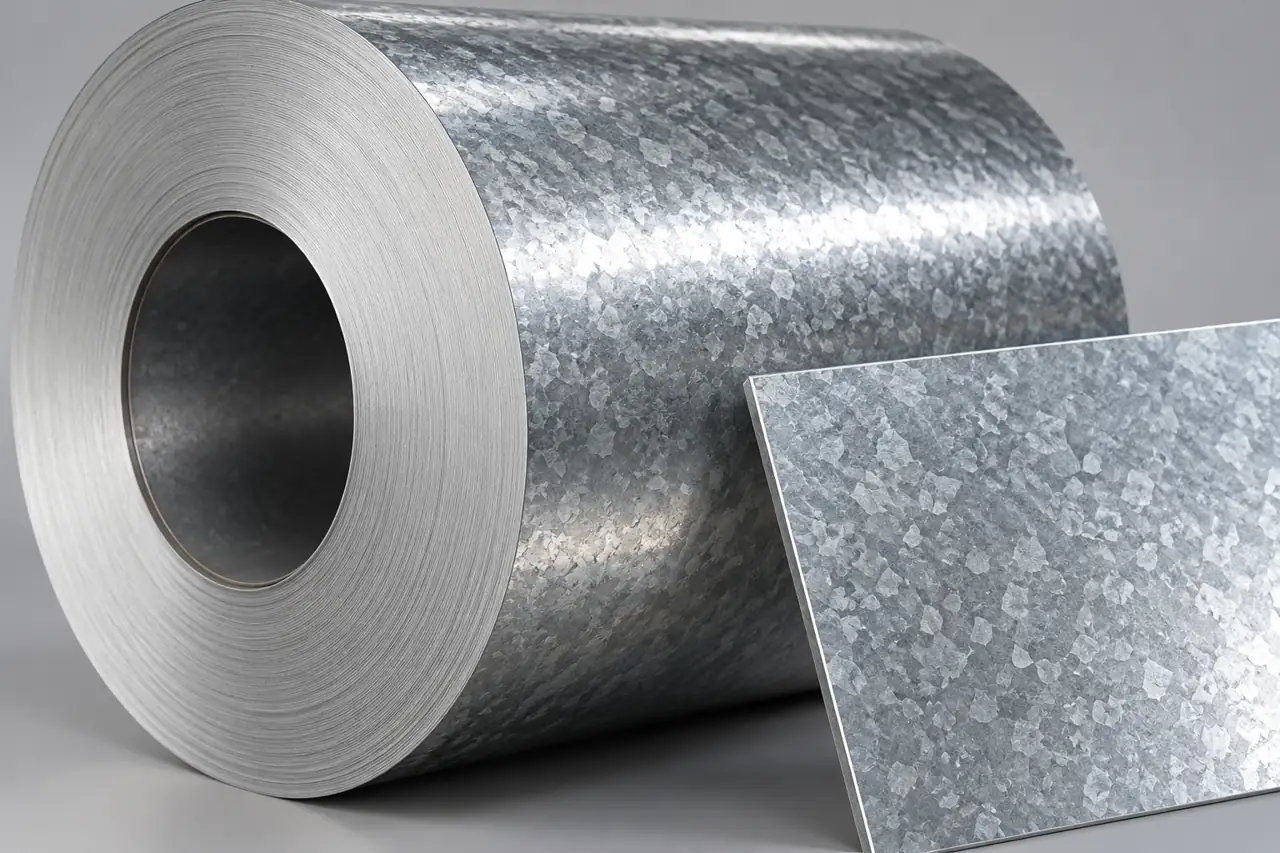
A forming trial needs the intended profile
Ask your production team to define a trial using the relevant roofing profile and representative line conditions. Record the candidate coil identity, settings and finished-sheet observations. Separate material acceptance from the approval of the formed roofing product, especially when the profile, tooling or application changes.
Inspect the formed result at the relevant features
Review bends, edges and visible surfaces against the agreed criteria after the trial. Preserve photographs and any required measurements with the material reference. A successful trial on one profile supports that defined use; it should not be extended into a promise that the coil suits every forming line or roof design.
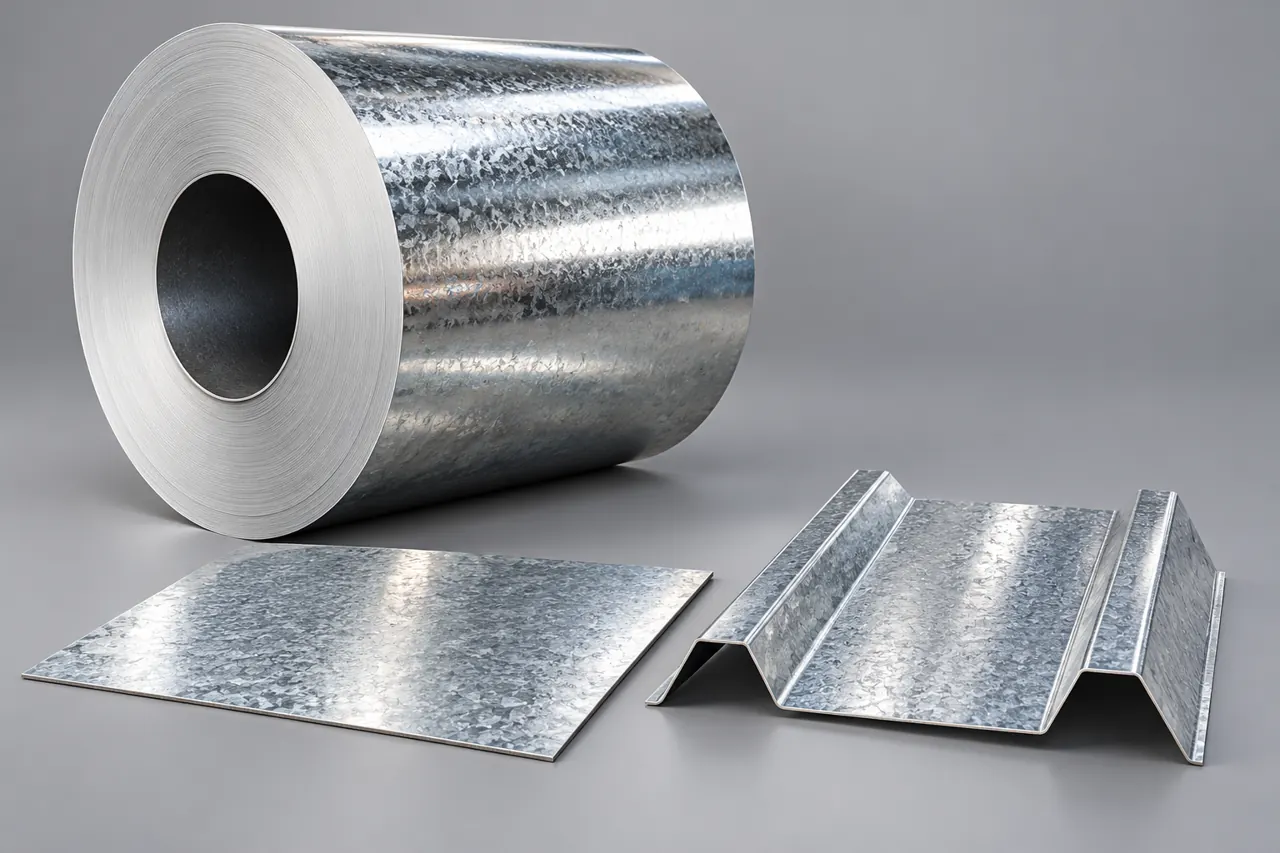
Supply review should identify the actual material source
Confirm the proposed coil’s material records, coating evidence and product-specific manufacturing or sourcing relationship. Our wider materials catalogue provides enquiry candidates, not proof that every flat product is processed in-house. If a project requires a particular mill or document format, state it before the offer is finalized.
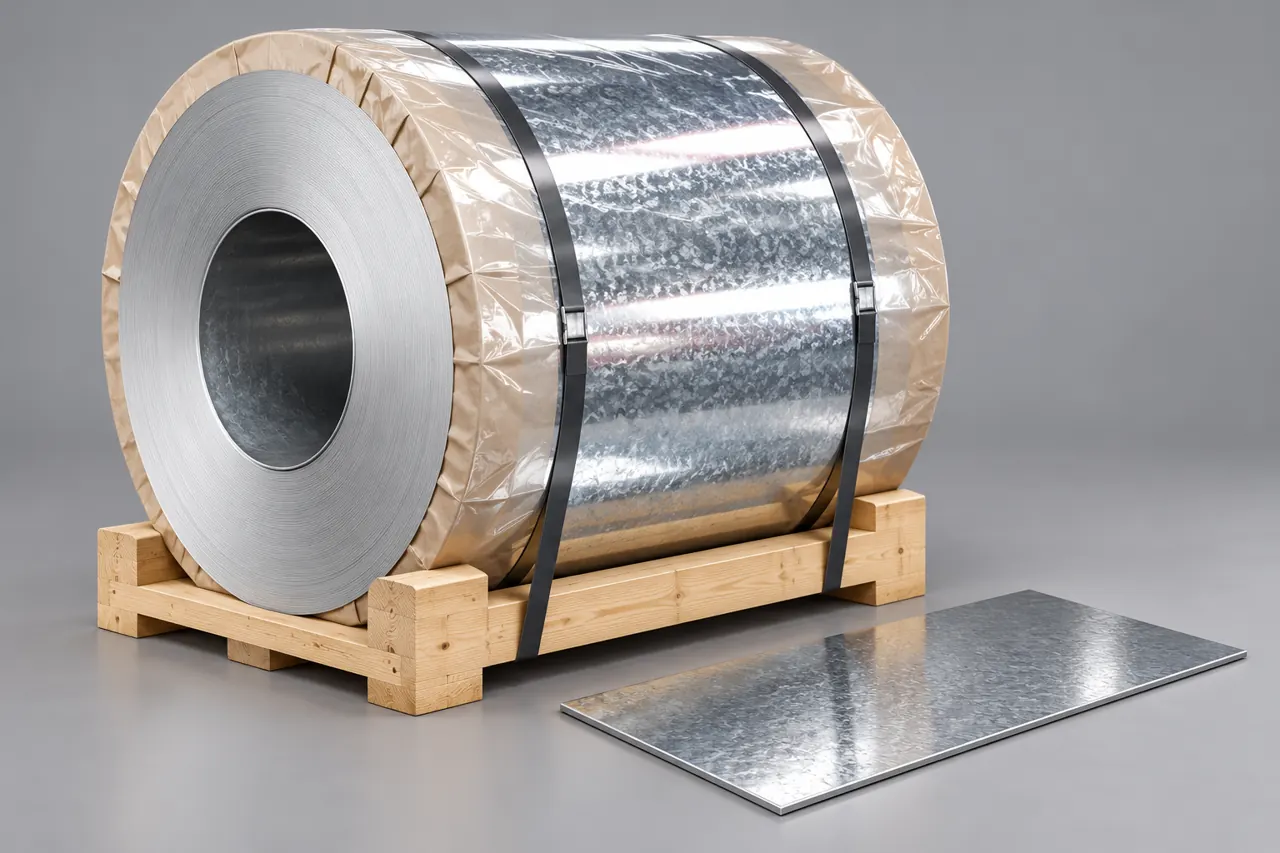
Packing should match handling and receipt conditions
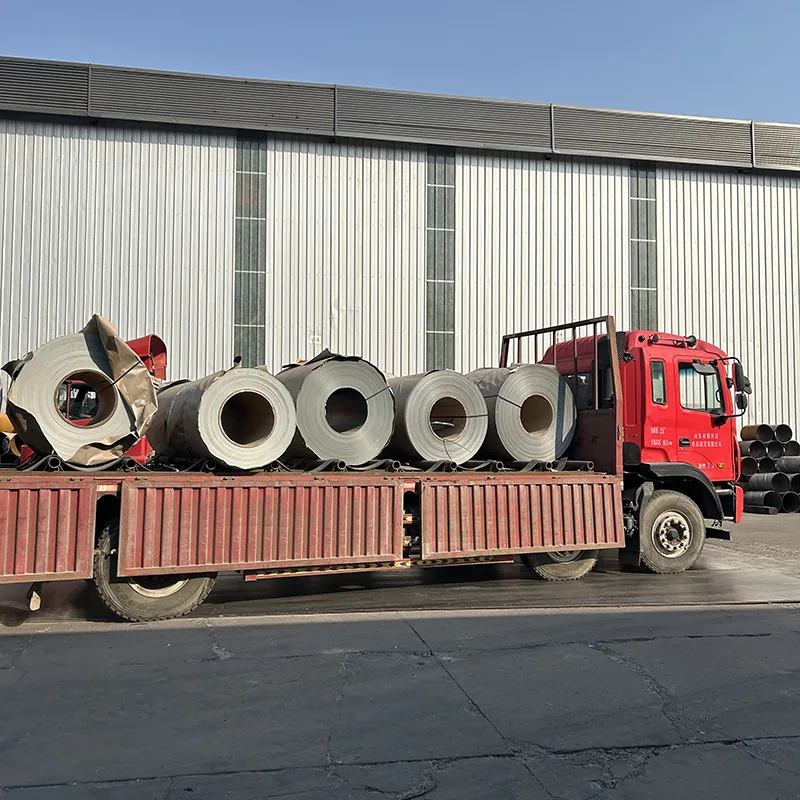
Specify coil orientation, protection and package identification needed at your receiving facility. Confirm net mass and quantity separately from the number of coils. Ask how the package and material record references will connect, and confirm delivery terms and timing against the actual coil schedule.
A receiving deviation needs an identifiable coil
Record packaging damage, dimensions or surface concerns before running the affected coil. Keep labels, representative samples and the related material records together. If an issue appears during forming, include the line and profile conditions in the review so the material and production observations can be compared fairly.
Send a coil schedule built around the roofing line
Share substrate grade and thickness basis, coating requirement, strip width and coil-handling limits. Add the profile, trial quantity, required records and destination. We can discuss the listed galvanized-coil candidate and confirm the actual offered material, packing and commercial scope for your production review.