Finishing media trials for aluminium die castings
Choose a trial around your casting and its acceptance limits before choosing zinc shot or stainless cut wire. We can review a catalogue-based enquiry with you, but the right medium depends on burrs, exposed surfaces and protected features. Treat candidate material, particle form and equipment settings as separate approval decisions.
Separate burr removal from appearance
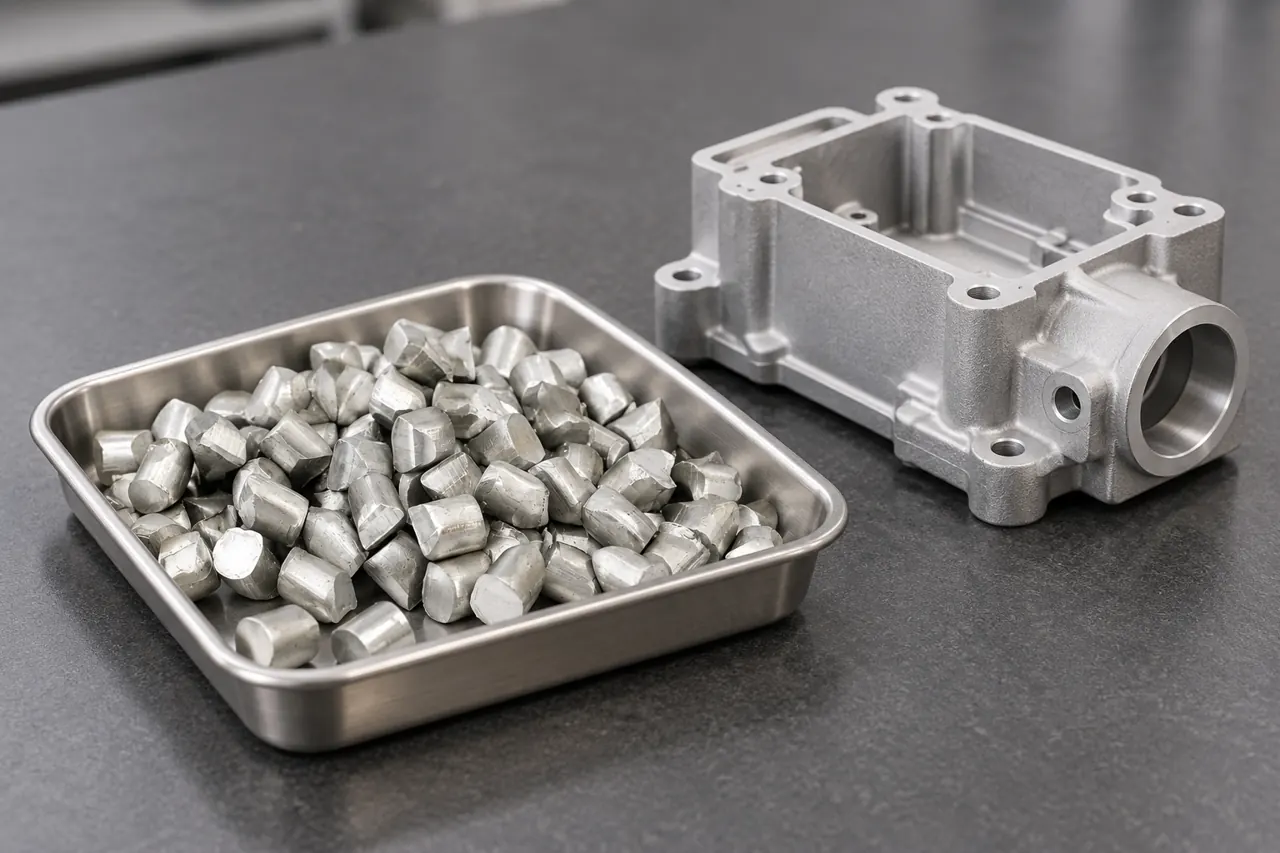
A casting can look cleaner while losing an edge that matters. Mark sealing lands, threads, thin fins and mating bores on the drawing, then describe the burr or surface condition you want changed. Distinguish removal, blending and cosmetic appearance so a pleasing sample does not silently redefine functional acceptance.
Compare material and particle form
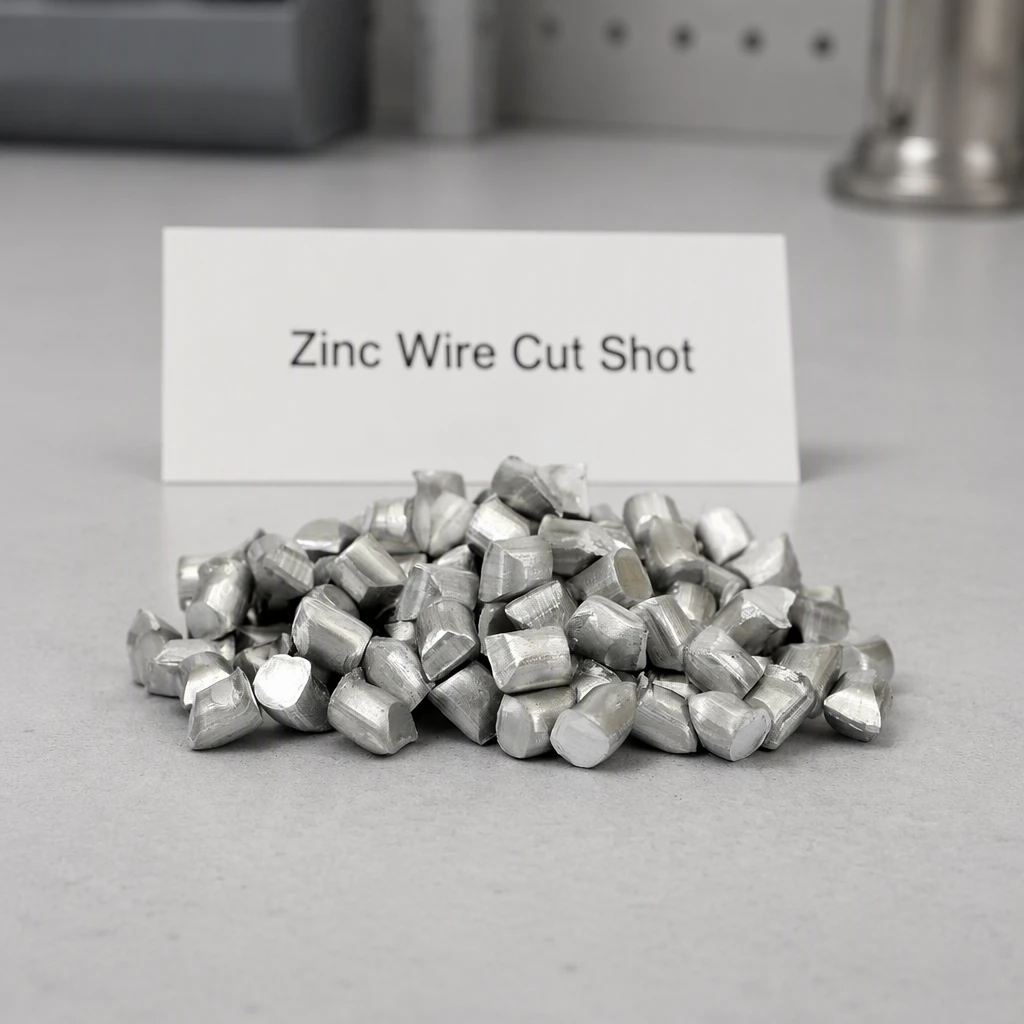
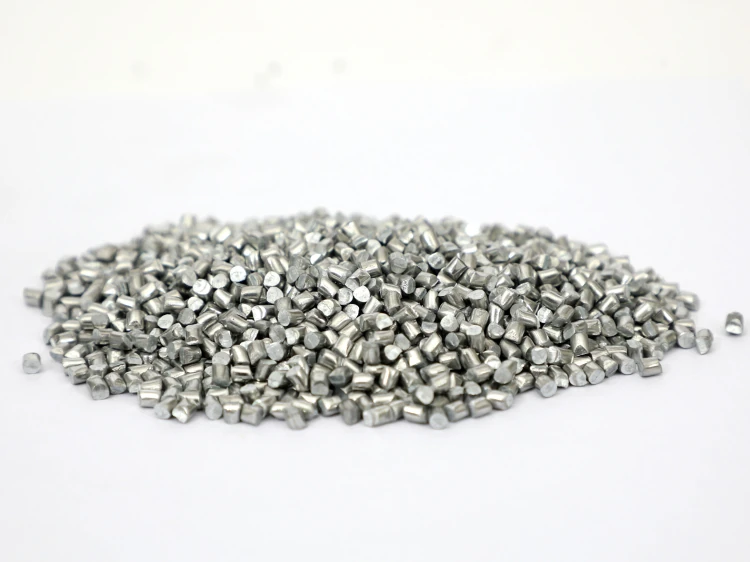
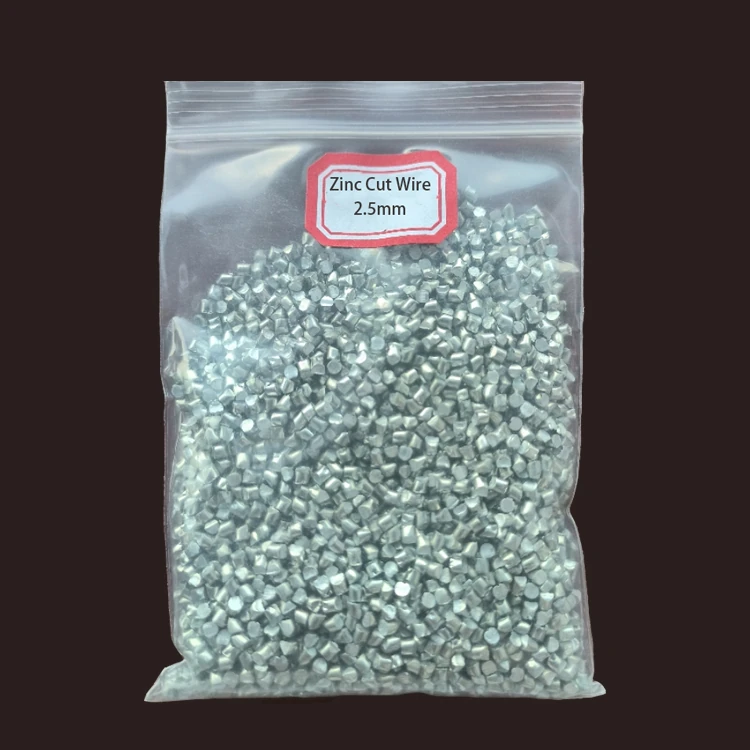
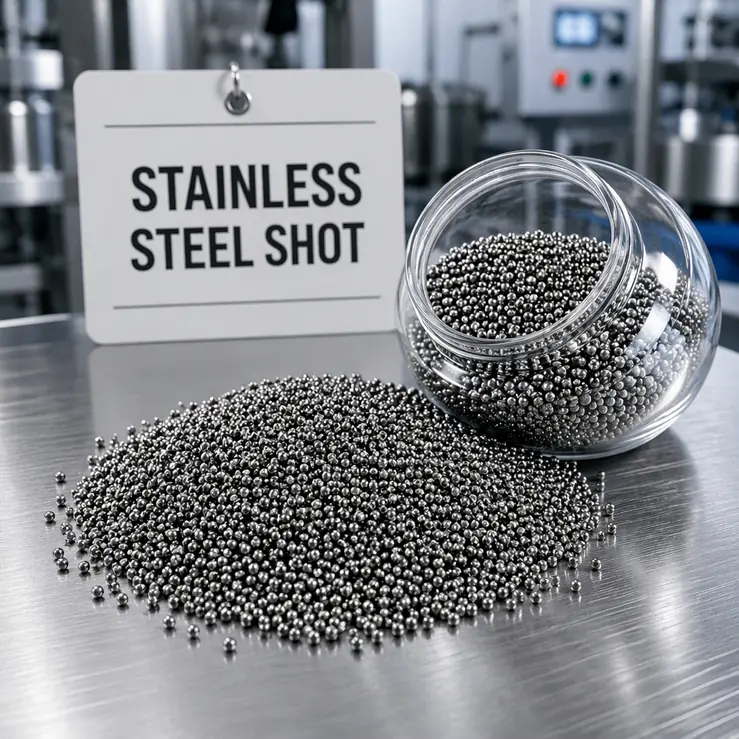
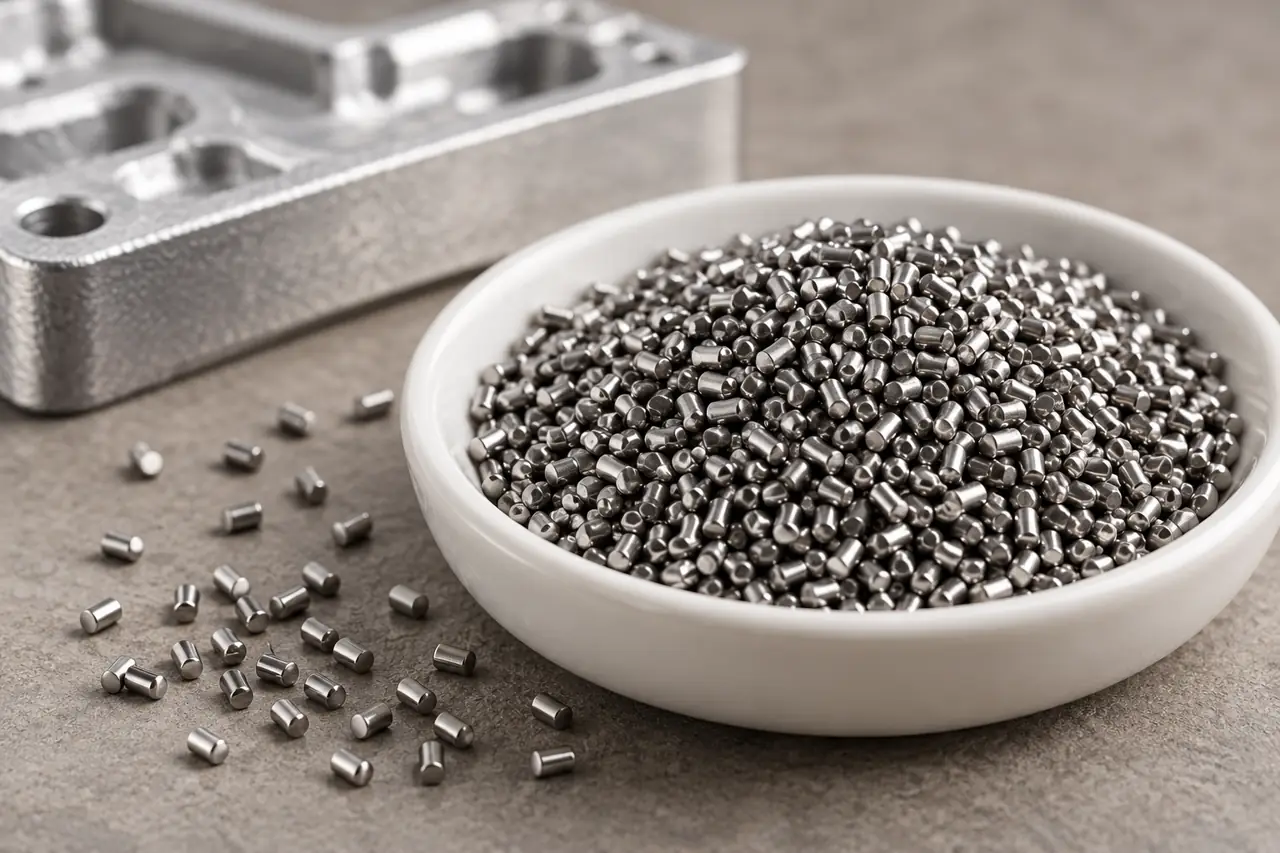
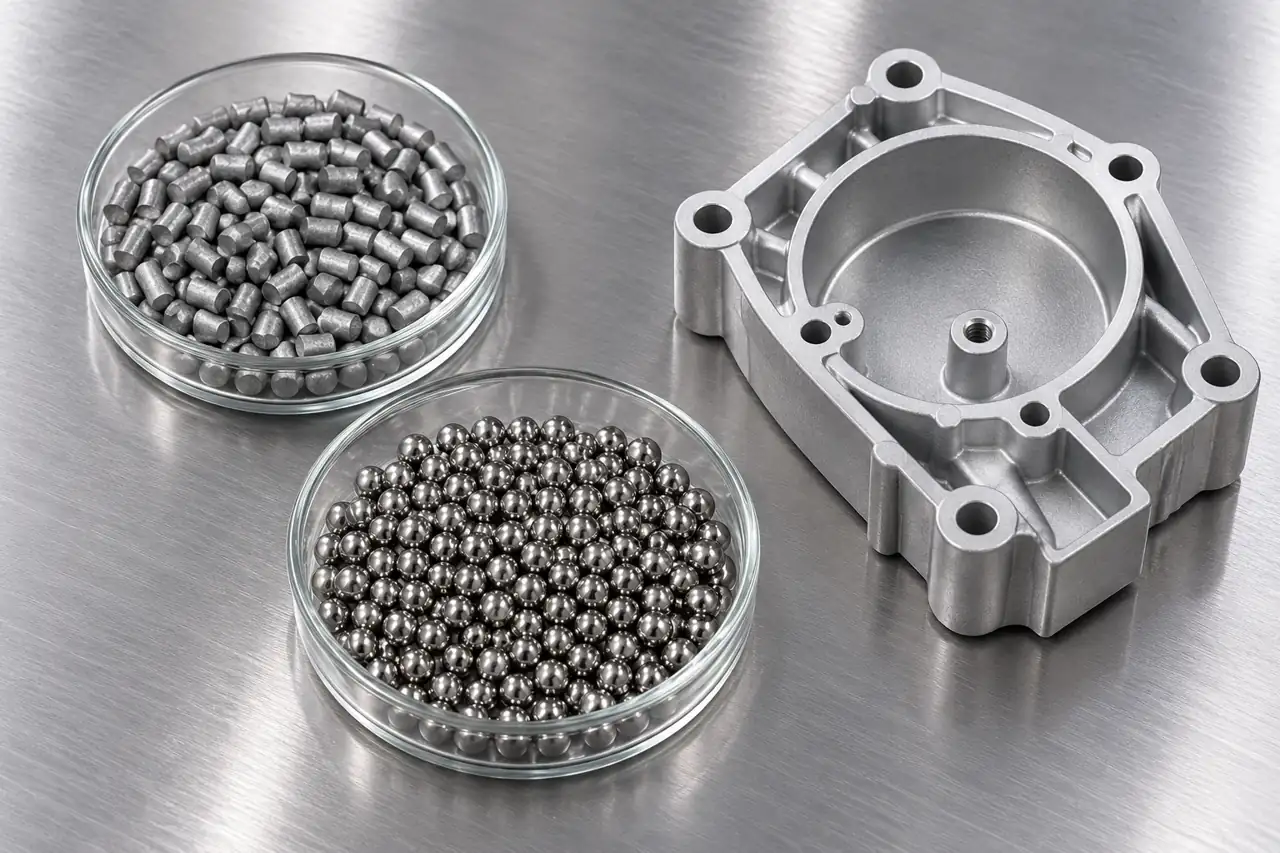
Our catalogue includes zinc cut-wire shot and stainless cut-wire media. Do not compare them on material name alone. Record nominal size, distribution and whether particles are as cut or conditioned, since the contact geometry is part of the trial. Ask for the actual proposed batch rather than a generic sample photograph.
Send samples that represent the difficult features
Include the casting alloy, drawing revision and the features most vulnerable to marking. Supply consistent starting parts for each candidate, with photographs taken before testing. Agree sample handling and responsibility before shipment. A simple, flat coupon cannot by itself demonstrate the response of a recessed or thin-walled casting.
Tie approval to measurable results
Define the observation method before testing. An edge check, dimensional measurement and appearance comparison answer different questions and should retain their own records. Record the equipment, loading and exposure used with each medium. A result without those conditions is difficult to repeat and should not become a volume-order specification.
Keep the trial media separately identified
Use separate containers for zinc and stainless candidates and retain a sealed sample of the approved medium. Media mixing obscures the reason a casting changed, especially if the trial also changes operating conditions. Ask us to identify the proposed supply route and supporting material records for the specific candidate.
Define the supply role before the order
Qingdao Relia Industries Co., Ltd. is a China manufacturer focused on steel wire and steel shot. This wider catalogue also carries finishing-media enquiries. Confirm the manufacturer and supply responsibility for the exact zinc or stainless proposal, along with available batch records, instead of assuming every catalogue item follows one production route.
Protect the casting and the media in transit
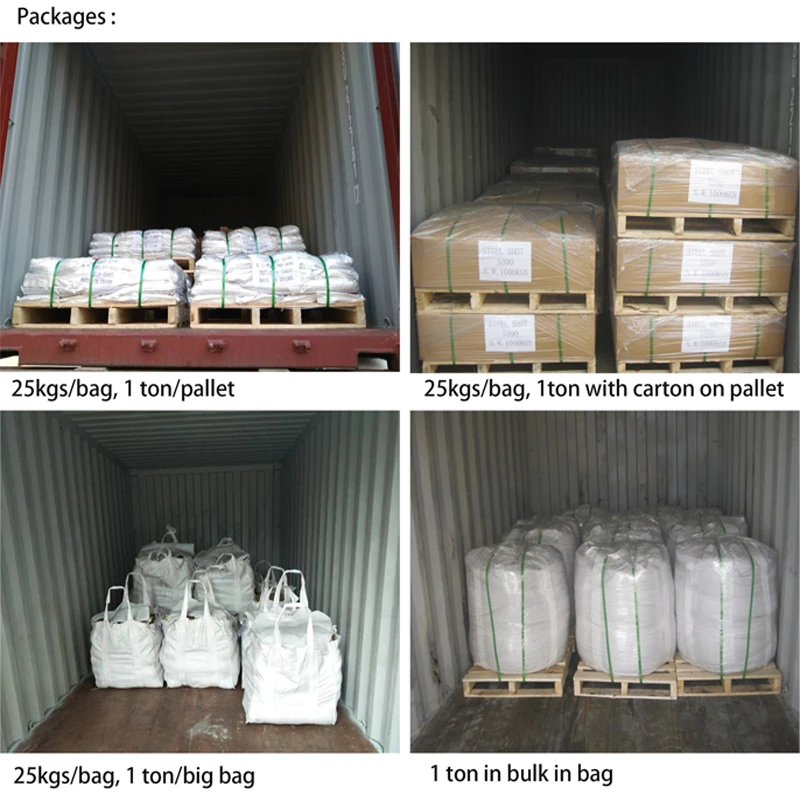
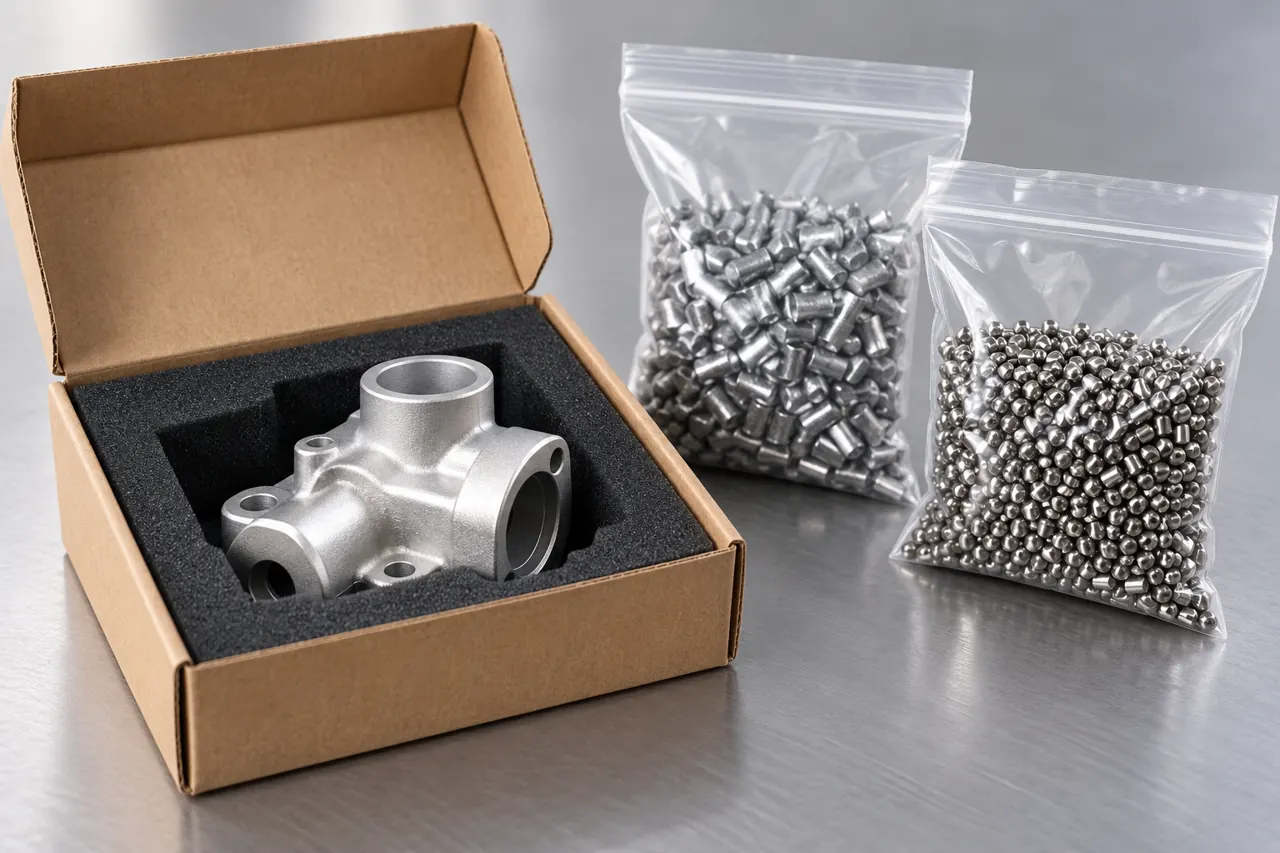
Trial parts need protection at the surfaces you intend to judge. Bag the media separately and keep sample identifiers outside cushioning that will be discarded. For repeat orders, agree the media pack, lot marking and storage guidance with the quotation. Packaging approval should preserve identification as well as physical condition.
Retain the approved trial as a reference
Keep the accepted casting, unused media sample and signed result together in the approval file. On the next delivery, compare the incoming medium with that reference before restarting the established process. Investigate a changed finish against the media, casting condition and machine settings rather than assigning the cause from appearance alone.
Send a casting-specific trial enquiry
Share the alloy, part drawing, burr locations, finish reference and protected dimensions, together with your equipment and intended order quantity. We can discuss the relevant catalogue candidates and confirm what trial support is available. Sample costs, records, packing and delivery scope belong in the actual proposal before you approve a supply programme.